If your frosting is too sweet, the answer is not more sugar. You either dilute what is already mixed with fat, dairy, acid or salt, or you cut the sugar gradually and replace the body it was holding. The usual culprit is powdered sugar, because it dissolves on your tongue almost instantly.
There are two different jobs hiding in that question, and they need different tools. Fixing a bowl of frosting you made an hour ago takes five minutes and no baking. Changing the recipe takes a scale, a ratio, and a willingness to taste the frosting twice.
I decorate a lot of American buttercream, and my own tolerance for sweet dropped somewhere around the third birthday cake in a row. What worked then is what the forum bakers keep landing on too: give the sugar less to do, then give something else more to do.
Table of Contents
- What You Need
- Step-by-Step
- 1. Rescue a batch you already made
- 2. Cut sugar in 25% steps instead of all at once
- 3. Blunt the receptors with acid and salt
- 4. Fold in bitterness: cocoa and dark chocolate
- 5. Replace the body the sugar was holding
- 6. Taste it cold before you decorate
- Common Mistakes
- Frequently Asked Questions
- What is the best way to make frosting less sweet?
- Can I reduce powdered sugar in buttercream without making it runny?
- How do I make chocolate frosting taste less sugary?
- Why does reducing sugar make frosting taste flat?
- What can I add to frosting to balance excessive sweetness?
- Can I use a sugar substitute in cake frosting?
- What to Do First
What You Need
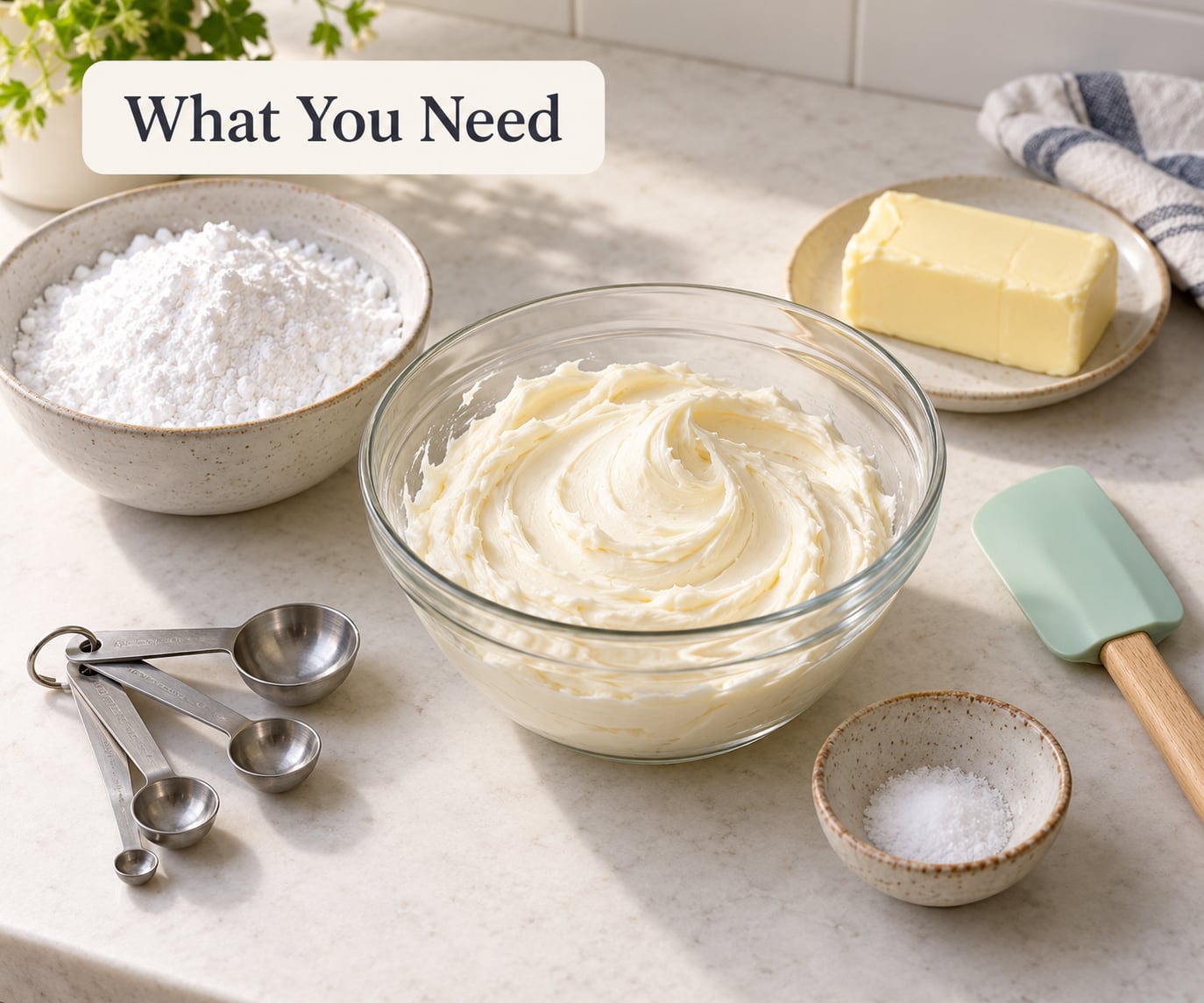
Nearly every less-sweet frosting job runs on the same short list of ingredients. Which ones you actually need depends on the frosting type, so this is a general kit rather than a recipe.
- Unsalted butter, softened to room temperature
- Powdered sugar, plus granulated sugar if you are cooking the frosting
- Heavy cream or whole milk for thinning
- Vanilla extract
- Fine sea salt
- Lemon juice or white vinegar
- Full-fat cream cheese
- Cocoa powder or a bar of 70% dark chocolate
- Gel food colouring if the frosting needs a shade
Salt and an acid are the two most underrated items on that list. A quarter teaspoon of salt in a bowl of frosting does more for perceived sweetness than most bakers expect, and it costs nothing to test.
Pick your method before you start, though. If the frosting is already in the bowl, you want the rescue table in the next section. If you have not mixed anything yet, change the recipe instead, because you can rebalance body and sweetness on the way in and you cannot get it back later.
Step-by-Step
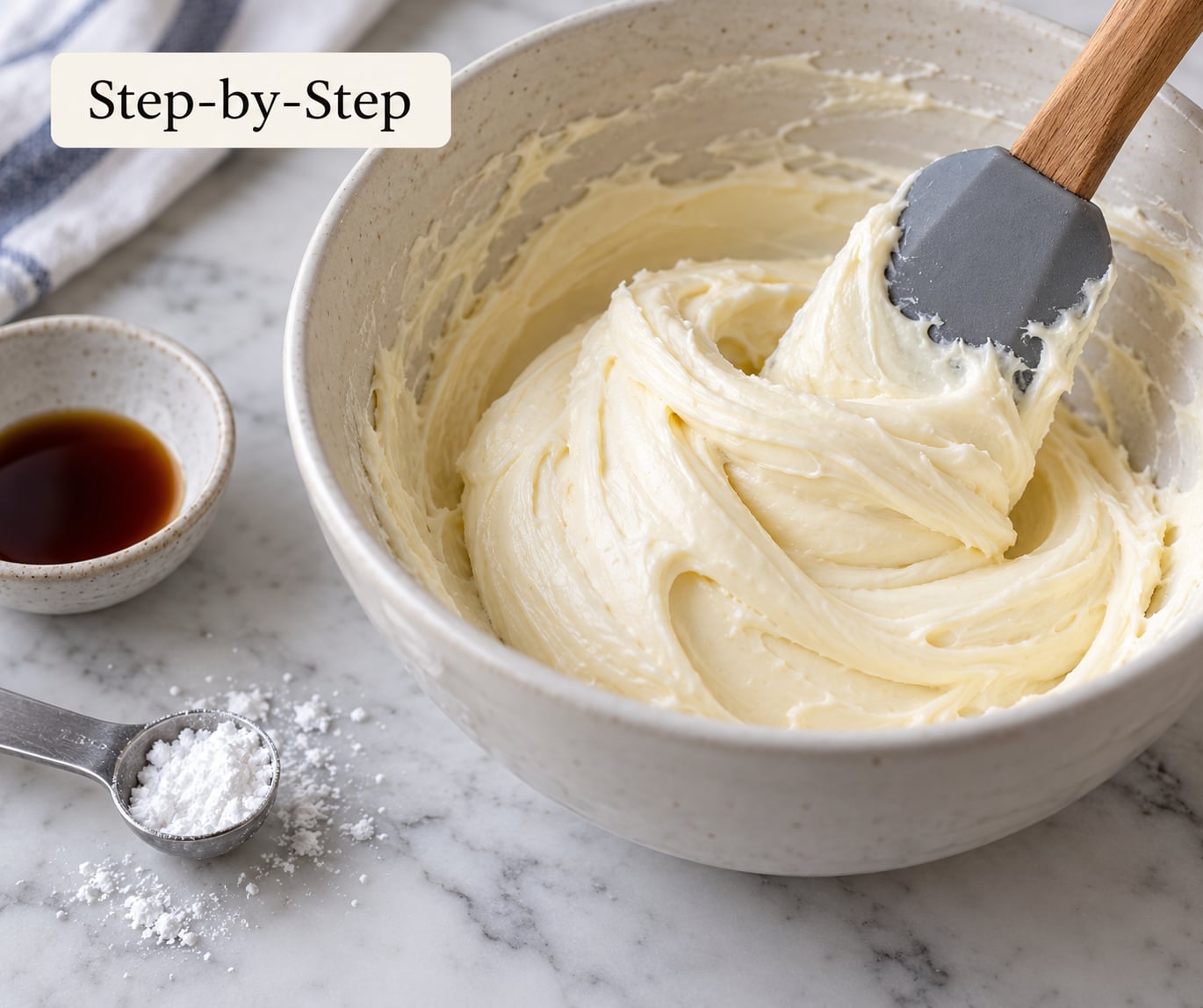
Work through this in order and stop after each step to taste. Frosting is cheap to fix while it is still in the bowl and expensive to fix after it is on a cake.
1. Rescue a batch you already made
Add one lever at a time and taste between each. These amounts are for one cup of frosting, and they scale straight up from there.
| What to add | Amount per cup of frosting | What it changes |
|---|---|---|
| Softened unsalted butter | 2 tablespoons | Mellows sweetness best of all; may go grainy if beaten cold |
| Full-fat cream cheese | 2 tablespoons | Adds tang and loosens the frosting |
| Heavy cream | 1 to 2 teaspoons | Dilutes fastest, but thins the frosting fast too |
| Fine sea salt | 1/8 teaspoon | Sharpens everything around it; barely changes texture |
| Lemon juice | 1/2 teaspoon | Blunts sweetness perception; use less than you think |
| Cocoa or finely chopped 70% chocolate | 1 tablespoon | Adds bitterness that the sugar has to compete with |
Butter and cream cheese dilute rather than cut. That is the trade: you are spreading the same amount of sugar over more frosting, and your tongue registers a smaller dose.
2. Cut sugar in 25% steps instead of all at once
For the next batch, drop the powdered sugar by a quarter and see how it behaves. If it still reads sweet, drop another quarter. A 50% cut in one go is a different recipe, and a different recipe is where the greasy, loose results come from.
Worked example: a recipe calling for 4 cups of powdered sugar goes to 3 cups, then 2 and a half, then 2. Every step you keep or cut two extra tablespoons of butter with it, and the frosting stays the same body while the sweetness walks down.
3. Blunt the receptors with acid and salt
Sugar lands on sweet receptors and salt and acid crowd them out. Half a teaspoon of lemon juice, a quarter teaspoon of salt, or both, changes how sweet the same bowl tastes without removing a single gram of sugar.
One forum detail worth stealing: on a CakeCentral thread a baker noticed that vanilla extract on its own pushes perceived sweetness up, then balanced it with a little popcorn salt and extra almond flavouring. Vanilla is not neutral. Measure it, do not free-pour it.
Coffee works the same way. A teaspoon of instant espresso dissolved into the frosting adds depth and makes the sugar recede, without making anything taste like coffee.
4. Fold in bitterness: cocoa and dark chocolate
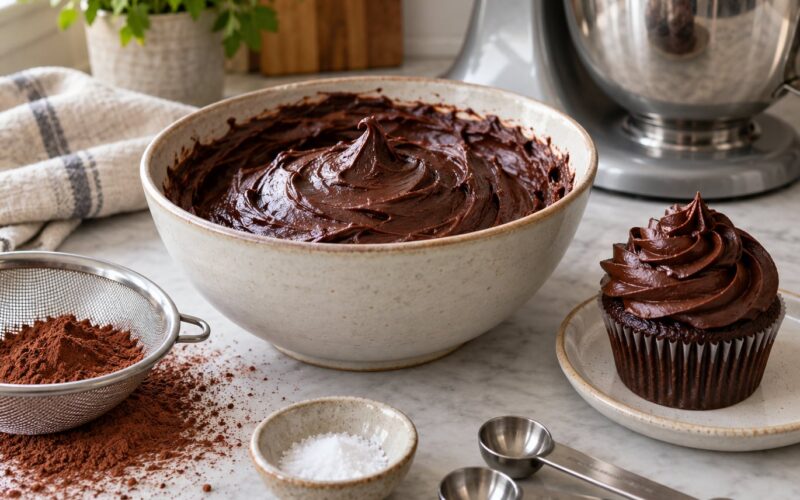
Chocolate frosting reads sweeter than vanilla because cocoa adds nothing to soften the sugar. Melt a tablespoon of 70% dark chocolate per cup, or whisk in a tablespoon of Dutch-process cocoa, and the batch tastes grown-up overnight.
Go further than that and make it genuinely bittersweet: drop the powdered sugar by a quarter, add a tablespoon of cocoa and a tablespoon of strong coffee. It is the same frosting with a completely different destination.
5. Replace the body the sugar was holding
Here is where most attempts go wrong. Powdered sugar is not just sweetness, it is structure, and pulling it out without a replacement leaves you with a frosting that slumps off the spoon or slides off the cake in a warm kitchen.
Add 2 tablespoons of softened butter per cup of frosting for every cup of powdered sugar you removed. If the frosting is dairy based, use cold heavy cream instead, a teaspoon at a time, and beat it on low. German buttercream and ermine frosting get their structure from a cooked custard base rather than sugar, which is why they stay smooth when you dial the sweetness right down.
Whip longer too. Frosting that has been under-whipped tastes heavy and slightly like plain butter, which reads as flat rather than sweet. Give it two to three minutes on low with the paddle after any liquid goes in.
6. Taste it cold before you decorate
Frosting tastes sweeter warm and milder straight from the fridge, so taste a small dab cold before you commit. Chilled tasting also tells you whether it will hold on the cake, since a frosting that already feels soft will soften further in a warm room.
Nut-free kitchens: check that your vanilla extract and any chocolate you use are made without nut processing. Most brands are, but the label is worth a glance when a cake is going to a child with an allergy.
Common Mistakes
Almost every disappointing less-sweet frosting comes from one of these six, and each has a specific fix rather than a general instruction to add more of something.
| Mistake | Why it happened | The fix |
|---|---|---|
| Frosting tastes sweet even after you cut the sugar | Powdered sugar dissolves instantly; granulated sugar resists and reads milder | Switch to a cooked or custard-based frosting, or add 1 tablespoon of cocoa per cup |
| Frosting is greasy or dense | Sugar was removed without replacing fat, or it was under-whipped | Beat 2 tablespoons extra butter per cup and whip 2 to 3 minutes longer on low |
| Frosting is watery and slides off the cake | Too much cream or milk was added to thin it | Chill it 20 minutes, then beat in butter a tablespoon at a time |
| Frosting tastes flat and dull | Sugar was cut and nothing with flavour replaced it | Add salt first, then lemon juice, vanilla measured properly, or espresso powder |
| Frosting is gritty | Not enough butter to carry the sugar, or sugar added too fast | Add 1 tablespoon butter per 2 cups of sugar and re-whip on low for 3 minutes |
| Frosting will not hold a tall or tiered cake | Softened too much in a warm kitchen, or thinned with cream | Use a stiff base such as German buttercream or stabilized whipped ganache instead of thinned cream cheese frosting |
Two habits prevent most of that list. Weigh the powdered sugar rather than spooning it, because a tablespoon of loosely packed icing sugar can carry a quarter more than one scraped level. And make one change at a time, tasting after each, so you know which lever actually moved the sweetness.
Granulated sugar is worth a note of its own. For a cooked frosting, replacing the powdered sugar with granulated gives a smoother, less aggressively sweet result, and forum bakers on WellTrainedMind have long cooked their frostings this way for exactly that reason. It will not work in raw American buttercream, where granulated sugar simply stays gritty.
Frequently Asked Questions
What is the best way to make frosting less sweet?
Dilute the sugar rather than delete it. Add two tablespoons of softened butter or cream cheese per cup of frosting, then sharpen with an eighth of a teaspoon of salt and half a teaspoon of lemon juice. Butter dilutes the sugar and acid plus salt blunt how sweet your tongue reads it, and the frosting keeps its body.
Can I reduce powdered sugar in buttercream without making it runny?
Yes, as long as you replace the fat. Powdered sugar is doing structural work in buttercream, so cut it in 25% steps and add 2 tablespoons of softened butter per cup of sugar you remove. Beat on low for two to three minutes afterwards. Dropping half the sugar in one go is what turns frosting loose and greasy.
How do I make chocolate frosting taste less sugary?
Cocoa adds flavour without adding anything that softens the sugar, which is why chocolate frosting seems to need more sweetness than it does. Melt a tablespoon of 70% dark chocolate into each cup, or whisk in a tablespoon of Dutch-process cocoa, then add a quarter teaspoon of salt. A teaspoon of espresso powder deepens it further.
Why does reducing sugar make frosting taste flat?
Because you removed flavour along with sweetness, and under-whipped frosting compounds it by staying heavy and tasting like plain butter. Put the flavour back with vanilla measured properly rather than free-poured, plus salt, lemon juice or espresso powder. Then whip the frosting two to three minutes longer on low so it turns pale and light.
What can I add to frosting to balance excessive sweetness?
Salt, acid and bitterness are the three reliable options. Add an eighth teaspoon of fine sea salt, half a teaspoon of lemon juice or white vinegar, and a tablespoon of cocoa or chopped 70% dark chocolate per cup of frosting. Cream cheese or sour cream dilute while adding tang, and all of them work better than simply cutting more sugar.
Can I use a sugar substitute in cake frosting?
You can, but expect a different result. Baked sugar substitutes such as erythritol do not cream with butter the way sugar does, so the frosting turns loose and gritty, and they can taste cooling or bitter at full strength. Start by replacing a quarter of the powdered sugar, keep the butter at full weight, and always add salt to cover any aftertaste.
What to Do First
If the frosting is already mixed, beat in two tablespoons of softened butter per cup, taste, then add an eighth teaspoon of salt. That single pair of changes moves perceived sweetness further than anything else you can do in five minutes.
If you have not started, cut the powdered sugar by a quarter of your recipe and carry the butter with it. Sweetness is far easier to leave out of a frosting than to take back out of one, and 2026 is a fine year to stop baking cakes that taste like sugar.