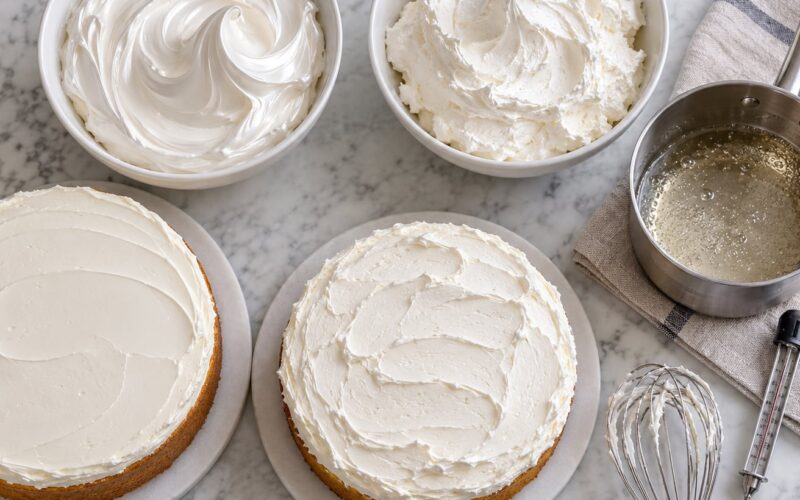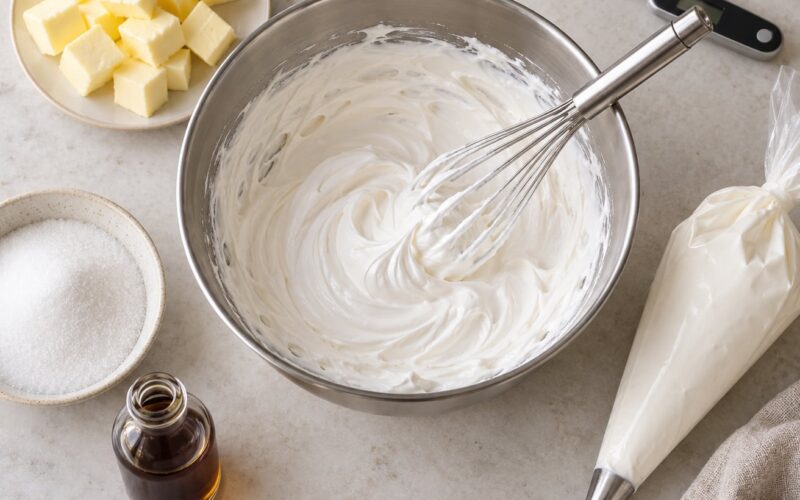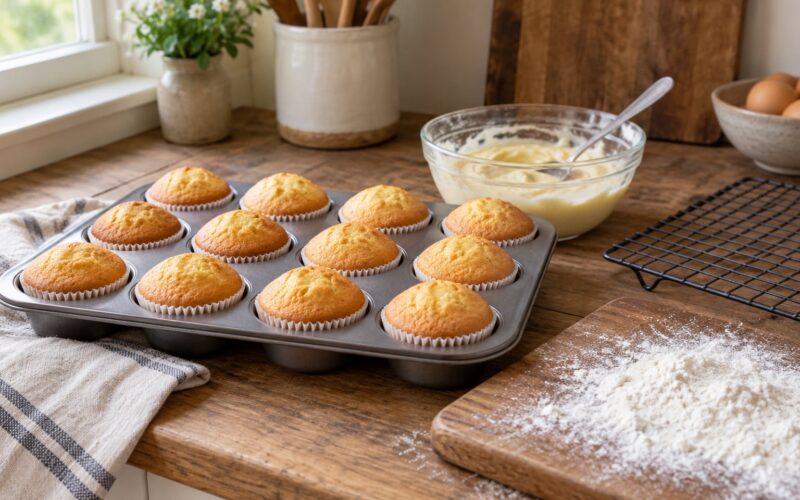
The reason most whipped cream frosting slumps off the cake is simple: air bubbles alone cannot hold cream. To learn how to make whipped cream frosting that holds up, you chill the cream, the bowl and the beaters, whip only to soft peaks, then fold in fully dissolved gelatin. That single stabilizer stretches the life of the frosting to roughly 24 to 48 hours refrigerated. Allow about 15 minutes of active work plus a short chill.
Plain whipped frosting is a foam, and foam is temporary. Fat droplets trap air in a loose network held together by water and partially crystallized fat. Warmth, gravity and time break that network, the air escapes, and the free water separates out as weeping. A stabilizer binds that free water so the bubble structure stays where you put it.
I learned this the hard way on a sheet cake for a birthday party. The frosting looked perfect at noon and had slid into a puddle by the time anyone cut into it. One tablespoon of bloomed gelatin later, the same recipe survived a warm car ride and a whole afternoon outdoors.
Table of Contents
- What You Need
- Step-by-Step
- Step 1: Chill the Cream and Equipment
- Step 2: Prepare the Gelatin Stabilizer
- Step 3: Whip the Heavy Cream to Soft Peaks
- Step 4: What Makes Whipped Cream Frosting That Holds Up?
- Step 5: Test and Use the Frosting
- Common Mistakes
- Stabilized Whipped Cream Frosting Tips
- Frequently Asked Questions
- Can I make whipped cream frosting without gelatin?
- How long does stabilized whipped cream frosting stay good?
- Can I pipe stabilized whipped cream frosting?
- Can I use this whipped cream frosting on cupcakes?
- Can stabilized whipped cream frosting be frozen?
- Why does my whipped cream frosting melt quickly?
- Conclusion
What You Need
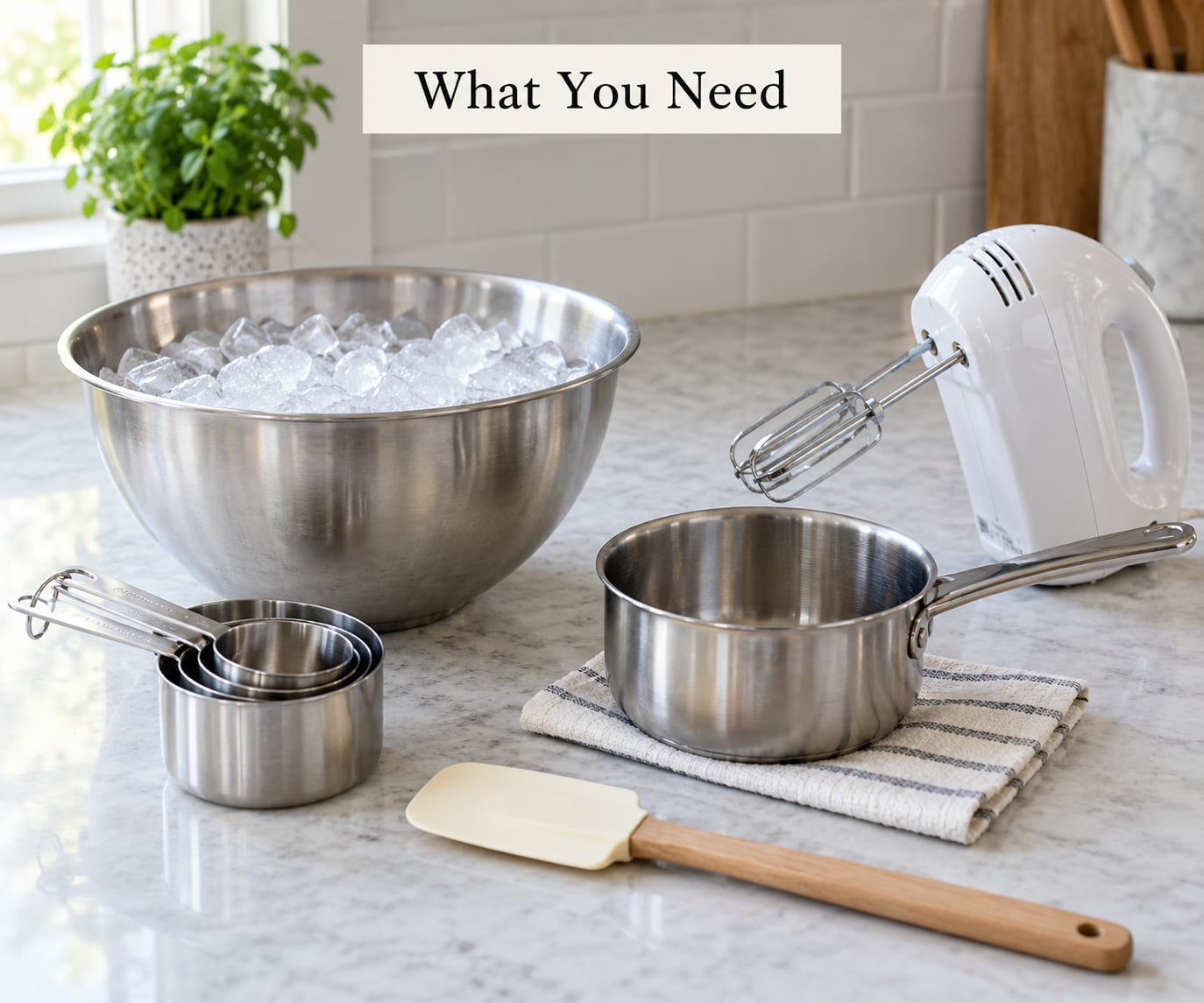
You need very little, and the temperature of each piece matters more than the brand you buy.
- Heavy whipping cream, 2 cups (480 ml) at least 36% milk fat, straight from the fridge. Do not use light whipping cream or half-and-half.
- Unflavored gelatin, 1 envelope (about 7 g / 2 teaspoons) for a standard 8-inch layer cake or a dozen cupcakes.
- Confectioners’ sugar, 3 to 4 tablespoons, sifted if it has any lumps.
- Vanilla extract, 1 teaspoon, and a pinch of fine salt.
- Cold water, 2 tablespoons, for blooming the gelatin.
- A metal bowl and beaters that have been in the fridge for at least 20 minutes.
Why unflavored gelatin? It sets without adding a flavor you have to hide. Plain gelatin works fine and is what I use, because the flavor of a lemon or berry gelatin is a matter of taste rather than function.
Substitutions are worth knowing before you start. Swap the gelatin for 2 tablespoons of instant vanilla pudding mix per 2 cups of cream for a slightly sweeter, softer result. For a tangier frosting with the best holding power of any option, use 4 ounces (113 g) of cream cheese with 2 tablespoons of sugar in place of the gelatin. A cornstarch slurry of 2 teaspoons cornstarch whisked into 1 tablespoon cold water also works, though it can taste faintly starchy if you use more.
The cream should be fridge cold, roughly 35 to 40°F (2 to 4°C). It does not need to sit out at all. Have the gelatin solution ready before you turn the mixer on, because once the cream starts moving you are working against the clock.
Step-by-Step
Step 1: Chill the Cream and Equipment
Put the bowl, the beaters and the measuring cups in the fridge for 20 minutes before you start. Metal conducts cold far better than glass or plastic, which is why a chilled stainless bowl makes such a difference. Warm equipment raises the temperature of the cream as it whips, and warm cream cannot trap as much air. The frosting comes out loose and the volume never recovers.
If you forget to chill anything, run the bowl under cold water for a minute and dry it well. That is not as good as a proper chill, but it rescues the batch.
Step 2: Prepare the Gelatin Stabilizer
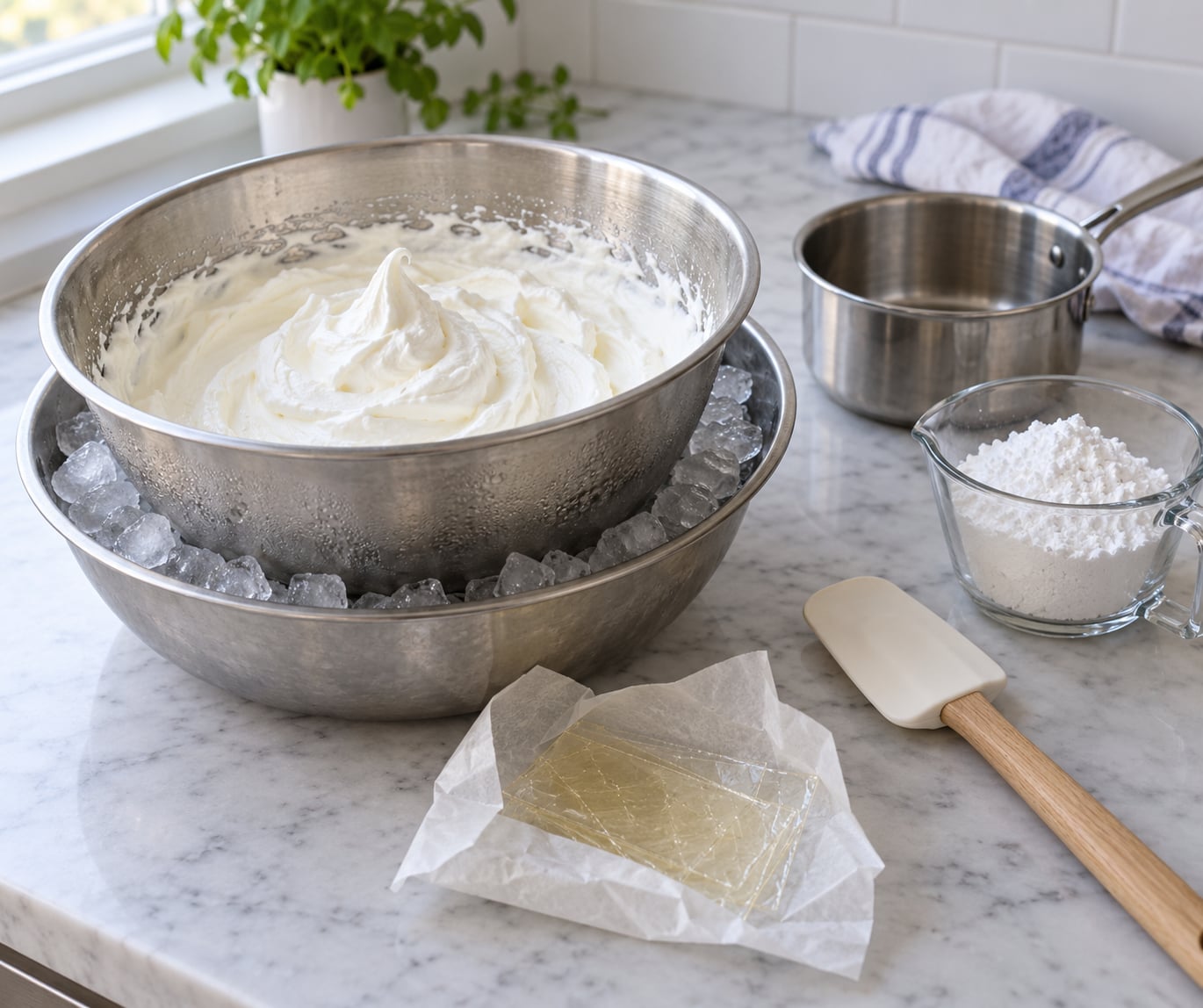
Pour the 2 tablespoons of cold water into a small bowl, sprinkle the gelatin over it and leave it untouched for 5 minutes. This is blooming. The powder swells and goes pasty, which is what stops clumps from forming later.
Set a small saucepan over low heat, add the bloomed gelatin and stir constantly until it dissolves completely, roughly 1 minute. Nothing should remain at the bottom. Then cool it to about 90°F (32°C), testing with your finger. Warm enough to stay liquid, cool enough not to melt the cream. Pour too hot and you will scramble the cream into curds; pour too cool and the gelatin sets into a solid lump you cannot fold out.
Fully dissolved gelatin is the whole trick here. Any graininess you find in the finished frosting almost always traces back to a speck of undissolved powder.
Step 3: Whip the Heavy Cream to Soft Peaks
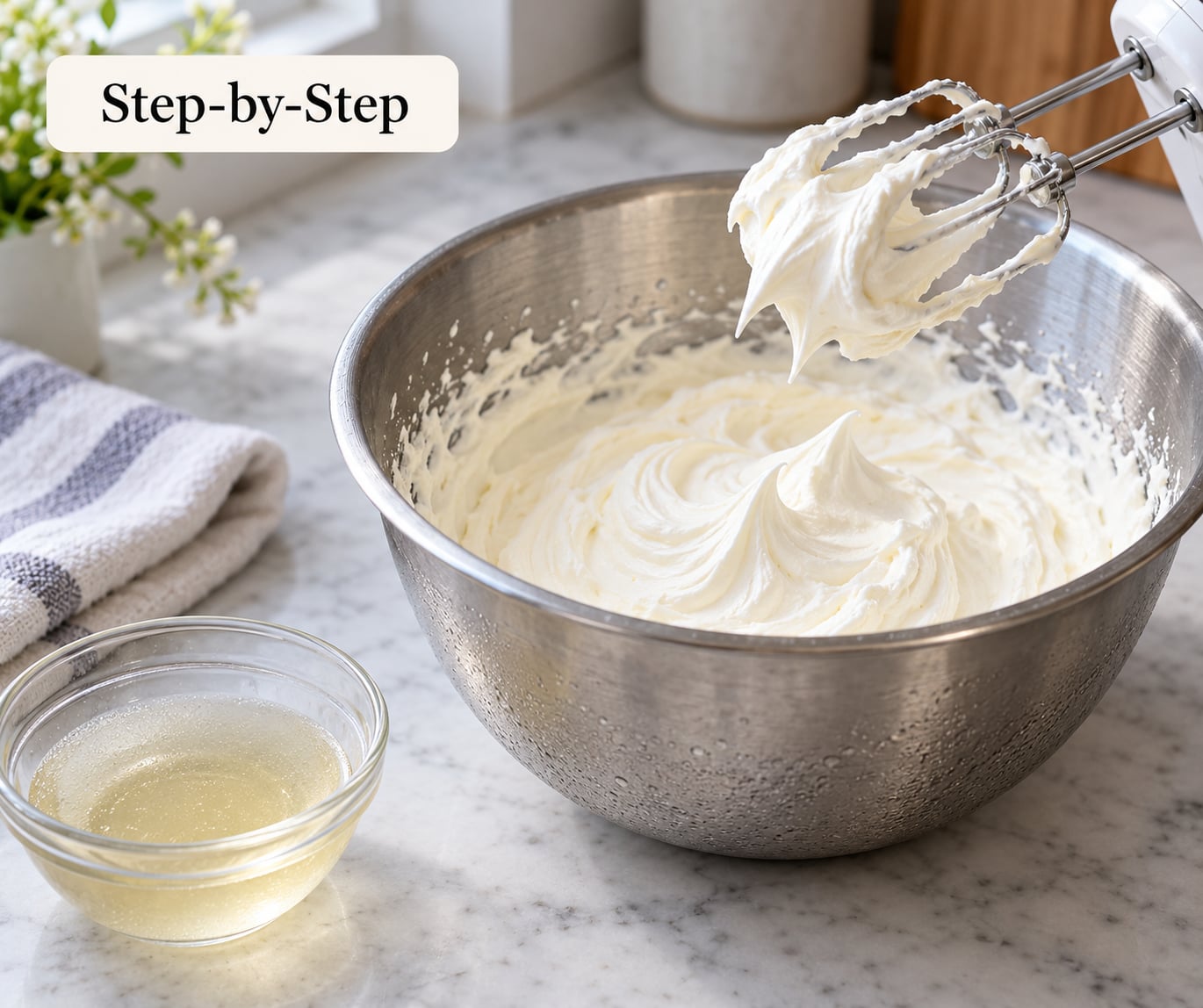
Put the cold cream in the chilled bowl and start on medium speed, not high. Medium gives the fat time to partially crystallize and the bubbles time to grow evenly, and it throws less spatter into the beaters. Scrape down the bowl and beaters once at the 60 second mark.
Stop at soft peaks. Lift the beaters and the cream should tip forward in a relaxed curl. If you push past this, the cream tightens further, releases water and eventually turns into butter within a minute or two. Once that happens the frosting is not recoverable, so pull the mixer back a touch earlier than feels right.
Do not add the sugar yet. Sugar dissolves slowly and can pull the structure loose before the cream is stable. It goes in at the very end of this step.
Step 4: What Makes Whipped Cream Frosting That Holds Up?
Gelatin binds the free water that causes weeping, which is the same mechanism used in a classic mirror glaze. The water that would otherwise squeeze out between the fat droplets gets locked into the gelatin network instead. More gelatin does not mean more stability, though. Too much and the frosting turns gummy and heavy, which defeats the reason you chose whipped cream in the first place.
One 7 g envelope per 2 cups of cream gives a frosting that spreads smoothly, holds soft peaks and pipes a border that survives overnight. Two envelopes work if you need it to survive a hot car ride or sit on a dessert table for several hours, but the texture starts to resemble a light panna cotta.
Keep the mixer running on low and drizzle the gelatin in a thin stream down the side of the bowl. Let it circle for about 30 seconds, then stop the mixer and fold the bowl with a spatula, scraping from the bottom and turning up the mixture. Speed is what creates volume, so most of the work after this point should be a slow fold rather than a fast beat.
Add the confectioners’ sugar, vanilla and salt at the end and fold them in with two or three gentle turns. Stop the moment the streaks disappear.
Step 5: Test and Use the Frosting
Spoon the frosting onto the back of a cold plate and turn the plate upside down. If the frosting stays put for a few seconds without sliding off, it is ready for the cake. If it creeps down, beat the bowl over ice for another 30 seconds to firm it up. If it is stiff enough to dent a fingertip, add a tablespoon of cold cream at a time and fold until it softens.
That same tip is the way to judge a cupcake. Dip a finger in the frosting and turn your knuckle upside down. The frosting should stay in a soft mound. A flat smear means it will slide off the cupcake before you carry it to the table.
Refrigerated, the finished frosting keeps its shape for 24 to 48 hours, and gelatin-stabilized frosting made with a double dose can manage three to four days. Keep the cake covered in the fridge and take it out about 20 minutes before serving, since cold whipped frosting tastes flatter than frosting at room temperature.
The best cakes for it are light and unfrosted inside: sponge, angel food, chiffon, or a simple butter cake. Fruit tarts and éclairs also take it well. It is a poor filling for a dense fruit or chocolate cake because the moisture in the crumb pushes the frosting around.
Common Mistakes
Warm equipment. If the frosting never stiffens, chill everything harder and try again. This accounts for more failures than anything else.
Underwhipping. Soft peaks that curl rather than stand mean the cream is not ready for the stabilizer. Give it another 30 seconds on medium before folding anything in.
Gelatin at the wrong temperature. Hot gelatin curdles the cream. Straight-from-the-fridge gelatin sets into a rubbery lump you cannot stir out.
Pouring instead of folding. Pouring the gelatin straight onto the surface leaves a heavy layer at the bottom and thin frosting on top. Drizzle while the mixer runs on low, then fold.
Overloading the cake. A thick layer is heavier than the structure beneath it. Spread a thin crumb or buttercream seal on the cake first, then a thinner layer of whipped frosting than feels right.
Leaving it out too long. Frosting sits safely at room temperature for about 2 hours, or 1 hour if the room is above 80°F (27°C). Beyond that, move it to the fridge rather than serving from a warm table.
Stabilized Whipped Cream Frosting Tips
For pipeability, pipe within 2 hours and use a large open star tip. Home bakers on decorating forums point out that stabilized whipped cream is less forgiving than buttercream: you get pretty borders and rosettes, but it will not hold stiff ruffles the way a buttercream shell does.
For color, gel food coloring only. Liquid coloring adds water and starts the weeping process again. Add color in two or three drops while you fold, never by pouring.
For flavor, fold in 1 tablespoon of fruit puree in place of part of the sugar for fruit cakes, add the zest of one lemon for a brighter vanilla frosting, or dissolve 1 tablespoon of instant espresso powder in the cream before whipping for coffee flavor. Cocoa powder works too, mixed with the sugar at the folding stage.
For sliced cakes, stabilized whipped frosting needs a firm top. Chill the frosted cake for 20 minutes before cutting, use a sharp thin knife wiped between slices, and cut straight down rather than sawing.
For cupcakes, two cups of cream covers roughly a dozen. Pipe in a cool room and refrigerate while the cupcakes set.
For hot weather, work in the coolest room you have, keep a bowl of ice under your mixer bowl, and take the cake out of the car before it warms up. When in doubt, a stronger stabilizer beats a colder room.
For alternatives, instant pudding mix at 2 tablespoons per 2 cups of cream gives a softer, sweeter frosting suited to sheet cakes. Cream cheese at 4 ounces per 2 cups of cream gives the firmest result and takes vanilla, lemon or chocolate well. Cornstarch at 2 teaspoons in a 1 tablespoon cold water slurry works but can taste starchy, so keep it to light, fruit-flavoured applications. If you are baking nut-free for someone at the table, check the pudding mix label, since many brands dust the fruit powder with nut flour.
Frequently Asked Questions
Can I make whipped cream frosting without gelatin?
Yes. Cream cheese is the easiest swap: beat 4 ounces softened with 2 tablespoons of sugar until smooth, then whip in the cream to soft peaks. It holds longer than gelatin and adds a slight tang. Instant pudding mix at 2 tablespoons per 2 cups of cream works too, though the result is softer and slightly grainier. Both are nut-free once you check the labels.
How long does stabilized whipped cream frosting stay good?
Refrigerated in a covered cake or container, gelatin-stabilized frosting holds its shape for 24 to 48 hours. A double dose of gelatin stretches that to three to four days. Cream cheese and cornstarch versions last close to 48 hours. At room temperature, allow about 2 hours, or 1 hour if the room is above 80 degrees F (27 degrees C).
Can I pipe stabilized whipped cream frosting?
You can, and it pipes better than plain whipped cream. Use a large open star tip and pipe within a couple of hours of finishing. The frosting holds borders, shells and rosettes well but will not hold tall ruffles the way buttercream does, because the network is lighter. Chill the piped cake for 20 minutes to set the shape.
Can I use this whipped cream frosting on cupcakes?
Yes, and it is one of the best uses for it. Two cups of cream covers about a dozen standard cupcakes. Test the frosting by dipping a finger in and turning your knuckle upside down; it should stay in a soft mound rather than sliding off. If you are transporting them, refrigerate the cupcakes until the last possible moment.
Can stabilized whipped cream frosting be frozen?
Yes. Freeze it in a sealed container or wrap the cake in a layer of plastic wrap and foil for up to one month. Thaw it in the refrigerator overnight, never at room temperature, and expect the texture to be slightly softer than fresh. Beat briefly with a whisk if it needs firming before you use it.
Why does my whipped cream frosting melt quickly?
Three usual causes: the cream, bowl or beaters were not cold, the frosting was overwhipped until it started to break and release water, or the cake sat in a warm room longer than about two hours. Stabilized frosting that weeps within hours is usually under-stabilized rather than overheated. Chilling properly and folding in fully dissolved gelatin solves most of it.
Conclusion
Start with the cold work. Chill the bowl, the beaters and the cream for 20 minutes, bloom one envelope of gelatin in cold water, dissolve it over low heat and cool it to about 90°F (32°C). Whip the cream on medium only to soft peaks, drizzle the gelatin in while the mixer runs low, then fold the bowl to bring it all together.
That order is what separates frosting that still holds a rosette tomorrow from frosting that is a puddle by dessert time.