Eggless buttercream is a frosting made by creaming fat with icing sugar and a small amount of liquid such as milk or cream, with no eggs in any form. It is pipeable and sliceable because the sugar and fat do the emulsifying work that egg whites normally do in a meringue buttercream, so you can skip the cooked meringue entirely and make it in about ten minutes.
The catch is that eggless frosting is less forgiving. Load the bowl with sugar too fast and you get grit; stir the butter in before it softens and the frosting turns greasy; add too much liquid and it splits. Every one of those failures has a cause you can fix before it happens, and that is most of what this guide covers.
Updated for 2026, and still the same method I use for layer cakes, cupcakes and rosettes.
Table of Contents
- What You Need
- Eggless Is Not the Same as Vegan
- How to Make an Eggless Buttercream Step by Step
- Which Thickener Gives Eggless Buttercream Its Body?
- Cream the Butter Until Fluffy
- Add Sugar Gradually and Avoid Overmixing
- Thin and Flavour the Buttercream
- Common Eggless Buttercream Mistakes and Fixes
- How to Store and Use Eggless Buttercream
- Frequently Asked Questions
- Can I make buttercream without eggs for cakes?
- Is eggless buttercream safe for people with egg allergies?
- Why is my eggless buttercream too soft?
- Can I use eggless buttercream for cupcakes?
- How long can eggless buttercream be stored?
- Conclusion
What You Need
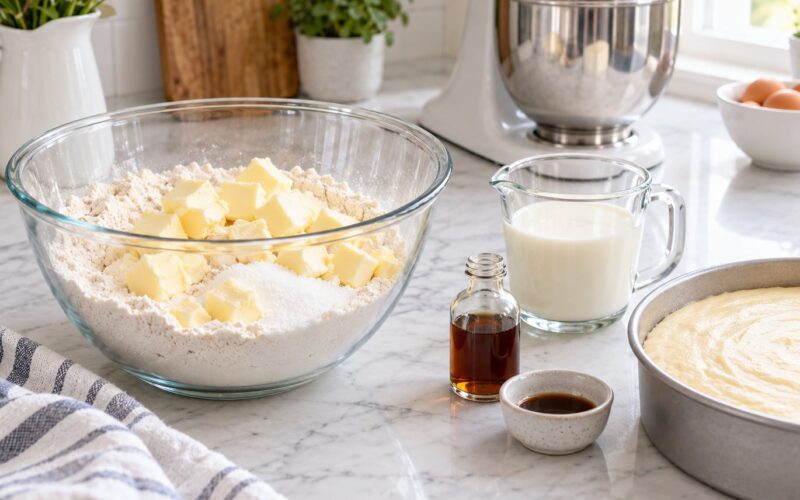
You need softened unsalted butter, icing sugar, vanilla and a splash of milk or heavy cream. That is the whole recipe. Everything below it is either a variation or an explanation of why those four things behave the way they do.
| Ingredient | Amount | What it does |
|---|---|---|
| Unsalted butter, softened | 225 g (1 cup / 8 oz) | The fat body. Air pockets trapped here give volume. |
| Icing sugar (confectioners’ sugar) | 450 g (4 cups / 16 oz) | Sweetness, structure and the fine grit-free body. |
| Vanilla extract | 2 tsp | Flavour carrier. Adds depth, not sweetness. |
| Milk or heavy cream | 1 to 2 tbsp, plus more to thin | Loosens the mix so it spreads and pipes. |
| Fine salt | 1/4 tsp | Balances the sugar. Non-negotiable in my kitchen. |
| Gel food colouring | Optional | Colour that stays vivid without dulling the mix. |
A stand mixer with the paddle attachment is the easy way, and a hand mixer works fine for batches under 400 g of sugar. Sift the icing sugar if you can. If you cannot, at least tap the bag firmly against the counter a few times, because compacted sugar is the most common reason a homemade batch feels sandy.
Eggless Is Not the Same as Vegan
Eggless means no eggs. Vegan means no animal products at all. A butter and cream frosting with no eggs is eggless and perfectly suitable for someone with an egg allergy, but it is not vegan and it contains dairy and soy.
This distinction matters more than it sounds. Plenty of people searching for eggless frosting are avoiding eggs for a child with an allergy, and they would happily use dairy butter. Others are avoiding all animal products, and they need a plant butter plus a plant milk instead. If a recipe never says which it is, you can end up serving someone the wrong thing at a party.
For a vegan version, swap the butter for a baking stick with 79 to 80 percent fat. Below that, the frosting will slump. For a nut-free or soy-free cake, check the butter label carefully, since some plant butters are made in facilities that handle nuts and some contain soy lecithin.
How to Make an Eggless Buttercream Step by Step
Cream the fat, add the sugar slowly on low speed, then adjust the liquid last. Eight steps, and only step four is actually difficult.
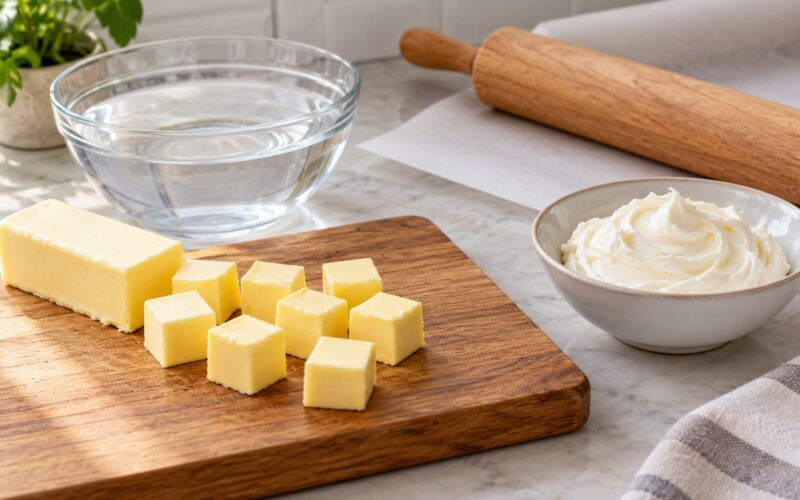
- Cut the butter into cubes and leave it out until it dents under a finger but does not shine or smear. That is room temperature, and it takes 30 to 60 minutes depending on how cold your kitchen is.
- Put the butter in the bowl with the paddle attachment and beat on medium for 2 to 3 minutes until it turns pale, aerated and noticeably lighter in colour.
- Add the vanilla, the salt and half the icing sugar. Beat on low until the white streaks disappear.
- Add the remaining icing sugar a third at a time on low or stir speed, letting each addition disappear before the next. Low speed is what keeps the texture smooth; high speed drags sugar into the fat and leaves a grainy mouthfeel.
- Beat on low for a full 2 minutes after the last addition. This is the emulsifying step that beginners skip, and it is the reason some batches stay smooth while others feel waxy.
- Add 1 tablespoon of milk or cream and beat on low until the frosting turns glossy and moves in a slow ribbon when the spatula is lifted.
- Add colour now, not later. Gel colouring goes in at this stage and will not thin the frosting meaningfully. Mixing colour in the next day, after the frosting has chilled, is a reliable way to cause a split.
- Taste, then adjust. Too stiff? Beat in liquid a teaspoon at a time. Too loose? Beat in more icing sugar, 1 to 2 tablespoons at a time, and give it 30 seconds on low after each addition.
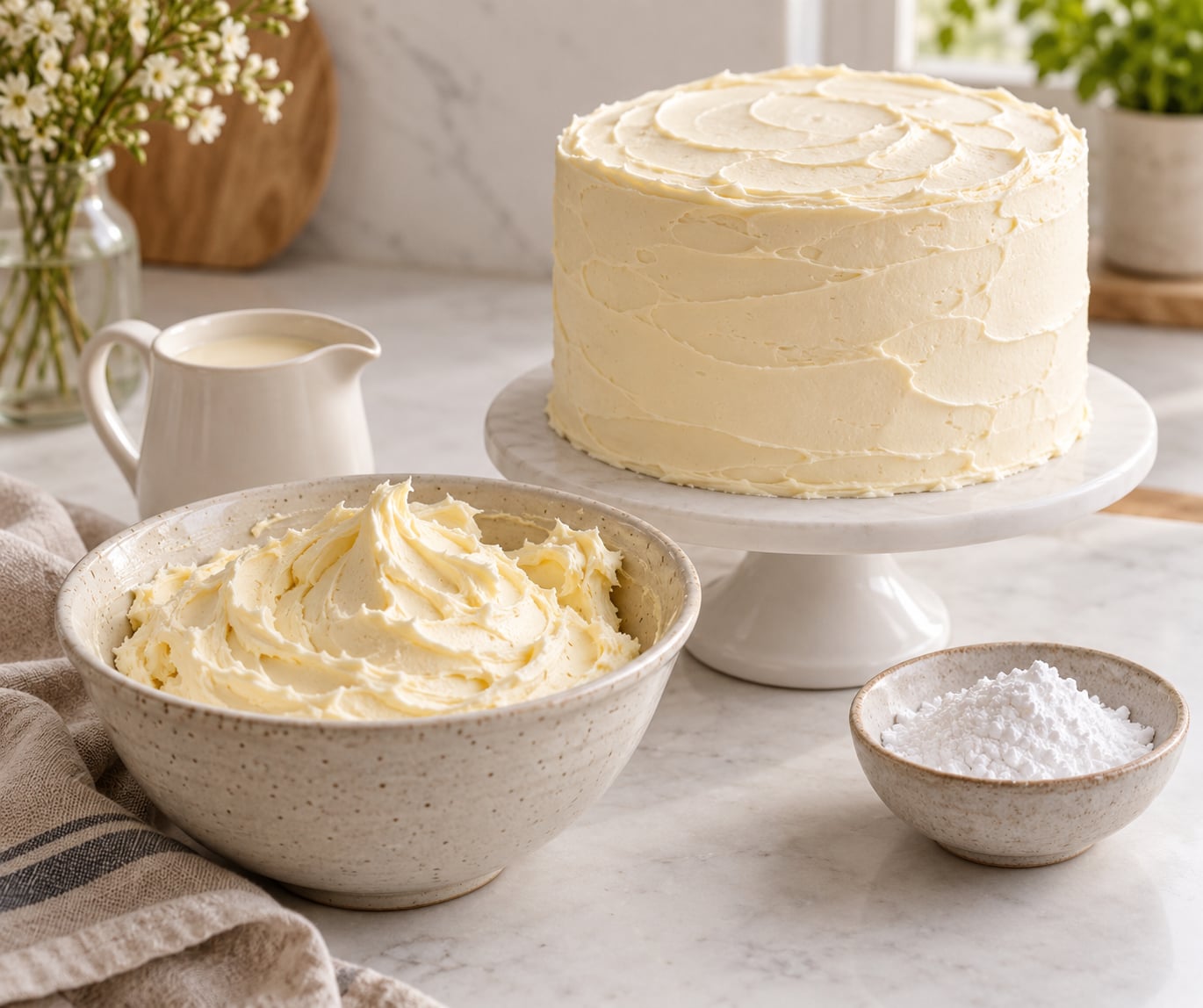
How do you know when it is right? Run a finger across the top of the bowl. The frosting should hold a clean line that does not fill itself in within a few seconds. For spreading, that is the target. For piping rosettes, stiffen it by another 2 to 3 tablespoons of sugar and chill before you load the bag.
Which Thickener Gives Eggless Buttercream Its Body?
Icing sugar is the answer for most people, because the fine starch in it builds a stable body and dissolves into the fat as you beat. A 1 to 4 fat-to-sugar ratio by weight is the one home bakers quote most often, and it is the ratio used above.
Cornstarch is the next choice. Mix 1 to 2 teaspoons into the butter before adding sugar and it absorbs extra moisture, which helps a frosting made with a soft plant butter hold a peak. It will not make frosting any silkier, though, and too much leaves a faint chalky finish.
Cooked flour paste is the old household option. Stir flour into a little milk, cook the slurry until thick, cool it completely and beat it into the butter. It gives real body and keeps frosting workable in warm rooms, but the cooked paste has to cool before it goes in or it will melt the butter.
Aquafaba, the liquid from a tin of chickpeas, is the closest thing to a meringue replacement. Beat it to stiff peaks, then fold it into the butter in three additions. It lightens the texture and cuts the sweetness without collapsing the frosting, which is the route to take if American buttercream tastes too sugary to you.
One to avoid: marshmallow fluff. It is frequently listed as an egg-free thickener, and it does add volume, but it is an egg product and carries a real egg-allergy risk. If eggs are the concern, leave it out.
Cream the Butter Until Fluffy
Structure comes from air, and air only enters at the creaming stage. Two to three minutes on medium until the butter is pale and fluffy is not optional, and it is where impatience shows up.
Cold butter will not aerate. Overly soft butter turns greasy and oily instead, because the fat has lost its structure before the air gets in. If your butter is sitting in oil or sweat in the fridge, put it back for 20 minutes rather than trying to beat your way out of it.
For plant butter sticks, beat longer than you think. Around five minutes usually, because these butters incorporate air more slowly than dairy butter.
Add Sugar Gradually and Avoid Overmixing
Dump the whole bag in and the first thirty seconds will be a dust cloud with lumps in it. Those lumps are sugar that has stuck together with nowhere to go, and beating longer does not undo them; the graininess is already in the bowl.
Add sugar in three or four additions on stir speed instead. Once the last addition is in, keep beating on low for two full minutes. Many bakers call this overmixing and stop early. It is not; it is emulsification, and it is the difference between a frosting that looks smooth and one that only looks smooth from a distance.
Grit also comes from speed rather than time. A full-speed mixer turns icing sugar into a fine sandpaper finish that no amount of extra beating will fix.
Thin and Flavour the Buttercream
Milk and cream both work. Milk gives a lighter, more familiar flavour and cream gives a richer, slightly heavier frosting with a better colour body, which is why I use cream for anything being piped.
Add liquid in small stages and re-beat between each. Pouring it all in at once is what makes frosting split, and a split eggless batch looks curdled rather than smooth. It is usually recoverable: chill the bowl for 10 minutes, then beat on low until it comes together, adding a tablespoon of sugar at a time.
For flavour, cocoa goes in as two tablespoons mixed into a paste with a splash of hot milk, which keeps the frosting from going dusty. Fruit works best as freeze-dried powder turned into a paste with a little liquid. Coffee powder, citrus zest and a pinch of cinnamon all mix in dry without thinning anything.
Reducing sweetness: add aquafaba in three folds, or cut the sugar by up to 20 percent and increase the fat slightly. Going beyond that and the frosting will sag in a warm room.
Common Eggless Buttercream Mistakes and Fixes
Most eggless frosting problems trace back to fat temperature, fat content or liquid volume. Find the symptom below and correct the cause rather than adding more sugar to cover it.
| Symptom | Cause | Fix |
|---|---|---|
| Greasy or waxy in the mouth | Butter too soft, or a low-fat plant butter | Chill 15 minutes, add 2 tbsp sugar, beat on low 2 minutes |
| Cannot hold a peak, slumps while piping | Fat below 80 percent, or too much liquid | Chill, then beat in 2 to 3 tbsp sugar a tablespoon at a time |
| Gritty or sandy texture | Sugar added too fast, or mixed on high speed | Prevention only: sift, add in thirds, stay on stir speed |
| Splits after liquid is added | All the liquid went in at once, or colour mixed in after chilling | Chill 10 minutes, beat on low, add a tablespoon of sugar |
| Weeps or leaks between layers | Frosting too loose, or cake still warm | Frost a fully cooled cake, stiffen the frosting, refrigerate the layer cake |
| Tastes powdery | Cocoa or flavour powder added dry | Mix into a paste with hot milk first |
| Too sweet, lingers | Sugar-to-fat ratio too high | Fold in whipped aquafaba or coconut cream |
Five mistakes cover nearly everything else. Soft or low-fat fat first, and a frosting made on a soft spread will never pipe properly. Liquid dumped in at once second, which splits the mix. High speed with sugar third, which grits it. Colour added after chilling fourth, which splits it again. And frosting a warm cake fifth, which melts the frosting and crumbles the crumb, whether or not there are eggs in the bowl.
How to Store and Use Eggless Buttercream
Because there is no raw egg, the strict handling rules that apply to meringue buttercream do not apply here. Storage still matters, and it depends on what is in the frosting.
| Where | How long | Notes |
|---|---|---|
| Cool room, covered | About 1 day | Fine in a cool room. Not safe to leave in a warm kitchen for longer. |
| Refrigerator | Up to 2 weeks | Re-beat on low before use; it will look separated and smooth back out. |
| Freezer | 3 months | Freeze in portions in an airtight box, thaw overnight in the fridge. |
Return chilled frosting to room temperature for 20 to 30 minutes, then beat on low for 2 to 3 minutes before piping or spreading. Cold frosting that has not come back to a workable temperature will tear the cake crumb as you spread it.
Whether to chill before piping is the question that comes up most. Yes, for detail work. Chilling firm the fat enough for rosettes, shells and borders to hold their shape, and a warm kitchen is exactly when you need it. Spread a soft base layer on a cake, chill the cake for 15 minutes, then pipe on the chilled surface.
| Project | Amount of frosting |
|---|---|
| 24 cupcakes, swirled tops | One full batch, about 3 1/2 cups |
| 24 cupcakes, rosettes or shells | Roughly triple a standard batch |
| Two-layer 20 cm round cake | About 500 ml |
| Three-layer 15 cm cake | About 700 ml |
| Bare-ish crumb coat before fondant | 150 g, mixed with a splash of hot coffee |
Rosettes eat frosting. This is the most consistently underestimated number in cake decorating, so if rosettes are the plan, make the batch before you pipe and stop when the bag is empty.
For transport in hot weather, American-style eggless buttercream holds better than most frostings because of the sugar content, but a car above 30 C will still soften it. Chill the frosted cake until you are ready to leave, transport it in a cool box with ice packs around the base, and keep the car air-conditioned.
A macaron filling is the fiddliest use. Pipe a small dome on the flat side, let it set for 20 minutes in the fridge until firm to the touch, then sandwich and rest the shells for at least 4 hours, ideally overnight. For those, the sugar-heavy American style works; a lighter aquafaba version tends to weep into the shells.
Frequently Asked Questions
Can I make buttercream without eggs for cakes?
Yes, and for most layer cakes and cupcakes an eggless American-style buttercream is the easier option. Cream softened butter, beat in icing sugar gradually on low speed, then thin with milk or cream. It slices cleanly and holds rosettes without any meringue, and because there is no raw egg involved it carries none of the meringue handling rules.
Is eggless buttercream safe for people with egg allergies?
Eggless buttercream contains no egg, so it is suitable for people with an egg allergy. Check labels on the rest of your bake as well, since many commercial mixes, marshmallow-based stabilisers and some icing sugars carry egg. If someone in the household has a severe allergy, bake and decorate in a clean space and check for cross-contamination on shared equipment.
Why is my eggless buttercream too soft?
Most often the fat is too soft or too low in fat. Aim for a plant butter with 79 to 80 percent fat and use baking sticks rather than spreads. Chill the finished frosting for 15 minutes, then beat on low and stiffen it with another 2 to 3 tablespoons of icing sugar a little at a time until a finger drawn across the bowl stays visible.
Can I use eggless buttercream for cupcakes?
Yes, it suits cupcakes very well. One batch covers about 24 cupcakes with swirled tops, and roughly three times that if you are piping rosettes or shells. Frost cooled cupcakes, and for neater swirls chill the frosting for 15 to 20 minutes first so it holds its shape instead of sliding down the swirl.
How long can eggless buttercream be stored?
Covered at a cool room temperature it keeps about a day. Refrigerated it lasts up to two weeks, and frozen in an airtight box it keeps around three months. Bring chilled frosting back to room temperature for 20 to 30 minutes and beat it on low for a couple of minutes before use, since it looks separated straight from the fridge.
Conclusion
Start with the butter. Cream it until pale, add the icing sugar in thirds on low speed, beat the full two minutes, and only then reach for the milk. Nearly every disappointing eggless batch comes from rushing those first four things, and the consistency adjustments at the end are much easier than fixing a split or a greasy bowl afterwards.