How to make buttermilk substitute for baking is easier than most recipes suggest: stir 1 tablespoon of lemon juice or distilled white vinegar into milk, fill to the 1 cup mark, and let it stand 5 to 10 minutes until lightly curdled. The whole thing takes about the time your oven takes to preheat.
Buttermilk in a baking recipe is doing two jobs at once. The acid reacts with baking soda for lift, and it tenderizes the gluten in the flour so the crumb turns soft instead of tough. Real cultured buttermilk also carries thickness and a deeper tang, and that part no shortcut fully reproduces.
So the substitute is close, not identical. In cakes, muffins, pancakes, biscuits and quick breads it does the important work well. In a salad dressing or anywhere creaminess is the point, skip it. I update this guide every year as new test results come in, and the last round of checks was done in 2026.
Table of Contents
- What You Need
- Step-by-Step
- The three steps that work for every acid
- How to make buttermilk substitute for baking with milk and vinegar
- How to make buttermilk substitute with yogurt
- How to use powdered milk as a buttermilk substitute
- How to choose a substitute for cakes, muffins, and biscuits
- Common Mistakes
- Frequently Asked Questions
- What is the best buttermilk substitute for baking?
- How much milk and vinegar do I use to make buttermilk?
- Can I use lemon juice instead of vinegar in a buttermilk substitute?
- How long should I let milk and vinegar stand before using it?
- Is plain yogurt a good substitute for buttermilk in baking?
- Can I use buttermilk substitute in cakes, muffins, and biscuits?
- Conclusion
What You Need
The base method needs a milk, an acid, and a vessel that lets you see the volume. That is it. Everything else on this list depends on the recipe you are baking.
- A milk. Whole milk, 2% and skim all work. 2% is the most reliable all-rounder and is what I default to when a recipe does not say.
- An acid. Fresh lemon juice, distilled white vinegar, or cream of tartar. Distilled white vinegar is the neutral option and is the safest pick for cakes and chocolate things.
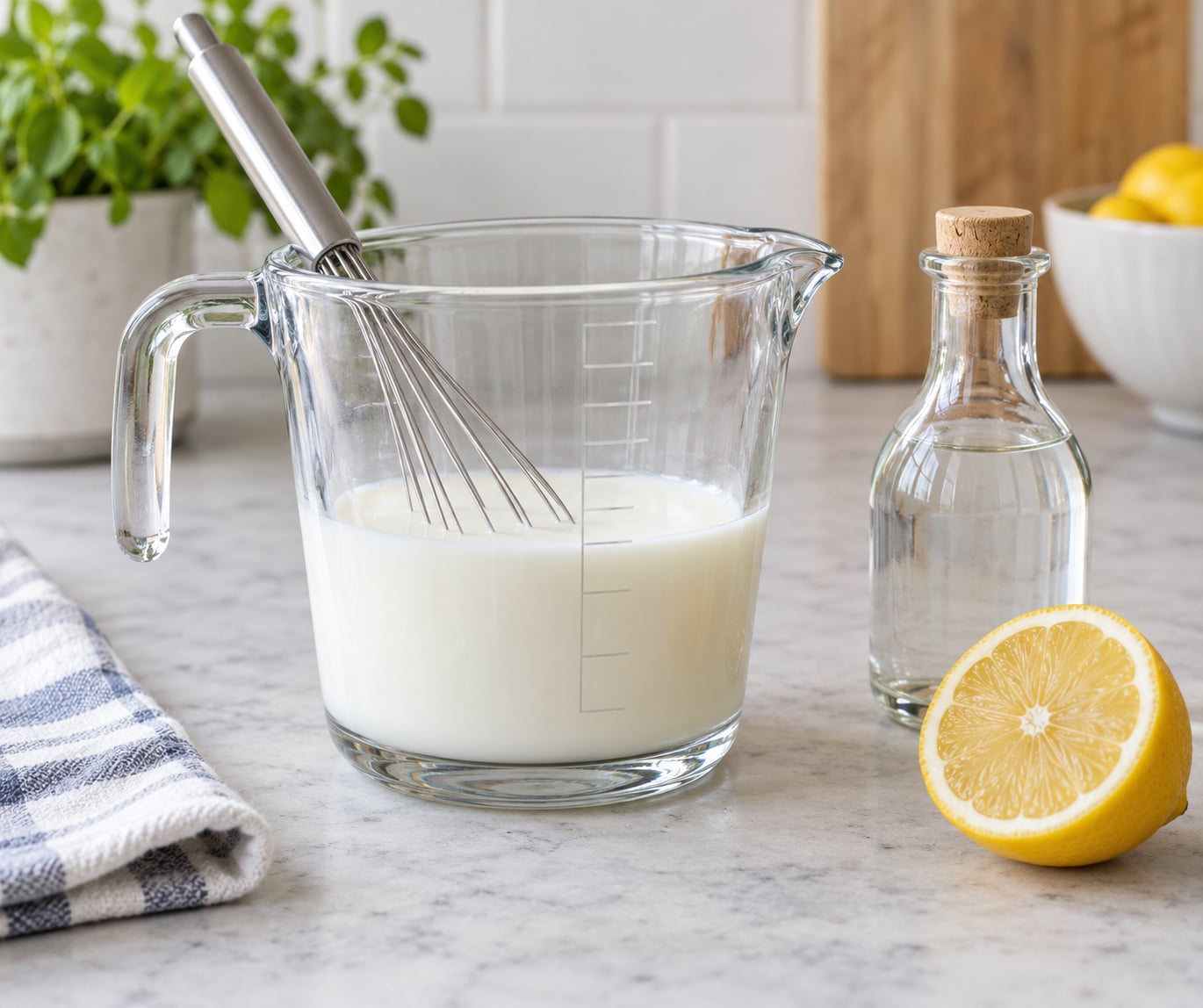
- A 2-cup glass measuring jug or a small bowl with a whisk. The jug matters because you will add acid first and then fill the milk to the line, and you want to see that happen.
- A thicker option, when you have one. Plain yogurt or sour cream. If it is in the fridge already, this is the richest substitute.
- A timer. Five to 10 minutes is the target, and going past an hour is where quality drops off.
Two recipe variables change the method. If the recipe calls for baking soda, the acid matters most, because the soda needs acid to release its lift. If it calls for baking powder, the leavener already carries its own acid, so the buttermilk is mostly there for tenderness and tang, and the yogurt method works beautifully.
One more variable is the total liquid in the recipe. Eggs, melted butter, oil and yogurt all count toward it. Acidified milk is a substitute one for one, which is another reason to measure to the cup line rather than eyeballing.
Step-by-Step
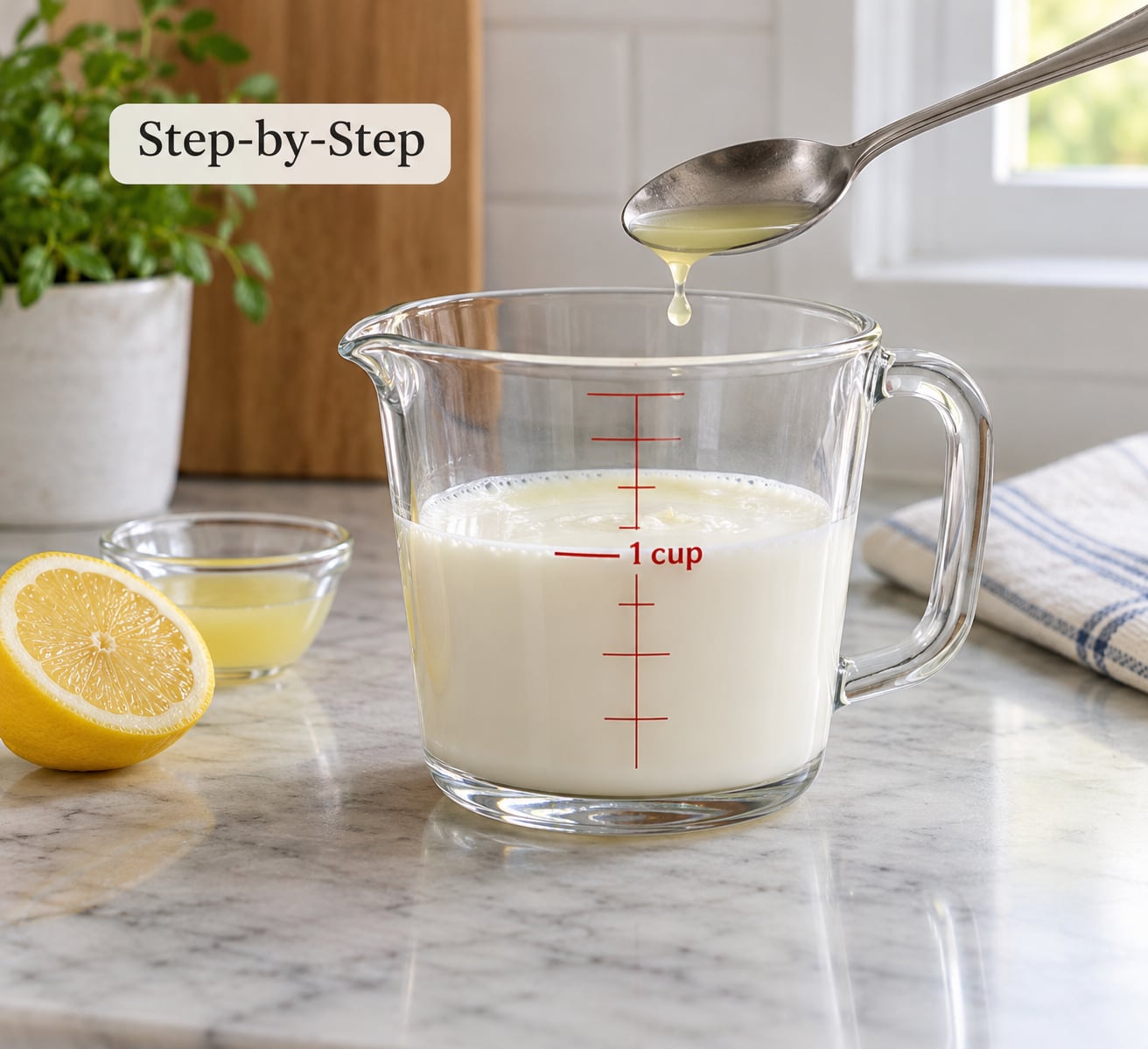
The three steps that work for every acid
- Add the acid first. Put 1 tablespoon of fresh lemon juice or distilled white vinegar into the jug.
- Fill with milk to the 1 cup line. This is the detail people miss. You want 1 cup of finished buttermilk, so the acid counts toward the volume. Measure the milk after the acid goes in.
- Stir and wait. Stir once, then leave the jug on the counter for 5 to 10 minutes at room temperature until the surface looks faintly curdled and a light skin forms. Use it right away.
If you skip the stir, the acid sits on the bottom and the top of the jug stays sweet. That uneven mix is the second most common mistake after using too much acid.
How to make buttermilk substitute for baking with milk and vinegar
The vinegar method is the default I use. Both acids use the same 1 tablespoon to 1 cup ratio, so you can keep one figure in your head and swap the acid depending on the bake.
- Lemon juice: 1 tablespoon fresh lemon juice plus enough milk to make 1 cup. Slightly brighter and fruitier. Good in blueberry muffins, pancakes and lemon cakes.
- Distilled white vinegar: 1 tablespoon plus enough milk to make 1 cup. Practically flavourless, which makes it the safe choice for chocolate cake, cornbread and anything with a delicate flavour.
- Cream of tartar: 1-3/4 teaspoons, about 5 g, per cup of milk. This one clumps badly if you dump it in, so whisk the powder into a splash of the milk first, then pour the rest in.
Bottled lemon juice works in a pinch, but fresh has more flavour and the same acidity. The rest should be at room temperature. Cold milk curdles slower and gives you a thinner result, and cold ingredients also slow the batter down.
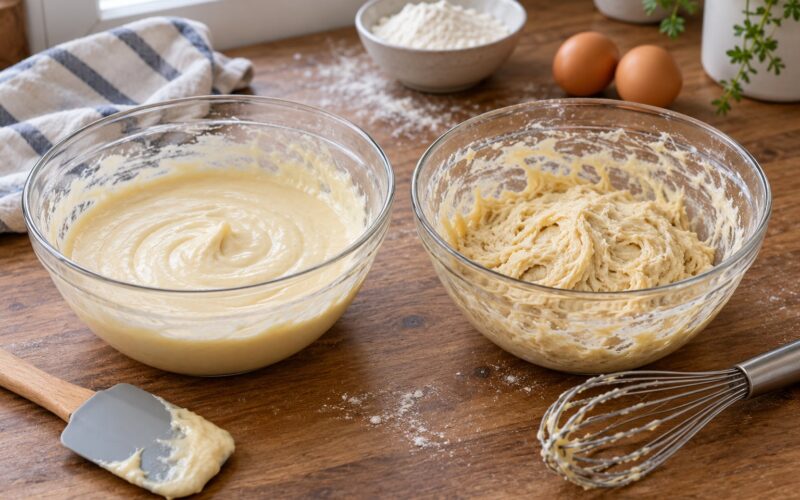
You are looking for a barely-thickened milk with tiny curds and a clean sour smell, not a broken mess. If you can still pour it easily and it smells pleasantly tangy, it is ready. Milk separates into a fine mesh of protein when the acid lowers the pH, and that is the whole trick.
Expect a thinner result than cultured buttermilk. That is normal, and it is why recipes rarely call for a lot of it at once.
Plant milk works on the same ratio if you are baking dairy-free. Soy thickens best of the three, oat is next, and almond barely curdles, so give almond and oat 10 minutes and expect a looser batter. Community kitchen wisdom settles on 1 tablespoon per cup, rest 5 to 10 minutes, use it in the batter.
How to make buttermilk substitute with yogurt
Yogurt is the richest shortcut and the one I reach for when the bake is a cake. It carries protein, fat and body, so the crumb comes out closer to a full buttermilk cake than the vinegar version ever will.
The working ratio is 3/4 cup plain yogurt plus 1/4 cup milk for every cup of buttermilk called for. Whisk it smooth before it goes into the bowl, because thick yogurt streaks through batter and bakes into uneven pockets.
Use plain and unsweetened. Sweetened or flavoured yogurt brings sugar and flavour you did not ask for, and it usually makes the cake sweeter and wetter than the recipe intends. Full-fat sour cream works in the same 3/4 and 1/4 split, and it is even closer in texture.
The trap here is moisture. Yogurt holds water, and the 1/4 cup of milk is there to loosen it, so do not skip it and do not add more. If your recipe already includes yogurt or sour cream in the ingredients list, use acidified milk for the buttermilk and leave the yogurt alone. Two thick things in one batter is how you get a soggy middle.
How to use powdered milk as a buttermilk substitute
Powdered milk works, and it is genuinely useful when you need buttermilk in a gluten-free bake or when the liquid weight in your batter matters. Rehydrate first, acidify second. The order is the same, but the ratios shift.
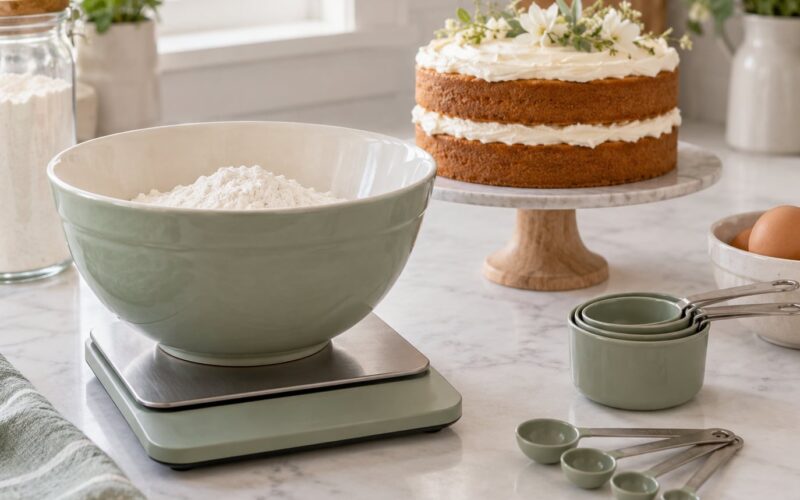
Mix 1/4 cup of powdered milk with 1/4 cup of water to reconstitute a half cup, then stir in 1 teaspoon of lemon juice or vinegar and let it stand about 5 minutes. Scale the water by weight, not guesswork, because powdered milk goes lumpy if you splash it in and it never fully dissolves if you dump it.
Recipes that suit this: pancakes, cornbread, and gluten-free bakes where you want extra protein without gluten. Recipes that do not suit it: anything where the milk is strained out or cooked long, and cakes that need a lot of lift, because reconstituted powdered milk is thin and low-fat compared with whole milk.
Unsweetened powdered buttermilk sold as a pantry staple is a different thing entirely. That product is already acidified and works as a direct 1:1 swap with the water called for in the recipe.
How to choose a substitute for cakes, muffins, and biscuits
Match the method to what the bake needs from the buttermilk. Cakes want tenderness, muffins want lift, biscuits want flaky layers and fried food wants a tenderizing soak.
| Recipe | Best method | What to watch |
|---|---|---|
| Cakes and cupcakes | 3/4 cup plain yogurt plus 1/4 cup milk, or acidified whole milk | Yogurt gives the tender crumb. Acidified milk is lighter but needs the soda in the recipe to do its job. |
| Muffins and quick breads | 1 tablespoon lemon juice or vinegar per cup of milk | Banana bread and blueberry muffins are forgiving. Use 2% or whole milk. |
| Biscuits and scones | Acidified milk with a 1:1 swap | The acid keeps the layers short and flaky. Do not add extra liquid. |
| Pancakes and waffles | 1 tablespoon lemon juice or vinegar per cup | Ten minutes of rest gives the best tang. Skip it and the pancakes are just sweet. |
| Cornbread and soda breads | Distilled white vinegar | Vinegar keeps the flavour clean. Too much lemon reads as lemony cornbread. |
| Fried chicken and tenderizing soaks | 1 tablespoon vinegar per cup of milk | Works on the acid alone, no rest needed. Do not use yogurt here. |
| Salad dressings and marinades | Do not substitute | Cultured buttermilk is thick and creamy. The acidified version is thin and tastes thin. |
For fractional recipes, use the table below instead of doing the math mid-bake.
| Milk amount | Lemon juice or white vinegar | Cream of tartar |
|---|---|---|
| 2 cups | 2 tablespoons | 3-1/2 teaspoons |
| 1 cup | 1 tablespoon | 1-3/4 teaspoons |
| 3/4 cup | 3/4 tablespoon, about 1 teaspoon plus 1/2 teaspoon | 1-1/3 teaspoons |
| 1/2 cup | 2 teaspoons | 3/4 teaspoon |
| 1/3 cup | 1 teaspoon | 1/2 teaspoon |
| 1/4 cup | 3/4 teaspoon | 1/4 teaspoon |
| 1 tablespoon | A scant 1/4 teaspoon | Not practical |
In every row the milk goes in after the acid, and the combined volume fills the measure to the line. A 1/3 cup line gets 1 teaspoon of acid and then milk up to 1/3 cup. That is the answer to the question people search most, and it is the one most recipes online leave you to guess.
Common Mistakes
Most bad buttermilk bakes come down to five habits, and every one of them is easy to avoid.
Adding too much acid. Doubling to 2 tablespoons per cup is the single most reported problem, and it produces a harsh, vinegary cake that no amount of sugar hides. One tablespoon per cup is the ceiling. Forum bakers who double up almost universally regret it, so measure carefully and use a real tablespoon, not a glug.
Not counting the acid as liquid. If you pour 1 cup of milk into the acid and then add a spoonful more, you have made 1 cup plus an extra, and the batter is thinner than the recipe wants. Acid first, milk to the line, no guessing.
Skipping the rest. Ten minutes of counter time is what lets the milk thicken and lets the acid work into it. Using it straight away gives you a thin mixture with the flavour but not the body. Set a timer and get your dry ingredients measured while you wait.
Reaching for the wrong yogurt. Sweetened, flavored or fruit-on-the-bottom yogurt ruins the balance of the bake. Plain and unsweetened is the only version that works here.
Treating it as store-bought buttermilk. Real cultured buttermilk keeps for weeks in the fridge and pours thick. Your acidified milk is thin and meant to be used within the hour. Making a big batch and refrigerating it for tomorrow gives you a flat, separated, sour-tasting liquid that behaves nothing like the recipe intended.
Reaching for the substitute where texture is the point. Creamy dressings, dips and smooth marinades are the wrong place for it. There, buy the small carton or use yogurt.
Two smaller tips that make a real difference. Bring the milk to room temperature first, and use the milk fat level the recipe implies, since 1% and skim produce a noticeably leaner cake than whole milk does.
Frequently Asked Questions
What is the best buttermilk substitute for baking?
The best buttermilk substitute for baking is milk lightly acidified with 1 tablespoon of lemon juice or distilled white vinegar per cup, rested 5 to 10 minutes. For cakes where tenderness matters most, use 3/4 cup plain yogurt plus 1/4 cup milk instead, which gives a richer, more tender crumb than the acid version.
How much milk and vinegar do I use to make buttermilk?
Use 1 tablespoon of distilled white vinegar and enough milk to make 1 cup total. Add the vinegar first, then pour milk to the 1 cup mark, since the acid counts toward the finished volume. For 1/2 cup of buttermilk you need 2 teaspoons of vinegar; for 1/3 cup, 1 teaspoon. Rest 5 to 10 minutes and use immediately.
Can I use lemon juice instead of vinegar in a buttermilk substitute?
Yes. Lemon juice works at the same 1 tablespoon per cup ratio and is the classic choice for pancakes, muffins and lemon cakes because it adds mild citrus flavour along with the acidity. Use distilled white vinegar when you want the acid with no flavour at all, such as in chocolate cake, cornbread or fried chicken.
How long should I let milk and vinegar stand before using it?
Let it stand 5 to 10 minutes at room temperature, until the surface looks faintly curdled and smells pleasantly tangy. Cold milk takes longer, so bring it to room temperature first. Use the mixture within about an hour. It will not thicken further or keep like cultured buttermilk, so do not refrigerate it for later use.
Is plain yogurt a good substitute for buttermilk in baking?
Plain unsweetened yogurt is an excellent substitute, especially for cakes. Use 3/4 cup yogurt plus 1/4 cup milk for each cup of buttermilk called for, and whisk it smooth first. Because yogurt holds moisture, do not skip the milk or add more, and do not combine it with another yogurt already called for in the recipe.
Can I use buttermilk substitute in cakes, muffins, and biscuits?
Yes, all three. The substitute swaps one for one in cakes, muffins, quick breads, biscuits, scones, pancakes and cornbread. It works because the acid reacts with baking soda for lift and tenderizes the crumb. If the recipe uses baking powder rather than baking soda, the acid matters less, and a yogurt substitute gives an even softer result.
Conclusion
Start with the rule that answers nearly every question: 1 tablespoon of lemon juice or distilled white vinegar, milk added to the 1 cup line, and 5 to 10 minutes of rest. Reach for plain yogurt only when the bake is a cake and you want a softer crumb, and skip the whole thing for dressings.
Measure it properly, use it the same hour, and you will not think about the missing carton again. If you bake a lot of acid-plus-baking-soda recipes, keep the fractional-cup conversion table above within reach so the smaller measures land right too.