Getting a stuck cake out of a Bundt pan is mostly a heat-and-time problem. Let the cake cool 10 to 15 minutes, work a plastic knife around the edges, then warm the pan with hot water or a hot damp towel so the metal expands and the seal breaks. To clean a Bundt pan with stuck cake after that, soak it in warm, soapy water and scrub the grooves with a nylon brush.
Most cakes release once the pan is warm and the edges are loosened, and the clean-up takes about 30 minutes of soaking time you can walk away from. The part most guides skip is what happens in the flutes and around the center tube, which is exactly where the next cake will stick.
Table of Contents
- What You Need
- Step-by-Step: How to Clean a Bundt Pan with Stuck Cake
- Step 1: Let the Cake Cool and Loosen the Residue
- Step 2: Soak the Pan in Warm Soapy Water
- Step 3: Scrape Away the Softened Cake
- Step 4: Rinse and Dry the Bundt Pan Thoroughly
- Common Mistakes
- Frequently Asked Questions
- How long should I let a bundt cake cool in the pan before turning it out?
- Does baking soda really work on stuck cake in a bundt pan?
- Can I soak a nonstick bundt pan overnight?
- How do I get into the grooves and center tube to clean them?
- How do I get rid of a smell after cleaning a bundt pan?
- The Bottom Line
What You Need
You do not need anything specialty. Everything below is already in most kitchens, and the only thing you have to be deliberate about is how hard you scrub.
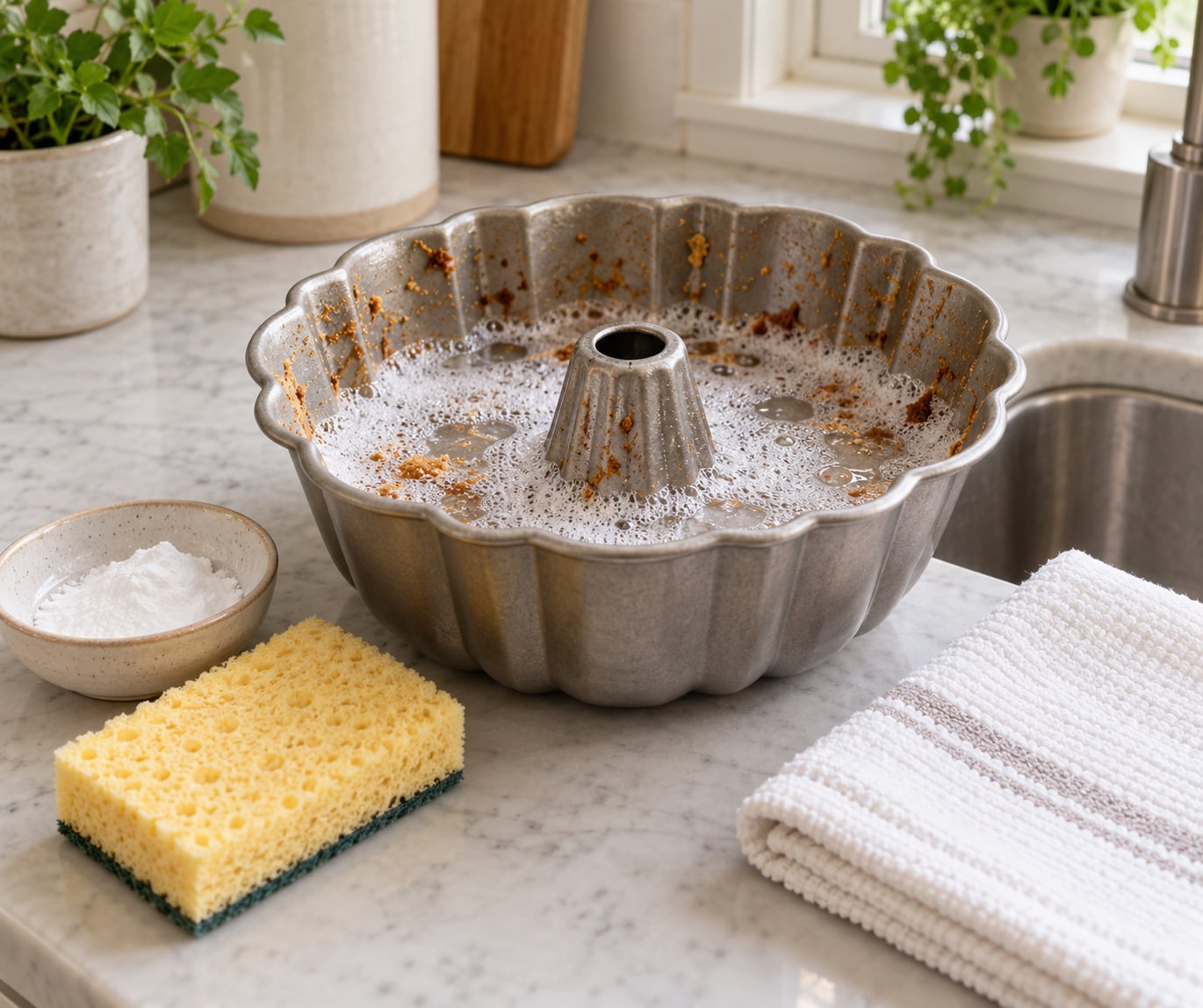
- A Bundt pan that is cool enough to hold with a towel
- Warm water and a few drops of dish soap
- Baking soda for hardened sugar or glaze residue
- A soft sponge, pastry brush, or nylon-bristle brush
- A clean, dry towel
Skip anything metal and anything abrasive. Steel wool, chain-mail scrubbers, and metal brushes will strip a coating and leave scratches that hold onto the next cake, and a nonstick pan has no second layer of protection once that surface is gone.
If your pan is vintage cast aluminum or uncoated, you have more room to scrub, but stay with nylon or a stiff plastic brush anyway. Flour and sugar packed into a groove are easier to lift with a brush than with a sponge that stops at the ridge.
Step-by-Step: How to Clean a Bundt Pan with Stuck Cake
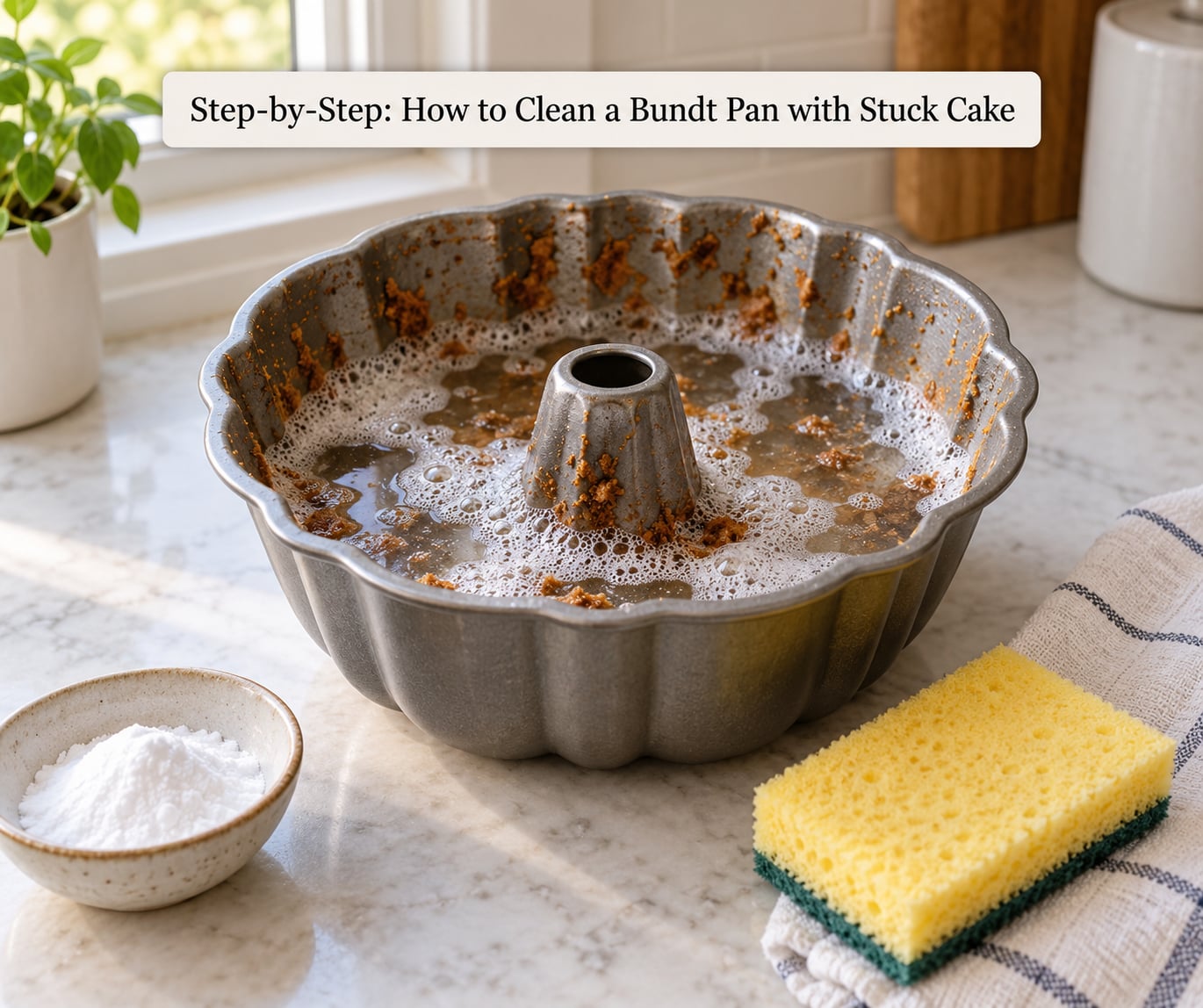
Work through these four steps in order. The first two do the real work, and the last two take care of the crumbs hiding where most people stop looking.
Step 1: Let the Cake Cool and Loosen the Residue
Wait until the pan is cool enough to handle safely, roughly 10 to 15 minutes after it comes out of the oven. Cleaning a pan that is still hot sets the grease into the residue instead of lifting it out, and handling a hot Bundt with a wet towel is how people burn a palm for no reason.
Run a plastic spatula or a thin knife around the inside edge, following the curve of the pan, then do the same around the center tube. On a coated pan, use plastic only. Go around twice, and keep the blade nearly flat so you are separating the cake from the metal rather than digging into it.
Anything that lifts away with a gentle tug, take off now. The goal at this stage is not a clean pan, only fewer chunks of cake still bonded to it.
Step 2: Soak the Pan in Warm Soapy Water
Fill the pan itself if it will sit in your sink without spilling, otherwise submerge it in a large basin. Either way, the stuck cake needs to be fully under water, because the part sitting in air keeps its grip.
Add a few drops of dish soap and use water that is hot to the touch but not boiling. Boiling water poured into a cold coated pan can damage the coating, and hot water on a pan that is still very warm does less than you would expect, so let the pan cool a few minutes first.
Fifteen to 30 minutes handles light crumbs and frosting smears. If the residue is hardened sugar, a caramelized glaze, or cake that sat overnight, give it a few hours or leave it until tomorrow. An overnight soak costs you nothing but time.
Step 3: Scrape Away the Softened Cake
Use a soft sponge, a pastry brush, or a nylon-bristle brush, and start at the center tube where residue is thickest. Work outward through the flutes with short strokes, and tip the pan so loosened crumbs fall out rather than sliding deeper into the grooves.
For anything still stuck after the soak, stir a tablespoon or two of baking soda into the water, or make a paste with baking soda and a few drops of water and spread it over the stubborn spots. Give it five minutes, then scrub again. You should know it is working when the sponge comes out without streaks of crumb and the water in the basin goes from cloudy to nearly clear.
Step 4: Rinse and Dry the Bundt Pan Thoroughly
Rinse under running water and run the nylon brush through the center tube one more time, then check each flute with a fingertip. Dried-on sugar hides at the top edge of the ridges, right where the next cake touches first.
Dry with a clean towel, or set the pan upside down on a rack until it is completely dry inside and out. Water trapped in the grooves keeps the pan slightly greasy, and that film is part of why a freshly cleaned pan still catches the next cake.
Common Mistakes
Almost every stuck Bundt traces back to one of these.
- Cleaning while the pan is hot. Grease sets into the residue rather than lifting, and a hot coated pan plus hot water is a bad combination for the surface.
- Steel wool, scouring pads, or metal brushes. They scratch nonstick coatings and bare aluminum alike, and the scratches make the next cake stick harder.
- Boiling water on a coated or cold pan. Use water that is hot to the touch and let the pan cool first.
- Scraping with a sharp knife or a butter knife. A thin plastic knife flexes with the curve of the pan; steel does not.
- Not drying the pan before storing it. Trapped moisture leaves a greasy film and a sour smell that carries into the next bake.
- Running a coated Bundt through the dishwasher. Heat and detergent strip the coating. Hand-wash coated pans, and check the maker’s care instructions before you decide about uncoated ones.
To stop it happening again, grease and dust before the batter goes in. Softened shortening or vegetable oil worked into every flute with a pastry brush is more reliable than butter, because the milk solids in butter brown in the oven and glue the cake to the metal. Follow the fat with a light dusting of flour, or cocoa powder for a chocolate cake, and fill the pan below the rim so the batter does not set against the edge.
Make sure the pan is clean before you grease it, too. Old grease and crumbs from previous bakes are the reason a properly greased pan still sticks. For a pan that never releases cleanly, cake goop, a mix of equal parts flour, vegetable oil, and shortening, is the strongest home method I have found.
Frequently Asked Questions
How long should I let a bundt cake cool in the pan before turning it out?
Ten to fifteen minutes is the window most bakers land on. Cool longer and the cake can set into the metal, especially with a sugary or fruit-filled batter, which is how a cake ends up cemented in overnight. Turn it out while the crumb still feels slightly soft and the underside still holds warmth, and it usually slides free in one clean flip.
Does baking soda really work on stuck cake in a bundt pan?
Yes, and it is the gentlest option you have. Stir one or two tablespoons into the soaking water, or make a paste with baking soda and a few drops of water for stubborn spots, then let it sit five minutes before scrubbing. It is mildly alkaline, so it loosens caramelized sugar and grease without taking a nylon brush too close to a nonstick surface.
Can I soak a nonstick bundt pan overnight?
A long soak is usually fine, provided the water is warm rather than boiling and the pan is cool before it goes in. Overnight works well for hardened sugar residue. Skip the dishwasher, which uses hotter water and harsher detergent and is the fastest way to strip a coating, and hand-wash with a soft sponge or nylon brush instead.
How do I get into the grooves and center tube to clean them?
Start at the center tube and work outward, because that is where residue is thickest. A pastry brush or nylon-bristle brush reaches into the flutes where a sponge stops at the first ridge. Tip the pan as you scrub so crumbs fall out instead of sliding deeper, and run the brush through the tube once more at the rinse.
How do I get rid of a smell after cleaning a bundt pan?
A lingering smell usually means sugar residue is still baked into the grooves, not that the pan is dirty. Soak it in hot, soapy water with a couple of tablespoons of baking soda for several hours, scrub the flutes, and let it air-dry completely. A wrapped lemon in a dry pan overnight also clears odors, but only after the residue is gone.
The Bottom Line
Start by letting the cake cool about 15 minutes, then run a plastic knife around the edges and the center tube to lift off the pieces that release easily. Put the pan in warm, soapy water for 15 to 30 minutes, longer if the residue is hardened sugar, scrub it with a soft sponge or nylon brush, and dry it fully before you store it. Most releases happen in the first two minutes of the scrub.