How to make frosting for hot weather parties comes down to one choice: swap some or all of the butter for vegetable shortening. Butter softens and slumps around 65-70F, while shortening holds its shape far longer, so a shortening-based American buttercream survives a warm afternoon that would send regular buttercream down the sides of the cake. Swiss meringue buttercream, cream cheese frosting and a thin pourable glaze all work too, with different trade-offs.
None of this survives direct sun on a table for hours. What heat stable frosting buys you is time — enough to get the cake out, cut it and serve it before anything slides.
Table of Contents
- What You Need
- Step-by-Step
- How to Make Frosting for Hot Weather Parties: American Buttercream
- How to Make Frosting for Hot Weather Parties: Swiss Meringue Buttercream
- How to Make Frosting for Hot Weather Parties: Cream-Cheese Frosting
- How to Make Frosting for Hot Weather Parties: Pourable Glaze
- Common Mistakes
- Frequently Asked Questions
- What is the best frosting for hot weather parties?
- Can I make frosting a day before the party?
- How long can cake frosting stay outside in warm weather?
- Should I frost a cake while it is warm?
- How do I keep cream cheese frosting from melting?
- Conclusion
What You Need
Four methods, one shared toolkit. You need a stand mixer with a paddle attachment, at least two mixing bowls, an instant-read thermometer, a silicone spatula and a cooling rack. A piping bag and tips come out for any method that needs decorating.
For the American buttercream: butter, vegetable shortening, confectioners’ sugar, a little vanilla, optional meringue powder and gel food colouring. For the Swiss meringue: egg whites, sugar, butter and a heatproof bowl with a whisk. For the cream cheese frosting: full-fat cream cheese, butter, confectioners’ sugar and a splash of milk or cream for adjusting. For the glaze: confectioners’ sugar, a liquid and a little acid or flavour.
Two optional extras earn their place here. Meringue powder adds a little extra hold with no change to the flavour, and gel colour rather than liquid food colouring keeps the frosting from thinning out.
Step-by-Step
How to Make Frosting for Hot Weather Parties: American Buttercream
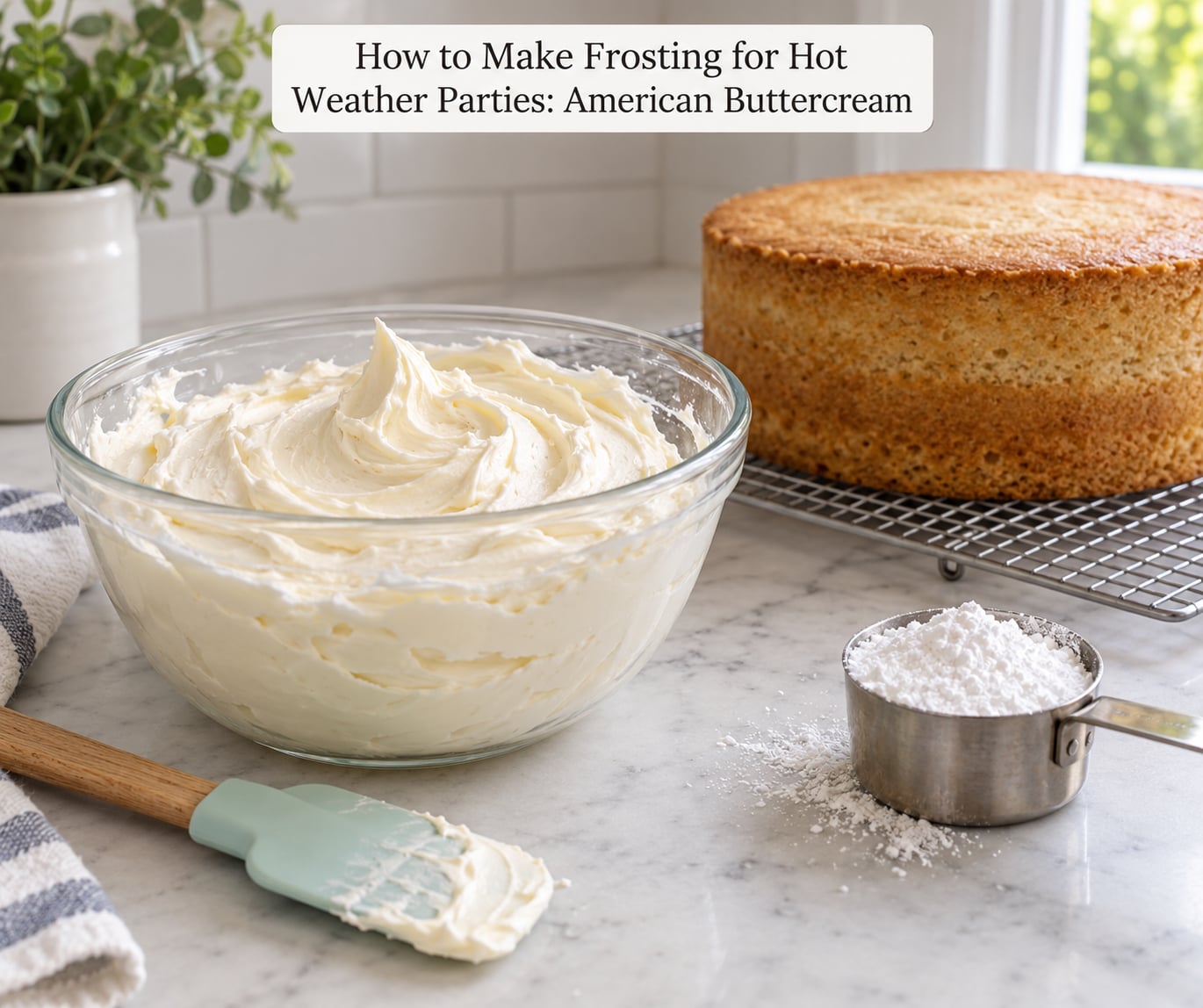
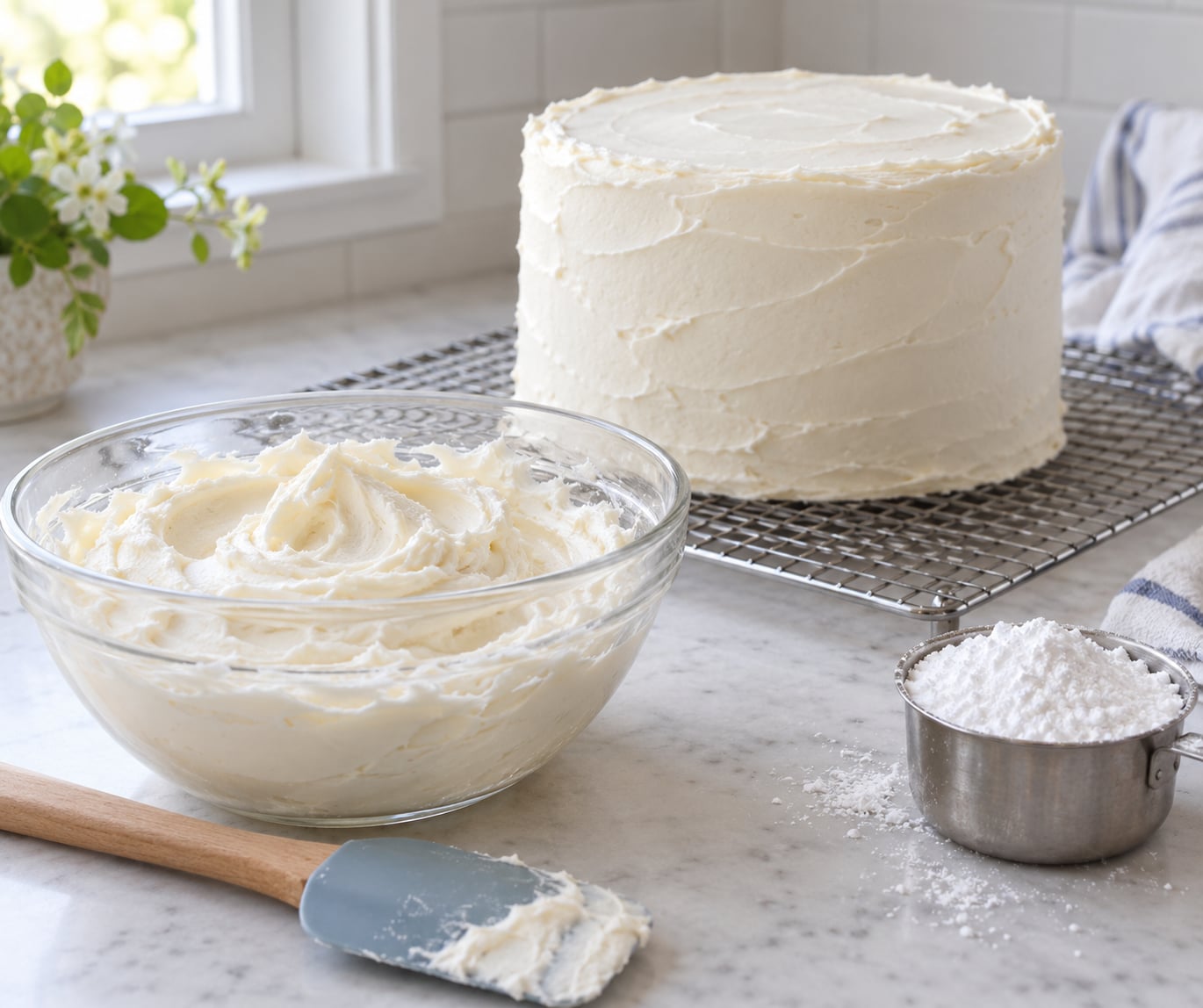
Use 1 cup unsalted butter and 1 cup vegetable shortening for every 4 cups of confectioners’ sugar. That 50/50 split is the sweet spot for flavour, and going all shortening gives you the most stable and the whitest frosting there is.
Softened means it dents when you press it and no cold lumps remain, not melted in a puddle. Beat the butter and shortening together on low for two full minutes before any sugar goes in — rushing this step is where most greasy, split frosting comes from.
Add the sugar a cup at a time on low speed, scraping the bowl down every time. Optional extras: 1 teaspoon meringue powder, 1 teaspoon clear vanilla, and a pinch of salt, which takes the edge off the coating-mouth sweetness shortening tends to leave behind.
Colour with gel, a few drops at a time. To keep a batch pure white, add a drop of violet gel — it cancels the yellow cast without showing.
Aim for soft peaks and a trail behind the spatula that holds for a second. If it is too stiff, add a teaspoon of water at a time. If it is glossy and slack, add sugar a spoonful at a time. Add water last, never up front.
Store it sealed at room temperature for up to a day, or freeze it up to three months and re-fluff it briefly before piping. It is ready to use when the peaks stand up on their own.
How to Make Frosting for Hot Weather Parties: Swiss Meringue Buttercream
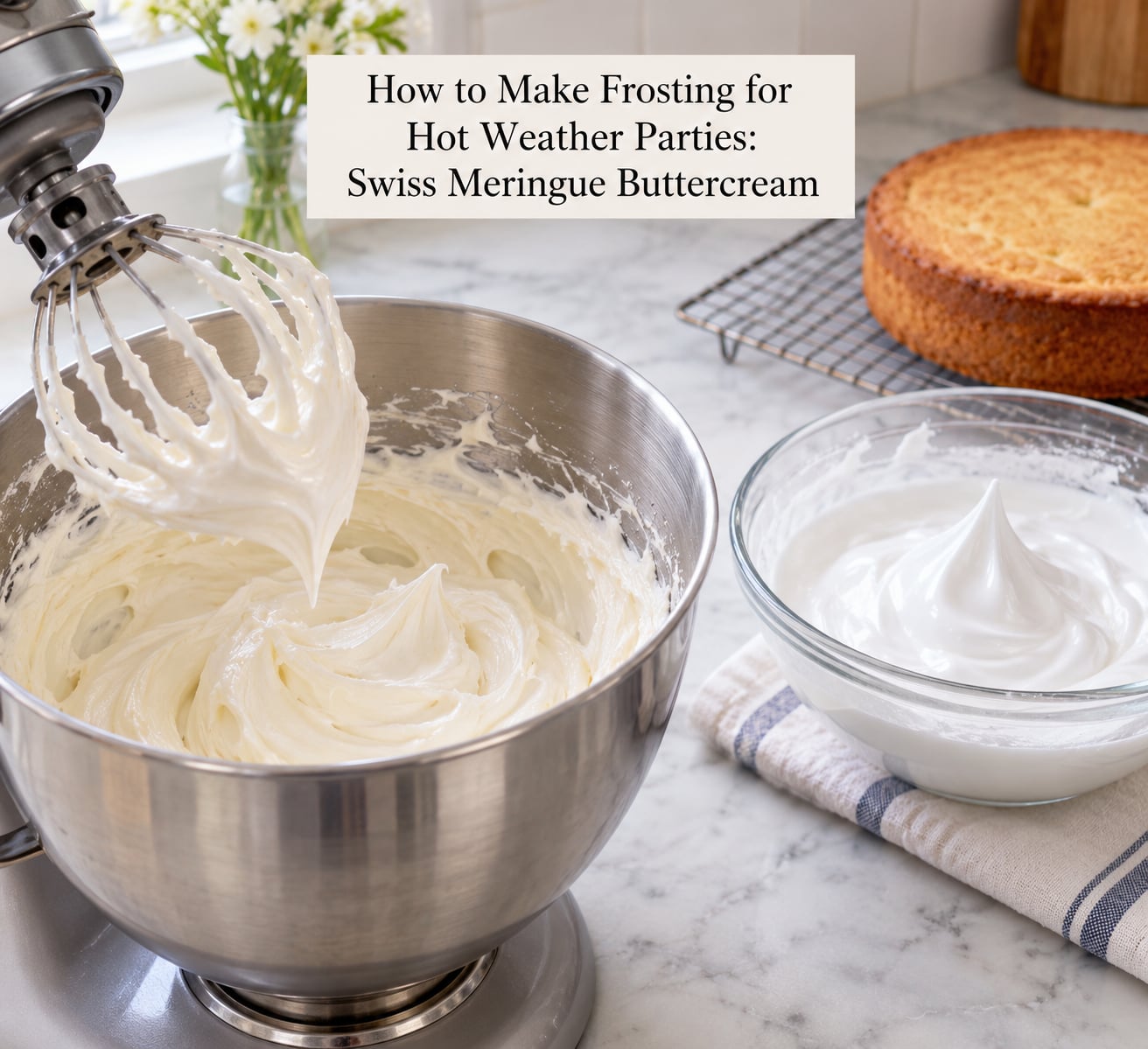
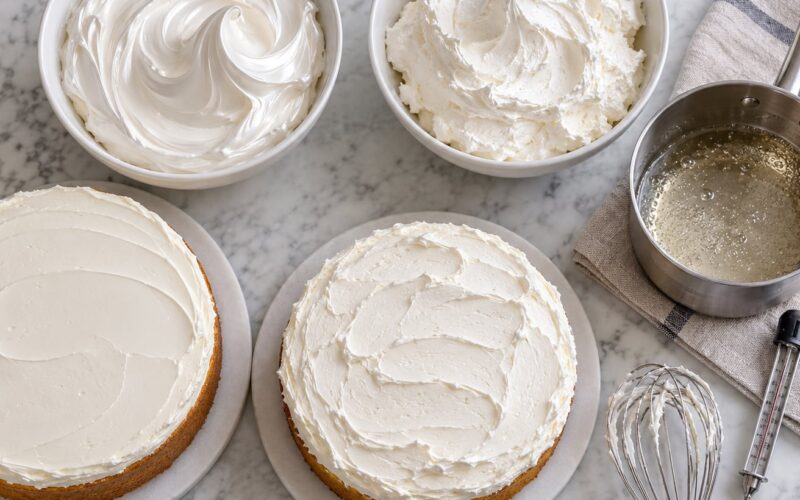
This one tastes the best of the lot and holds well, but it is the fussiest. Heat the sugar into the egg whites properly and you get a stable, glossy buttercream; skip it and the egg whites will scramble into sweet curds.
Whisk 4 egg whites in a heatproof bowl over barely simmering water until foamy. Add 1 cup sugar gradually, whisking constantly, until the mixture is hot to the touch and the sugar dissolves — about 160F. Do not let the bowl touch the water.
Move it to the stand mixer and whip on high for 8 to 10 minutes, until the bowl is cool to the hand and the meringue holds stiff, glossy peaks.
Switch to low speed and add 1 cup butter, one tablespoon at a time, letting each piece work in before the next. If it looks curdled, keep going — it comes together. Slow steady additions are what prevent splitting.
Flavour and colour at the end. Keep it refrigerated, then let it sit at room temperature for 20 to 30 minutes before spreading so it is workable, and rewhip briefly if it has firmed up.
Use it the same day, or refrigerate up to a week. It is ready when it holds the swirl you just piped without sagging.
How to Make Frosting for Hot Weather Parties: Cream-Cheese Frosting
Tangy and soft, and the least heat-proof option here. Treat it as a frosting for shaded tables, air-conditioned rooms or cupcakes served straight from the box.
Beat 8 ounces full-fat cream cheese with 1/2 cup butter on medium until completely smooth with no lumps, scraping twice. Beat in 3 to 4 cups confectioners’ sugar a cup at a time, then 1 to 2 teaspoons vanilla and a pinch of salt.
Add milk or heavy cream one teaspoon at a time at the end. Only enough to make it spreadable — every extra teaspoon makes it softer and less reliable in heat. Fruit preserves stirred in at the end work well too, though they add moisture.
Chill the finished frosting for 30 minutes before using, and frost only a completely cool cake. It is ready when a knife drawn through it leaves a clean edge that holds.
Dairy is the one thing that rules this one out of a warm outdoor table. Keep it refrigerated until shortly before serving, and do not leave it sitting out at the party. Return anything left out within two hours to the fridge and use it within two days, or discard it.
How to Make Frosting for Hot Weather Parties: Pourable Glaze
The easiest way to finish a bundt cake, quick bread or lemon loaf is a glaze, and a thin one soaks in rather than sitting on top melting. You cannot pipe it, but it shrugs off heat.
Whisk 2 cups confectioners’ sugar with 2 to 3 tablespoons milk or water until smooth. Add a teaspoon of vanilla or lemon juice, and a drop of gel colour if you want it tinted. Add the liquid a teaspoon at a time until it runs off the spoon in a thin ribbon.
For a thicker, drizzleable finish on cupcakes, cut the liquid to 1 tablespoon and add an extra 1/4 cup of sugar. Add the colour after the liquid so you can still see how thin the glaze is.
Pour over a cake that has cooled for at least an hour, letting it run down the sides. Let it set for 20 to 30 minutes before moving the cake, and two hours before cutting it.
It is ready when it feels firm and slightly tacky to a light touch and no longer leaves a wet sheen on your finger.
Common Mistakes
The frosting melted and slid down the sides. Butter does this first, and there is no fixing it in place. Chill the cake for 20 minutes, scrape the frosting back up with an offset spatula, add more powdered sugar to stiffen it, and re-chill before decorating again. For next time, shorten half the butter.
The frosting looks greasy or split. Either the butter was too cold when you started or the sugar went in too fast. Beat the fat alone for two minutes on low first, then add sugar in small additions. If it is already split, keep whipping — warm patches re-emerge within a minute or two.
The surface is grainy or full of air bubbles. Graininess means sugar that did not dissolve; fix it by adding a tablespoon of warm water and mixing again. Air pockets come from shortening. Warm a third of the batch in the microwave for 10 seconds and stir it back in.
The frosting weeps or picks up lint. That is condensation from a chilled cake meeting warm, humid air. Let the cake sit in its box, unwrapped, in the shade for 20 minutes after you take it out before you unwrap it fully.
It leaked out between the layers. The cake was probably still warm, or the crumb coat was too thin. Frost a cold cake and seal each tier with a thin layer before you fill it.
For the day itself, a few habits matter more than the recipe. Frost the cake the day before, then hold it in the fridge. Set it out 30 minutes before cutting rather than at the start of the party. Transport it on a non-slip mat in a cool car, parked in the shade, and stage it under an awning or umbrella rather than in open sun. Put a tray or cake board under the drip line in case something softens.
Humidity matters as much as heat. It stops frosting crusting over for a smooth finish, makes colours look mottled and brings condensation faster. A dry day on a cake stand does more for your frosting than any extra ingredient.
Frequently Asked Questions
What is the best frosting for hot weather parties?
Shortening-based American buttercream is the safest bet for a warm outdoor party. Replace half or all of the butter with vegetable shortening and add a little extra confectioners’ sugar, and it holds piped shapes at temperatures that send ordinary buttercream sliding down the cake. All-shortening versions are the most stable and the whitest. A thin pourable glaze is the easiest heat-proof finish for bundt cakes and quick breads.
Can I make frosting a day before the party?
Yes for American buttercream and glazes. Both keep sealed at cool room temperature for about a day, and buttercream freezes for up to three months and can be re-fluffed before piping. Swiss meringue buttercream keeps in the fridge for up to a week. Cream cheese frosting also lasts a day refrigerated, but it needs to stay cold right up to serving.
How long can cake frosting stay outside in warm weather?
Plan on minutes, not hours. In direct sun above 85F, even a shortening buttercream softens within an hour or two, and whipped cream or cream cheese frosting will not last. Keep the cake chilled until shortly before you cut it, stage it in shade or under an awning, and cut within 30 minutes of setting it out rather than leaving it on display for the whole event.
Should I frost a cake while it is warm?
Never. Warm cake melts the frosting as you spread it, so it slides off and seeps into the crumb. Cool the layers completely on a rack, which usually takes an hour or two, then chill them for 20 minutes. Even a slightly warm layer is enough for buttercream to start weeping around the edges.
How do I keep cream cheese frosting from melting?
Keep it cold from mixing to serving. Beat in powdered sugar and only the minimum milk needed to spread it, since every extra teaspoon makes it softer. Chill the finished frosting for 30 minutes, frost a cold cake, and refrigerate the cake until shortly before you serve it. Because it is a perishable frosting, do not leave it out at a warm outdoor gathering.
Conclusion
For a warm outdoor party, make American buttercream with at least half vegetable shortening, or skip the buttercream entirely and pour a thin glaze over a bundt cake. Frost a fully cooled cake, chill the finished cake until the last possible moment, and keep it shaded rather than in open sun. Cut it within half an hour of setting it out and it will look exactly like the photos.