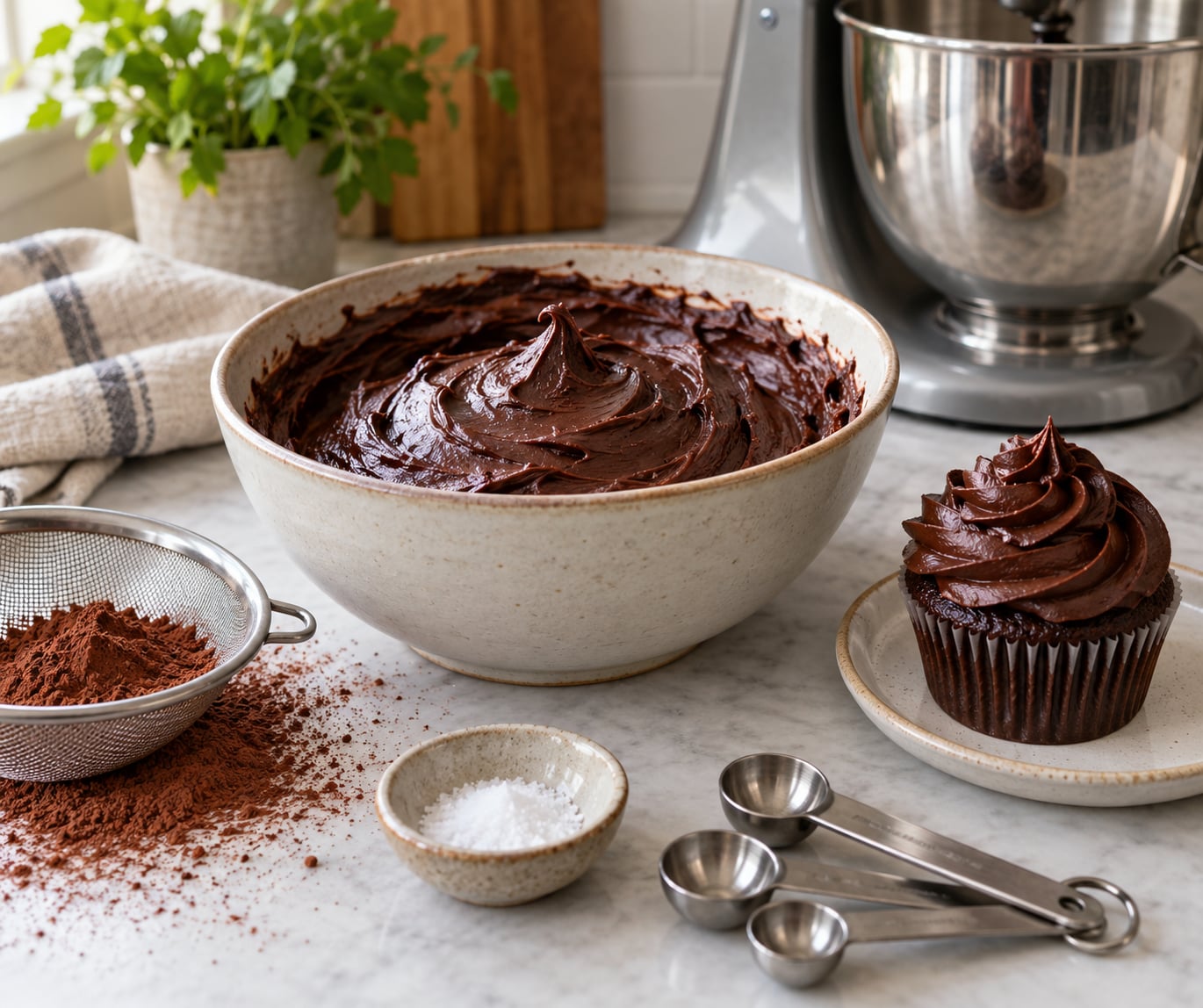
To make chocolate buttercream that is not too sweet, change the ratio instead of the recipe: keep 1 cup (227 g) of butter, cut the powdered sugar to 2 cups (240 g), raise the cocoa to 3/4 cup (55 g), and finish with 1/4 teaspoon of kosher salt plus 1 teaspoon of instant espresso powder. Beat the whole thing for a full five minutes. About ten minutes of work, no baking required.
The reason most chocolate buttercream tastes cloying is simple arithmetic. A standard American buttercream runs somewhere around three parts sugar to one part butter by weight, and that much sucrose in a nearly water-free frosting sits on your tongue as pure sweetness. Nothing is competing with it.
Chocolate flavor only partly covers that. Cocoa carries bitterness, but standard natural cocoa powder is not bitter enough on its own to stand up to three cups of sugar, and the sugar crystals can stay visibly grainy instead of dissolving into the fat. So the fix has two halves: put less sugar in the bowl, then add ingredients that push the flavor past sweetness. Salt and espresso do most of that work without changing the texture.
Here is the recipe I make when a frosting has to work for people who find American buttercream too sweet, followed by how to repair a batch you already made and it came out sweet.
Table of Contents
- What You Need
- Step-by-Step
- How to Make Chocolate Buttercream That Is Not Too Sweet
- Choosing Ingredients That Stay Balanced
- Common Mistakes
- Frequently Asked Questions
- How to make your buttercream frosting less sweet?
- How do you make chocolate ganache buttercream frosting?
- What is the best buttercream recipe?
- How far ahead can I make buttercream?
- Why is my chocolate buttercream gritty?
- What type of cocoa powder is best for chocolate buttercream?
- Conclusion
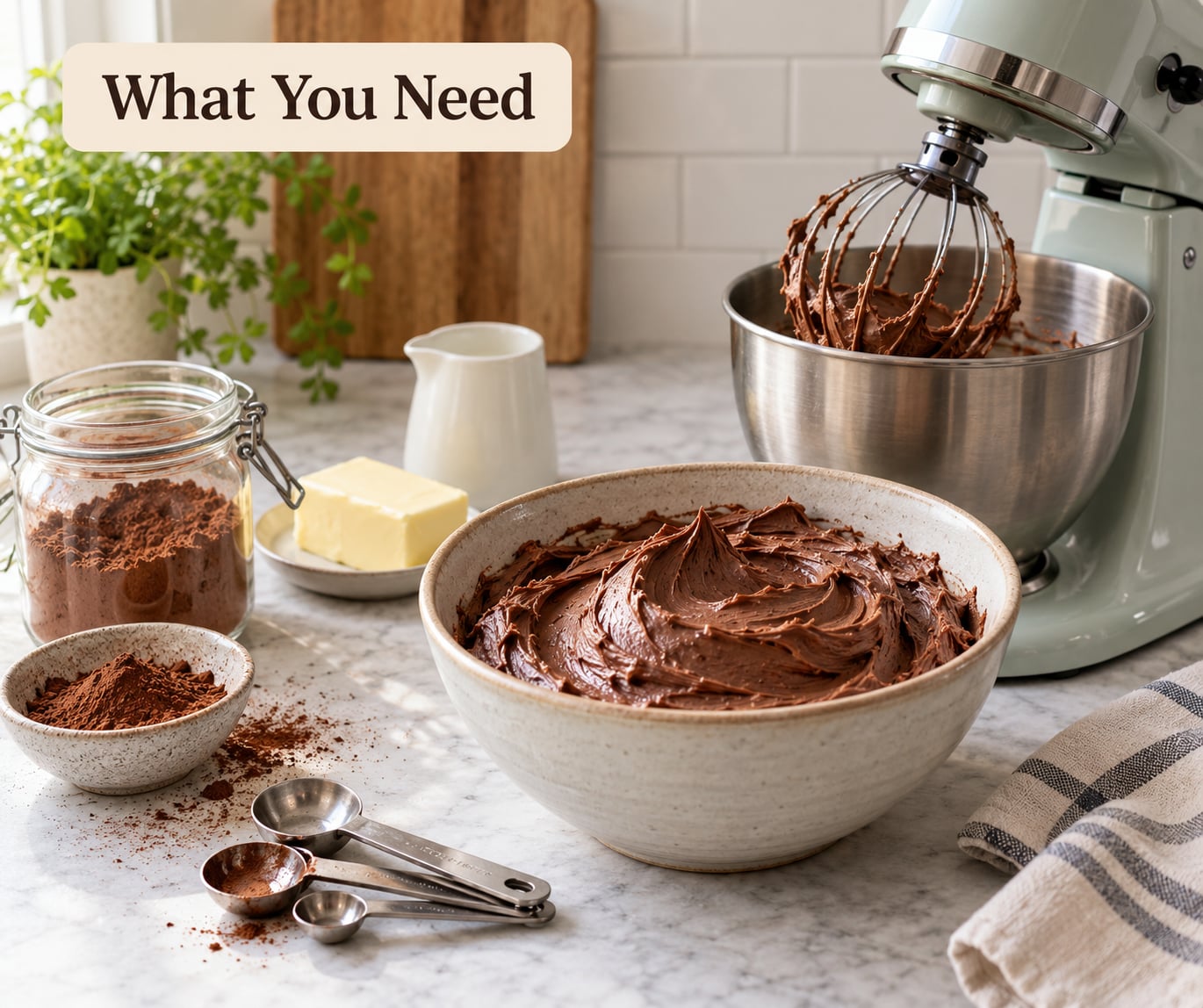
What You Need
Everything below fits a 5-quart stand mixer. A hand mixer works, with more scraping and a longer beat, which is the usual reason people end up with gritty frosting.
- 1 cup (227 g) unsalted butter, at room temperature
- 2 cups (240 g) powdered sugar, sifted, starting point rather than a rule
- 3/4 cup (55 g) unsweetened cocoa powder, Dutch-process if you have it, sifted
- 1/4 cup (60 ml) heavy cream or whole milk, divided
- 1 teaspoon vanilla extract
- 1/4 teaspoon fine kosher salt
- 1 teaspoon instant espresso powder, optional but the single biggest flavor upgrade
Two optional items carry real weight. Dried milk powder, about 2 tablespoons, adds a milky depth that makes the cocoa taste rounder while you use less sugar. A tablespoon of bourbon, rum, or coffee liqueur in place of some of the cream adds depth and barely any sweetness.
For a melted chocolate version, swap the cocoa for 6 ounces (170 g) of 70% dark chocolate bar, finely chopped and melted, cooled to just above body temperature before it goes near the butter. Keep the same 2 cups of powdered sugar. Do not use chocolate chips; the sugar and oil they carry will send you straight back to too sweet.
Butter temperature is the variable people skip. You want 65 to 72°F (18 to 22°C), which feels cool and slightly firm but dents when you press a finger into it. Colder butter gives you a stiff, greasy frosting that will not pipe. Warmer butter melts the sugar into a thin puddle that slides off the cake.
Step-by-Step
Read the whole thing through once before you crack the eggs on the counter, because the last two steps are where taste decides the recipe.
How to Make Chocolate Buttercream That Is Not Too Sweet
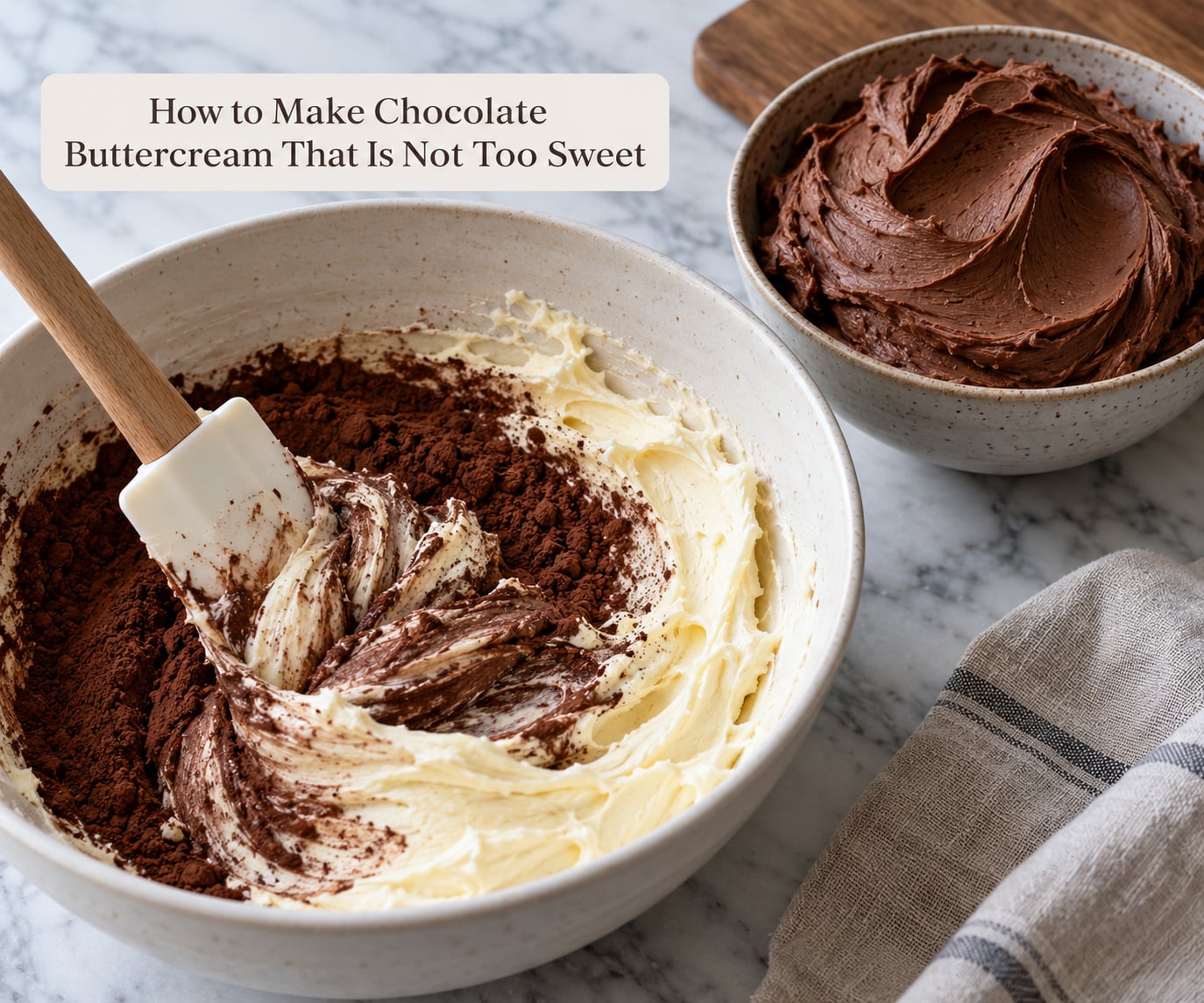
Beat the butter alone on medium for about 2 minutes until it is pale and fluffy, scraping the bowl twice. This aeration is what gives you a light texture, and it also spreads butter fat across your palate, which makes the same sugar read less intense.
Add the sifted cocoa powder and beat for 1 minute. It will look dry and a little crumbly for a moment, then it turns into a paste. That is normal, and it is the step most recipes skip by dumping everything in at once. Folding cocoa into the fat before any sugar goes in is what stops grit.
Now add the powdered sugar a third at a time on low speed, alternating with the cream. Start with 1 1/2 cups rather than the full 2, mix, then taste.
At this point you decide. If it tastes balanced, add the rest. If it is still sweet, add more cocoa in tablespoon increments instead of sugar. If it is dry or thick, add cream a teaspoon at a time. You are looking for a frosting that holds a soft ridge when the paddle lifts and then relaxes slightly at the tip.
Add the vanilla, salt, and espresso powder, then beat on low for a full 5 minutes. That long final beat is what dissolves the sugar. It is the step bakers skip, and it is why hand-mixed frosting often stays grainy even with good ingredients.
Stop while the frosting is barely pale, not brilliant white. It will look light and thin and will darken over the next 20 minutes as the cocoa hydrates. Frost it then, or chill it first for the cleanest color.
| Lever | What to add or change | How much per cup of butter | Sugar impact | Flavor impact |
|---|---|---|---|---|
| Cut the sugar | Reduce powdered sugar | Start 1/2 cup under | Removes about 60 g of powdered sugar, nearly all sucrose | Flattens; stability drops, so add cream before adding more sugar back |
| Add bitter cocoa | Dutch-process cocoa | 1 extra tablespoon | None | Deeper and more bitter, the cleanest fix |
| Add espresso | Instant espresso powder | 1/2 to 1 teaspoon | None | Bitterness without a coffee taste at 1 teaspoon or less |
| Add salt | Fine kosher salt | 1/4 to 1/2 teaspoon | None | Suppresses sweetness perception, does not add saltiness |
| Swap the sweetener | 70% dark chocolate bar | Replace the cocoa, keep the sugar | Neutral | Smoother and more chocolate-forward than cocoa powder |
| Add dairy | Heavy cream or milk | 1 tablespoon per 2 tablespoons of sugar removed | Dilutes | Lighter mouthfeel; loosens the frosting, so pipe sooner |
Two honest trade-offs. Cutting sugar weakens the structure, so a frosting at 1 1/2 cups of sugar will not hold a tall piped border the way 3 cups does. And adding cream to soften a reduced-sugar frosting costs you holding power for a crumb coat. If you are decorating a tall layer cake, hold the sugar at 2 cups and get the balance from cocoa, salt, and espresso instead.
Doubling a recipe doubles the sweetness in the same ratio, so it also doubles the salt and cocoa if you follow the same proportions. Bakers on r/AskBaking and r/cakedecorating report learning this the hard way after scaling up for a party.
Choosing Ingredients That Stay Balanced
American buttercream is the sweetest and most forgiving base. Swiss, Italian, and ganache hybrids start out tasting like chocolate first, which is what you want if sweetness is a real problem, and each one costs you forgiveness.
| Base | Sweetness | Difficulty | Stability | Best for |
|---|---|---|---|---|
| American | Sweetest, easiest to rebalance | Low | Very stable, holds heat well | Piping, borders, roses, beginners |
| Swiss meringue | Mildly sweet | Medium | Excellent, tolerates warm rooms | Anyone who finds American too sweet |
| Italian | Least sweet of the meringue types | High | Excellent, heat stable | Warm kitchens and outdoor events |
| Ganache hybrid | Balanced by real chocolate | Medium | Very good | A deeper chocolate flavor in the frosting |
| Cream cheese | Mild, tangy | Low | Soft, must stay cold | Sheet cakes and cupcakes served cool |
Your cocoa choice decides how much sugar you can get away with.
| Cocoa type | Bitterness | Color | Best use |
|---|---|---|---|
| Natural unsweetened | Low, slightly acidic | Medium brown | When you want bright cocoa flavor |
| Dutch-process | High, smoother | Deep brown to near black | Not too sweet frosting; acid-free so it works with cream cheese |
| Dark or black cocoa | Very high, sometimes harsh | Almost black | Pushing an existing sweet frosting past sweet |
Powdered sugar matters more than most recipes admit. Conventional powdered sugar is mostly cornstarch, and cornstarch is what stays grainy in the fat. Organic varieties are frequently tapioca-based and dissolve more cleanly. Either way, sift it twice if you have a fine mesh sieve, and beat long enough for the sugar to disappear into the butter.
Equipment changes the result more than people expect. A stand mixer aerates and dissolves in five minutes. A hand mixer works if you scrape the bowl constantly and beat a full eight minutes; short bursts on medium leave a sandy texture that tastes like extra sugar because the crystals never dissolve.
Common Mistakes
Too much sugar from the start. The single cause of cloying frosting. Start a half cup under the recipe amount and add more only after tasting.
No salt. A quarter teaspoon of kosher salt costs nothing and makes the same frosting taste noticeably less sweet. Bakers describe it as the cheapest fix in the kitchen.
Cocoa added with the sugar instead of into the butter. It clumps and stays grainy. Beat it into the fat on its own first.
Whipping on high speed. High speed pushes sugar to the surface where it cannot dissolve. Medium to whip the butter, low for everything after.
Butter too warm. Warm butter cannot hold sugar in suspension and the frosting melts. Check it with a finger dent, not a thermometer, if you have no thermometer.
Using chocolate chips. Chips are mostly sugar and added fat. For a less sweet frosting, use a 70% bar or cocoa powder.
Stopping the beat early. Five minutes on low at the end is where the sugar dissolves. Cutting it short is the most common reason frosting tastes grainy and therefore sweeter than the recipe deserves.
Three texture problems come up constantly. Gritty frosting usually needs more beating, or a longer rest; readers on r/cakedecorating report sealing gritty frosting for a few hours and re-mixing it, and it often turns silky, because the sugar has time to dissolve. Stiff frosting gets softened with cream, one teaspoon at a time. Loose frosting is fixed with more sifted cocoa or powdered sugar, never with more liquid, which only makes it thinner.
If your frosting is already made and too sweet, work through these in order and stop when it tastes right.
- Fold in more cocoa. Sift 1 tablespoon of Dutch-process cocoa per cup of frosting and fold gently with a spatula. This shifts the flavor without changing the consistency.
- Add salt and espresso. Stir in 1/4 teaspoon kosher salt and 1/2 teaspoon instant espresso powder. Both push the perception of sweetness down with no sugar added.
- Fold in softened butter. 1 to 2 tablespoons of butter at room temperature, a tablespoon at a time. It dilutes the sugar and keeps the frosting pipeable.
- Thin with cream and rewhip. Add heavy cream a teaspoon at a time, then beat on low for 3 minutes. This is the last resort because a thinner frosting will not hold a crumb coat or a border.
For storage, American buttercream keeps at a cool room temperature for a day or two, refrigerated airtight for up to 4 days, or frozen for up to 2 months. Bring it out 30 minutes ahead, then rewhip on low until it comes back to piping consistency. Meringue-based frostings need the fridge because of the raw egg; give those up to 3 days refrigerated and 2 months frozen.
For yield, this recipe makes roughly 4 cups of frosting: enough for 12 to 15 cupcakes, a 6-inch three-layer cake with simple piping, or a crumb coat plus a light finish on an 8-inch layer cake. Elaborate piping on an 8-inch cake runs closer to 6 cups.
Frequently Asked Questions
How to make your buttercream frosting less sweet?
Cut powdered sugar by half a cup per cup of butter, add an extra tablespoon of Dutch-process cocoa, and finish with a quarter teaspoon of kosher salt and a teaspoon of instant espresso powder. Beat on low for a full five minutes at the end so the sugar dissolves. Taste before adding anything else back, and adjust one ingredient at a time.
How do you make chocolate ganache buttercream frosting?
Heat 4 ounces of heavy cream until just steaming, pour it over 4 ounces of finely chopped 70% dark chocolate, and let it sit 2 minutes before stirring smooth. Cool to about 75°F (24°C), then fold it into whipped butter and powdered sugar a third at a time. The ganache brings chocolate and fat, which lets you hold the sugar down a full cup.
What is the best buttercream recipe?
For the least sweet option that still pipes cleanly, Swiss meringue buttercream wins: egg whites, sugar, and butter, with no corn syrup and far less sugar than American. For ease and forgiveness, American with cocoa, salt, and espresso is hard to beat. Choose Italian if your kitchen runs warm, since it holds its shape better than either.
How far ahead can I make buttercream?
Most American chocolate buttercream can be made two days ahead and stored airtight in the fridge, or frozen for up to two months. Bring it to room temperature for about 30 minutes and rewhip on low before using. Meringue and Italian frostings, which contain raw egg, keep refrigerated up to 3 days and freeze up to 2 months.
Why is my chocolate buttercream gritty?
Grittiness almost always means the sugar did not dissolve. The usual causes are powdered sugar not sifted, mixing on high speed, or stopping the mixer too early. Sift the sugar twice, beat on low for a full five minutes at the end, and switch to tapioca-based organic powdered sugar. Resting sealed gritty frosting for a few hours also helps.
What type of cocoa powder is best for chocolate buttercream?
Dutch-process cocoa is the best choice for frosting that should not taste too sweet. It is more bitter, less acidic, and higher in fat than natural cocoa, so a smaller amount of sugar covers the same flavor. Use dark or black cocoa to push an existing sweet batch further, and choose natural cocoa when you want a brighter, more acidic chocolate note.
Conclusion
Start a half cup under the powdered sugar your recipe calls for, use Dutch-process cocoa, and salt the frosting properly. Beat it on low for a full five minutes at the end, taste with a clean spoon, and change one thing at a time. If a batch is already too sweet, fold in cocoa first, then salt and espresso, and save the cream for last.