Yes, you can freeze cupcakes that are already frosted, as long as the frosting is butter- or chocolate-based. Cool them completely, flash-freeze them uncovered until the frosting is solid, then wrap each one and seal it in an airtight container. Most frosted cupcakes hold their quality for two to three months in the freezer, and thawing them slowly in their wrapping is what keeps the cake from turning gummy.
That is the whole method, and it works whether the cupcakes came out of your oven this afternoon or you are planning a party six weeks from now. The one variable that changes everything is the frosting itself, so that is where I would start before you bake anything.
Table of Contents
- What You Need
- How to Freeze Cupcakes with Frosting: Step-by-Step
- Cool the Cupcakes Completely
- Choose the Right Frosting
- Freeze in a Single Layer First
- Pack and Label the Cupcakes
- Thaw Cupcakes Without Ruining Them
- How Long Can You Freeze Frosted Cupcakes?
- Common Mistakes
- Freezing warm cupcakes
- Skipping the flash-freeze
- Stacking without separation
- Thawing on the counter in the open
- Sealing condensation into the container
- Freezing a whipped topping in place
- Tips for Freezing Different Frostings
- Frequently Asked Questions
- Can you freeze cupcakes that already have frosting?
- How long do frosted cupcakes stay frozen?
- Can cream cheese frosting be frozen?
- Should cupcakes be thawed in the refrigerator or at room temperature?
- How do you freeze cupcakes without smudging the frosting?
- Can you refreeze cupcakes after thawing them?
- Conclusion
What You Need
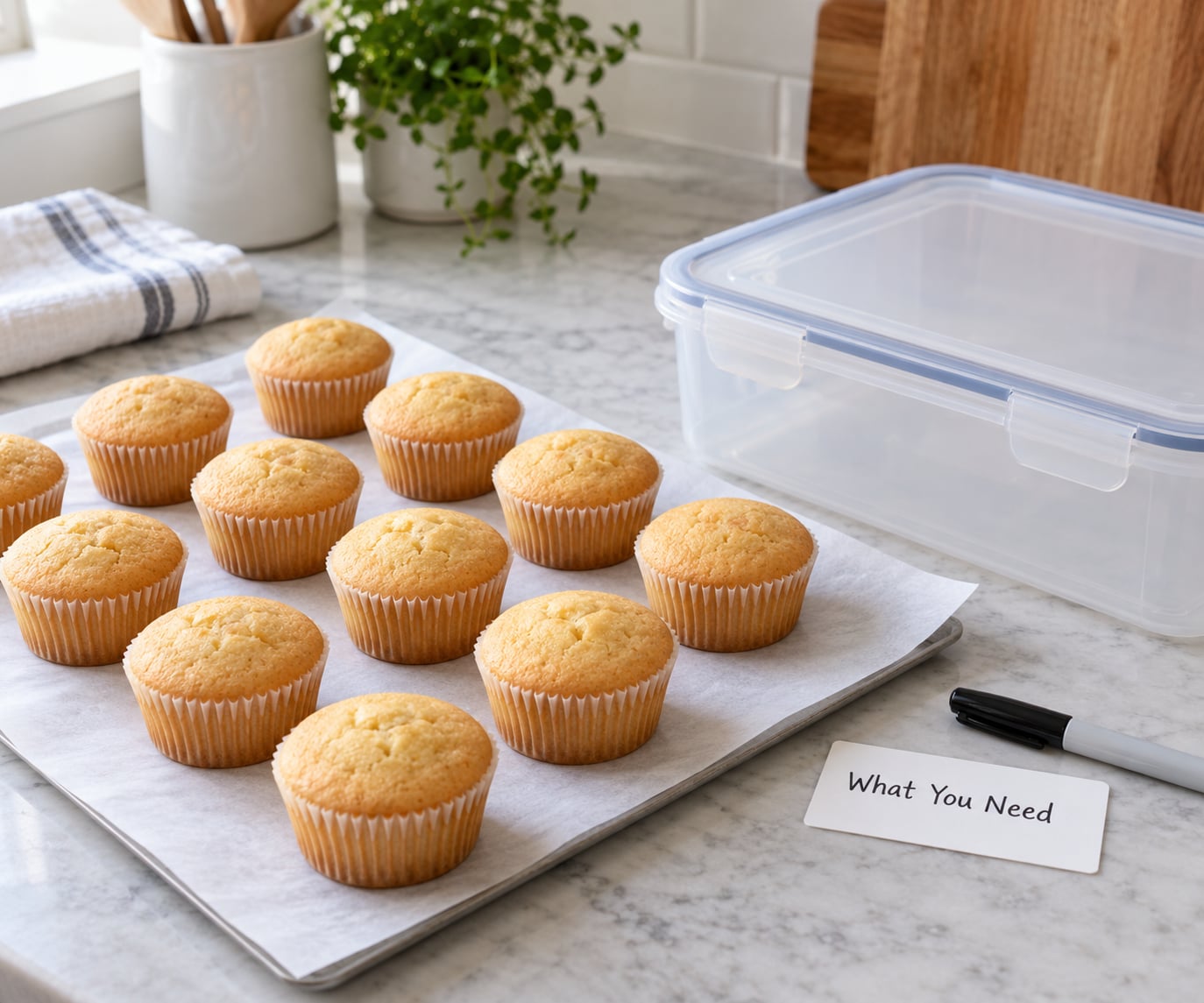
You do not need specialty equipment. The whole method works with things most kitchens already have, plus one airtight container.
- A wire cooling rack so air moves under the cupcakes while they cool.
- A flat baking sheet or sheet pan that fits in your freezer for the flash-freeze stage.
- Parchment or wax paper to line the pan and separate stacked layers.
- Plastic wrap or press-and-seal wrap for wrapping individual cupcakes.
- An airtight container or freezer bag that is tall enough for the frosting to sit without touching the lid.
- A marker and masking tape or labels for the flavor and date.
The container is the piece worth thinking about before you start. A rigid tub with a snap lid holds its shape in the freezer and protects a tall swirl from being crushed. For a big order, clamshell cupcake boxes with a molded insert do the same job and stack neatly in a walk-in.
How to Freeze Cupcakes with Frosting: Step-by-Step
Cool the Cupcakes Completely
Let the cupcakes sit on a wire rack for at least an hour, until the center of the base feels room temperature and not even slightly warm. Frosting a warm cupcake melts, and freezing a warm cupcake traps steam that turns to condensation inside the wrapping.
That condensation is the failure I see most. It collects on the inside of the lid, drips onto the frosting, and turns the top of the cake wet. Cooling fully is the cheapest fix and there is no shortcut.
Choose the Right Frosting
American buttercream, Swiss or Italian meringue buttercream, and ganache all freeze well because they are built on fat and sugar. Cream cheese frosting also freezes, though it is perishable, so it has to stay in the refrigerator once it thaws.
Whipped cream, marshmallow, and seven-minute style frostings are the ones I would not freeze on the cupcake. They are mostly water and air, and they turn grainy and weep when they thaw.
Freezing unfrosted and frosting on the day still gives the cleanest result, especially for whipped and cream cheese toppings. Freeze the plain cupcakes in a layer on a sheet pan, then frost fresh once they are back at room temperature.
Freeze in a Single Layer First
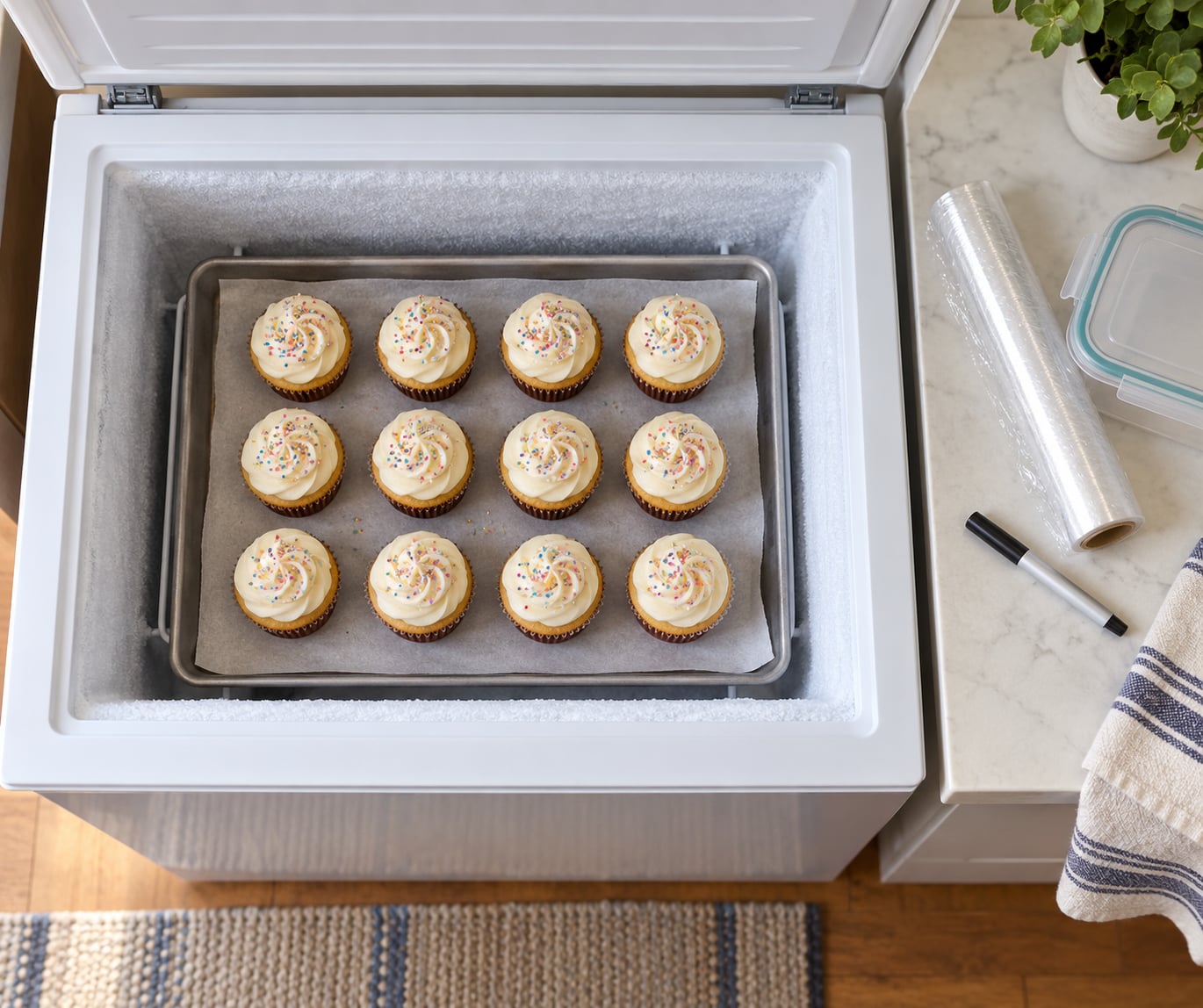
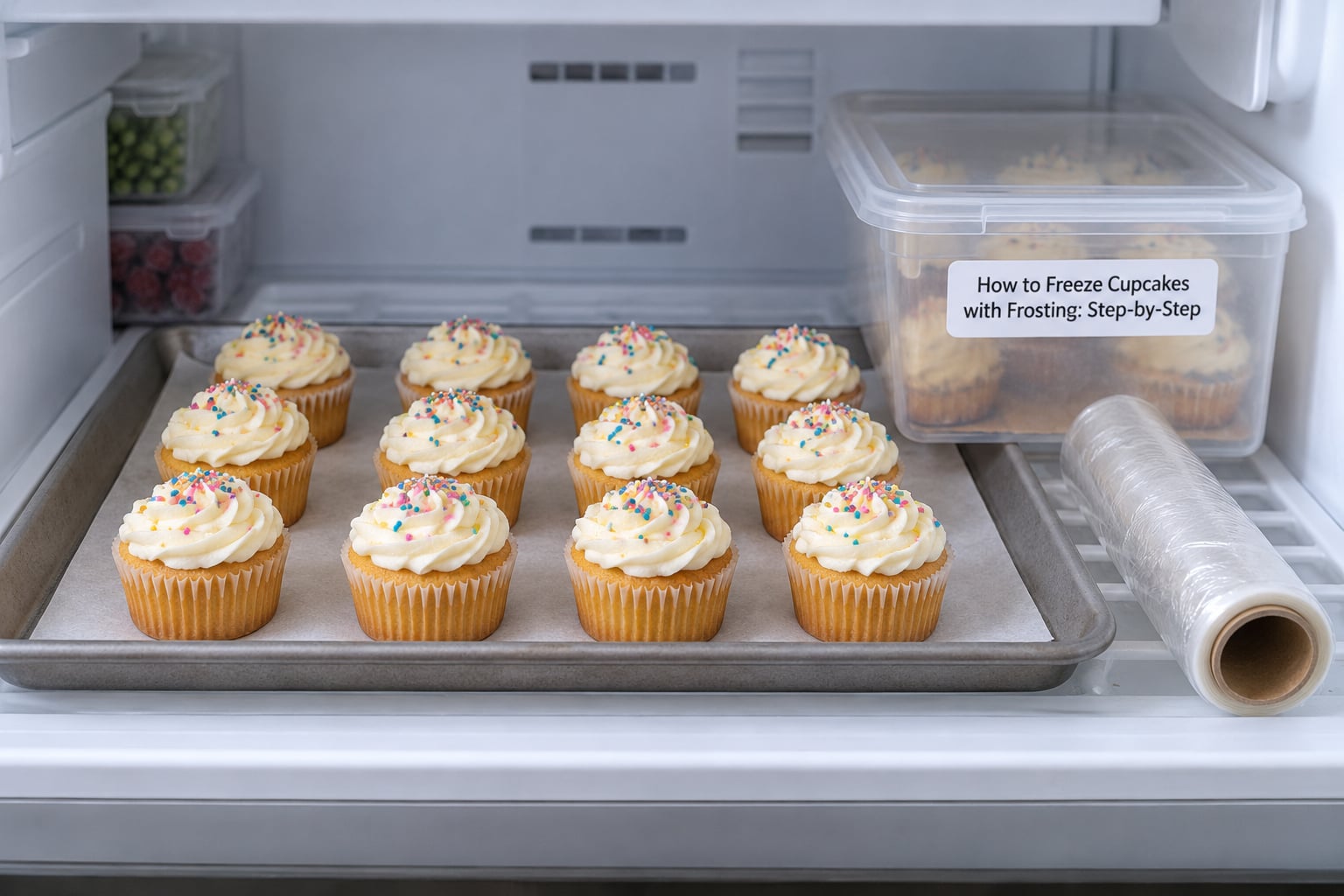
This is the flash-freeze step and it is what protects your design. Set the frosted cupcakes on a parchment-lined sheet pan with an inch of space between them and put the pan in the freezer uncovered for one to two hours, until the frosting is hard to the touch and no longer dents when you press a fingertip lightly against it.
Allow closer to two hours for cream cheese frosting or a very tall piped swirl, and about an hour for a simple American buttercream spread. If you skip it, the frosting is soft enough to smear the moment plastic wrap touches it.
Pack and Label the Cupcakes
Once the frosting is solid, wrap each cupcake individually in plastic wrap or press-and-seal wrap. Press gently so the wrap shapes to the frosting instead of squashing it, and leave the base wrapped too, since that is where liners tend to peel away from the cake during thawing.
Stand the wrapped cupcakes upright in the airtight container or freezer bag, frosting side up, so nothing rests on the design. Fill the empty space with folded parchment or a small towel to stop them shifting around, and press out the excess air before you seal a freezer bag.
Label the container with the flavor and the date you froze it. Labeling takes eight seconds and it is the difference between serving a birthday cupcake in March that was baked in January and one that was baked last week.
Thaw Cupcakes Without Ruining Them
Move them from the freezer to the refrigerator and leave them there for four to eight hours, still wrapped. When the center is no longer cold to the touch, take one out, unwrap it, and let it finish at room temperature for another hour or two.
The wrapping is doing the work. It keeps the condensation that forms during the thaw on the outside of the cupcake, where it stays on the plastic, instead of on the cake. Skip the fridge step and the outside of the cupcake takes on moisture while the center is still frozen, which is exactly how you get a wet top and a dry middle.
Some bakers serve them semi-frozen straight from the fridge, which is a perfectly good option for a party where the cupcakes will be eaten within the hour.
How Long Can You Freeze Frosted Cupcakes?
Two to three months is the safe quality window for frosted cupcakes. Past that, the crumb dries out gradually and the frosting picks up freezer odors, even inside a well-sealed container. At six months they are still safe to eat, but nobody is pretending they taste fresh.
| Stage or frosting | Time | Notes |
|---|---|---|
| Cooling on a rack | 1 hour minimum | No shortcuts, no fridge |
| Flash-freeze, buttercream | 1 hour | Frosting hard to the touch |
| Flash-freeze, cream cheese or tall swirl | 2 hours | Go to the firm end |
| Frosted storage, best quality | 1 to 3 months | Airtight, labeled, dated |
| Frosted storage, edible but past peak | 3 to 6 months | Drier crumb, freezer odors |
| Unfrosted storage | 3 months | Wrap tightly, freeze flat |
| Thaw in the refrigerator | 4 to 8 hours | Keep the wrapping on |
| Finish at room temperature | 1 to 2 hours | Then unwrap and serve |
If the cake has to taste freshly baked, stay inside the one-month mark. That is where the crumb still holds its moisture and the frosting still tastes of butter rather than freezer. Plenty of people freeze a party batch a month out with no complaints at all, so the honest answer is that the window depends on how fussy your guests are. The storage limit is about quality, not safety, for a standard buttercream cupcake.
Two groups need a different conversation. Cream cheese and whipped cream frosting are perishable, so frozen cupcakes carrying them must move to the refrigerator the moment they thaw and stay there until serving. And cupcakes filled with fresh fruit or curd carry the same rule, since those fillings are perishable too.
Common Mistakes
Freezing warm cupcakes
Trapped steam becomes condensation inside the wrapping, and you get a wet lid and a soggy cake. Wait until the base is completely cool, even if it feels like you are wasting time.
Skipping the flash-freeze
Soft frosting smears under plastic wrap, no matter how gently you wrap. One to two hours uncovered is what hardens the surface enough to survive the next layer of packaging.
Stacking without separation
Put a square of parchment between each layer, or wrap every cupcake individually. Frosting that touches another frosting is frosting that has transferred and cracked.
Thawing on the counter in the open
The temperature swing pulls moisture out of the air and straight onto the cake. Thaw in the wrapping, in the refrigerator first.
Sealing condensation into the container
If you find beads of water when you open the tub, let them evaporate before you seal it again. Trapped water keeps working on the frosting and the cake beneath it.
Freezing a whipped topping in place
Whipped cream and marshmallow frostings go grainy and weep on the way back to room temperature. Freeze those cupcakes plain and pipe the topping after thawing.
Tips for Freezing Different Frostings
| Frosting | Freezes well? | Adjustments |
|---|---|---|
| American buttercream | Yes | Flash-freeze 1 hour; holds a rosette or swirl well |
| Swiss or Italian meringue buttercream | Yes | Handle gently when unwrapping; softens fast at room temperature |
| Ganache | Yes | Can weep slightly; blot the surface after thawing |
| Cream cheese frosting | Yes, with care | Flash-freeze 2 hours; refrigerate after thawing |
| Whipped cream frosting | Not on the cupcake | Freeze plain cupcakes, whip fresh |
| Marshmallow or seven-minute frosting | Not on the cupcake | Freeze plain; this one weeps badly |
| Thin glaze | Yes | Can crack as it thaws; hold cupcakes in wrapping longer |
Decorations need their own rules. Fondant survives well, but it can develop sticky spots after thawing, so add it in the last hour rather than before freezing. Sprinkles are better added after the cupcake has thawed, partly because colors can bleed and partly because they pick up condensation and look dull. For a large batch, skipping the sprinkles until the end and adding them as the cupcakes come out of the wrapping is the fastest route to a batch that looks fresh.
Toppers and picks have to come off before the cupcakes go into the freezer. Cardboard toppers, ribbon and anything on a toothpick will get crushed or soaked, and paper picks scar the frosting when you pull them out of a frozen cupcake. Set them aside and stick them in as the cupcakes come out of the wrapping.
High-moisture cakes need the slowest thaw of all. Red velvet, carrot, banana and anything with fruit in the crumb carry enough moisture already, and thawing them too fast pushes what is left into a gummy texture. Give them the full eight hours in the fridge and finish them uncovered on a rack, not on a plate.
You can also freeze frosting on its own, which helps if you decorated too early and ran out of cupcakes. Buttercream keeps in the freezer for about three months, then comes back to workable softness after a short beat with a paddle. Rewhip whipped cream the same way, adding a splash of cold milk.
Frequently Asked Questions
Can you freeze cupcakes that already have frosting?
Yes. Frosted cupcakes freeze well when the frosting is butter- or chocolate-based, including American buttercream, meringue buttercream and ganache. Cool them fully, flash-freeze them uncovered for one to two hours so the frosting firms up, then wrap each one and seal it airtight. Whipped cream, marshmallow and seven-minute frostings are the exceptions, because they weep and turn grainy on thawing.
How long do frosted cupcakes stay frozen?
Frosted cupcakes keep their best texture for one to three months in a freezer at 0°F or below. They stay safe to eat well past that, up to about six months, but the crumb dries out and the frosting can pick up freezer odors. Unfrosted cupcakes wrapped tightly hold their quality for roughly three months. Always label the container with the flavor and the date you froze it.
Can cream cheese frosting be frozen?
Yes, cream cheese frosting freezes and comes back well, but it is perishable. Flash-freeze the cupcakes for closer to two hours, since the frosting is softer than buttercream, and expect it to need a beat or a small amount of extra cream cheese after thawing. Once thawed, these cupcakes belong in the refrigerator, not on the counter, and should be served within a day or two.
Should cupcakes be thawed in the refrigerator or at room temperature?
Use the refrigerator first. Move the wrapped cupcakes from the freezer to the fridge for four to eight hours, then finish them at room temperature for another hour or two. Thawing straight on the counter draws moisture from the air onto the cake while the center is still frozen, which is what causes a soggy top. The wrapping keeps that condensation on the plastic instead of the frosting.
How do you freeze cupcakes without smudging the frosting?
Flash-freeze them first. Set the frosted cupcakes on a parchment-lined sheet pan with space between them and freeze uncovered for one to two hours, until the frosting is hard enough not to dent under a light touch. Only then wrap each cupcake individually and stand them upright in a rigid airtight container so nothing presses on the design. Add sprinkles and toppers after the cupcakes have thawed.
Can you refreeze cupcakes after thawing them?
You can, but the cake crumb will be a little drier and softer the second time around, and the frosting loses some of its crisp edges. Refreezing is reasonable when a cupcake has only partly thawed and you still have frosting on it. If a cupcake has been fully thawed and served, it will not return to its original texture no matter how carefully it is packed.
Conclusion
Start by letting the cupcakes cool completely on a wire rack, then check the frosting. Butter-based frostings can stay on the cupcake; whipped and marshmallow toppings should be added after thawing. Flash-freeze the frosted cupcakes uncovered for one to two hours, wrap each one, seal them upright in an airtight container, and label it with the date.
Give yourself at least four to eight hours in the refrigerator to thaw, keep the wrapping on until they are fully cold through, and unwrap only just before serving. That is everything standing between you and a cake that tastes like it came out of the oven yesterday.