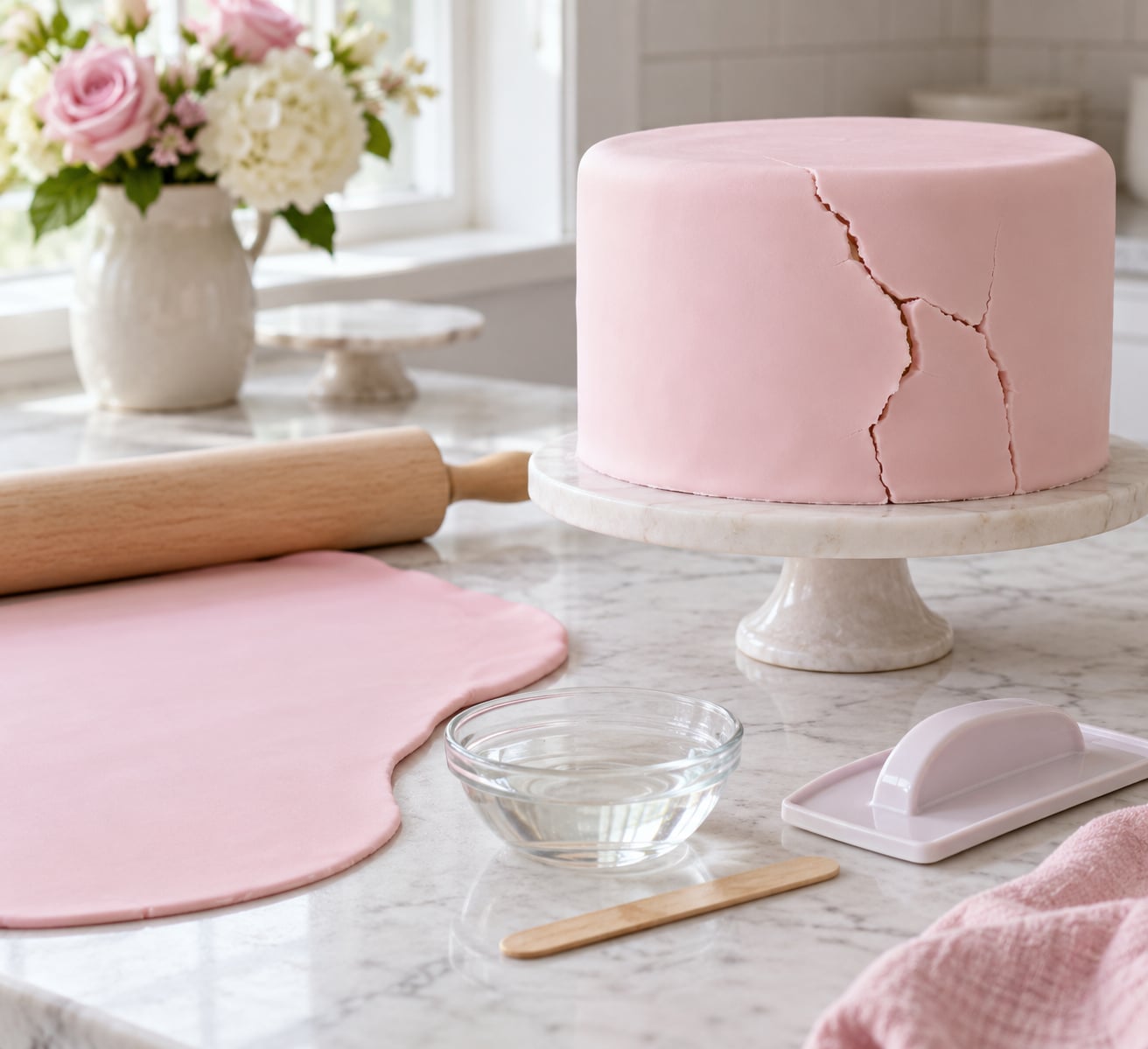
Dried, cracked fondant is fondant that has lost the surface moisture keeping it stretchable, and the fix takes about two minutes: knead in a pea-sized dab of vegetable shortening or a drop or two of glycerine until the fondant feels warm and pliable again. If the fondant has already dried onto the cake, patch the crack instead of peeling the whole layer. Below I walk through both paths, starting with how to fix dry cracked fondant before you roll it, then how to repair it once it is stuck to a cake, cookie or dummy cake.
Most cracking comes down to one of four things: air exposure, too much cornstarch or icing sugar on the surface, cold or stiff fondant, and pulling the sheet too hard as you smooth it down the sides. None of them mean you start over.
Table of Contents
- What You Need
- Step-by-Step: How to Fix Dry Cracked Fondant
- 1. Check the Crack Before You Fix Dry Cracked Fondant
- 2. Protect the Cake and Prepare the Fondant
- 3. Restore Moisture in Dry Cracked Fondant Without Making It Sticky
- 4. Fill Small Cracks and Smooth the Seams
- 5. Replace Fondant That Cannot Be Repaired
- 6. Smooth, Decorate and Let the Repair Dry
- Common Mistakes When Fixing Dry Cracked Fondant
- How to Prevent Dry Cracked Fondant in the Future
- Frequently Asked Questions
- Can I fix cracked fondant without replacing the whole layer?
- What is the best way to soften dry fondant without making it sticky?
- Can I use water to repair cracks in fondant on a cake?
- How do I fix a crack that goes through a fondant decoration?
- Why does my fondant crack again after I smooth it?
- How long should repaired fondant dry before I decorate or transport the cake?
- What to Do First
What You Need
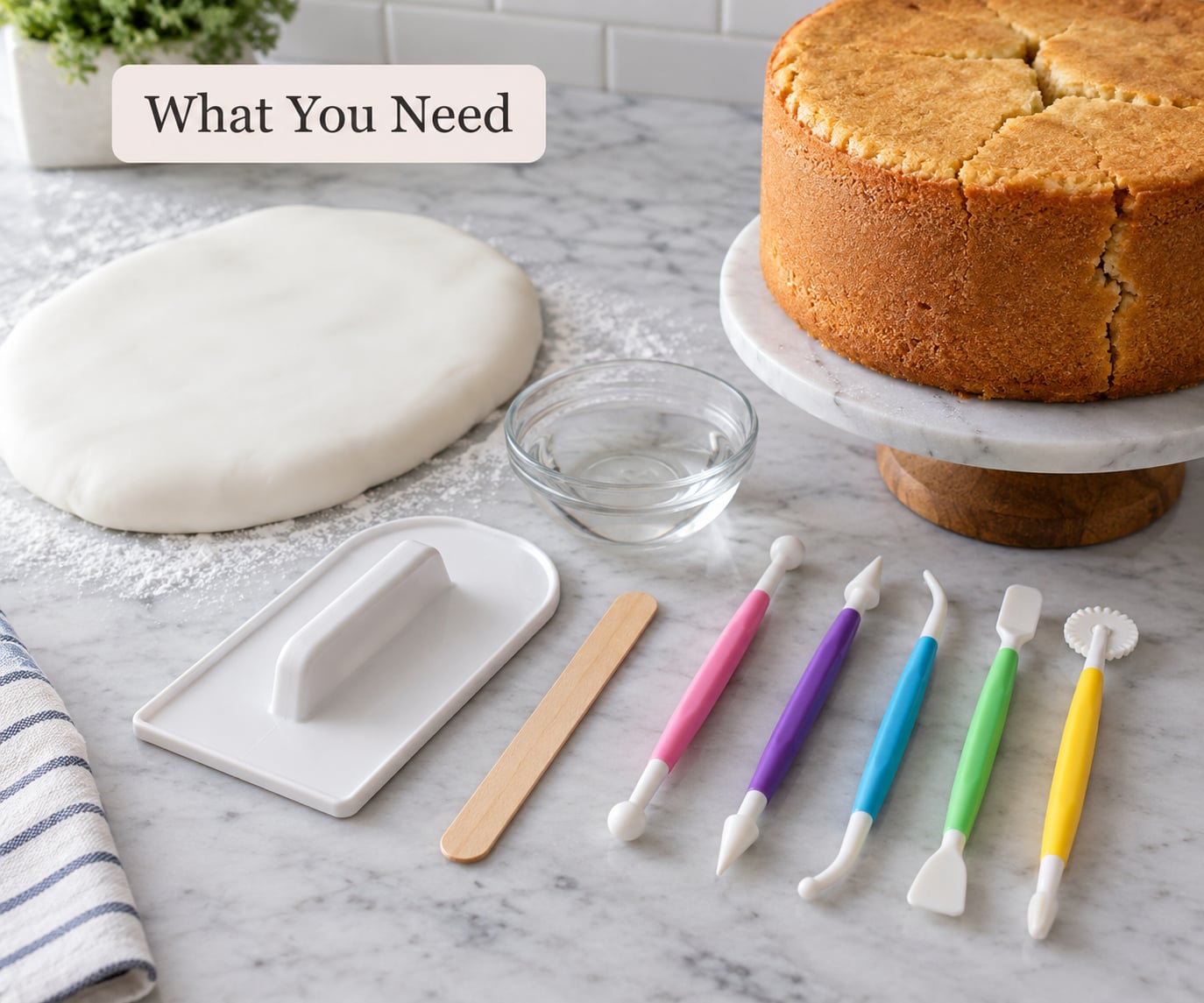
Gather everything before the fondant is unwrapped, because the moment it hits the air it starts drying again.
- The cracked fondant itself and, if it is beyond repair, enough fresh fondant to replace the sheet.
- One moisture source: vegetable shortening such as Crisco, glycerine, or a small bowl of water. You only need one.
- A clean, non-porous work surface or a silicone mat, plus a light dusting of cornstarch or icing sugar.
- A fondant smoother or the back of a large knife for blending seams and joins.
- A craft stick or a clean, small brush for pressing into cracks and easing edges.
- Rolling pin guide rings, so your replacement sheet comes out the same thickness as the original.
- Edible glue or piping gel and any colour or decorations you plan to add, since repairs need to dry first.
Step-by-Step: How to Fix Dry Cracked Fondant
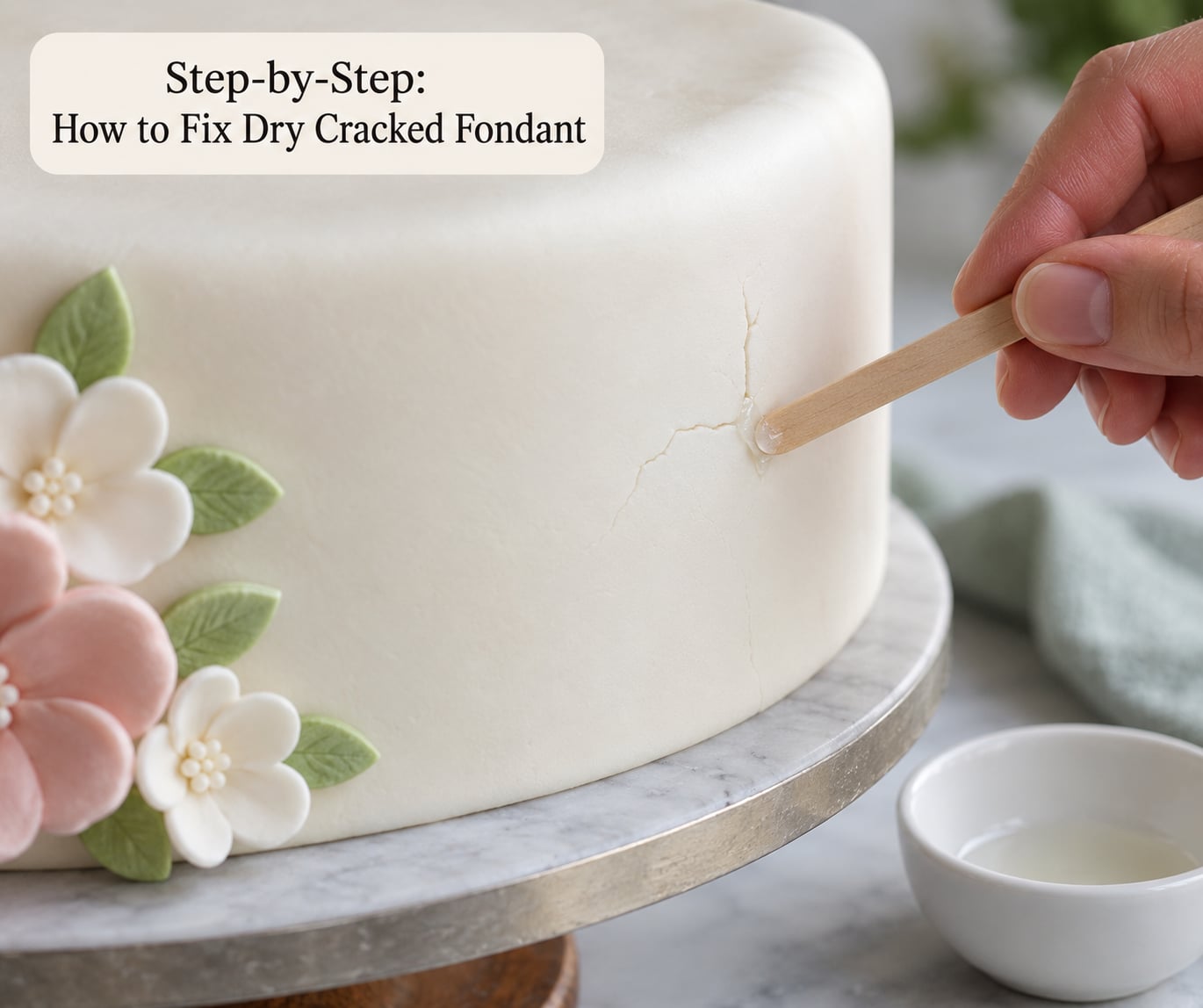
Work through these in order and stop as soon as the fondant is soft and smooth again. Overworking is what turns a repair into a sticky problem.
1. Check the Crack Before You Fix Dry Cracked Fondant
The right method depends entirely on how bad the damage is. Press a fingertip into the cracked area: if it dents and feels soft, it is a surface crack. If the edge crumbles into chunks or the sheet will not roll without breaking, it is finished.
- Hairline surface lines and the fondant still bends: the dried part is only on top and the gum network is still working. Knead it, then roll straight away.
- Cracks at the base or bottom edge after lifting: the sheet was over-stretched while applying. Knead, roll a fresh sheet and leave about 1 inch of excess at the base.
- Wrinkly, textured surface: elephant skin from sitting out too long. Knead firmly until warm, then smooth with a fondant smoother.
- The sheet crumbles or snaps when lifted: the moisture is gone. Try shortening or glycerine first, and if it is still brittle, replace it.
- The crack has already dried onto a cake: the fondant hardened in place. Patch, fill and blend it where it sits.
Cracks at the bottom edge are the most common failure, and they are almost always caused by lifting the sheet when it is too dry rather than by the cake itself.
2. Protect the Cake and Prepare the Fondant
If the fondant is already on the cake, put the cake on a turntable, wipe loose crumbs away with a dry brush, and chill it for 15 minutes. Cold fondant and cold buttercream are easier to handle, and crumbs under a repair patch show up badly under lights.
Leave the sound parts of the sheet alone. Trim only what is genuinely broken, and roll the replacement to the same thickness as the fondant already on the cake so the joins match.
3. Restore Moisture in Dry Cracked Fondant Without Making It Sticky
Put a pea-sized dab of vegetable shortening on your palms and knead it into the fondant. For every 500g of fondant, that dab is roughly right; start smaller if the fondant is only slightly stiff. Knead until it feels warm and pliable, which normally takes 30 to 60 seconds.
That warmth matters. Manufacturer guidance quoted on baking forums tells decorators to knead until the fondant is warm to reactivate the gums, and that is what restores elasticity. Cold fondant stays stiff no matter how much shortening you add.
Two other options work, with caveats:
- Glycerine works at about 1 to 2 teaspoons per 500g and gives a slightly firmer result than shortening. Add it a drop at a time.
- Water is the last resort. A couple of drops sprayed or dabbed on will soften fondant that is only slightly dry, but too much dissolves the sugar and leaves you with sticky paste.
Put shortening or cornstarch on your hands and your rolling surface, not straight into the block. The same manufacturer guidance warns that working fat or powder directly into the fondant speeds up drying and weakens it. Stop kneading the moment it is smooth.
4. Fill Small Cracks and Smooth the Seams
For a crack in fondant that is still attached, roll a pea-sized piece of your softened fondant into a thin sliver and press it into the crack with a craft stick. Push it in just far enough to fill the gap, not far enough to dent the surface around it.
Then take the smoother and blend the patch edges outward in two or three light strokes. Wipe the tool between strokes so you are not dragging crumbs across the cake.
On a cake that is still unfirmed, the other trick is to rub the crack with a well-used dry pastry brush or the pad of your finger warmed against the fondant. Decorators on CakeCentral use a mix of rubbing with fingertips and rolling a tiny coil to sit over the line.
5. Replace Fondant That Cannot Be Repaired
Some things are not worth patching. Peel the fondant off if the sheet crumbles as you lift it, if tears run across the middle of a panel, or if a large area has gone grey and hard from the edges inward.
Warm the fresh block for about 5 seconds in the microwave, knead until smooth, then dust the surface lightly with cornstarch and roll from the centre outward to a consistent 3 to 4mm, roughly an eighth of an inch. Guide rings make this far easier than eyeballing it.
Lay the sheet over the chilled cake, smooth the top, and leave roughly 1 inch of excess at the base. Fondant shrinks as it dries, and that excess is what keeps the bottom edge from riding up.
Blend any joins with the smoother, then trim with a sharp knife at the base once everything has firmed up.
6. Smooth, Decorate and Let the Repair Dry
Give the repair 20 to 30 minutes to firm before you touch it again, and longer if you have used water or glycerine, which dry more slowly than a shortening-only repair.
Once it is firm to a light touch, run the smoother over the repaired area with light, even pressure. Overworking the patch is what creates the shiny ring or the fingerprint you were trying to remove.
Add your final details with edible glue or piping gel, and let the cake rest uncovered at room temperature for a few hours before it goes in a box. Fridge storage is fine once the fondant is fully dry and firm, but chilling fondant while it is still soft gives you condensation and wrinkling when it comes out.
Common Mistakes When Fixing Dry Cracked Fondant
Most of the trouble when you fix dry cracked fondant comes from correcting too hard rather than too little.
Adding too much water. Water dissolves sugar on contact, so an over-wetted patch goes sticky, slides, and can never be smoothed. Two drops is enough for fondant that is only a little dry.
Kneading for minutes instead of seconds. Long kneading warms the fondant evenly and makes it stick to your work surface and your hands. Once it is smooth and warm, stop.
Repairing over sticky icing. Fondant will not bond to a tacky or wet buttercream. Chill the cake first, or the patch lifts within the hour.
Dusting the fondant itself with cornstarch or icing sugar. Powder on the fondant wicks moisture out of it and speeds up the exact problem you are trying to solve. Dust the surface, not the sheet.
Leaving the patch edge visible. A patch pressed on top and left alone reads as a lump under lights. Blend the edges with a smoother while the fondant is still soft and from the same batch, or the colour shifts will show.
Decorating too early. If you add details before the repair has set, you press your finger straight into it. Wait for the firm-to-light-touch stage.
Stretching the sheet down the sides in one pull. Over-stretching is the top cause of stress cracks at the base. Apply in small sections instead and let each one settle.
How to Prevent Dry Cracked Fondant in the Future
Prevention is mostly about air and time, since those are the two things fondant cannot get back once it loses them.
Work in small batches and keep the rest sealed. Wrapping unused fondant tightly in plastic wrap and storing it in an airtight container at room temperature keeps it usable for weeks; never refrigerate it, because condensation forms and the texture goes rough.
Knead every block until it is warm before the first roll. Cold fondant from the fridge cracks on contact with a rolling pin, and you will spend longer fixing it than warming it.
Light dust only. Cornstarch or icing sugar on the rolling surface keeps fondant from sticking, and going heavy on it is the single most repeated cause of cracking on decorating forums.
Roll between two sheets of acetate if your fondant clings and you keep adding powder. It removes the powder problem entirely and makes lifting the sheet onto the cake far easier.
Mind the room. Air conditioning and winter heating dry fondant out fast, while summer humidity makes it tacky without touching it. Sticky fondant in humid weather and cracked fondant in dry winter weather is the climate talking, not your technique.
Finish the cake prep properly too: a thin crumb coat, chilled until firm, with sharp buttercream edges smoothed off. Fondant clings to a firm even base and fights every lump underneath it.
Check your gum ratio if you make fondant at home. Excess CMC relative to glycerine gives you a dry, crumbly batch that cracks no matter how well you knead it. Glycerine is what keeps it flexible, so a batch that keeps cracking usually wants more glycerine and less CMC.
Frequently Asked Questions
Can I fix cracked fondant without replacing the whole layer?
Usually yes. If the fondant still bends without crumbling, the crack is surface-level and a pea-sized patch of softened fondant pressed into the gap, then blended with a smoother, will hold. Replace the sheet only when it snaps as you lift it, crumbles at the edges, or the tear runs across the middle of a panel.
What is the best way to soften dry fondant without making it sticky?
Shortening on your hands first, then knead. A pea-sized dab per 500g of fondant is enough, and kneading until warm reactivates the gums that give fondant its stretch. Glycerine at 1 to 2 teaspoons per 500g works too and stays firmer. Save water for fondant that is only slightly dry.
Can I use water to repair cracks in fondant on a cake?
A small amount, yes, but not as your first choice. Water dissolves sugar, so a wet patch turns sticky and can slide off the cake. Use a couple of drops on a soft brush to press into a dried crack, or mix water to a peanut-butter consistency and rub it in for fondant already set on a dummy cake.
How do I fix a crack that goes through a fondant decoration?
Lift the decoration off carefully, roll it flat, patch the gap from underneath with a small piece of matching fondant, and smooth the back with your fingertips. If the crack runs across a bow, flower centre or ribbon, rebuild the section from fresh fondant instead, since joined edges show more on a small detail than they do on a cake side.
Why does my fondant crack again after I smooth it?
Usually two causes. Either the fondant underneath never recovered its moisture and is re-drying as you work, or the patch was built from a different batch or thickness than the surrounding fondant. Warm and knead the fondant, let it rest 15 minutes, and patch with fondant from the same softened block at the same thickness.
How long should repaired fondant dry before I decorate or transport the cake?
Allow 20 to 30 minutes before touching a repair, and longer if you used water or glycerine. For adding details, wait until the fondant is firm to a light touch with no tackiness. Transport it once it is fully dry and firm, and box it with cardboard support so the sides do not flex.
What to Do First
To fix dry cracked fondant, knead it until it is warm before you decide anything else. Most cracks that look fatal at first are just dry and stiff, and they soften in under a minute. If it still crumbles after a proper knead, patch what is small and re-roll only the section that is genuinely ruined.