To make nut free birthday cupcakes, bake a plain vanilla or chocolate batter from ingredients that carry no peanuts or tree nuts in the ingredient list or the may contain warning, then frost and decorate with products you have checked the same way. The whole job is label checking, not recipe magic.
A standard cupcake recipe is already nut free in theory. Peanuts and nut butters show up in a few places people don’t expect, like almond flour, hazelnut spread, some chocolate chips, and a lot of bakery frosting. Fifteen minutes of label reading up front saves you from serving something a child with an allergy can’t touch. Most of the work is 30 minutes, and the baking itself is a one-bowl affair that any beginner can handle.
Updated for 2026: allergen wording on packaging shifts with each reformulation, so the habit of re-reading the label every time you buy matters more than any single brand recommendation. For a child with a diagnosed allergy, always confirm the finished recipe with their allergist or doctor.
Table of Contents
- What You Need
- Base batter for 12 standard cupcakes
- Frosting and decorating
- Equipment and label-checking kit
- What to replace when a recipe calls for a nut
- Step-by-Step: How to Make Nut Free Birthday Cupcakes
- 1. Verify Every Ingredient Before You Start
- 2. Prepare the Cupcake Pan and Oven
- 3. Mix the Batter Without Nuts
- 4. Bake Until the Cupcakes Are Done
- 5. Choose and Apply Nut-Free Frosting
- 6. Decorate and Serve the Cupcakes
- Bake-ahead, freezing and batch sizing
- Common Mistakes
- Assuming a homemade recipe is safe for every allergy
- Reading the front of the package instead of the ingredient list
- Switching brands without re-checking
- Using decorations nobody has verified
- Allowing cross-contact through pans and utensils
- Frosting cupcakes that are still warm
- Overbaking, especially with a gluten-free flour
- Ignoring the coconut question
- Frequently Asked Questions
- Can I make regular birthday cupcakes nut free?
- Which flour is best for nut free cupcakes?
- Is buttercream safe for someone with a nut allergy?
- Are sprinkles and cupcake liners automatically nut free?
- How should I store nut free birthday cupcakes?
- Conclusion
What You Need
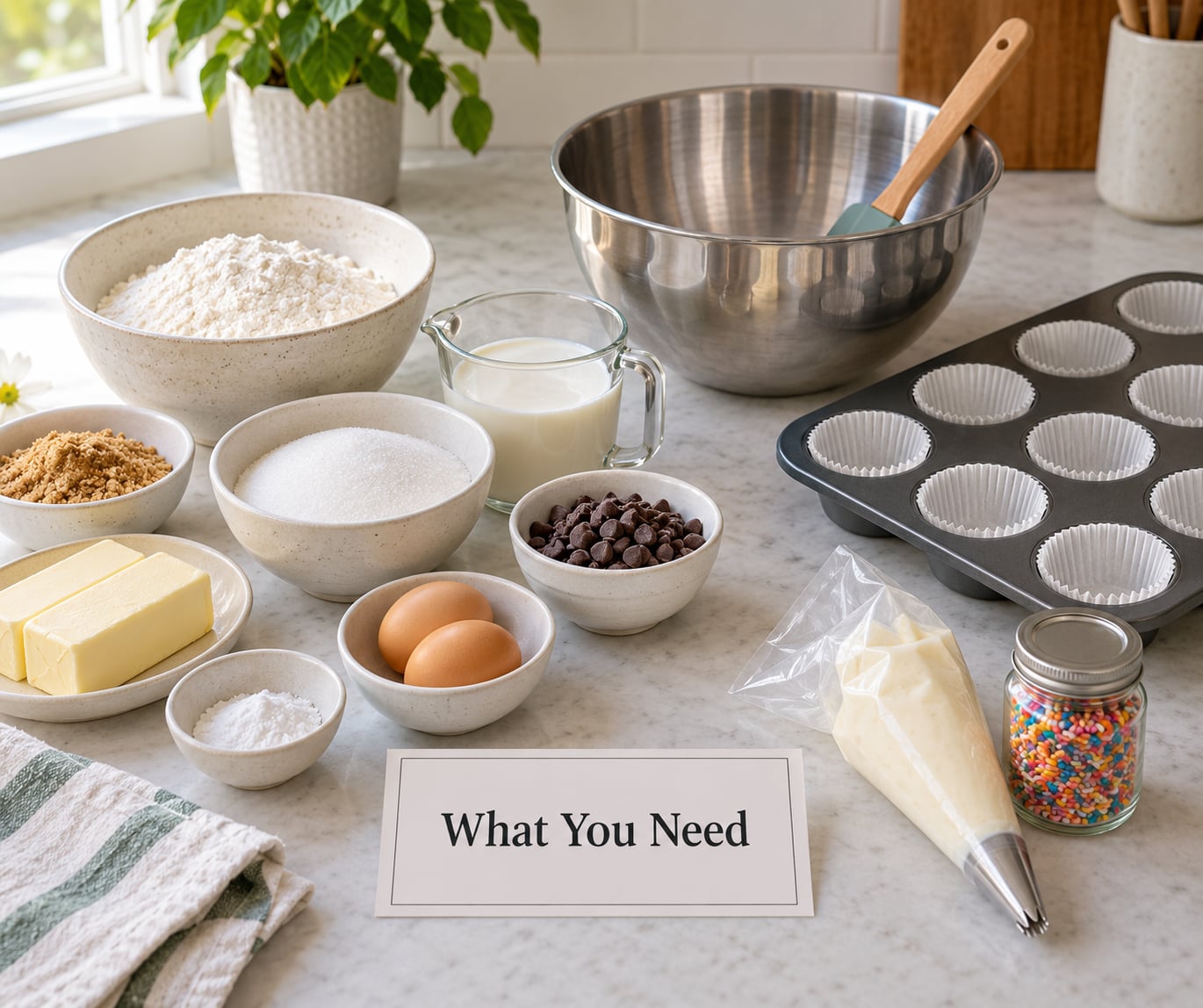
You need a cake base, a frosting, decorating supplies, and one muffin tin. Almost everything is a pantry staple, so this is not an expensive or hard-to-source bake.
Base batter for 12 standard cupcakes
- 1 and 1/2 cups (190 g) all-purpose flour, or a 1-to-1 gluten-free baking flour blend if gluten is also out
- 3/4 cup (150 g) granulated sugar
- 1 and 1/2 teaspoons baking powder
- 1/2 teaspoon baking soda
- 1/4 teaspoon fine salt
- 2 large eggs at room temperature, or 2 flax eggs for an egg-free version
- 1/2 cup (120 ml) neutral vegetable oil or 115 g melted unsalted butter
- 1 teaspoon pure vanilla extract
- 3/4 cup (180 ml) milk, oat milk or another verified nut-free milk
If you use a gluten-free blend that already contains xanthan gum, do not add extra. Most blends are formulated to work one-to-one with wheat flour, so the measuring and mixing stay the same.
Frosting and decorating
- 115 g unsalted butter or a dairy-free butter, 3 cups powdered sugar, 2 tablespoons milk or oat milk, 1 teaspoon vanilla for a standard buttercream
- Sprinkles, sanding sugar, or a pre-made fondant or gum paste
- Cupcake liners, only if the box lists no nut cross-contact warning
- A piping bag and star tip, or a small offset spatula for spreading
Equipment and label-checking kit
- A 12-cup muffin tin and 24 small paper or silicone liners
- Two mixing bowls, a whisk, a rubber spatula, a measuring cup and spoons
- Cooling rack, toothpick or instant-read thermometer
- A phone or notebook, so you can photograph each ingredient list and, if a warning is vague, call the manufacturer before you start
Peanuts and tree nuts are separate allergen categories on US labels, and a product free of one is not automatically free of the other. Someone avoiding tree nuts may still react to peanut, and a shared facility changes the picture entirely. Coconut sits in a gray area: the FDA treats coconut as a tree nut for labeling purposes, while allergy organizations classify it as botanically a fruit. If coconut must be avoided for your household, treat it as a nut and leave it out.
What to replace when a recipe calls for a nut
- Almond flour or almond meal use a 1-to-1 gluten-free baking flour blend, or a cup of regular flour for a lighter crumb
- Peanut butter use sunflower seed butter or pumpkin seed butter, both of which are nuts in name only and carry a nut-free label
- Hazelnut or chocolate spread use a seed-based chocolate spread, or thin chocolate ganache made from cocoa and a verified nut-free chocolate
- Nut oil such as almond or hazelnut oil use neutral vegetable oil, avocado oil or sunflower oil
- Finely chopped nuts as a topping use toasted sunflower seeds, pumpkin seeds, extra sprinkles or sanding sugar
Any swap still needs its own label check. Seed butters are made in facilities that handle nuts more often than flour is, so read that jar like you would read peanut butter.
Step-by-Step: How to Make Nut Free Birthday Cupcakes
1. Verify Every Ingredient Before You Start
Read the full ingredient list on every package, including the small print about shared equipment and may contain statements. If a label is vague, call or email the manufacturer and ask whether the product is made in a facility that also processes peanuts and tree nuts, and get the answer in writing if you can.
Set out everything on one counter and photograph the labels. Once the batter is mixed, nobody wants to identify a mystery tub of shortening at 4 p.m. the day before a party. Pay closest attention to items with the shortest ingredient lists, like frosting, chocolate chips, sprinkles and boxed mixes, since those are the ones most likely to hide nut products or cross-contact warnings.
2. Prepare the Cupcake Pan and Oven
Heat the oven to 350°F (175°C) and place the rack in the center, so the cupcakes bake evenly on both sides. A pan sitting too close to the top or the heating element browns the domes before the centers set.
Line all 12 wells with liners if you are using them, pressing each one down into the corner so it stands straight. If the liners themselves are unverified, grease the tin lightly and bake directly in it. A metal tin washed in a nut-free kitchen holds its heat better than paper, which is another small reason allergy-aware bakers lean toward it.
3. Mix the Batter Without Nuts
Whisk the flour, sugar, baking powder, baking soda and salt in a large bowl until no streaks of flour remain. In a second bowl, whisk the eggs or flax eggs with the oil or melted butter and vanilla, then pour that into the dry ingredients.
Fold with a spatula until the last streak of white disappears, about 30 to 45 seconds, then stop. Overmixing develops gluten in wheat flour and gives you a dense, tough cupcake, which is the single most common complaint about homemade versions. The batter is ready when it looks uniform and holds a soft ribbon when you lift the spatula. Divide it evenly between the 12 wells; a 4-ounce ice cream scoop with the sweep motion makes the tops dome evenly instead of sloping to one side.
4. Bake Until the Cupcakes Are Done
Bake at 350°F for 18 to 20 minutes, starting to check at 17 minutes. The centre should spring back when you press the top lightly, and a toothpick or digital thermometer inserted into the middle should come out clean or with a couple of moist crumbs, never wet batter.
Let them sit in the tin for 5 minutes, then turn out onto a wire rack and cool completely, 45 to 60 minutes. Frosting a warm cupcake melts, slides off and pulls crumbs up with it. If you are above 5,000 feet, drop the oven to 325°F and add 5 to 10 minutes, since thin air makes batters rise faster and set slower.
5. Choose and Apply Nut-Free Frosting
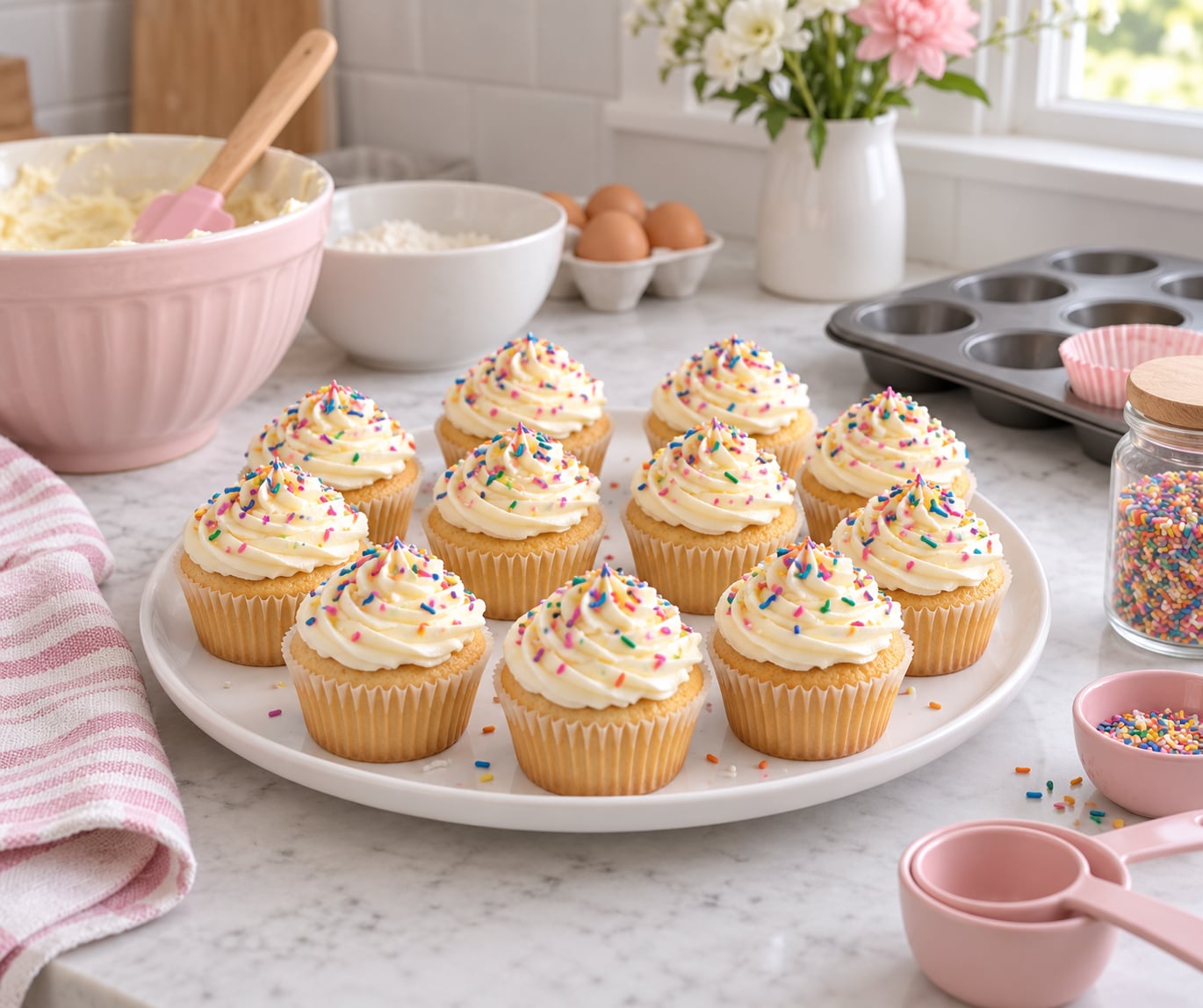
Use a buttercream made from butter, powdered sugar, a little milk and vanilla, and check the powdered sugar label for nut cross-contact. Cream the butter for 2 to 3 minutes until pale and fluffy, add the sugar gradually, then the milk a spoonful at a time until the frosting holds a soft peak.
A can of supermarket frosting is faster but usually lists both milk and sometimes tree nuts, so it is worth reading before it goes on a cake someone with an allergy will eat. For a hot-weather party, a chilled cake with a thin buttercream layer holds up better than a tall swirl that softens on the platter. Pipe from the outside in with a star tip, then chill the finished cupcakes 15 minutes before transport so the frosting firms up.
6. Decorate and Serve the Cupcakes
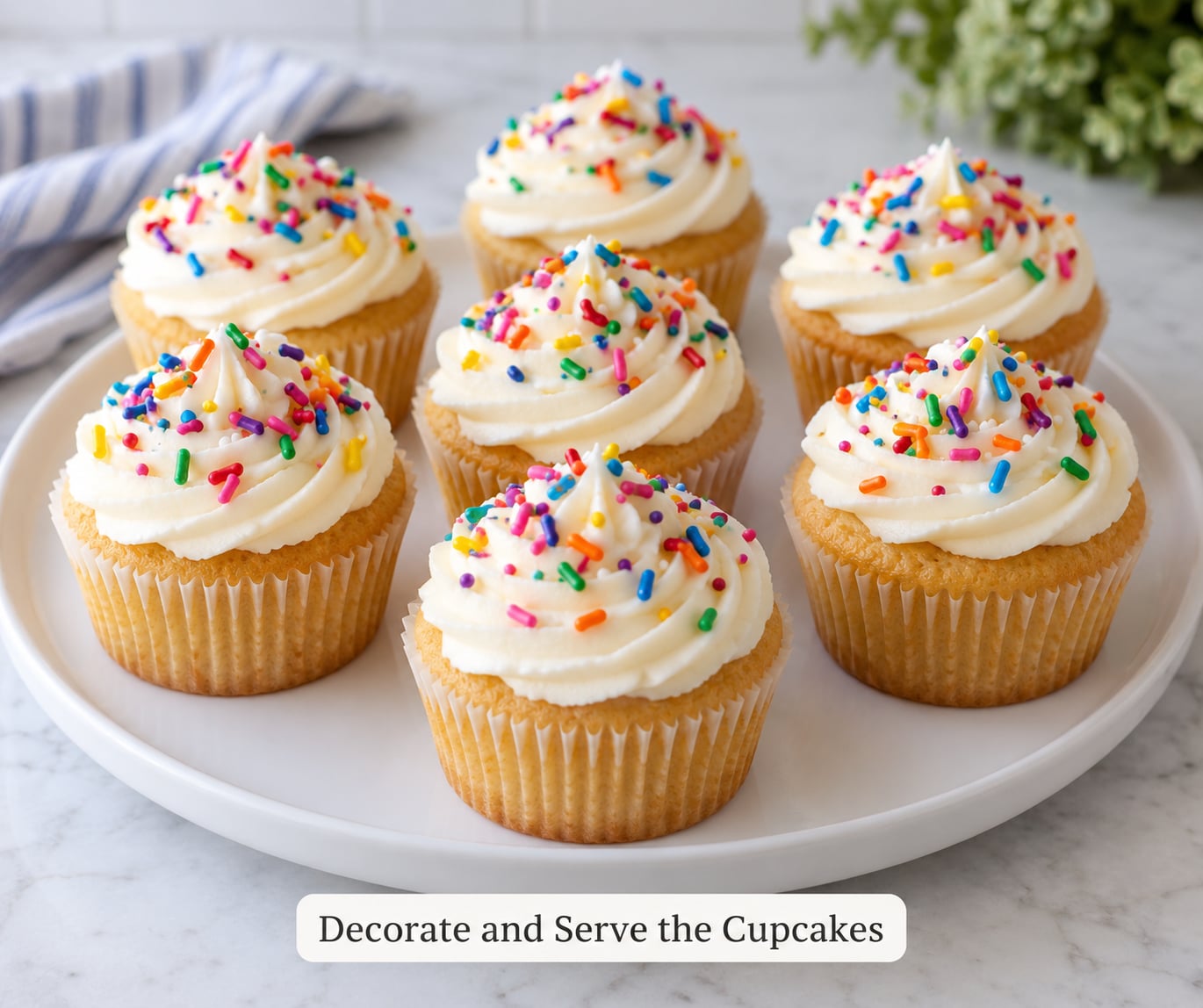
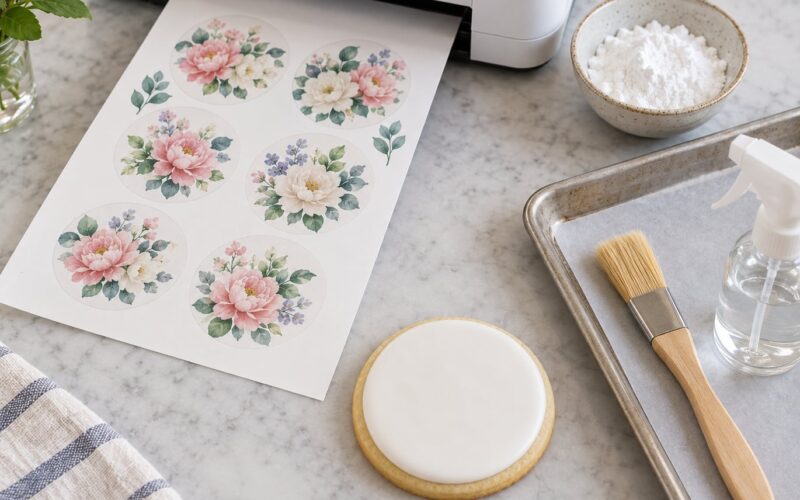
Sprinkles, sanding sugar, mini marshmallows, edible glitter and fondant shapes are all nut free decorations, provided the package has no nut warning. Fondant sheets and edible image sheets are worth checking closely, since some are made on shared nut equipment. Fruit, mini cheese cubes and a small topper are the easiest options of all.
Skip anything crushed, chopped or dusted with nuts, including many cookie crumble toppings and some caramel and praline sauces. For a school celebration, put the cupcakes on a platter with a small printed card listing the ingredients, and use a dedicated serving utensil so no one reaches in with fingers that have touched peanut butter sandwiches.
Bake-ahead, freezing and batch sizing
Bake up to three days ahead. Cool fully, wrap the tray tightly in plastic wrap, and hold it at room temperature, away from anything nutty in the cupboard, for up to three days. Frost the day before the party.
Unfrosted cupcakes freeze for up to three months. Wrap each one individually, freeze flat on a tray, then move them to a bag so nothing gets crushed. Thaw them in the fridge overnight, or at room temperature for two hours, and frost once they feel like room temperature all the way through.
For a class or party, bake one cupcake per guest plus the birthday child, then add four spare. Nobody wants to be the grown-up explaining that the birthday child has a different dessert while the other kids watch. Carry them in a rigid container with a flat base, not a dome, so the frosting does not slide into one side in the car.
Common Mistakes
Assuming a homemade recipe is safe for every allergy
One base batter cannot cover every allergy. A standard cupcake is nut free but full of wheat, milk and egg, and people often have more than one. Decide which allergens actually need to be removed, change only those, and keep the rest of the recipe intact so the cupcakes still taste like cupcakes.
Reading the front of the package instead of the ingredient list
The claim on the front is a marketing statement, not a guarantee. The ingredient list and the may contain warning are what matters, and on several categories, like chocolate chips and frosting, the warning is the only mention of nuts anywhere on the package.
Switching brands without re-checking
Formulas change, and a company you have used safely for two years may have moved production lines. Re-read the label every purchase, and if you have a printed copy of the old one in your notes, check it against the new packaging rather than assuming nothing changed.
Using decorations nobody has verified
Sprinkles, fondant, edible glitter and cupcake liners are all skipped over because they look trivial. Each is a separate packaged product with its own facility, so each one gets its own label check, including the ones that come in a birthday pack.
Allowing cross-contact through pans and utensils
A whisk that was used for nut butter, a wooden spoon stored in the same drawer as a peanut butter jar, or a counter wiped down after someone made trail mix will all transfer allergens through a cupcake that contains no nuts at all. Wipe down surfaces, use utensils you are certain are clean, and wash anything shared in the sink rather than the dishwasher with unverified items.
Frosting cupcakes that are still warm
Warm cake melts the frosting and drags crumbs into it, which also makes the finished cupcake look messy. A full hour on a wire rack fixes it, and a quick ten-minute chill in the fridge speeds things up if you are short on time.
Overbaking, especially with a gluten-free flour
Gluten-free batters have no gluten structure to hold them together, so extra minutes turn them dry or gummy. Pull them at the low end of the time range and trust the spring-back test rather than the clock. If the batter looked thick going into the pan, that is normal for a gluten-free blend and not worth loosening with extra liquid.
Ignoring the coconut question
Coconut is labeled as a tree nut by the FDA but treated as a fruit by allergy organizations, which is exactly the confusion that trips people up. If anyone at the table reacts to coconut, leave it out entirely, including coconut oil and coconut milk in the frosting.
Frequently Asked Questions
Can I make regular birthday cupcakes nut free?
Most standard cupcake recipes contain no nuts at all, so nut free is often the default rather than a swap. The work is checking: flour, sugar, baking powder, shortening, milk, chocolate and sprinkles all get a label read, and you look for peanuts, tree nuts and any may contain warning. What usually sneaks nuts in is almond flour, nut butter, hazelnut spread and some bakery frostings.
Which flour is best for nut free cupcakes?
Plain all-purpose flour works and carries no nut cross-contact warning in most kitchens. If you also need gluten free, a 1-to-1 baking blend made in a dedicated allergen-free facility is the safer pick, and several brands are widely discussed by allergy parents for exactly that reason. Check whether the blend already contains xanthan gum before adding any, or the batter turns gummy.
Is buttercream safe for someone with a nut allergy?
Buttercream is nut free when it is made from butter, powdered sugar, milk and vanilla, and every one of those has been checked. A homemade batch gives you control, which matters for shared-facility frosting from a supermarket tub. Some commercial frostings list milk and tree nuts, so read the label rather than assuming the flavour tells you what is in it.
Are sprinkles and cupcake liners automatically nut free?
No, and this trips people up because they are the least-examined items at the store. Sprinkles, sanding sugar, fondant, edible glitter and printed liners are all made on their own lines and some carry nut warnings. Read each package separately, and check the ingredients on any frosting or filling you plan to pipe or spread alongside them.
How should I store nut free birthday cupcakes?
Keep frosted cupcakes in a covered container at room temperature for up to three days, in a spot away from other baked goods and nut spreads. For longer storage, freeze them unfrosted in individual wrapping for up to three months, then thaw overnight in the fridge before frosting. A dedicated container and utensil keep another food from getting into them.
Conclusion
Start by reading every label before anything comes out of the cupboard, since that single habit is what makes these cupcakes safe. Then wipe down the counter, mix the batter, bake at 350°F until the centres spring back, and frost only once they are completely cool. Parents who use one nut free recipe for every birthday find it removes the announcement entirely, because every guest eats the same dessert.