How to fill cupcakes with frosting comes down to four moves: let the cupcakes cool completely, hollow a hole in the center, add one to two teaspoons of frosting, then cover the whole top with a generous swirl. That is the whole method, and it takes about five minutes per cupcake once the cake is cool.
A filled cupcake looks identical to a plain one from the outside, so the seam where you cut is a non-issue as long as the top swirl is thick. It is the two details that trip people up: warm cake, which crumbles in your hands, and too much filling, which pushes out of the bottom of the liner.
Table of Contents
- What You Need to Fill Cupcakes with Frosting
- Step-by-Step: How to Fill Cupcakes with Frosting
- How to fill cupcakes with a piping bag
- How to fill cupcakes with a melon baller
- How to fill cupcakes with a spoon or offset spatula
- Choosing the right filling amount and frosting type
- How to finish filled cupcakes without spills
- Common Mistakes When Filling Cupcakes
- Frequently Asked Questions
- Do cupcakes need to be chilled before filling?
- How much frosting should I put inside one cupcake?
- Can I fill cupcakes the day before serving?
- Why is frosting coming out the bottom of my cupcake?
- Can I fill cupcakes without removing the cake center?
- What is the best filling method for beginners?
What You Need to Fill Cupcakes with Frosting
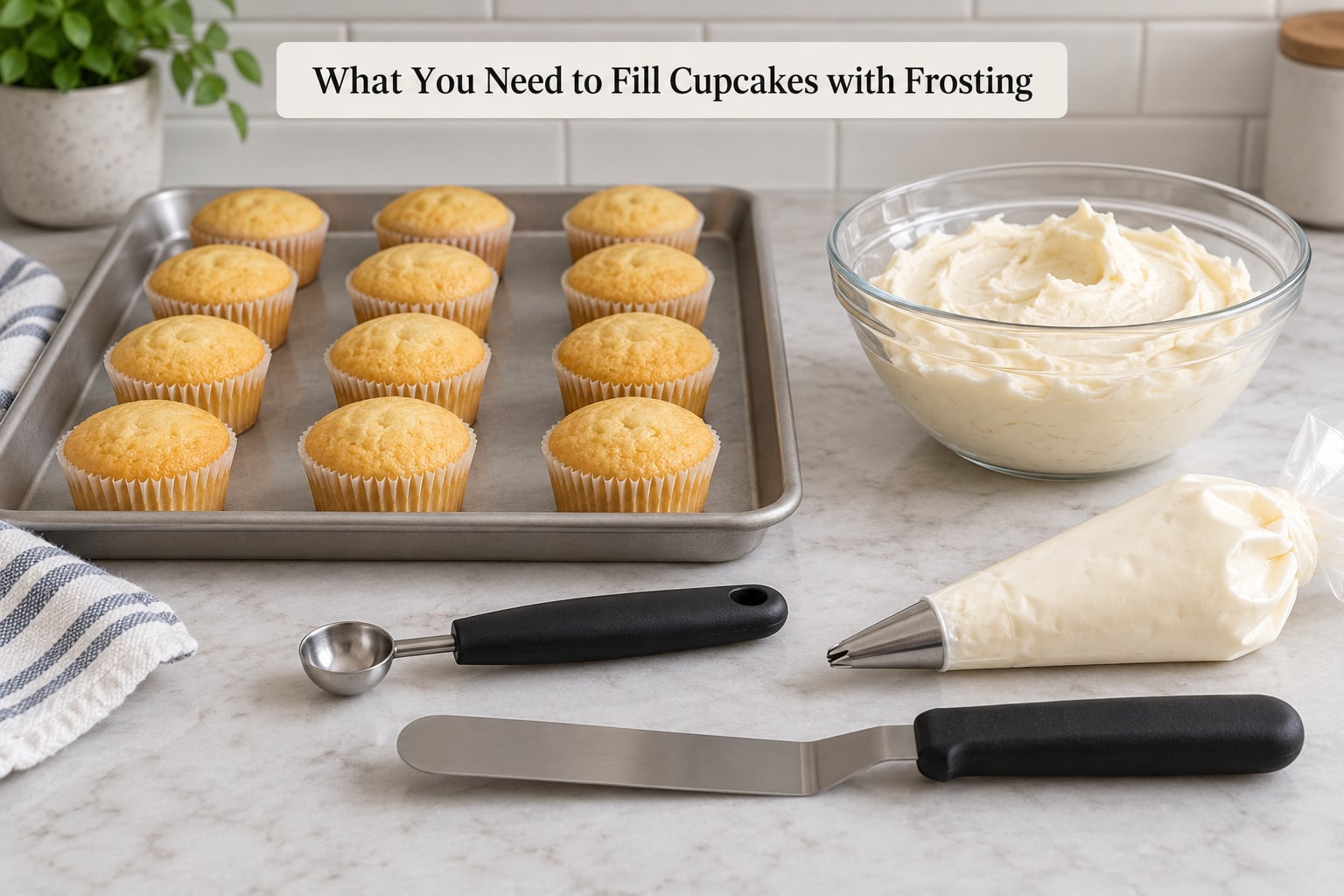
The cupcake list is short. You need baked cupcakes that are completely cool, a frosting or filling thick enough to hold its shape, and one tool to make the hole.
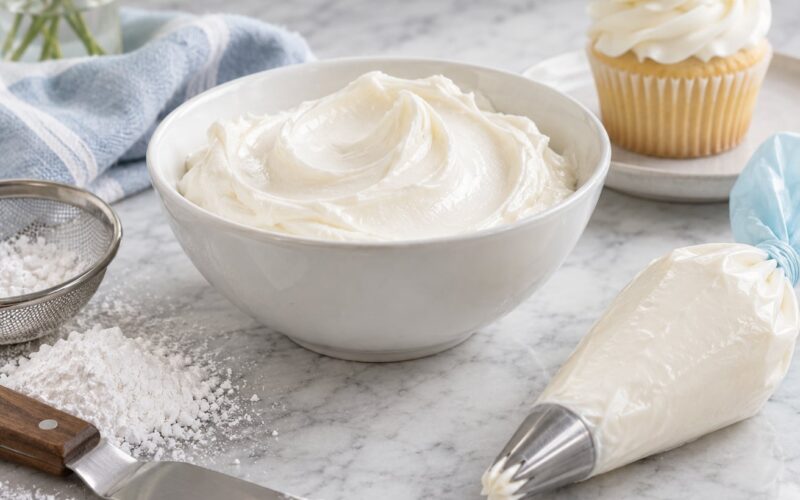
A piping bag with a narrow round tip gives the neatest result and the least mess. It reaches into a small hole and delivers frosting exactly where you want it, so it suits soft fillings like whipped frosting and loose fillings like jam.
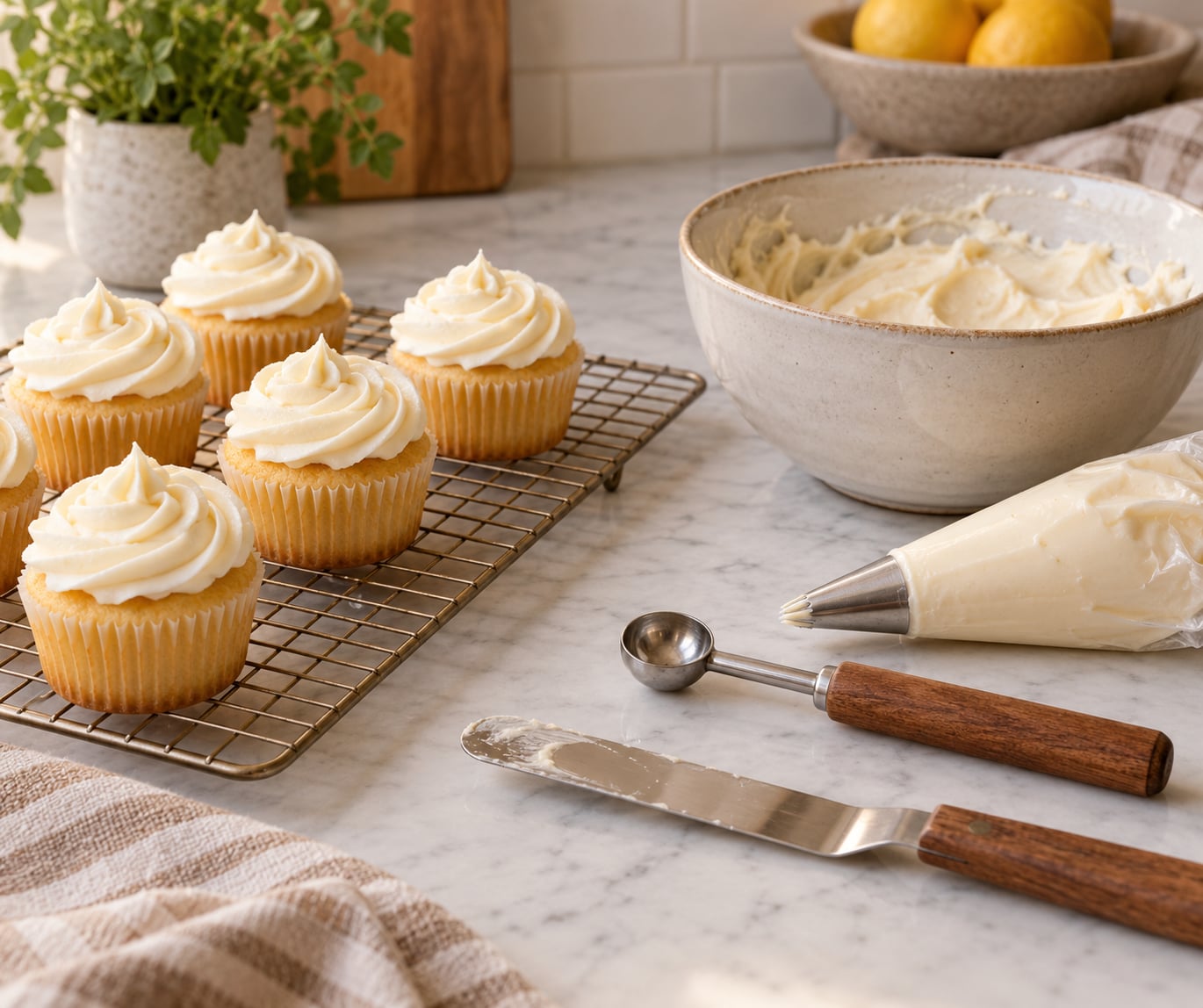
A melon baller or apple corer is the fast option for a batch. Press it straight down, twist, and lift out a clean plug of cake. An offset spatula does two jobs: it cuts a small well when you do not own a corer, and it levels frosting afterwards.
A small spoon works fine for a dozen cupcakes and costs nothing. It is the least precise of the four, so add filling in two rounds rather than one.
Chill the cupcakes for 15 to 20 minutes in the fridge if your frosting is soft, or if the cake is a delicate one like angel food or a sugar-free recipe. Cold cake cored cleanly for me far more often than cake straight off the rack. If you like, set the filling out while they chill so it stays pipeable.
Step-by-Step: How to Fill Cupcakes with Frosting
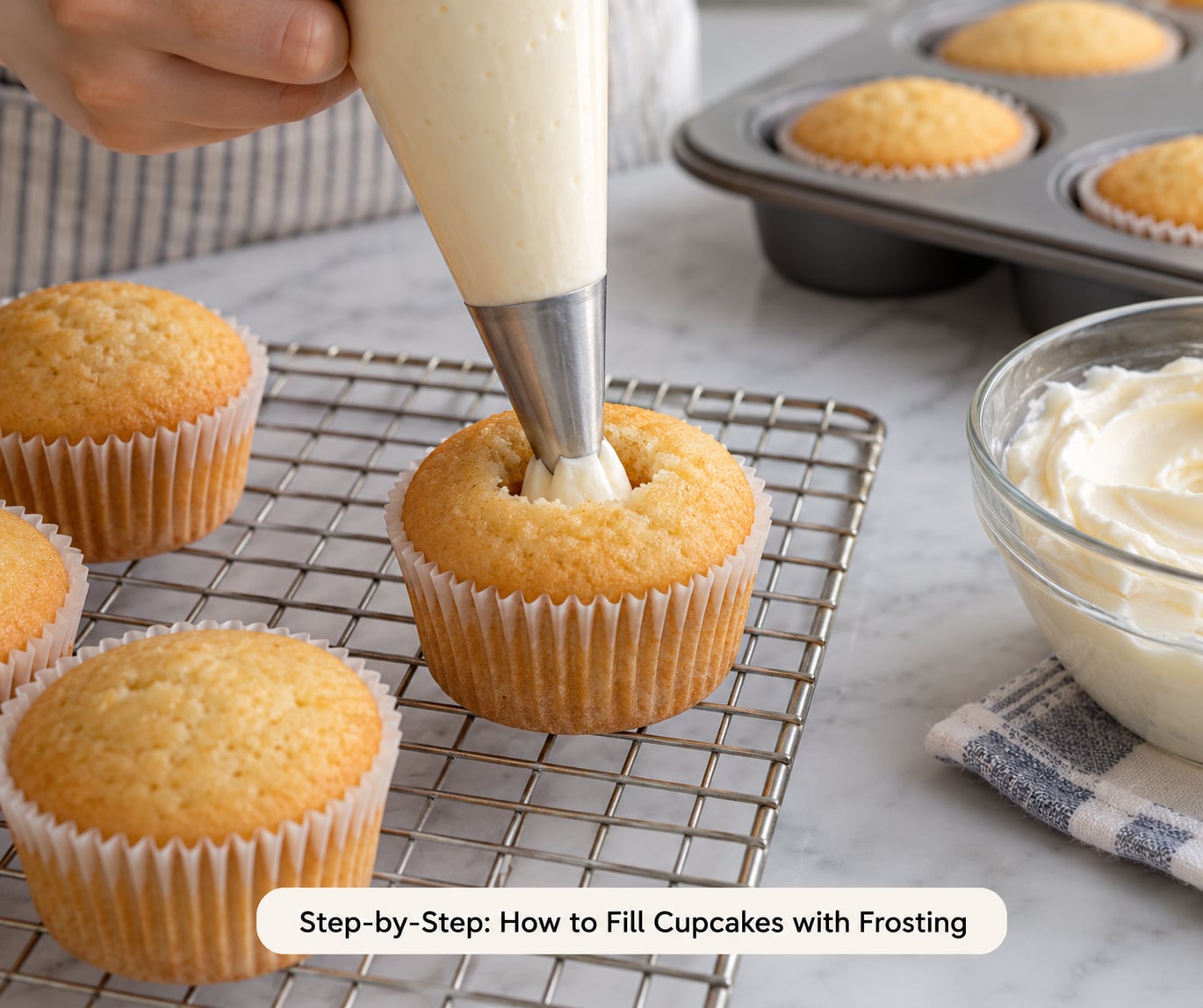
Read the whole process once before you start, then work through it in order.
- Cool the cupcakes completely. Any warmth left in the center means the cake tears and the crumbs drag the filling down with them.
- Make a hole about 1 inch deep in the center, using a corer, the wide end of a large piping tip, or a small paring knife.
- Add 1 to 2 teaspoons of frosting or filling, stopping well before it reaches the top of the hole.
- Trim the pointed end off the cake plug, set it back in the hole flat side up, then pipe frosting over the entire top.
That 1 inch depth works on a standard 2.5 inch cupcake. On a jumbo cupcake go to 1.5 inches, and on a mini cupcake stop at about three-quarters of an inch.
How to fill cupcakes with a piping bag
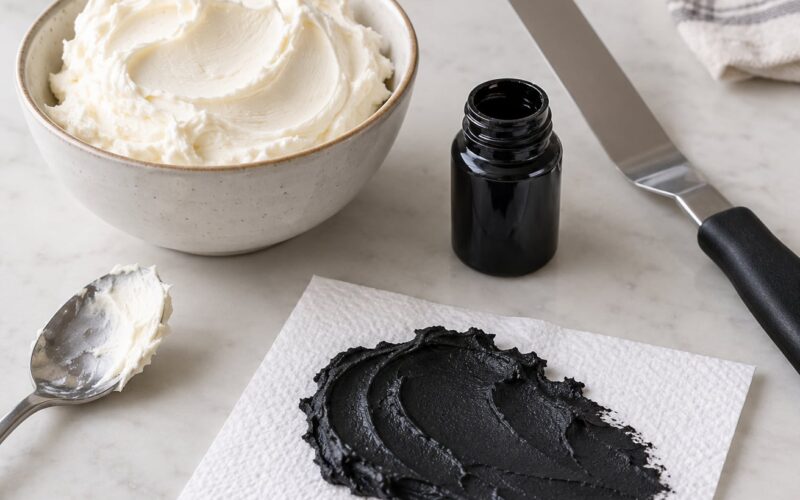
Squeeze a little frosting onto a paper towel first. If it comes out of the tip in a slow blob instead of a steady stream, the tip is clogged, and frosting is going to end up behind the tip and down the outside of the bag while you work.
Push the narrow round tip into the center of the cupcake to about halfway down, keeping the bag upright so frosting does not run backward into it. Squeeze slowly while lifting the tip a fraction as you go.
Stop when the frosting reaches about a quarter inch below the surface. If you see it at the top of the hole, you have gone too far, and the cupcake will push frosting out of the bottom when you pick it up. Lift the tip straight out and blot the hole with a paper towel.
For a standard cupcake, one to two teaspoons fills the center properly. A generous one-inch mound is a good visual check before you seal it.
How to fill cupcakes with a melon baller
Push the melon baller straight down into the center, no more than 1 inch, and rotate it once or twice before pulling it out. That twist is what keeps the walls of the hole tidy instead of ragged.
If you push through and break out the side of the cupcake, your motion is angled. Aim the handle straight up and over the center, and let gravity do the work rather than pressing hard.
Crumb the removed core in your hand over the cupcake so the loose crumbs fall into the cavity, then drop frosting in with a spoon. Tearing at the top happens when the cake has sat for a day or two and dried out, so fill those a little more gently and accept an uneven surface.
This is the method to use for a large batch. Thirty cupcakes takes a few minutes with a corer versus much longer with a piping bag, one cup at a time.
How to fill cupcakes with a spoon or offset spatula
Use the angled edge of an offset spatula to cut a shallow well, roughly half an inch deep, and pull the loose cake crumbs out. You are not trying for a clean cylinder here, just a pocket that will hold frosting.
Drop in a teaspoon, check that it sits below the rim, and add a second only if the first settled low. Level the surface with the flat of the spatula and move on.
This works best on cupcakes that are going to be frosted heavily on top anyway, since the cut edge stays visible under a thin layer. It is also the fastest method when you are filling leftover or day-old cupcakes.
Choosing the right filling amount and frosting type
The amount is tied to size. A standard cupcake takes 1 to 2 teaspoons, a jumbo takes about 1 tablespoon, and a mini takes half to 1 teaspoon, roughly.
American buttercream on the cool side holds a shape well and survives room temperature for a day or two. Swiss or Italian meringue buttercream is lighter and holds its swirl nicely, but it needs a cool room, and it softens fast on a warm counter.
Whipped cream frosting and any dairy-based filling are perishable. Chill the filled cupcakes until about an hour before serving, and refrigerate them the whole time they are not on the table.
Cream cheese frosting is soft and tangy, so fill with a jam or curd rather than more frosting. The filling stays put in the cool center while the frosting handles the outside work.
If you are working with a thin filling like lemon curd or raspberry jam, thicken it first. A spoonful of cornstarch cooked into the jam, or an hour less cooking, keeps it from soaking straight through the cake crumb.
How to finish filled cupcakes without spills
Look at the cupcake before you frost it. A level, slightly domed top is fine. A crater, a visible crack or a plug sitting proud of the surface all get covered by a proper swirl.
Trim the cake plug flat with a serrated knife and press it down gently, pointed side up and flat side toward the filling. Some bakers eat the trimmings on the spot, which is the correct use for them.
Chill the cupcake for 10 minutes if the frosting feels loose, then pipe from the center outward in a single slow spiral, lifting as you go. An open star tip builds height quickly, and the base of the swirl covers the filled hole completely.
You will know it is right when the cupcake sits flat on the counter after you pick it up, and the liner shows no frosting seeping through the bottom.
Common Mistakes When Filling Cupcakes
Filling the cupcake while it is still warm. The crumb is soft and it sticks to the corer instead of releasing. Wait until the center feels cool to the touch, not just the top.
Cutting all the way through the sides. A paring knife drifts as it goes down. Twist the cupcake in your fingers as you lower the knife, keeping the blade vertical, and stop at 1 inch.
Overfilling. This is the number one reason frosting ends up on the baking sheet. Fill to a quarter inch below the surface and no further, and squeeze the bag gently rather than hard.
Using frosting that is too warm. Warm frosting slumps into the hole and pushes out the bottom. Chill the bowl for 15 minutes, or add a tablespoon of cold butter and beat it through.
The filling disappears. Nobody bites the center. Fill enough to be visible from the side, about two thirds of the cavity, and tell people at the table that the cupcakes are stuffed.
A lumpy top after replacing the plug. Trim it flat with a serrated knife and press it down, then cover it with more frosting than feels necessary. The swirl is doing the leveling, not the plug.
Soggy cake by serving time. Runny fillings soak into the crumb. Fill those cupcakes no more than an hour or two before serving, and hold the rest unfilled until then.
Frosting behind the piping tip. Push the tip into a fresh cupcake before loading, and lift your thumb slightly as you squeeze so pressure goes forward, not up into the bag.
A few habits make most of this disappear. Work on a chilled tray, fill in two small additions instead of one large one, and give every filled cupcake a proper top swirl rather than a thin coat. That swirl is what makes a filled cupcake look professional.
Frequently Asked Questions
Do cupcakes need to be chilled before filling?
Not always, but chilling helps. Cupcakes straight from the tray crumble when you core them, so at minimum let them cool fully to room temperature, which takes one to two hours. If your frosting is soft whipped or cream cheese frosting, chill the cupcakes for 15 to 20 minutes first. Cold cake cored cleanly every time in my kitchen, and it keeps the filling firm while you work.
How much frosting should I put inside one cupcake?
One to two teaspoons for a standard cupcake, about one tablespoon for a jumbo, and half to one teaspoon for a mini. The cavity is only about an inch deep, so stop when the frosting sits a quarter inch below the surface of the hole. Anything more pushes out of the bottom of the liner when you pick the cupcake up.
Can I fill cupcakes the day before serving?
Yes, for buttercream, jam, ganache and pastry cream fillings. Refrigerate them in a single layer for an hour, then move them to an airtight container and keep them cold overnight. Whipped cream frosting, cheesecake filling and anything with fresh dairy needs to be filled closer to serving, ideally within a few hours, and stays refrigerated until it goes on the table.
Why is frosting coming out the bottom of my cupcake?
That usually means the hole reached the base of the cupcake, so there was nowhere for the frosting to go but down. Keep the core about one inch deep on a standard cupcake, and check the liner for holes afterward, since some liners tear. Overfilling is the other cause, so stop at a quarter inch below the top and hold the bag upright while you squeeze.
Can I fill cupcakes without removing the cake center?
You can, using a piping bag fitted with a long narrow tip such as a number 230 Bismarck. Push the tip into the center from the top without cutting, squeeze in the filling, and pull the tip out. The cupcake expands slightly as it fills, which is your signal to stop. Anything thicker than curd or jam needs a cored hole instead.
What is the best filling method for beginners?
The melon baller with a spoon is the easiest to learn, since both tools are ordinary kitchen utensils and the frosting goes in where you can see it. A piping bag gives a neater result but takes practice to load and control. Whichever you pick, chill the cupcakes, fill in two small additions, and cover the top generously so the cut is never visible.
Start by chilling your cupcakes if the frosting is soft, then pick the method that matches the filling: a corer for thick fillings, a piping bag for soft ones, a spoon when you are in a hurry. Work in small increments, stop a quarter inch below the surface, and give the top a swirl heavy enough to hide everything underneath. Once you get the rhythm, a batch of two dozen takes about fifteen minutes.