Sugar cookies spread in the oven because the butter and sugar melt into a liquid before the flour and egg proteins have set, so the dough flows outward instead of holding its cut shape. Three things cause it almost every time: the dough is too warm, the butter is too soft, or there is not enough flour holding the structure together.
That is why the same recipe can hold a perfect gingerbread snap one Saturday and puddle into one merged tray the next. Spread is a temperature and ratio problem, not a recipe problem, and you can only fix it if you know which of the nine causes below is in play.
Start at the top of this list and work down in order. The first three account for most of the batches I see go wrong.
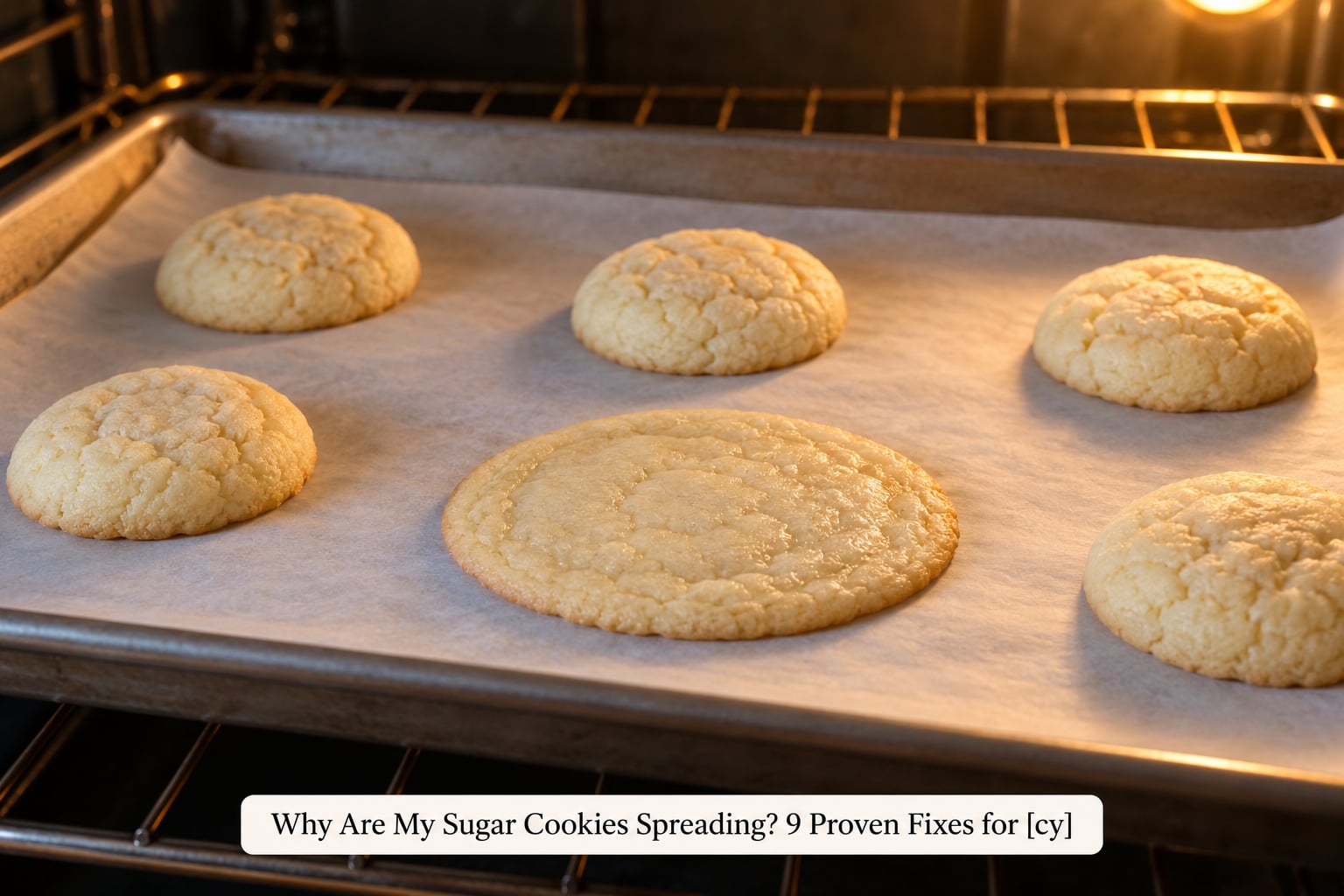
Table of Contents
- Why Are My Sugar Cookies Spreading in the Oven?
- The 9 Most Common Causes of Spreading
- Dough and Ingredient Problems
- How to test butter temperature without guessing
- Is it too much sugar, and does the type matter
- Are you measuring flour by volume
- How long to cream, and what vanilla and leavening do
- Chilling and Handling the Dough
- Why are my sugar cookies spreading in the oven even after chilling?
- How long to chill sugar cookie dough
- Warm hands and a warm counter are real variables
- Oven Temperature and Baking Problems
- Do cookies spread more at 350 or 375
- Check whether your oven is actually at temperature
- Parchment, silicone or a greased metal sheet
- How to Fix the Next Batch of Sugar Cookies
- Frequently Asked Questions
- How do I stop my sugar cookies from spreading?
- Do cookies spread more at 350 or 375?
- Why are my cookies spread but not brown?
- Does adding more flour to cookie dough stop it spreading?
- Should I use parchment paper or grease my cookie sheet?
- Why did my cookies spread more this time with the same recipe?
- Conclusion
Why Are My Sugar Cookies Spreading in the Oven?
The mechanism matters, because it tells you which fixes are worth your time. Butter and sugar melt somewhere around the low 300s, while the flour proteins and egg proteins need several more minutes to set. For that window the dough has no structure, so it behaves like a liquid and spreads outward. Whatever shape you cut is the shape it had only briefly.
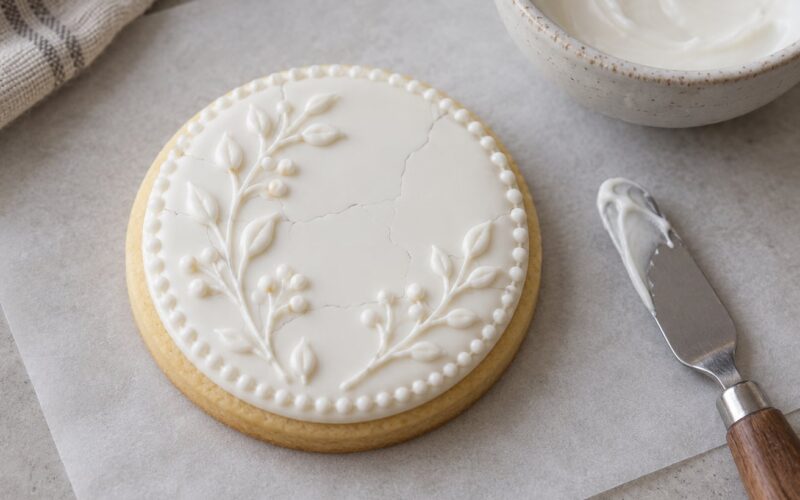
Spread is normal in a thin cookie, around a quarter inch of added width on each side. It is a problem when a cut-out loses its outline, when cookies touch, or when the finished cookie is wafer thin and brittle. Cut-out shapes for royal icing have almost no tolerance, since flooding icing needs a flat, even surface to sit on.
The fix is always one of two things: give the fat less time to melt before the structure sets, or build more structure in the first place. Chilling does the first. Firm butter, more flour and short mixing do the second.
Here is the full list of causes, most common first.
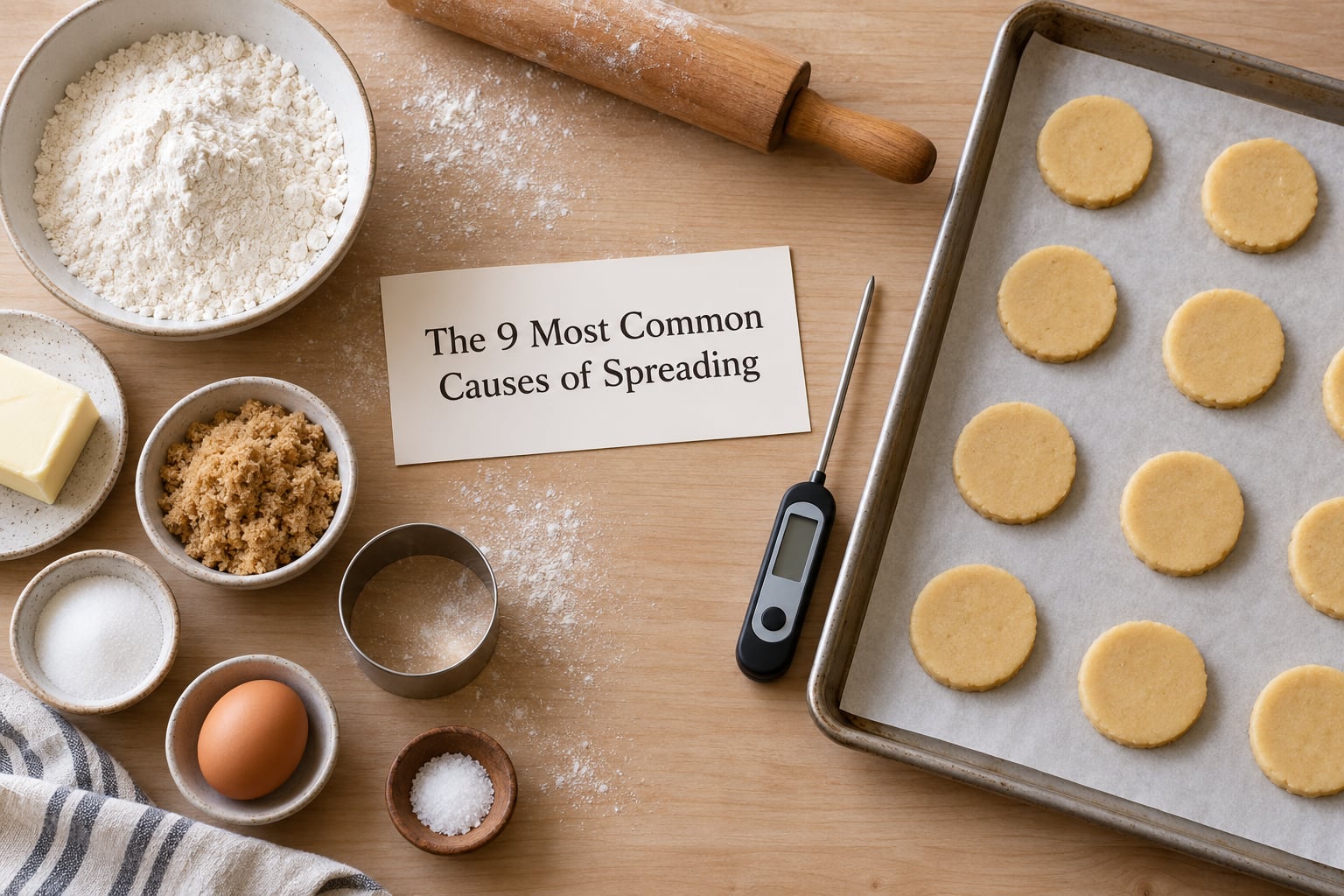
The 9 Most Common Causes of Spreading
1. Butter that is too soft. Room temperature or melted butter has no solid fat left to hold shape, and it flows the moment the tray hits the oven. Signs: dough that will not hold a print, edges that slump as soon as you roll, cookies that spread from the very first second of baking.
2. Too much sugar in the dough. Sugar dissolves, and a dough with too much of it has less structure to resist flow. Brown sugar pushes harder in that direction than granulated because molasses adds moisture. Signs: cookies that spread and also taste cloyingly sweet.
3. Not enough flour. Every extra tablespoon of fat and sugar needs flour to balance it. Scooping a heaped cup is a very common way to come up 20 to 30 grams short. Signs: dough that feels tacky and elastic, cookies that spread wider each batch.
4. Overmixing after the flour goes in. Flour contains gluten, and gluten tightens when you work it. A tough dough should spring back and hold a clean edge. Signs: the dough resists rolling, then bakes flat anyway.
5. Dough that warms up on the counter. Rolling, re-rolling and handling add heat faster than most bakers expect. A dough that felt firm at mixing time can be soft twenty minutes later. Signs: dough softens as you work, especially in a warm kitchen.
6. Chilling at the wrong stage. Chilling the log, then rolling and cutting, warms everything back up. The last thing to chill should be the cut shapes on the sheet. Signs: dough goes from firm to slack in under two minutes of handling.
7. Low-protein flour or cake flour used by mistake. Pastry and cake flour have roughly half the protein of all-purpose flour. They are made for tenderness, not for holding a cut edge. Signs: a recipe that is fine with all-purpose flour fails with whatever is in the pantry.
8. An oven that runs hot. Sugar cookies need 350F to set before they colour. A hot oven melts the fat faster and browns the thin edges long before the centre sets. Signs: dark rings around pale centres, cookies spread wide and thin, bottoms scorch first.
9. A dark, hot sheet with the cookies crowded together. A dark nonstick pan absorbs far more heat than light aluminium, and it transfers straight into the butter. Cookies touching have nowhere to spread but into each other. Signs: spread on one tray only, worse on the second tray, worse still in summer.
Run through this list in order and you will usually find one clear culprit.
Dough and Ingredient Problems
How to test butter temperature without guessing
Room temperature butter is the single most common culprit. Aim for 65 to 68F, cool room temperature, which is colder than most kitchens think. Press a fingertip into the butter: it should dent it and stay dented, not split the stick or bounce back.
If it dents and your finger sinks in, that is fine. If your finger pushes straight through, chill the butter for 20 minutes and try again. The same rule applies to brown sugar, which holds a surprising amount of moisture and softens the dough around it.
Is it too much sugar, and does the type matter
Yes, the type matters. Granulated sugar dissolves more completely, and brown sugar adds both moisture and extra spreading. If your cookies spread and also feel sticky or overly sweet, pull back 10 to 15 grams of sugar rather than adding flour, which fixes the structure but leaves the sweetness where it is.
Granulated and caster sugar are interchangeable. Do not swap in powdered or confectioners sugar, which dissolves almost completely and turns the dough gluey.
Are you measuring flour by volume
Weigh it. One cup of all-purpose flour is about 120 grams, and a heaped cup can be 130. Spoon the flour into the cup, level it with the rim, and only then tip it in. Weighing removes the largest single source of variation in home cookie dough.
If your dough is already mixed and spreading, add flour one to two tablespoons at a time and chill again. More than three tablespoons and the cookies turn tough and dry, which is a different complaint entirely.
A useful check: measure the ratio in your recipe. Most cut-out sugar cookie recipes land near 2 to 2.25 cups of all-purpose flour per cup of butter, and 3/4 cup of sugar per cup of butter. A recipe that sits well under those numbers is a thin cookie recipe by design.
How long to cream, and what vanilla and leavening do
Cream butter and sugar for about 60 to 90 seconds, until pale and just fluffy, then stop. More air now means a puffier cookie that rises before it sets, and a puffier cookie lands wider. A stand mixer on medium for five minutes is a genuine cause of spread in an otherwise correct recipe.
Vanilla extract adds liquid and a little extra spread. One to two teaspoons is normal. Old baking powder or baking soda that has lost its strength can produce odd shapes, and expired soda tastes bitter in baked goods, so replace it if the box has been open more than six months.
Once the flour goes in, mix only until no dry patches remain. Then stop. That is the whole rule for overmixing.
Chilling and Handling the Dough
Why are my sugar cookies spreading in the oven even after chilling?
Because chilling the log and then rolling and cutting it puts the warmth back in. Rolling friction, hands and a warm counter all heat the dough, and a chilled dough is often back to room temperature by the time the last shape is cut.
Chill the cut shapes on the sheet instead. That is the advice the r/Baking community repeats most often, and it is the step most recipes skip. The consensus in the r/AskBaking thread on spreading cookies is the same: standard chilling of the dough alone did not stop a batch merging into a single sheet.
If you have already done both, the next things to change are the sheet and the oven. A dark nonstick pan plus a hot oven is the combination that produces puddles even with cold dough.
How long to chill sugar cookie dough
Chill time and result line up more predictably than most recipes admit.
| Chill time | What the dough feels like | Result in the oven |
|---|---|---|
| 15 minutes | Firm edges, soft centre | Not enough, expect mild spread |
| 30 minutes | Noticeably cold throughout | Usually enough for simple rounds |
| 1 hour | Rigid, holds a sharp cut edge | Best for detailed cut-out shapes |
| Overnight | Firm, drier, slightly harder to roll | Least spread, flattest and crispest |
For decorating cookies, chill the cut shapes at least an hour. In a warm kitchen, or above 75F, go longer, because room temperature climbs the whole time the dough sits out.
Store dough in the fridge up to three days or in the freezer up to three months. Wrap it tightly, and press parchment against the surface so it cannot pick up fridge smells or dry out.
Warm hands and a warm counter are real variables
Everything that touches warm dough gives heat back to it. Chill the dough, dust the counter lightly, and if your kitchen runs warm, roll between two sheets of parchment rather than on the board itself. Rolling pins with guides, or two dowels either side of the dough, also stop you from pressing and warming it while you roll.
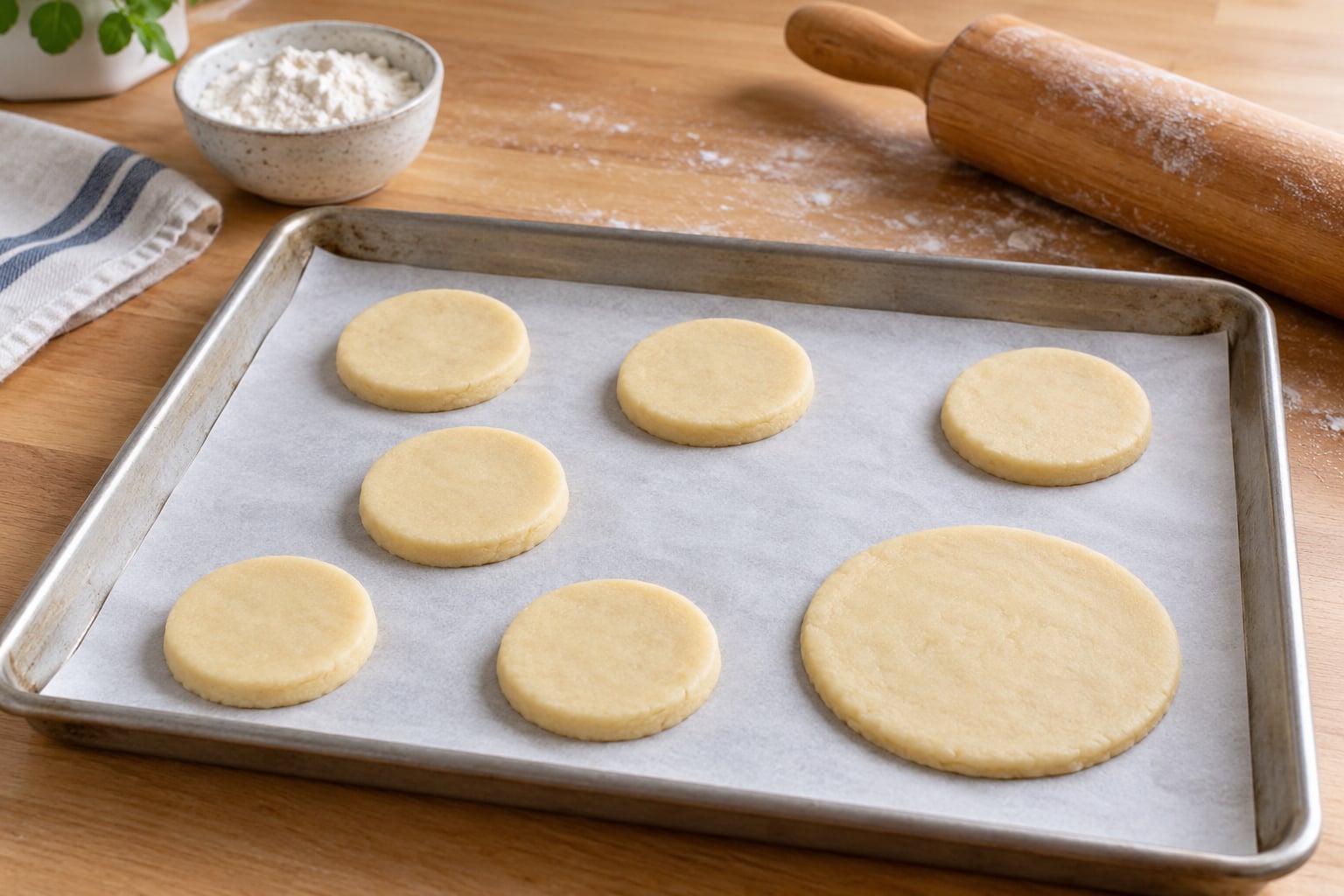
Thickness matters as well. Roll cut-out cookies to a consistent 1/4 inch. Thin dough has less mass to resist flow, so a 1/8 inch cut-out will spread roughly twice as far as a 1/4 inch one from the same batch.
Oven Temperature and Baking Problems
Do cookies spread more at 350 or 375
375F, every time. The higher temperature melts the fat faster and thins the cookie before the structure sets, so you get more spread, more colour and a crisper edge in the same ten minutes. 325F gives the dough longer to set, so cookies hold shape but bake up softer and paler.
| Oven temperature | Spread | Texture and colour | Use it for |
|---|---|---|---|
| 325F | Least | Soft, pale, cakey | Very thick cut-outs, brown sugar cookies |
| 350F | Moderate, predictable | Crisp edge, tender centre | Standard sugar cookie rolls |
| 375F | Most | Thin, snap, deeply golden | Deliberately thin, lace and lace-style cookies |
For cookies you intend to decorate, 350F for 8 to 12 minutes depending on size is the sweet spot. Bake on the middle rack, and let the tray come to temperature with the oven rather than dropping a cold sheet into a hot cavity.
Check whether your oven is actually at temperature
An oven that runs 25F hot is a genuine cause of repeat failure, and it is the least tested variable in most home kitchens. Put a leave-in oven thermometer on the middle rack, preheat for a full 15 minutes, and read it. Adjust the dial until it reads true, then leave the thermometer in place for future bakes.
Browsers in the oven are not accurate. If your cookies spread wide, thin, and pale in the middle while the rims go dark, that is a hot or uneven oven rather than a bad recipe.
Parchment, silicone or a greased metal sheet
Parchment paper is the best all-round choice. It is neutral and slightly cooler than bare metal, so cookies stop spreading sooner. Silicone mats also work well and run about 10F cooler, so drop the bake temperature by 10F and shorten the time by a minute or two. A greased metal sheet is the worst option for holding shape, because the cookie releases from the pan the moment fat hits hot metal.
Use a light-coloured aluminium rimmed baking sheet. A dark nonstick pan behaves closer to a 25F hotter bake for these cookies, and it is the most under-discussed cause of spread on a single tray.
Space cookies 1 to 2 inches apart. A light-coloured pan with a tall rim also buys you more room per tray, which is how a full holiday batch of three trays ends up as one merged sheet.
If you do want thin cookies, skip all of the above. Leave a couple of tablespoons of butter out, skip the chill, use 375F and space the cookies 2 inches apart. The same levers that hold shape also make a lace cookie.
How to Fix the Next Batch of Sugar Cookies
Work through this in order, and change one thing at a time. Changing three things at once is why batches stay unpredictable for months.
- Weigh the flour. 120 grams per cup of all-purpose flour, and use a scale for sugar and butter too if you own one.
- Bring the butter down. Check for a 65 to 68F dent that holds, not a finger that sinks in.
- Cream for 60 to 90 seconds only. Pale and fluffy, then stop.
- Mix in the flour briefly. Until no dry streaks remain, then stop.
- Roll to 1/4 inch between parchment or between rolling pin guides.
- Cut, then chill the shapes on the sheet for 1 hour. This is the step that makes the biggest difference.
- Preheat to 350F for a full 15 minutes and use a light-coloured sheet lined with parchment.
- Space 1 to 2 inches apart and bake on the middle rack for 8 to 12 minutes.
Then test-bake a single cookie. Bake one round on the centre of the sheet, note how far it spread, and adjust the next full tray from that one result. The distance a 3 inch cut-out spreads tells you the ratio: 1 inch of spread on a 3 inch cookie is about 1.33x, which is normal for a thin cookie and far too much for a decorated one.
If the test cookie spreads, add another 15 minutes to the chill before the full batch. If it holds almost too tightly, take 15 minutes off. Two test cookies is usually enough to dial a recipe in permanently.
Frequently Asked Questions
How do I stop my sugar cookies from spreading?
Chill the cut shapes on the baking sheet for a full hour before they go in the oven, not just the dough log. Use butter at 65 to 68F, weigh your flour, cream the butter and sugar for 60 to 90 seconds only, and bake on a parchment-lined light-coloured sheet at 350F. Most spread disappears with those five changes alone.
Do cookies spread more at 350 or 375?
They spread noticeably more at 375F because the butter melts faster and the structure sets later. 350F gives the dough more time to set, so cookies hold their shape with a crisp edge and a tender centre, and it is the better temperature for anything you plan to decorate. Reserve 375F for thin cookies where you want snap.
Why are my cookies spread but not brown?
That combination usually points at a cool or uneven oven rather than the recipe. Fat reaches the melting point well before the sugars caramelise, so a dough sitting in a cavity 25F cold melts and spreads without ever getting hot enough to colour. An oven thermometer on the middle rack will tell you within one preheat.
Does adding more flour to cookie dough stop it spreading?
It does, and one to two tablespoons is usually enough for dough that is already mixed and soft. Beyond about three tablespoons the cookies turn tough and dry, which trades one problem for another. Weighing the flour properly in the first place is better than patching dough afterwards, since a heaped cup can leave you 20 to 30 grams short.
Should I use parchment paper or grease my cookie sheet?
Parchment paper wins for cut-out sugar cookies because it is neutral and slightly cooler than bare metal, so the dough stops spreading sooner. A greased metal sheet lets cookies release as soon as fat hits hot metal, which makes the spread worse. A silicone mat is fine too, but it runs about 10F cooler, so shorten the bake slightly.
Why did my cookies spread more this time with the same recipe?
Look at what changed outside the recipe: a warmer kitchen, softer butter sitting out longer, a dark baking sheet instead of light aluminium, or an overcrowded tray. Sugar cookies spread more in summer than winter for exactly that reason. Note the butter temperature and the room temperature each batch and the pattern shows up fast.
Conclusion
Fix the highest-impact things first, in this order: butter firm enough to dent and hold, cream briefly and mix the flour in briefly, chill the cut shapes for a full hour on the sheet, then bake on a preheated light-coloured sheet with parchment at 350F. Those four cover most spreading.
After that, look at the oven with a thermometer and at the pan you are actually using. If a cookie still spreads after all of it, extend the chill rather than adding more flour, and change one variable per test cookie so you can see what actually moved the result.