Learning how to make a sheet cake for a crowd is mostly arithmetic: pick the pan that matches your guest list, scale the batter to fill it about two-thirds, and give yourself a two-day window. A 12×18 half sheet is the workhorse, feeding roughly 50 people at party-sized 2×2 squares, and it bakes in 25 to 30 minutes at 350°F.
One pan, one layer, no stacking, no leveling, and no frosting the sides. That is why a sheet cake is the sane choice when you are feeding 20 people or 80 from a home kitchen. Plan the pan and frosting first, though, because guessing is how people end up with 40 portions for 60 guests.
Table of Contents
- What You Need
- Step-by-Step: How to Make a Sheet Cake for a Crowd
- Choose the Right Pan and Cake Size
- Prepare the Batter Without Overmixing
- Bake Until the Center Is Set
- Cool, Level, and Prepare the Cake
- Frost and Decorate for a Crowd
- Chill, Transport, and Serve
- Common Mistakes and How to Fix Them
- Frequently Asked Questions
- How big should a sheet cake be for a crowd?
- How many people does a full-size sheet cake serve?
- Can I make a sheet cake ahead of time?
- How do I keep frosting from melting when transporting a cake?
- Can I freeze a sheet cake with frosting?
- How long should a sheet cake rest before serving?
- Final Serving Checklist
What You Need
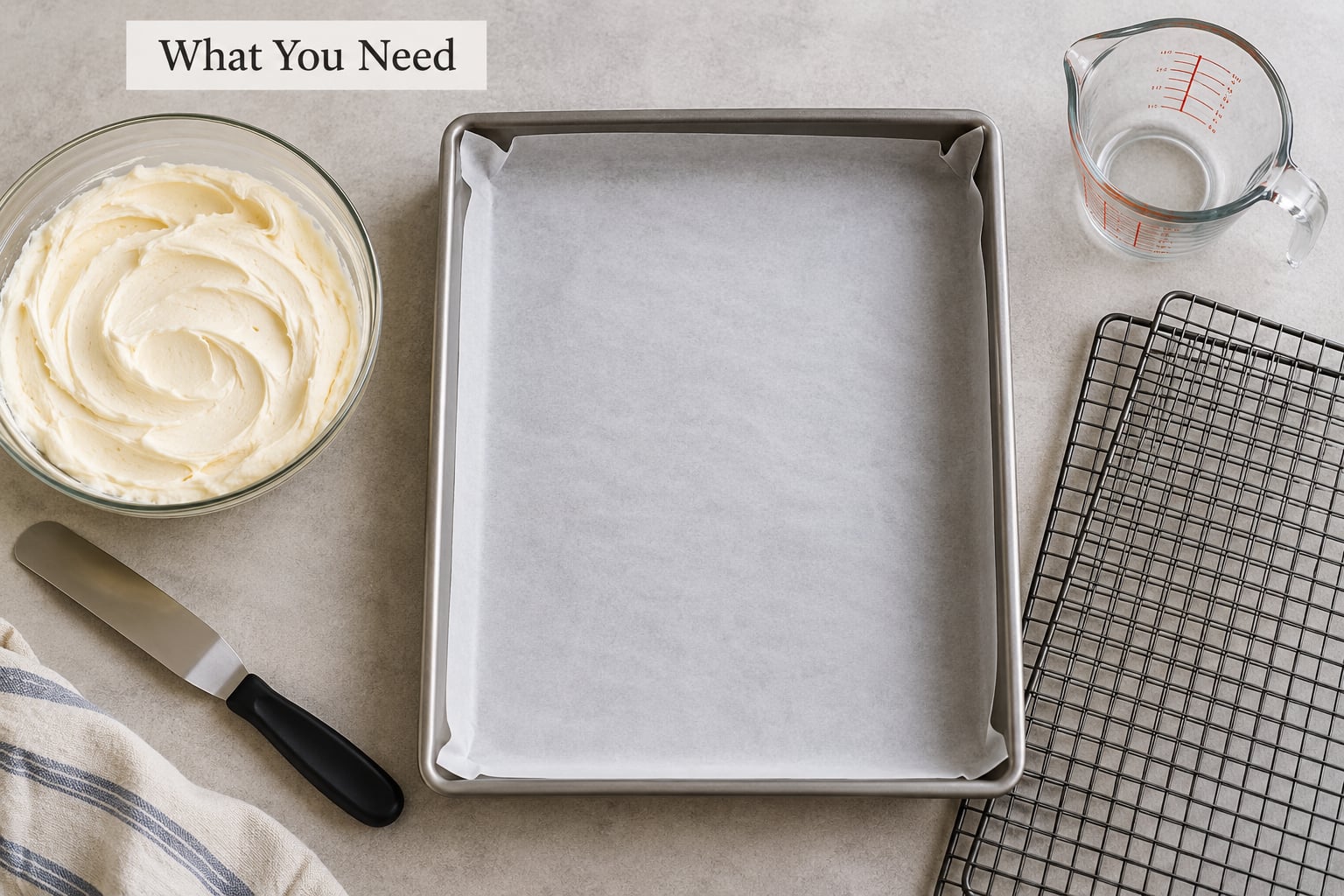
You need one rectangular pan, parchment paper, a mixer or bowl, two wire cooling racks, an offset spatula, a ruler or pastry wheel, and far more frosting than a small cake would take.
The formula for sizing is simple: divide your guest count by the servings in one pan, then add a few extra portions because people take seconds when dessert is free. Divide by 54 for a 12×18, by 29 for a 9×13, or by 96 for an 18×26. Slice size changes the answer more than anything else, so decide whether you are cutting wedding-thin 1×2 fingers or generous 2×2 squares before you count anything.
| Pan | Size | Batter needed | 2×2 party squares | 1×2 finger cuts | Frosting for the top |
|---|---|---|---|---|---|
| Quarter sheet | 9x13x2 inch | 6 to 8 cups | about 29 | about 42 | 2 to 2.5 cups |
| Half sheet | 12x18x2 inch | 10 to 14 cups | about 54 | about 72 | 3.5 to 4 cups |
| Full sheet | 16x24x2 inch | 18 to 24 cups | about 84 | about 112 | about 6 cups |
| Commercial full sheet | 18x26x2 inch | 24 to 30 cups | about 96 | about 130 | 7 to 8 cups |
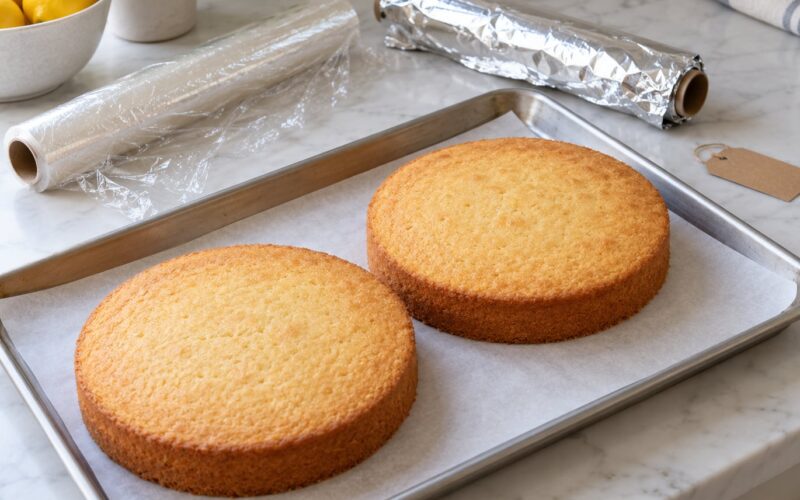
One more planning point people miss: an 18×26 pan will not fit in a standard home oven. If you need full-sheet size, bake two 12×18 half sheets and frost them as one cake, or present them side by side on a long board. Two half sheets also give you a backup if one bakes unevenly.
For supplies, parchment and a decent offset spatula matter more than any gadget. A dollar store sells both, and the spatula is what keeps the frosting off the counter and the edges sharp.
Step-by-Step: How to Make a Sheet Cake for a Crowd
Choose the Right Pan and Cake Size
A 9×13 quarter sheet handles about 20 to 30 guests. A 12×18 half sheet handles 40 to 55, which is the range most church socials, office parties, and holiday gatherings actually need.
Measure from the inside edge of the pan and ignore the printed size on the box if it looks generous. Pan depth sets cake height, and pan width sets bake time: a wider pan bakes faster than a deep one, and a pan filled past two-thirds will overflow or bake up domed.
Grease the bottom and sides, then lay in a sheet of parchment that climbs about an inch up each long wall. That parchment is your release plan for transport, so do not skip it even if you oiled the pan.
Prepare the Batter Without Overmixing
This is the stage where how to make a sheet cake for a crowd either works or quietly fails, and the failure is nearly always overmixing.
Weigh your flour if you own a scale, because cup measures vary and a dense sheet cake cannot be rescued with frosting. Combine the dry ingredients first, add the wet ones, and stir only until the last streak of flour disappears, about 30 seconds.
A scalable base for a 12×18 uses 2 cups sugar, 2 cups all-purpose flour, 2 teaspoons baking powder, 1/2 teaspoon baking soda, 1 teaspoon salt, 2 eggs, 1 cup buttermilk, 1/2 cup neutral oil, and 1 teaspoon vanilla. That is the classic 1-2-3-4 ratio scaled up, and it fills a 12×18 to about 1.5 inches deep.
Pour it in, then tap the pan firmly on the counter two or three times. Big air pockets rise and settle unevenly, while small bubbles are harmless.
Bake Until the Center Is Set
Heat the oven to 350°F and put the rack in the lower-middle, so the cake gets even heat without a hot spot in the middle.
A 9×13 needs about 22 to 25 minutes, a 12×18 about 25 to 30, and a 16×24 about 30 to 35. Home ovens run hot, so start checking five minutes early rather than trusting the clock alone.
Doneness is visual first: the surface should spring back when pressed lightly and the edges should pull from the sides of the pan. Then run a toothpick into the center. It should come out clean or with a couple of moist crumbs, never wet batter.
If you are filling the cake with anything perishable, such as a custard, mousse, or a meat topping, that filling must reach 165°F, or 74°C, before the cake goes anywhere near a party table.
Cool, Level, and Prepare the Cake
Cool in the pan for 15 minutes, then run a knife around the edges and slide the cake, parchment and all, onto a wire rack. Cooling on the rack, not the counter, lets steam escape instead of soaking back into the crumb.
Full cooling takes about an hour. If you are in a hurry, 20 minutes in the freezer after 30 minutes on the rack will bring a warm cake down to workable temperature.
Sheet cakes rarely come out flat. Check the surface with a straightedge ruler, and trim any dome with a serrated knife held at a low angle. One shallow trim is plenty.
Frost and Decorate for a Crowd
Frosting a still-warm cake is the most common reason buttercream slides off the top. Wait for the cake to cool completely, then spread a thin crumb coat, about a quarter of an inch, to seal the crumbs.
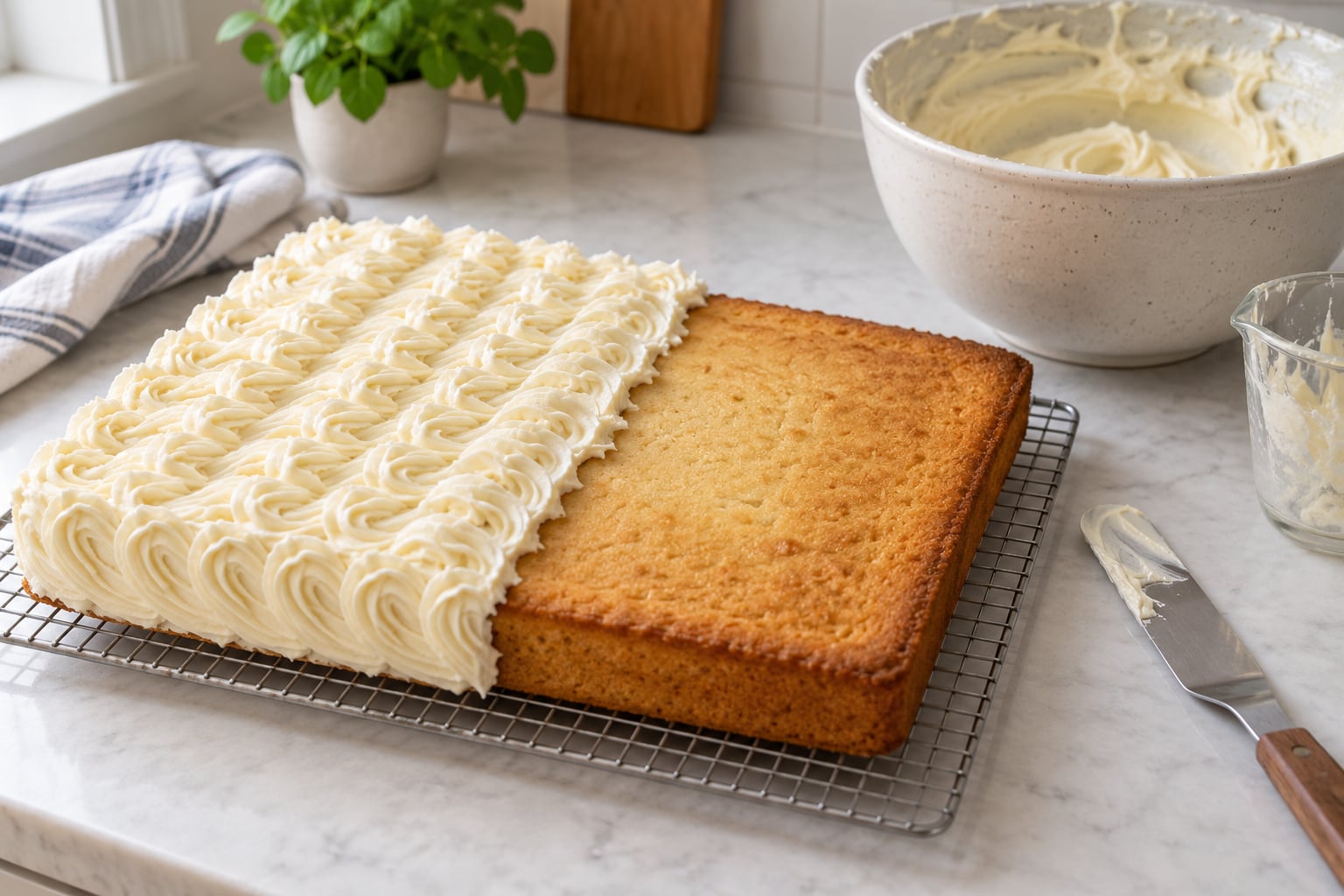
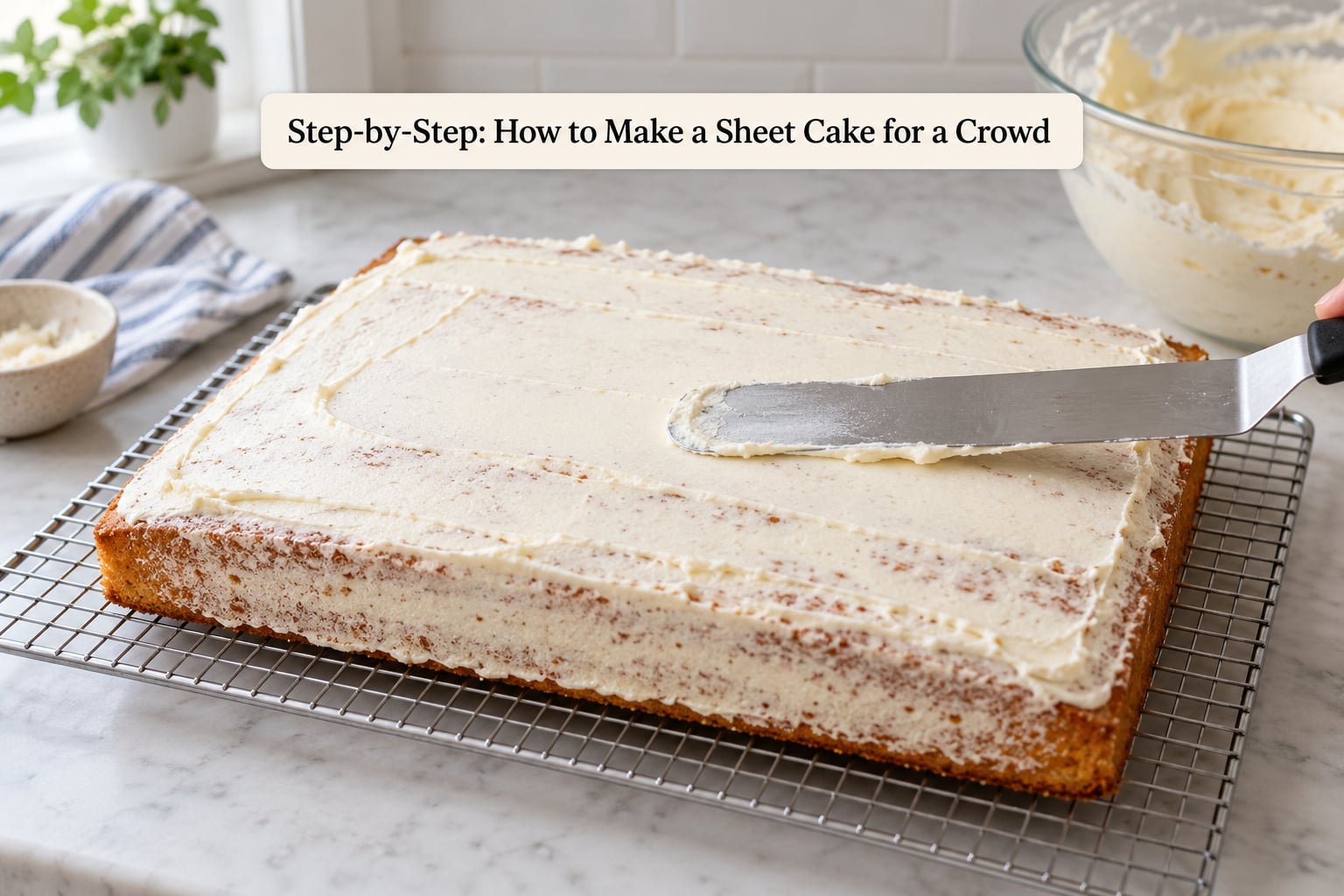
Chill the crumb-coated cake 15 to 20 minutes until the layer firms up. Then add the final frosting, working from the center outward with the flat of the offset spatula, and pull the last pass straight down one edge for a clean side.
Buttercream that will sit on a warm porch or in a car needs to be sturdier than usual. Swap part of the butter for vegetable shortening, hold the finished cake in the refrigerator until you leave, and keep it in the shade at the venue.
Decorate for volume, not detail. Piped borders, a scatter of sprinkles, and one message written across the middle all read well from across a dessert table. Fondant on a full sheet is a two-hour job you do not need.
Chill, Transport, and Serve
A sheet cake moves best cold and firm. Refrigerate it for at least an hour before the event, carry it on a flat board or a large platter, and keep the car cool with the air conditioning on.
Set it on a table at least 15 minutes before cutting. A cake served straight from the fridge tastes flat, and a warm cake smears under the knife.
For even portions, mark the whole cake in one direction first, then the other, and cut across the marks. A ruler pressed lightly on the surface gives you straight lines in soft cake.
Store cut cake covered at 40°F or below. A buttercream sheet cake keeps about 4 days refrigerated, and cream cheese frosting about 3 to 4 days.
Common Mistakes and How to Fix Them
Nearly every disappointing sheet cake traces back to one of seven things.
- Overfilling the pan. Batter past two-thirds domes, spills, and bakes unevenly. Fix: measure the pan, keep the layer around 1.5 inches deep, and bake a test half sheet before committing to a full one.
- Mixing too long. Gluten develops and the cake turns dense and chewy. Fix: stir until combined, then scrape the bowl once and stop.
- Frosting a warm cake. The frosting melts, pools at the edges, and slides off. Fix: cool fully on a rack, use a crumb coat, and chill before the final layer.
- Baking on a rack too high or too low. The top browns before the center sets. Fix: center the rack, and tent loosely with foil if the edges darken early.
- Underestimating frosting. Running out halfway across a 12×18 is common. Fix: use the frosting column in the table above and mix a second small batch while the first is going on.
- Cutting a cold cake straight from the fridge. It cracks and crumbles. Fix: rest it 15 to 20 minutes, use a sharp serrated knife, and wipe the blade between cuts.
- Miscounting the yield. Cake disappears faster than expected when it is the only dessert. Fix: count slices, not guests, and plan roughly one square per person plus about 10 percent extra.
Two habits fix most of the rest. Bake the cake the day before and frost it the day of, so the crumb has settled and the frosting goes on fresh. And if you own baking strips, use them; they slow the outer edge and produce a flatter sheet with no trimming.
Frequently Asked Questions
How big should a sheet cake be for a crowd?
Size the pan to your guest list and your slice size. A 9×13 quarter sheet serves about 29 people at 2×2 squares, a 12×18 half sheet serves about 54, and an 18×26 full sheet serves about 96. For most gatherings between 30 and 60 people, a single 12×18 half sheet is the right answer.
How many people does a full-size sheet cake serve?
A full sheet cake serves about 84 to 96 people when cut into 2×2 party squares, and roughly 112 to 130 people when cut into thin 1×2 finger pieces. An 18×26 commercial pan gives the higher numbers. Remember that an 18×26 pan will not fit in a standard home oven, so most home bakers bake two 12×18 half sheets instead.
Can I make a sheet cake ahead of time?
Yes, and it usually comes out better. Bake the cake one day ahead and wrap it tightly at room temperature, then frost and decorate the day of the event. If you want to go two days out, cool the cake completely, wrap it in plastic and foil, and freeze it. Thaw it in the refrigerator overnight, never on the counter.
How do I keep frosting from melting when transporting a cake?
Chill the finished cake for at least an hour before you move it, and choose a frosting that holds up: American buttercream beats whipped cream or cream cheese for warm settings. Carry it flat on a board, keep the car air conditioned, and set the cake in the shade at the venue. A cake that has been cold all the way there rarely melts.
Can I freeze a sheet cake with frosting?
You can, but freezing unfrosted is more reliable. Buttercream sheet cakes freeze fine for two to three months when wrapped airtight in plastic and foil; cream cheese frosting turns grainy and cream cheese can weep, so freeze those cakes bare. Thaw in the refrigerator for a full day, then frost and return to the fridge for an hour before serving.
How long should a sheet cake rest before serving?
Take it out of the refrigerator 15 to 20 minutes before you cut it. Cold cake tastes flat and crumbs instead of slicing cleanly, and a slightly warmed top takes buttercream better. If you baked it the same morning, give it the full hour of cooling on a wire rack so the crumb finishes setting before frosting.
Final Serving Checklist
Run through this before the cake leaves your kitchen.
- Pan chosen, sized to your guest count, and measured on the inside.
- Yield verified by the slice count you plan to cut, plus about 10 percent extra.
- Batter scaled to fill the pan two-thirds, no more.
- Cake cooled completely on a wire rack, dome trimmed if needed.
- Crumb coat applied, chilled, then finished with enough frosting for the top and edges.
- Cake chilled at least an hour, carried flat, and set out 15 minutes before cutting.
Start with the pan and the guest count. Everything else follows from those two numbers.