Nut free cookies for a school party are not just a recipe with no nuts in it. They are cookies made from verified nut-free ingredients, baked in a kitchen you have cleaned for nut contact, labelled in writing, and packed so nothing gets shared at the table.
The recipe is the easy part. What makes a treat safe is everything around it: the school policy, the label on the baking powder, the clean-up between uses of your counter, and the words on the lid of the container. Walk through that sequence and the baking itself takes about an hour.
Some parents on r/food bake cookies that are simultaneously dairy-free, egg-free, gluten-free and nut-free for a kindergarten class. Others on r/Edmonton just buy sealed, clearly labelled treats and skip the drama entirely. Both are legitimate answers; the difference is whether the school allows homemade food at all.
Table of Contents
- What You Need
- The ingredients and how to check each one
- The equipment
- The label and the information you need
- Step-by-Step
- How to bake nut free cookies for school parties: choose and verify the recipe
- Confirm the school’s allergy and outside-food rules
- Prepare a clean workspace and baking tools
- Mix, chill, and shape the dough
- Bake until set, then cool completely
- Decorate with verified nut-free supplies
- Label, package, and transport the cookies
- Common Mistakes
- Frequently Asked Questions
- Are nut free cookies safe for children with peanut or tree-nut allergies?
- What are the most common hidden sources of nuts in cookies?
- Can I use a boxed cookie mix or refrigerated dough for a school party?
- Can I replace nuts with seeds, coconut, or nut-free chocolate in the recipe?
- How should I label and package homemade cookies for a school allergy policy?
- What should I do if a child has a reaction after eating a school-party cookie?
- Conclusion
What You Need
Before you turn on the oven you need four things: a verified recipe, the school’s actual rules, a clean workspace, and a label you can print. Gathering them takes twenty minutes and it prevents every problem that follows.
The ingredients and how to check each one
- All-purpose flour. Look for a plain flour bag with a full ingredient list and no nut or seed terms on it. If the bag says it is milled in a facility that also processes tree nuts, put it back.
- Baking powder or baking soda. Double-acting baking powder often carries a may-contain warning for milk or nuts because of shared drying equipment. A plain baking soda in a short list is easier to verify.
- Butter or a neutral oil. Check the spread or tub for shared-line wording.
- Vanilla extract, salt, brown sugar. Pure vanilla and plain sugars are simple, but a flavored vanilla blend or a cinnamon roll filling often contains almond or peanut extract. Buy the boring versions.
- Chocolate. Chips and chunks from a dedicated allergen-free brand are the safest pick. Dark chocolate bars sometimes carry a may-contain line even though the ingredient list is clean.
- Sprinkles and decorations. Nonpareils from a dedicated facility, or plain sanding sugar you make yourself with coloured cane sugar.
Read the ingredient list every single time, including on the pantry staple you have used for years. Manufacturers change suppliers and change lines without changing the front of the bag.
The equipment
You need a rimmed baking sheet, parchment paper, a cooling rack, a mixing bowl, measuring spoons, a dough scoop or a spoon, and a rigid container with a lid that closes properly. Wash all of it in hot soapy water before you start, not after.
The label and the information you need
Type up the ingredients list before you bake, not afterwards, while the flour is scattered. You will want your name, the date, and one clear allergen sentence. Ask the teacher for the written school policy and get the answer in the email thread, so you know what was agreed.
Three things to confirm with the teacher: whether homemade food is allowed at all, whether you must supply an ingredient list and allergen statement, and which specific nuts are restricted. Peanut is a legume, not a tree nut, and plenty of schools ban one and not the other. Coconut is its own case again.
Under the US FDA list of major food allergens, coconut counts as a tree nut even though botanically it is a fruit. Some classrooms treat it as a nut and some allow it. If nobody in the class has a listed nut allergy, you have more latitude, but ask rather than assume.
Step-by-Step
How to bake nut free cookies for school parties: choose and verify the recipe
Pick a recipe with eight ingredients or fewer and no add-ins. Short ingredient lists are easier to verify, and plain cookies are easier to portion for twenty-five children than anything with piped frosting.
A one-bowl chocolate chip cookie is the safest default because it depends on staples almost nobody buys by mistake. A sugar cookie cut with a cutter is the easiest to decorate. Skip anything that calls for praline, nut butter, or a flavored compound with almond in it.
Then check every packaged ingredient against the school’s policy, not just against your own memory of it. The flour, the baking powder, the chocolate, the sprinkles and the vanilla. If one item has a shared-facility warning and you cannot find an alternative, pick a different recipe rather than hoping.
Confirm the school’s allergy and outside-food rules
Ask the school what it permits before you bake, not after. A nut-free recipe is still not automatically safe for people with nut allergies, because the flour may have been milled near peanuts and the sprinkles may have rolled through a machine that also handled almond.
Get answers to four questions in writing. Are outside foods allowed in the classroom? Does each treat need a full ingredient list, or does an allergen summary suffice? Is there a sealed-packaging requirement? Does the school provide, or have the teacher provide, a seating plan for children with allergies at the snack table?
Some schools ban homemade food entirely because they cannot verify a home kitchen. When that happens you are not stuck: bring store-bought, individually sealed items from a dedicated allergen-free brand instead, and label the bag anyway. Parents on r/Edmonton do exactly this and skip the whole kitchen question.
Prepare a clean workspace and baking tools
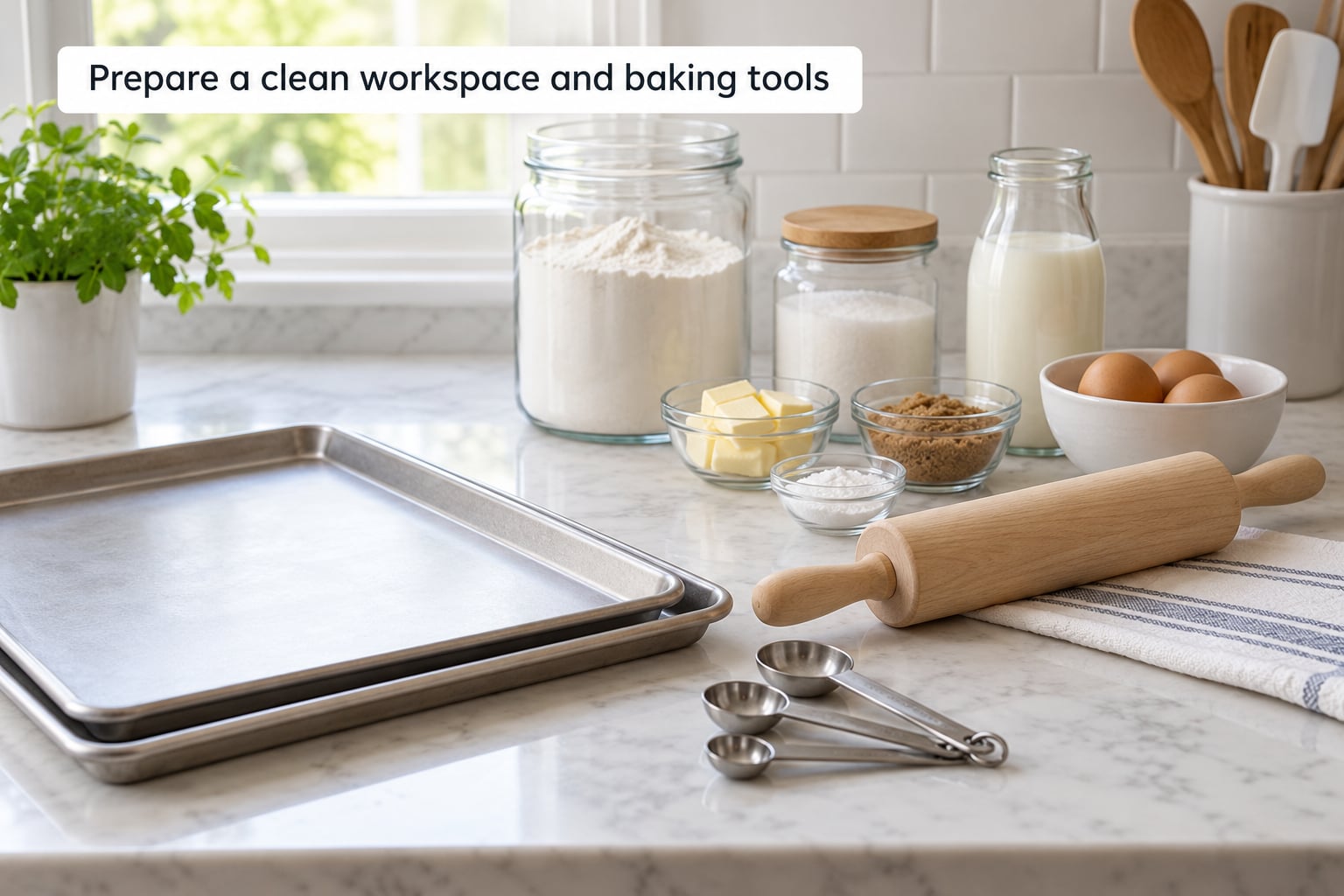
Wash your hands, then wash the counter, the oven handle, the rolling pin, the measuring spoons and the storage container with hot soapy water. Do this before the ingredients come out, not at the end.
What you are doing is reducing exposure. Home cleaning cannot promise a completely nut-free production environment, and any honest label has to reflect that. A kitchen where nobody eats nuts, where you wipe down surfaces first, and where nobody touches your dough mid-bake is about as close as a home kitchen gets.
Pull out only the ingredients you need. A jar of flour sitting next to a bag of chopped walnuts has already lost the argument, no matter how carefully you scooped.
Mix, chill, and shape the dough
Mix only the verified ingredients, and use the amounts in the recipe. Adding extra vanilla or a spoon of seed butter changes nothing about safety and usually changes the texture, so keep the ratio.
Chill the dough for thirty minutes. Firm dough is easier to handle, spreads less in the oven, and gives you cookies of the same size. Warm dough is the number one reason a sheet of chocolate chip cookies bakes into one connected puddle.
Portion with a dough scoop so every cookie is the same weight. Uniform size means even baking and an easy count later when you are working out how many you need for the class.
Bake until set, then cool completely
Follow the recipe’s temperature and time exactly, and give the oven a few minutes to come to temperature before the sheet goes in. Set the timer for the shorter end of the range and check.
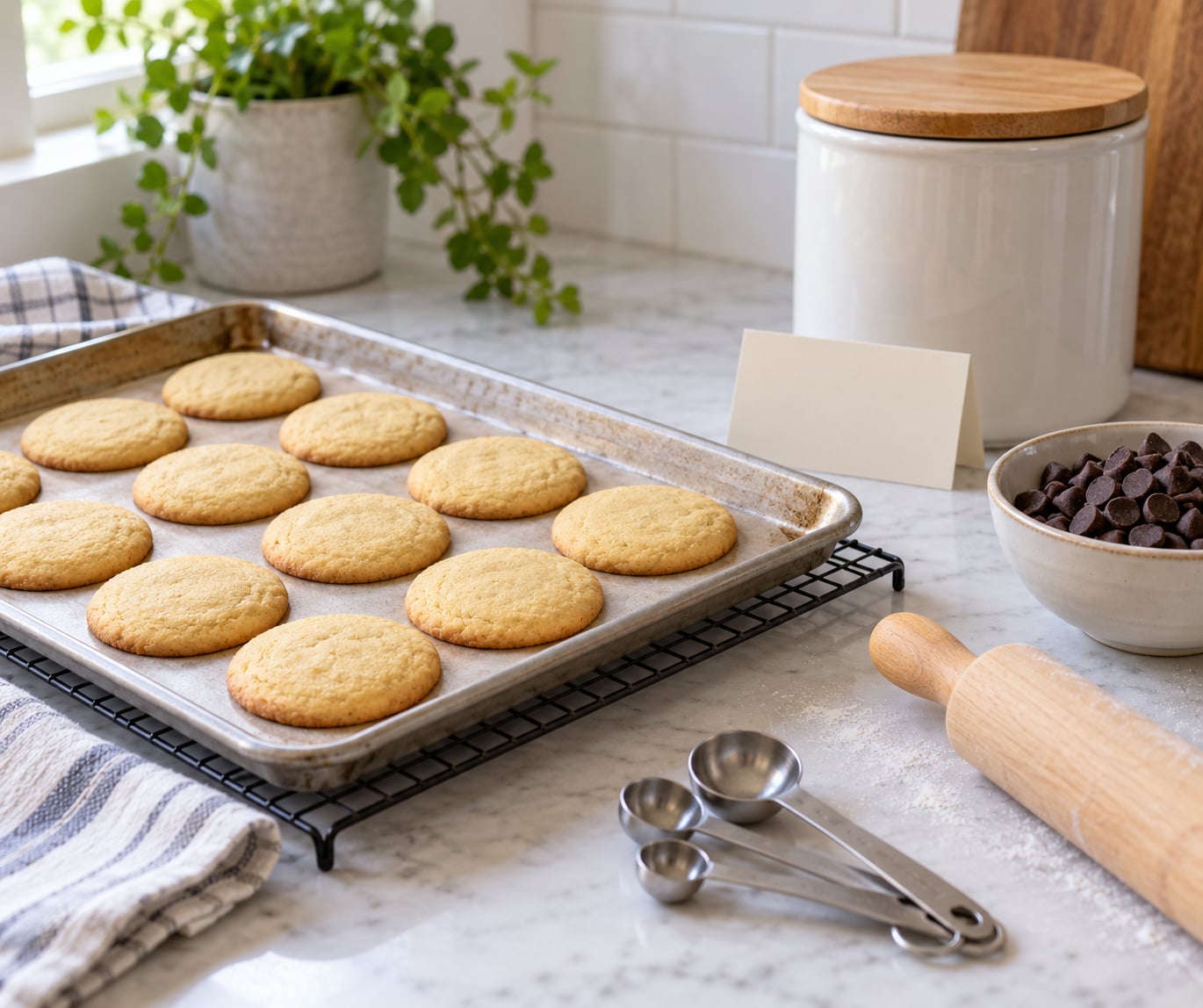
You know they are done when the centre looks set and no longer wet-looking, and the edges are lightly browned. The centre should look slightly underdone at the halfway point; it firms up as the cookies cool on the sheet.
Let them sit on the baking sheet for five minutes, then move them to a cooling rack. Packing warm cookies traps steam and softens everything, and the ones that touch on the tray can fuse into one shape.
Decorate with verified nut-free supplies
Check the decorating supplies the same way you checked the ingredients. Vanilla icing thinned with water, melted white chocolate made from verified chips, or plain sanding sugar you coloured yourself with a drop of food colour all work.
Keep it simple. Sprinkles travel badly, frosting softens in a warm classroom, and anything with a nut-shaped decoration defeats the point of the exercise. A thin glaze and one colour is enough to look festive and completely honest.
If you are working with melted chocolate, set the decorated cookies on parchment until the chocolate hardens, roughly fifteen minutes, before they go near a container.
Label, package, and transport the cookies
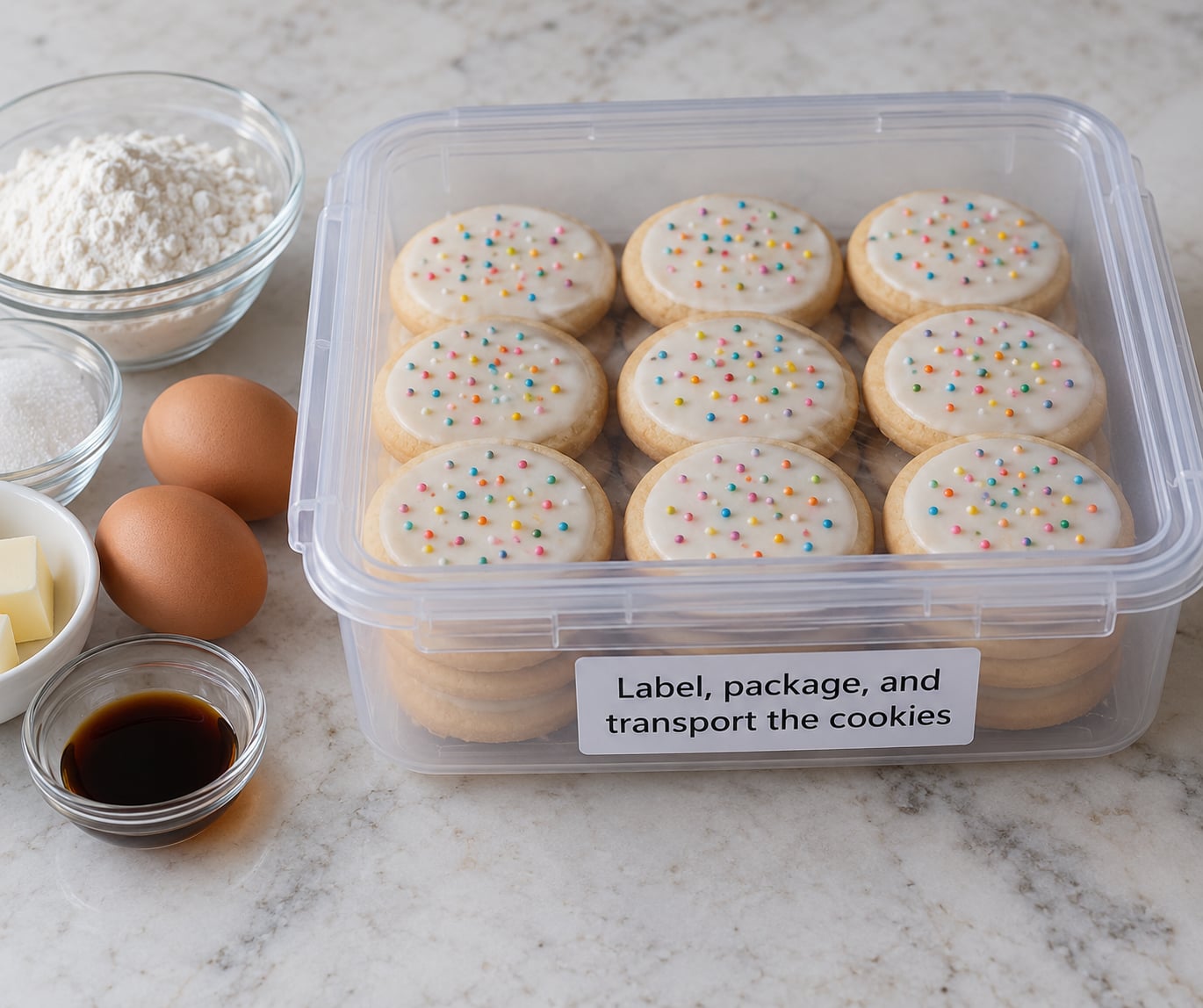
Write the label before you pack. This is the wording to copy onto a card or onto masking tape on the lid:
Chocolate Chip Cookies — made for the class party
Contains: wheat, eggs, dairy, soy.
No peanuts or tree nuts in the ingredients. Made at home in a kitchen where no nuts are used.
Made on: 3 October. Questions: (your name and email).
Please serve first from the sealed container.
Notice what that wording does. It lists what is in the cookies, states the nut status factually, gives the date, and gives you a way to be contacted. It does not say allergy-free or safe for everyone, because you cannot promise that from a home kitchen.
Pack the cookies in a rigid container with a lid, with a layer of parchment between the layers so nothing sticks and nothing breaks in the bag. Do not use a plate of loose cookies or an open bag.
Hand it to the teacher sealed, and mention the sealed container in your note so the teacher knows it is deliberate. Parents on r/Parenting say the single most useful thing is that allergy lists get circulated before the party, so ask whether one is coming and read it.
Common Mistakes
Assuming that no nuts in the recipe means allergy-safe. This is the mistake that matters. A recipe without nuts can still be unsafe if a packaged ingredient carries a nut warning or if your kitchen has cross-contact. Check the labels and tell the truth on the card.
Ignoring shared equipment and the pantry behind you. The whisk that lives next to the peanut butter jar is a cross-contact risk. The flour scoop stored in the same drawer as a bag of pecans is another. Check the flour bin before you fill a measuring cup.
Using decorations without reading the label. Sprinkles, sanding sugar, chocolate chips and vanilla frosting are common nut sources in finished cookies. Buy them from a dedicated facility or skip them.
Decorating too elaborately. A decorated, stacked cookie survives the trip to school in pieces. One layer, one colour, and it goes in the box whole.
Not following the school rules. Bring sealed store-bought items instead if that is the rule. Bringing the wrong thing is worse than bringing nothing.
Labelling only the outer box. If the teacher hands out cookies one at a time from a bag, the label on the box does nothing. Put the card on the container or write the ingredients on the bag itself.
Storing and transporting carelessly. A car seat in the sun turns soft cookies into crumbs. Carry the container flat, out of direct sun, and pack it the night before and bake or finish the day before so the cookies settle.
On portioning, most parents send three per child. Fifteen students needs about 45 cookies, twenty needs 60, twenty-five needs 75, and thirty needs 90. Add ten percent for the adults in the room and for the child who drops one.
One more thing worth knowing: if you remove nuts from a favourite recipe, the cookies often taste flat and spread more, because nuts added structure. Compensate with an extra half teaspoon of vanilla, a small pinch of salt, and slightly less baking powder. Chocolate chunks instead of chips add the bite people miss.
Frequently Asked Questions
Are nut free cookies safe for children with peanut or tree-nut allergies?
Only if every ingredient is free of peanut and tree nuts and carries no shared-facility warning, and your kitchen had no nut contact. A recipe without nuts is not the same as an allergy-safe treat. Check the flour, baking powder, chocolate and decorations, and tell the teacher exactly what you verified.
What are the most common hidden sources of nuts in cookies?
The usual ones are chocolate chips, sprinkles, frosting mixes, flavored vanilla and almond or praline paste, plus nut-contaminated flour or baking powder that carry a may-contain line. Crossover items on the baking sheet matter too. Coconut is treated as a tree nut under US FDA labelling rules even though it is botanically a fruit.
Can I use a boxed cookie mix or refrigerated dough for a school party?
Sometimes, and it is often the simplest option. The dough must come from a dedicated allergen-free line, and you still need to check the frosting and decorations separately. Confirm with the teacher first, because many schools accept sealed commercial products while refusing homemade ones.
Can I replace nuts with seeds, coconut, or nut-free chocolate in the recipe?
Seed butter works well for flavour but adds fat and chlorophyll notes, so use a little less. Coconut is not a safe swap in a classroom because US FDA rules list it as a tree nut, and many schools ban it outright. Chocolate chunks from a verified brand are the easiest substitution that changes nothing structurally.
How should I label and package homemade cookies for a school allergy policy?
List every ingredient, state the peanut and tree nut situation factually, add the date and your contact details, and never claim allergy-free. Pack them in a rigid sealed container with the label on the container itself, not just on a box. Single-serve wrapping removes the risk of cross-contact at the snack table.
What should I do if a child has a reaction after eating a school-party cookie?
Use the child’s prescribed auto-injector straight away and call emergency services, then tell the school office and the child’s parents so the batch can be traced. Follow the emergency plan the family already has with their clinician. Save the packaging and the label card, because that is what identifies every other cookie from the batch.
Conclusion
Four actions, in order. Ask the school what it allows and get the answer in writing. Verify every ingredient and every decoration against that policy, including the pantry staples. Clean the workspace and tools before you start, and keep only what you need on the counter.
Then label each batch with what it contains, its nut status, the date and your name, pack it sealed, and hand it over closed. That is how to bake nut free cookies for school parties in a way a teacher can actually rely on when the cookies come out of the container in 2026.