Yes, you can substitute almond flour in a cake recipe — the swap is usually the same weight, not the same volume, and the flour you choose matters more than most recipes admit. Wheat flour works for a plain vanilla or chocolate cake; oat flour is the closest nut-free stand-in; sunflower seed flour works for allergy households; coconut flour needs a third of the volume and twice the liquid. This guide covers how to substitute almond flour in a cake recipe, the ratios that actually hold up, and the four adjustments that turn a failure into a decent cake.
I bake a lot of gluten-free layer cakes, and the first thing you learn is that “just use another flour” is where most ruined nut cakes come from. Almond flour has no gluten at all, so it has no structure network, it carries more fat than wheat, and it browns faster. Replace it carelessly and you get a dense gummy centre or a cake that spreads to the pan edges.
Table of Contents
- What You Need Before You Swap Anything
- How to Substitute Almond Flour in a Cake Recipe: Step-by-Step
- Choose the Best Replacement Flour
- How to Substitute Almond Flour by Weight
- Adjust the Batter Before Baking
- Bake and Check the Cake
- Common Mistakes
- Frequently Asked Questions
- What to use if I don’t have almond flour?
- Can I replace almond flour with regular flour?
- What is the difference between almond flour and almond meal?
- How much almond flour equals 1 cup of all-purpose flour?
- What is the trick to baking with almond flour?
- Can I substitute almond flour for all-purpose flour in a cake?
- Conclusion
What You Need Before You Swap Anything
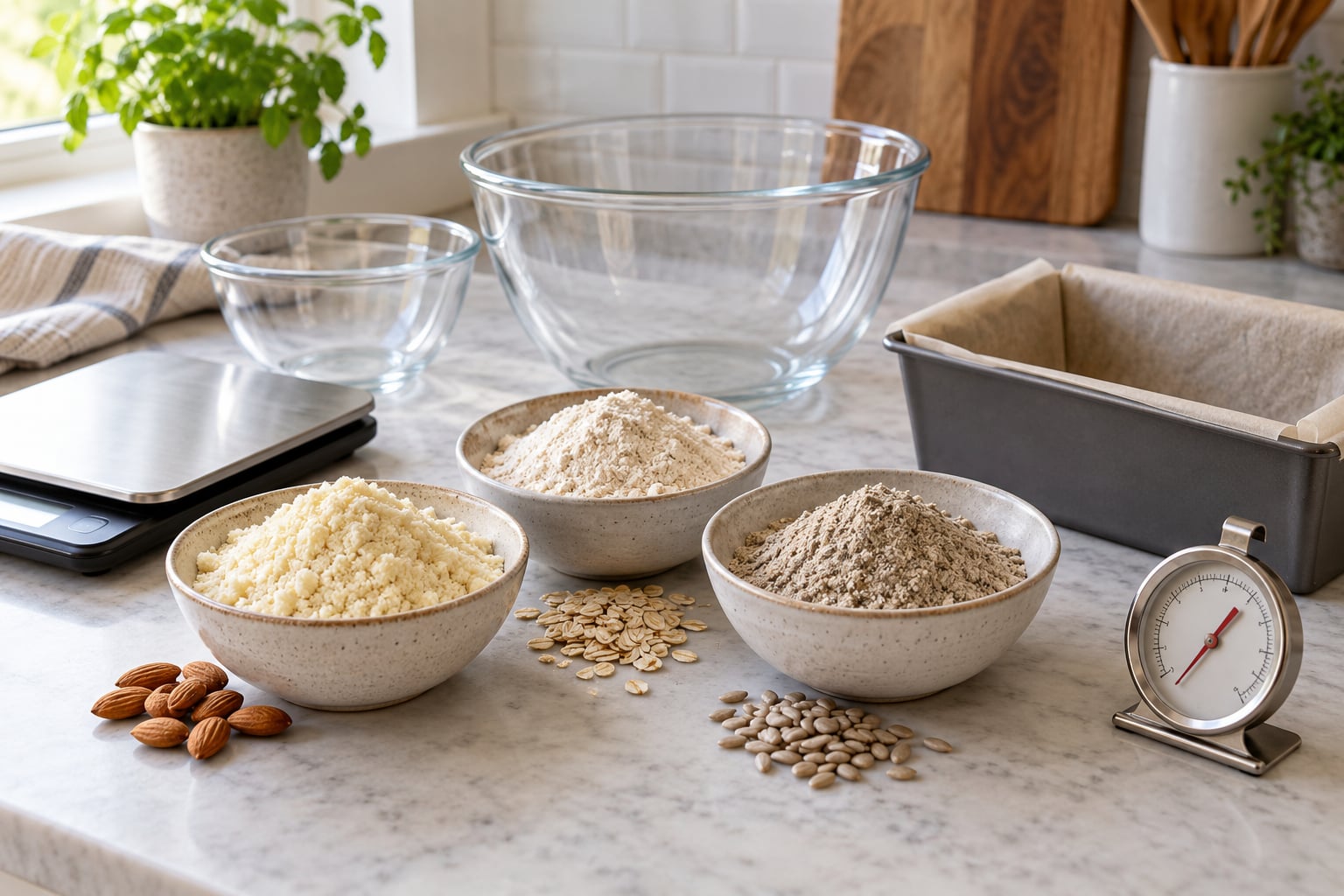
You need very little beyond the recipe itself, a gram scale, your chosen substitute, and the pan the recipe calls for. Everything else is a bonus.
- The original recipe, printed or on screen, so you can see every flour-based quantity including any almond flour in a frosting or crumb.
- A kitchen scale that reads to 1 g. This is the single most useful tool here, because almost every substitution problem traces back to volume measurement.
- Measuring cups and a sieve, for measuring the original amount of almond flour and for sifting any starch or seed flour into the batter.
- Mixing bowls and a whisk or spatula — nothing special, but a separate bowl for the dry mix keeps seed or nut flours from getting cross-contaminated.
- Light-coloured baking paper or silicone liners, since nut flours brown faster than wheat and a dark pan will push the outside of the cake past burnt before the middle sets.
- Cooling rack and a toothpick or skewer for doneness testing.
- An oven thermometer, if you have one. Gluten-free cakes bake faster than you expect and an oven running 10-20 degrees hot is a common reason the outsides overcolour.
Before you start, decide why you are swapping. Running out of almond flour is a different problem from a nut allergy in the house, and the second one rules out most nut and seed substitutes entirely until you check labels carefully.
How to Substitute Almond Flour in a Cake Recipe: Step-by-Step
There are four steps: choose the replacement, weigh it, adjust the batter for structure and moisture, then bake it slightly cooler and check early. Most successful swaps take about ten minutes of extra work on top of the original recipe.
Choose the Best Replacement Flour
The best replacement is the one that matches your dietary goal and the cake’s structure — denser, starchier flours for rich cakes, oat and sunflower for nut-free, and coconut only when you want the coconut flavour anyway.
All quantities below are per 100 g of the almond flour your recipe calls for, which is the only fair way to compare them.
| Substitute | Amount per 100 g almond flour | Extra needed | Flavour change | Best for |
|---|---|---|---|---|
| All-purpose flour | 100 g (roughly 3/4 cup) | Nothing | Lighter, nuttiness gone | Vanilla, chocolate, plain sheet cakes |
| Cake flour | 100 g (about 1 cup) | Nothing | Very light, delicate | Sponge and pound cakes |
| Oat flour | 100 g (about 1 cup plus 2 tbsp) | None usually; hold liquid if very wet | Mild, faintly sweet | Everything — the safest 1:1 swap |
| Sunflower seed flour | 100 g | 1 extra egg per cup of flour if the cake is light | Faint earthy note | Nut-free houses and school lunchboxes |
| Chickpea flour (besan) | 100 g | None, it binds well on its own | Noticeably beany if not sifted into the dry mix | Brownies, rustic cakes, gluten-free |
| Gluten-free flour blend (rice and potato starch) | 100 g | Nothing; blends are pre-balanced | Neutral | Layer cakes and cupcakes |
| Coconut flour | 25-35 g, plus 1.5 to 2x the liquid | Extra egg per cup | Strong coconut, drier | Only chocolate or carrot cakes where coconut fits |
| Hazelnut or cashew flour | 100 g | None | Sweet, nutty, different nut | Nut cake, frangipane-style bakes |
| Rice flour | 100 g | Nothing for dense cakes, extra egg for light ones | Neutral | Fruitcakes and puddings |
| Ground flaxseed or linseed | 50 g plus double the liquid | Extra egg | Earthy, slight bitterness | Bread-type cakes only, not celebration cakes |
Two things stand out. Oat flour is the one readers report as genuinely indistinguishable in a frosted layer cake — it is not nut-free-safe for people with a tree nut allergy unless the label confirms the facility, so check that. Coconut flour is the one most guides recommend and most people regret, because it soaks up three to four times its own weight in liquid and tastes like coconut whether you want it or not.
Chickpea flour is worth calling out as the sleeper option for chewy cakes. It has more protein and more structure than any other nut-free flour in the list, so brownies and banana bread hold together better with it than with anything else here. The trick is mixing it into the dry ingredients, not the wet, so it never clumps.
How to Substitute Almond Flour by Weight
Measure by weight, not by volume: one cup of almond flour is roughly 96 g, one cup of all-purpose flour is roughly 125 g, and that difference is exactly why cup-for-cup swaps fail.
| Flour | 1 cup, grams | 1 cup, ounces | Notes |
|---|---|---|---|
| Almond flour (fine, blanched) | 96 g | 3.4 oz | The reference amount |
| Almond meal (coarse) | 90 g | 3.2 oz | Heavier per cup than flour |
| All-purpose flour | 125 g | 4.4 oz | About 30% heavier per cup |
| Cake flour | 120 g | 4.2 oz | Sifted, or weigh before sifting |
| Bread flour | 130 g | 4.6 oz | Too strong for most cakes |
| Oat flour | 90 g | 3.2 oz | Blends vary, weigh yours once |
| Sunflower seed flour | 100 g | 3.5 oz | Very fine, packs down |
| Coconut flour | 80 g | 2.8 oz | About a quarter the volume of almond flour |
| Rice flour | 115 g | 4 oz | Fine and light |
| Chickpea flour | 120 g | 4.2 oz | Sifted |
If your recipe calls for 1 cup of almond flour, use 96 g of your substitute if you are going to a wheat, oat, seed or rice flour. If you are going to coconut flour, use 30 g and increase the liquid by 1.5 to 2 times. Weigh the almond flour out of the bag first, so you know what the recipe really meant.
Now the part that makes people give up on online guides. You will see 1:1, 1:1.2 and 1:2 all recommended for the same swap, and the reason is that people are answering different questions. A 1:1 figure comes from recipes written for one type of flour and converted casually. The 1:1.2 figure — a 20% increase by weight — is the practical correction for nut flours, which absorb less liquid than wheat, so you need more dry material to fill the same pan. The 1:2 figure comes from converting almond flour into a wheat cake where the writer assumed gluten structure was missing and compensated by cutting the flour hard.
My rule: use 1:1 by weight for wheat, oat, seed, rice, chickpea and blended flours. Add the extra 20% only when the batter is thin and the cake is meant to be light, or when you want a firmer crumb with no gluten at all. Never go below 1:1 without also increasing the eggs or the cake will be short and heavy.
Adjust the Batter Before Baking
Adjust the batter in four places — binder, leavening, fat and liquid — and the swapped cake will behave like the original rather than falling apart.
Eggs and binding. Wheat flour builds its own structure. Nut, seed and starch flours do not, so if the cake is light or layered, add one extra egg for every cup of flour swapped. More than that makes a cake dense and eggy. For very light cakes, a tablespoon of tapioca starch or arrowroot is an alternative binder, and it also fixes the greasy texture nut flours cause by soaking up fat and then releasing it.
Leavening. Because there is no gluten to trap gas, gluten-free batters need more lift. Add 1/4 teaspoon extra baking powder per cup of flour for a layer cake, or swap half of the baking soda for baking powder at the same total volume. Too much leavening is the other common failure — a domed, cracked top with a sunken centre — so change one thing at a time.
Fat. Nut flours are fatty already. If your original recipe has a high butter or oil ratio and you are swapping almond flour for another nut flour, drop the fat by about 10%. If you are swapping to wheat flour, leave fat alone. Neither wants coconut oil added, which is what often makes a swapped cake greasy.
Liquid. Wheat flour needs more liquid than almond flour for the same weight, because it has no fat to absorb it. Moving from almond flour to all-purpose, add 1 to 2 tablespoons of milk or buttermilk per cup. Moving from almond flour to coconut flour, add 1.5 to 2 times the liquid. Moving to oat, seed, chickpea or rice flour, hold the liquid as written until you see the batter.
Rest and mix. Let the combined dry ingredients sit with the wet for 10 minutes so the flour hydrates fully, then mix only until combined. Overmixing a gluten-free batter is the fastest route to a tough, gummy cake. Thick batters also need a scrape-down halfway through the bake, while a thin one needs nothing.
Pan. Line it, grease it, and use the size the recipe specifies. If you go down a pan size because the batter is thick, add 5 to 8 minutes to the bake; if you go up, shorten it.
Bake and Check the Cake
Bake at 25°F (15°C) below the recipe temperature — nut and seed flours brown faster than wheat — and start checking five to ten minutes early.
Lower heat matters most for cakes with a high sugar ratio, where the top will caramelise before the centre sets. The one exception is a gluten-free cake that is stubbornly dense, which sometimes opens up at full temperature because it needs a hotter, faster set.
Look for a golden-brown top, a slight dome, and edges that have begun to pull from the sides of the pan. A skewer inserted into the thickest part should come out with a few damp crumbs, never wet batter. If it comes out wet, give it three more minutes and re-test; gluten-free cakes that look done in the middle can still be raw at the centre, and there is no carryover cooking to save them.
Cool in the pan for 10 minutes, then turn out onto a rack. They will be more fragile than a wheat cake, especially nut-free ones, so give them a full hour before frosting. They also stay moist for days, which is one genuine advantage of the whole swap.
Common Mistakes
Almost every failed swap maps to a symptom, a cause and one adjustment — and checking the batter before the pan goes in the oven solves most of them for free.
| Symptom | Why it happened | Fix |
|---|---|---|
| Sunken centre | No gluten structure, or too much leavening, or underbaked middle | Add one egg per cup of flour, cut baking powder slightly, test 5 minutes earlier |
| Spread to the pan edges | Batter too thin, or no egg binder | Add an egg, hold liquid back, chill the batter 20 minutes |
| Dense and gummy centre | Overmixed, or too little liquid for the flour | Mix until just combined, add 1-2 tbsp liquid, bake 5 minutes longer |
| Greasy or oily top | Fat not absorbed by a fine starch-rich flour | Add 1 tbsp tapioca or arrowroot starch per cup, reduce oil slightly |
| Cracked dome | Oven too hot, or too much leavening | Drop 25°F (15°C), use an oven thermometer |
| Dry and crumbly | Coconut flour with too little liquid, or overbaked | Add liquid in stages, pull the cake at the first sign of doneness |
| Too nutty to taste the vanilla | Substitute is a nut flour | Use a quarter tsp almond extract, or switch to sunflower seed flour |
| Beany flavour | Chickpea flour added to wet batter | Sift it into the dry mix and use 1-2 tbsp less |
Beyond the bake itself, a few habits save time and money. Test a small batch first — one cupcake liner or a ramekin tells you in 12 minutes whether the ratio works, and almond flour is expensive enough that a ruined full cake is worth avoiding. Label jars with the flour name and the date you ground it; home-ground seed flour goes rancid fast, and rancid flour tastes like old oil in the finished cake. Store nut and seed flours airtight in the freezer rather than the pantry, and keep ground flaxseed in the fridge as the strongest of the three. Keep separate utensils for nut-free baking, because cross-contact is the actual danger in an allergy household, not the recipe.
And match the swap to the recipe instead of forcing it. Cakes that depend on structure and frosting, like layered vanilla or chocolate cakes, take wheat or oat flour cleanly. Quick breads, brownies and anything already dense and moist handle heavier flours such as chickpea. Very light sponge and angel food are the hardest, since nothing without gluten replicates their lift exactly — those are worth a shop-bought gluten-free blend rather than a single flour.
Frequently Asked Questions
What to use if I don’t have almond flour?
Wheat flour is the easiest answer: use the same weight of all-purpose flour, 96 g per cup of almond flour, and add 1-2 tablespoons of milk per cup. Oat flour is the closest in texture and flavour and is the swap readers recommend most. For gluten-free baking use a rice and potato starch blend at the same weight. Coconut flour is a last resort because you need only about 30 g per cup of almond flour plus roughly double the liquid.
Can I replace almond flour with regular flour?
Yes, and most plain cakes will be better for it. All-purpose flour gives a lighter, taller crumb and no nutty flavour, and the only adjustment is a little extra liquid, about 1-2 tablespoons of milk per cup, plus 25°F (15°C) less oven heat because wheat browns more slowly. Expect a slightly springier texture and keep the bake time the same.
What is the difference between almond flour and almond meal?
Almond flour is made from blanched, peeled almonds and milled very fine, so it looks pale and behaves like a flour. Almond meal is made from unblanched almonds and is coarsely ground, darker and speckled with skin. You can use meal wherever a recipe calls for flour — the taste is slightly stronger and coarser — but never grind your own to a powdery flour in a small food processor.
How much almond flour equals 1 cup of all-purpose flour?
About 3/4 cup, roughly 72 g. One cup of all-purpose flour is around 125 g, while one cup of almond flour is around 96 g, so almond flour is about 25% lighter per cup. If you are replacing almond flour rather than the reverse, use the same weight of your substitute rather than the same volume, and add a little extra liquid.
What is the trick to baking with almond flour?
The trick is extra binding and lower heat. With no gluten there is nothing to hold the cake up, so add one more egg per cup of flour or a tablespoon of tapioca starch, give the batter a 10 minute rest, and bake 25°F (15°C) cooler so the outside does not brown before the middle sets. Almond flour bakes faster and stays moist longer than wheat.
Can I substitute almond flour for all-purpose flour in a cake?
You can, but this reverse swap is the one that catches people. Replace only half to two thirds of the all-purpose flour with almond flour — a full swap gives a dense, heavy, oily cake because nut flour has no gluten and releases more fat. Keep the other portion as wheat for structure, add an extra egg, and expect a moister, tighter crumb that stays fresh for several days.
Conclusion
Start by weighing the almond flour the recipe wants, because everything after that depends on it. Pick your substitute to suit the cake — all-purpose for plain vanilla and chocolate, oat for the closest nut-free match, sunflower seed for allergy households, chickpea for brownies and quick breads — then add an egg per cup if the cake is light, adjust the liquid for wheat or coconut, and drop the oven 25°F (15°C). Bake a single cupcake or ramekin first; ten minutes will tell you whether a full cake is worth the ingredients.