Buttercream turns grainy for a handful of repeating reasons, and three of them account for nearly every case: butter that was too cold when it hit the mixer, powdered sugar that was never sifted or is a coarser grind, and not enough liquid to dissolve the sugar. Because buttercream frosting has no eggs and no cooking step, nothing dissolves the sugar on its own. Once you know which of those three you hit, the fix usually takes under five minutes.
The good news first: a grainy batch is almost never ruined. You can re-whip it, add measured liquid, or warm it gently to bring the texture back. You do not have to throw it out and start over.
Table of Contents
- What Causes Grainy Buttercream?
- Cold butter that will not cream properly
- Coarse or unsifted powdered sugar
- Not enough liquid
- Overmixing that pumps in air
- Warmer butter than you think
- Liquid added too fast or too cold
- How to Tell Whether Your Buttercream Is Too Cold, Too Warm, or Overmixed
- Dent the surface with a fingertip
- Rub a dab between two fingers
- Scrape it onto a cold plate
- Watch how it behaves under a spatula
- Check the timing, not just the texture
- 7 Easy Fixes for Grainy Buttercream
- 1. Beat it longer than you think you need to
- 2. Add room temperature cream or milk a teaspoon at a time
- 3. Warm the bowl gently
- 4. Sift the sugar, or replace it
- 5. Use the paddle, not the whisk
- 6. Use the microwave rescue in short bursts
- 7. Chill it if you overcorrected
- Recovering a batch that has already been chilled or stored
- Which Type of Buttercream Is Most Likely to Turn Grainy?
- How to Prevent Grainy Buttercream Before You Start Mixing
- Frequently Asked Questions
- Why is my buttercream grainy when the butter was cold?
- Can you overbeat buttercream?
- Why does my buttercream taste gritty?
- My buttercream frosting is curdled. How can I fix it?
- Does it matter what brand of powdered sugar you use?
- How do you make buttercream completely smooth?
- Conclusion: Start With Temperature and Mixing
What Causes Grainy Buttercream?
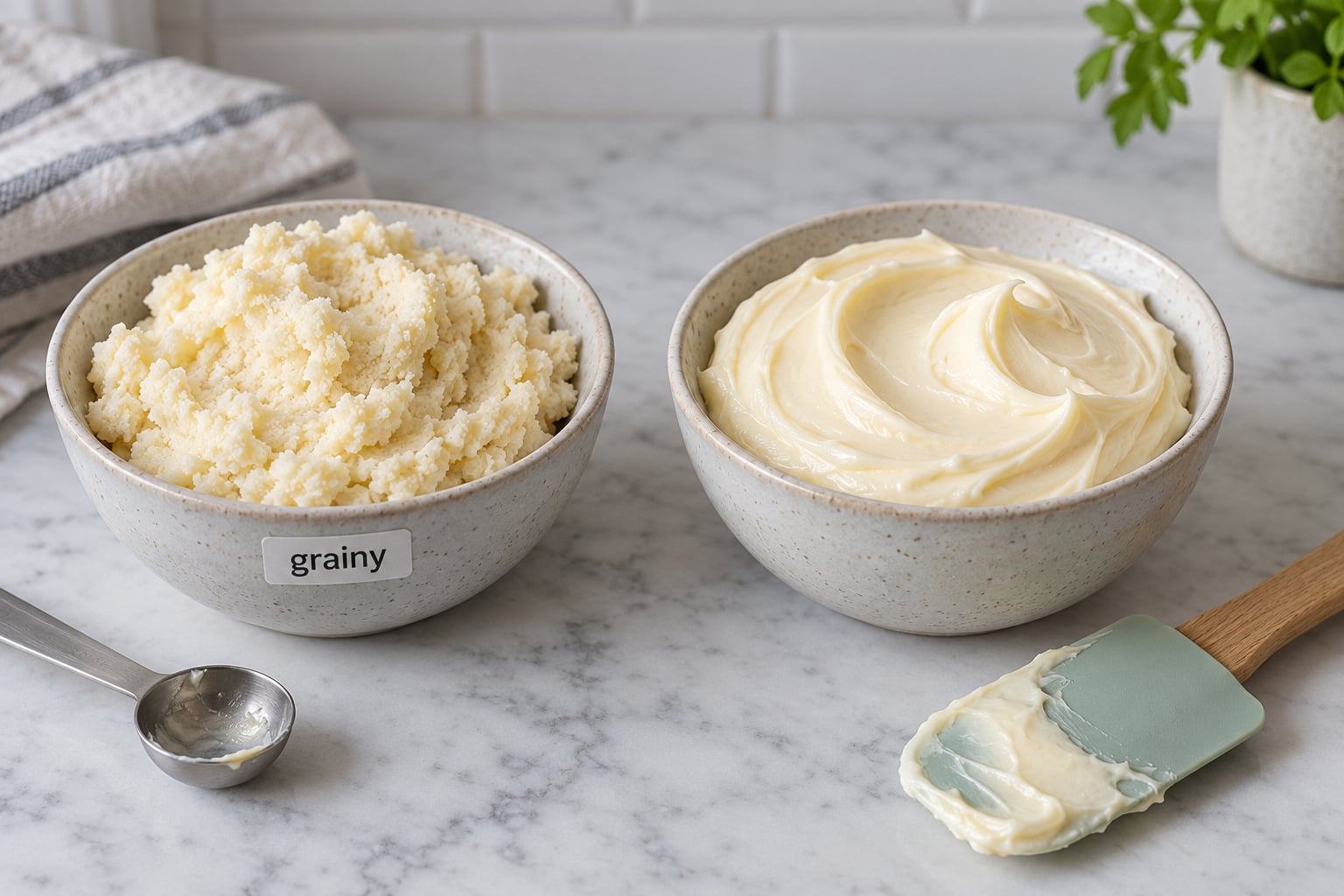
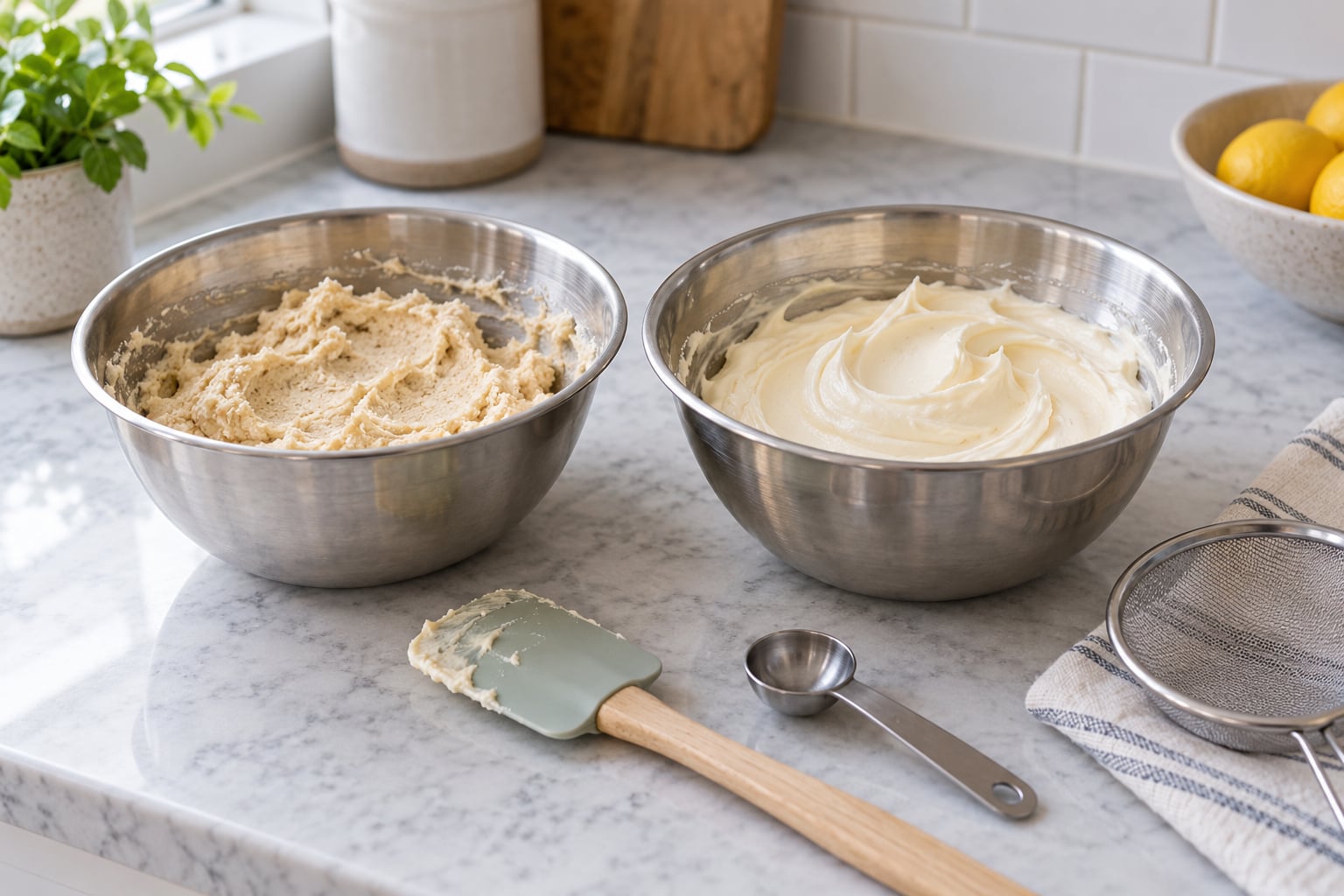
Graininess is a texture problem with two distinct flavors: the frosting feels sandy or gritty and you can taste sugar crystals, or it looks curdled and lumpy like cottage cheese. The first is undissolved sugar. The second is fat that never emulsified. Both get called grainy, and both get fixed the wrong way until you separate them.
Here are the causes in the order they actually happen in your bowl.
Cold butter that will not cream properly
Butter needs to be soft but still cool, somewhere around 65 to 68°F. Straight from the fridge it is a solid block, and the paddle just rolls it around in powder. What you end up with is butter flecks suspended in sugar, which reads as grit when you spread or pipe it.
Coarse or unsifted powdered sugar
Powdered sugar goes stale and clumps during storage, and those lumps do not break apart in a mixer bowl. Even in good condition, 6X sugar is a coarser grind than 10X, and some bags are noticeably grittier than others straight out of the box.
Not enough liquid
Sugar only dissolves in liquid. Most American buttercream recipes land around 2 to 3 tablespoons of milk or cream per 450g of powdered sugar, and going under that is the single most common reason for a gritty frosting that also tastes like raw sugar.
Overmixing that pumps in air
Beating on high speed past the point where the sugar has dissolved pulls in a lot of air. The frosting goes light, foamy and slightly sandy-feeling, and it will shed sugar dust onto your cake when you smooth it. This is a different problem from sugar that never dissolved, though the texture feels similar.
Warmer butter than you think
Butter left on the counter for a few hours softens past the point where it holds its shape, and the fat no longer has a crystal network to trap sugar. A split, grainy frosting is often traced back to butter that sat out far too long rather than to the food coloring you suspected.
Liquid added too fast or too cold
Cold milk straight from the fridge shocks the fat and can make the frosting split or look curdled. Room temperature liquid, added a teaspoon at a time, is what keeps the emulsion together.
| What you see | Likely cause | Correction |
|---|---|---|
| Sandy, gritty, tastes like raw sugar | Unsifted or coarse powdered sugar, not enough liquid | Add 1 to 2 tablespoons room temperature cream, beat on low 3 to 5 minutes |
| Chunky, hard to spread, butter flecks visible | Butter too cold | Warm the bowl briefly or beat until soft, then re-whip |
| Cottage cheese curds in a loose mixture | Butter too warm, emulsion broke | Chill 15 minutes, then beat hard to bring it back together |
| Light, foamy, sheds sugar dust | Overbeaten, air pumped into the fat | Spoon a little back in, or add sugar to stiffen, and stop mixing sooner next time |
| Gritty meringue buttercream | Whites never hit 160 to 165°F, sugar did not dissolve | Reheat to the soft ball stage and whip again |
| Rough only after coloring | Gel color knocked the emulsion loose | Add color earlier, in smaller additions, to a stiff frosting |
How to Tell Whether Your Buttercream Is Too Cold, Too Warm, or Overmixed
Before you change anything, look at the frosting rather than guessing. Three quick tests separate the main causes.
Dent the surface with a fingertip
Press a finger into the frosting. If it holds a clean dent and stands up sharply, the butter is on the cool side and needs more beating. If the dent fills in slowly and the frosting looks shiny and slack, it is too warm.
Rub a dab between two fingers
If you can feel distinct crystals and the frosting tastes sweet and raw, sugar is sitting there undissolved. That points at the sugar or the liquid ratio, not the butter.
Scrape it onto a cold plate
Spread a thin layer and look at the finish. Curdled, lumpy, cottage cheese texture means the emulsion broke. Fine even texture with a faint foam and a lot of air means it was overbeaten. Chunky streaks with visible fat pieces means cold butter.
Watch how it behaves under a spatula
Stiff frosting that tears the parchment when you drag the spatula across it is usually overworked and slightly too firm. Frosting that slides off the spatula and pools is too warm. Neither of those is a sugar problem, so do not keep adding cream to fix them.
Check the timing, not just the texture
Overmixing is easy to spot in the bowl rather than the finish. If the frosting went from pale to white and doubled in volume after the sugar was in, you beat it long past the point where the sugar dissolved. Most grainy frosting traces back to one small step, and it is usually the butter temperature.
7 Easy Fixes for Grainy Buttercream
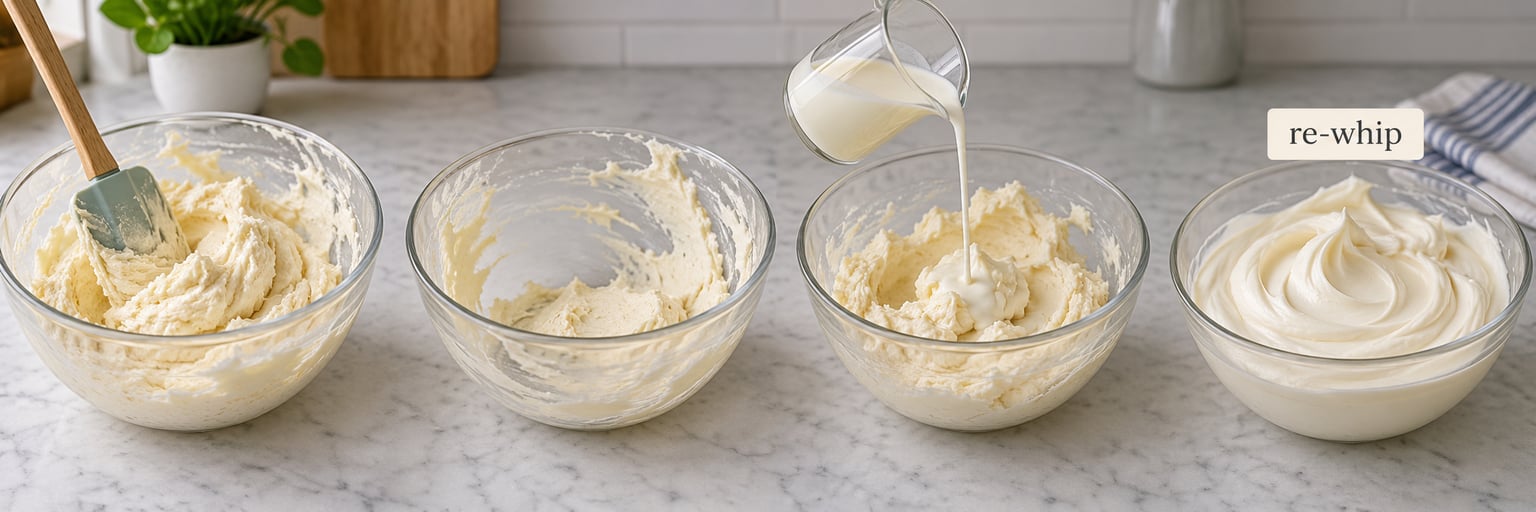
Work through these in order, cheapest step first. Stop as soon as the frosting turns smooth; adding more liquid than you need makes it weep on the cake later.
1. Beat it longer than you think you need to
Most American buttercream needs a full 3 to 5 minutes on low to medium after the sugar goes in, plus 10 minutes of creaming the butter alone before that. Many home bakers whip the butter to light and almost white first, which is what gives the sugar something to suspend in. If you only gave it 60 seconds, this fix alone handles it.
It will not work if the sugar has lumps in it, because lumps do not dissolve, they just get distributed.
2. Add room temperature cream or milk a teaspoon at a time
Start with 1 to 2 tablespoons of whole milk or heavy cream per 450g of powdered sugar, added slowly with the mixer on low. Spoon it down the side of the bowl, let it incorporate for 30 seconds, then add more if it still feels sandy.
This is the fix most people reach for first and most people overdo. Too much liquid is the reason frosting slides off cupcakes. If you have already added a splash and the grit remains, add liquid only after you have finished fix 4.
3. Warm the bowl gently
Put the mixing bowl in warm water for 30 seconds, or hold a filled piping bag in your hands, then beat again on low. Butter that is slightly too cold softens enough to emulsify without the sugar dissolving further.
Skip this for meringue buttercreams, which need to stay cold to pipe. And skip it if the frosting is already curdled and warm; heat makes that worse.
4. Sift the sugar, or replace it
When the sugar is the culprit, you can salvage the batch by sifting. Mix the loose sugar out of the bowl first, sift the frosting itself through a fine sieve, then return it to the mixer. Alternatively, add 2 to 3 tablespoons of fresh sifted powdered sugar and beat on low; the new, finer sugar dissolves and helps carry the coarse particles with it.
5. Use the paddle, not the whisk
A whisk incorporates far more air, which is what makes already-broken frosting look foamy as well as grainy. If you have no paddle and only a whisk, run the frosting on speed 1 for a couple of minutes and press it down with the spatula to knock the air out. Hand mixers work the same way, just expect it to take longer and to warm the butter faster.
This will not fix a hand-mixer batch that never got enough agitation to emulsify. In that case the butter is still in pieces, and fix 3 is what you need.
6. Use the microwave rescue in short bursts
For American buttercream that is gritty but otherwise fine, warm a portion of it in 5 to 10 second bursts rather than heating the whole bowl. Stir between bursts, return it to the mixer, and beat until smooth. A single 5 second burst is often enough to bring a split frosting back together.
Bursts of 10 to 15 seconds or more will melt the butter and push you into a soupy frosting that then has to chill and re-whip. Work in short bursts and check every time.
7. Chill it if you overcorrected
Too much liquid cannot be mixed out. Put the bowl in the fridge for 15 to 20 minutes, then beat on medium until it stiffens back up. For a crumb coat or a spreadable finish this is fine. For sharp edges and piping flowers, check the consistency again before you start.
Recovering a batch that has already been chilled or stored
Cold frosting reads grainy again because the butter fat goes firm. Bring it to room temperature for 20 to 30 minutes, then re-whip on medium. If it was stored covered for more than a day at room temperature, replace it; frosting left warm for hours is not something you want on a cake.
Which Type of Buttercream Is Most Likely to Turn Grainy?
The type changes both the cause and the fix. American buttercream graininess is almost always sugar and butter temperature. Meringue buttercreams are cooked, so their graininess means the sugar never dissolved in the first place, and no amount of extra mixing will change that.
| Type | Why it turns grainy | Best fix |
|---|---|---|
| American buttercream | Cold butter, coarse or unsifted powdered sugar, too little liquid | Add 1 to 2 tablespoons cream and beat 3 to 5 minutes longer |
| Swiss meringue buttercream | Whites heated too gently, sugar not fully dissolved at 160 to 165°F | Reheat to the soft ball stage and whip again |
| Italian meringue buttercream | Syrup poured in too cool, or added too fast so it seizes into strands | Whip hot, scrape down often, add syrup in a thin steady stream |
| French buttercream | Pasteurized butter warmed too far, fat starts to separate | Beat hard while cool, or rescue with a little extra butter |
| Ermine or roux frosting | Cooked paste cooled too fast and set into lumps | Rewarm gently and beat until smooth, or strain it |
For meringue buttercreams, stabilising means holding the whites at temperature long enough for the sugar to dissolve, then cooling before the butter goes in. Add butter in thin slices rather than a whole cube, and scrape the bowl down every 30 seconds. Adding the butter too fast is what turns meringue buttercream curdled and grainy at the same time.
How to Prevent Grainy Buttercream Before You Start Mixing
Most grainy frosting is a preparation problem, and it is much cheaper to prevent than to repair. These are the habits that separate a smooth batch from a salvage job.
- Weigh everything. Volume measuring of powdered sugar is off by enough to matter. A scale removes the guesswork from your liquid ratio before you start.
- Soften butter slowly. Cut it into cubes and leave it out 30 to 45 minutes. Aim for a dent that holds without the butter slumping. That is roughly 65 to 68°F if you have a thermometer.
- Sift the powdered sugar. Sifting breaks up the clumps that form as sugar absorbs moisture on the shelf. It does not matter whether the label says cornstarch or tapioca starch.
- Use 10X where you can find it. It is a finer grind than 6X and dissolves more readily, which matters if your frosting tends to be on the firm side.
- Start with room temperature liquid. Cold milk shocks the fat and can split the batch.
- Add gel color early. Color is easier to disperse into stiff frosting before sugar and cream go in, and knocking the emulsion loose is a common cause of a frosting that suddenly turns grainy.
- Respect batch size. A small amount of frosting in a large mixer bowl never gets enough agitation to emulsify properly.
- Stop before it looks done. Frosting keeps thickening after you switch off. Beat until pale and smooth, then stop.
A short checklist before you switch the mixer on: butter soft but cool, sugar sifted, liquid measured and at room temperature, paddle attached, bowl scraped clean. Ninety seconds of checking saves a full batch.
For storage, American buttercream keeps in the fridge for two to three days in an airtight container, and it needs a re-whip at room temperature before use. Meringue buttercreams also refrigerate well and freeze for up to a month, thawing in the fridge overnight rather than on the counter.
Frequently Asked Questions
Why is my buttercream grainy when the butter was cold?
Cold butter is the most common cause. Straight from the fridge it will not cream, so the paddle just rolls it around in the sugar and you get butter flecks suspended in powder instead of a smooth fat network. That reads as grit when you spread it. Beat the butter alone for 10 minutes until pale and almost white, then add the sugar. The frosting should be soft but the butter should still hold a dent.
Can you overbeat buttercream?
Yes, and the result is not the same problem as graininess from sugar. Beating on high after the sugar has dissolved pumps in air, so the frosting turns pale, foamy and voluminous, and it sheds sugar dust when you smooth it. It also spreads less sharply. Mix on low to medium, scrape down often, and stop as soon as the texture looks right rather than beating to a fixed time.
Why does my buttercream taste gritty?
Grittiness you can taste is undissolved sugar. American buttercream has no eggs and no cooking step, so powdered sugar never dissolves on its own. It relies entirely on liquid and fat to suspend it. If you are under the usual 2 to 3 tablespoons of milk or cream per 450g of sugar, or you used a coarse grind straight from the bag, crystals stay intact. Rub a dab between two fingers to confirm before you adjust anything.
My buttercream frosting is curdled. How can I fix it?
Curdled frosting is not the same as grainy. Curdled means the butter melted instead of emulsifying, so you have cottage cheese curds in a loose mixture. Chill the bowl for 15 minutes, then beat on medium until it comes back together. Some bakers use the microwave in 5 second bursts instead of chilling. Adding more cream to curdled frosting makes it worse, because the ratio is already too wet.
Does it matter what brand of powdered sugar you use?
It can. Bags vary in grind and in how much anti-caking starch they carry, and some are grittier straight from the box. If your frosting is consistently sandy with one brand and smooth with another, that is the difference. 10X is finer than 6X. Sifting helps with any brand, though brands that dissolve cleanly, like many store brands listing sugar and cornstarch, usually need it less.
How do you make buttercream completely smooth?
Cream the butter on its own for about 10 minutes until pale and fluffy, sift the powdered sugar, then add it with 2 to 3 tablespoons of room temperature milk or cream per 450g of sugar. Beat on low for a full 3 to 5 minutes and scrape down twice. Use the paddle rather than the whisk, and stop when it is smooth and glossy rather than when the timer ends.
Conclusion: Start With Temperature and Mixing
Check the butter temperature first. If it went into the bowl straight from the fridge, cream it properly before adding anything else. Next, decide whether the sugar is the problem by rubbing a dab between your fingers. If you taste grit, add room temperature cream a teaspoon at a time and beat on low for a few minutes longer. Only then adjust moisture deliberately, because adding liquid to a frosting that was only under-beaten is how you trade graininess for a slide.