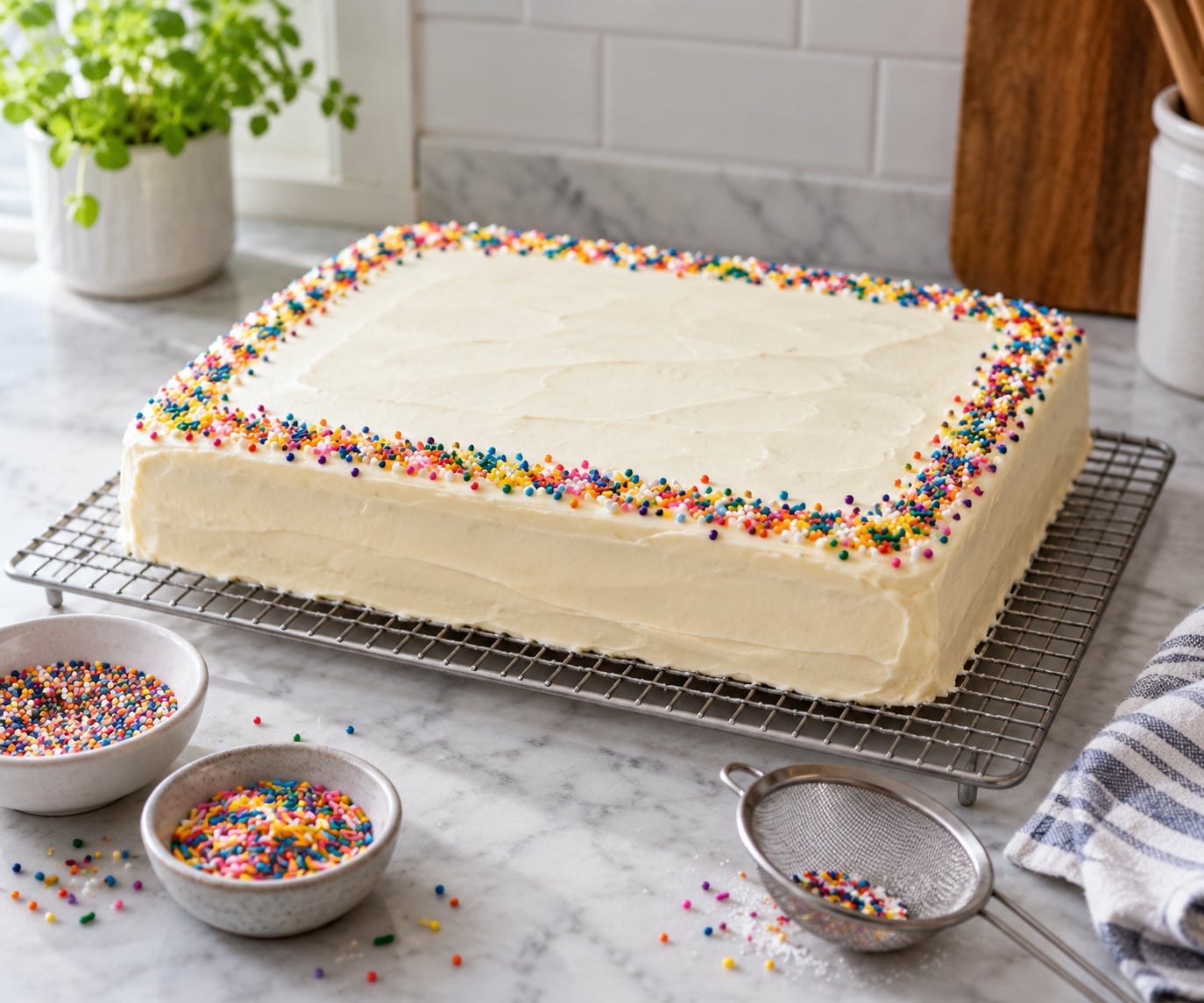
Sprinkles bleed because water-soluble dye on the coating dissolves in moisture and smears into the frosting. To fix it, pick sprinkles with a hard shell coating, add them when the frosting is firm but still tacky, then let the decorated surface dry uncovered for 12 to 24 hours before it goes in a box. Updated for 2026.
The whole thing takes about five minutes of decorating once the frosting is ready. Most of the work happens earlier: choosing the right sprinkle, getting the frosting stiff enough, and giving the finished cake time to set.
Table of Contents
- What You Need
- Step-by-Step: How to Keep Sprinkles from Bleeding Into Frosting
- 1. Choose Sprinkles That Hold Their Color
- 2. Match the Frosting to the Application Method
- 3. Chill or Set the Frosted Surface
- 4. Add Sprinkles Gently and Evenly: Keep Sprinkles From Smearing
- 5. Let the Decorations Set Before Serving
- Before Baking Instead of After
- Common Mistakes and Fixes
- Frequently Asked Questions
- How do I get sprinkles to stick to frosting?
- Which sprinkles bleed the least?
- Why do my sprinkles bleed overnight?
- Can you mix sprinkles into frosting?
- How long should frosting dry before I add sprinkles?
- Conclusion
What You Need
You need very little, and most kitchens already have it.
- Frosting that holds a shape — American buttercream, Swiss meringue buttercream, ganache, or royal icing. Soft whipped frosting and thin glazes are the two that bleed most.
- Sprinkles with a shellac or wax coating. Nonpareils, jimmies, sanding sugar, and pressed sugar shapes are the everyday options that hold color best on top of frosting.
- A wire cooling rack so air moves under the cake as well as over it.
- A fine sieve or a small shaker lid for scattering sprinkles evenly instead of dumping them.
- Parchment paper for the tray you decorate over, so you can pour off the excess and reuse it.
- A refrigerator for the short chill that firms buttercream, plus a box or dome for the final dry.
- A fan or a dehumidifier in the room if you live somewhere sticky. Airflow does more than anything else to speed the set.
A thermometer is not necessary, but a cheap hygrometer in the baking corner tells you something useful. If the room reads above 60 percent relative humidity on the day you decorate, expect trouble and plan for a fan.
Step-by-Step: How to Keep Sprinkles from Bleeding Into Frosting
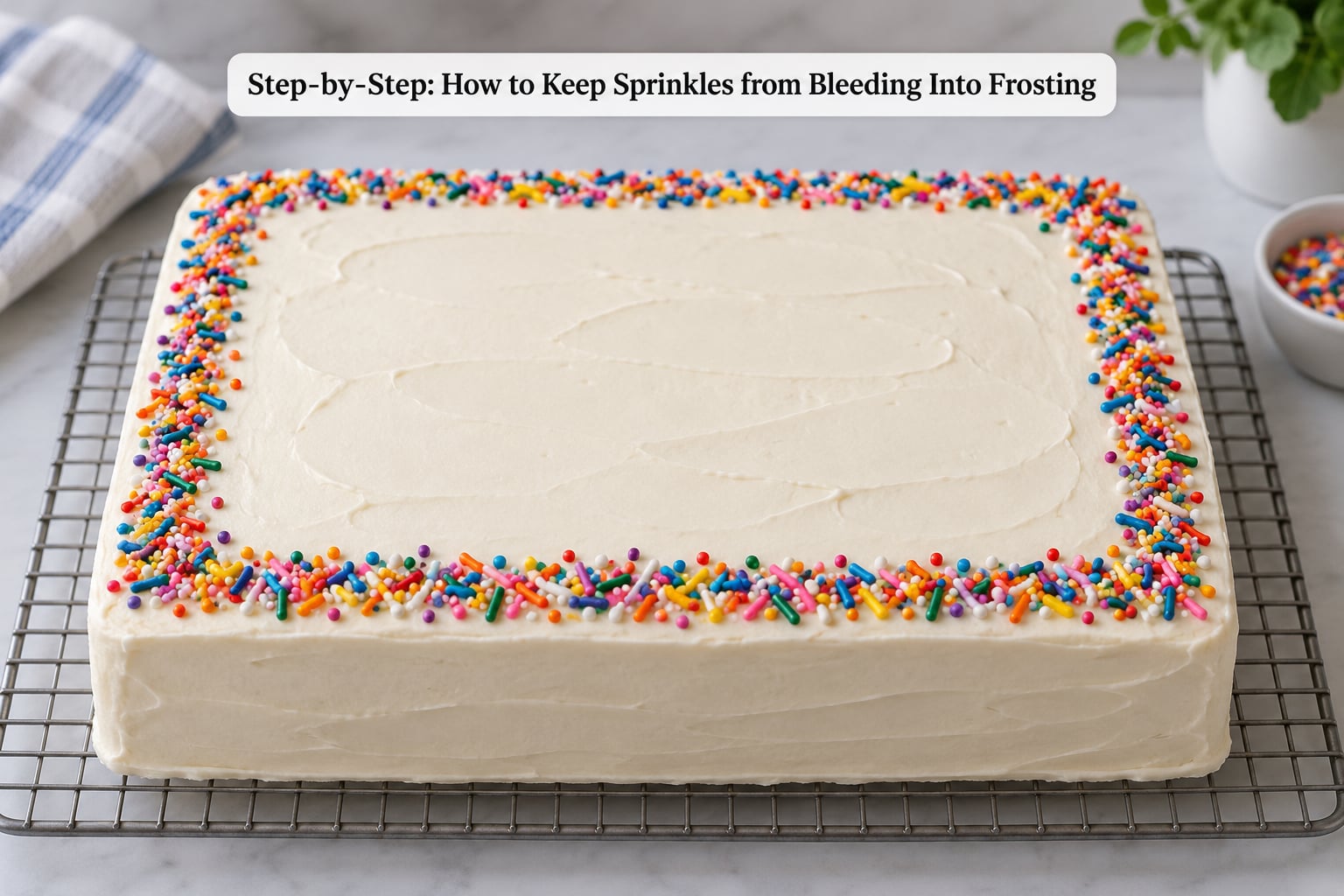
Work in this order and the color stays sharp for days. Each step has a cue you can see, so you know it worked before you move on.
1. Choose Sprinkles That Hold Their Color
Not all sprinkles are built the same. Round nonpareils have a thin dyed outer shell, and their color is strong enough to streak. Jimmies, sanding sugar, and larger pressed shapes carry more pigment through the body of the sugar, so what leaches out is less noticeable.
If bleeding has happened to you before, do a small test. Put a pinch of each type you own on a spare spoonful of frosting, wait 20 minutes, and see which ones halo. I keep a small jar of test scraps in the back of the cupboard for exactly this.
Read the label for two things: a shellac or beeswax coating, and the words suitable for baking if you plan to scatter them over batter or cookie dough before the oven. Oven heat melts wax coatings, so those jars are for decoration only.
2. Match the Frosting to the Application Method
Frosting has to be stiff enough to carry a sprinkle without swallowing it, but not so stiff that the sprinkle bounces off.
- American buttercream is the easiest match. Stiffen it with a little extra butter or powdered sugar until it holds a sharp edge, then chill.
- Swiss meringue buttercream works the same way, and it tastes lighter. It firms quickly in the fridge, so test it every five minutes.
- Ganache sets firm as it cools, which makes it a good surface for heavy pressed shapes and sanding sugar.
- Royal icing forms a dry shell, so sprinkles laid on top never dissolve into it. Put them on while the icing is still slightly damp, not once it has hardened.
- Thin glaze and whipped frosting need a different approach entirely. Either set the glaze until it is solid, or press sprinkles into a thicker icing underneath.
When the frosting is too soft, the sprinkles sink in and their color dissolves all at once. When it is too stiff and dry, they fall off. Both problems look like bad luck, and both have a simple fix.
3. Chill or Set the Frosted Surface
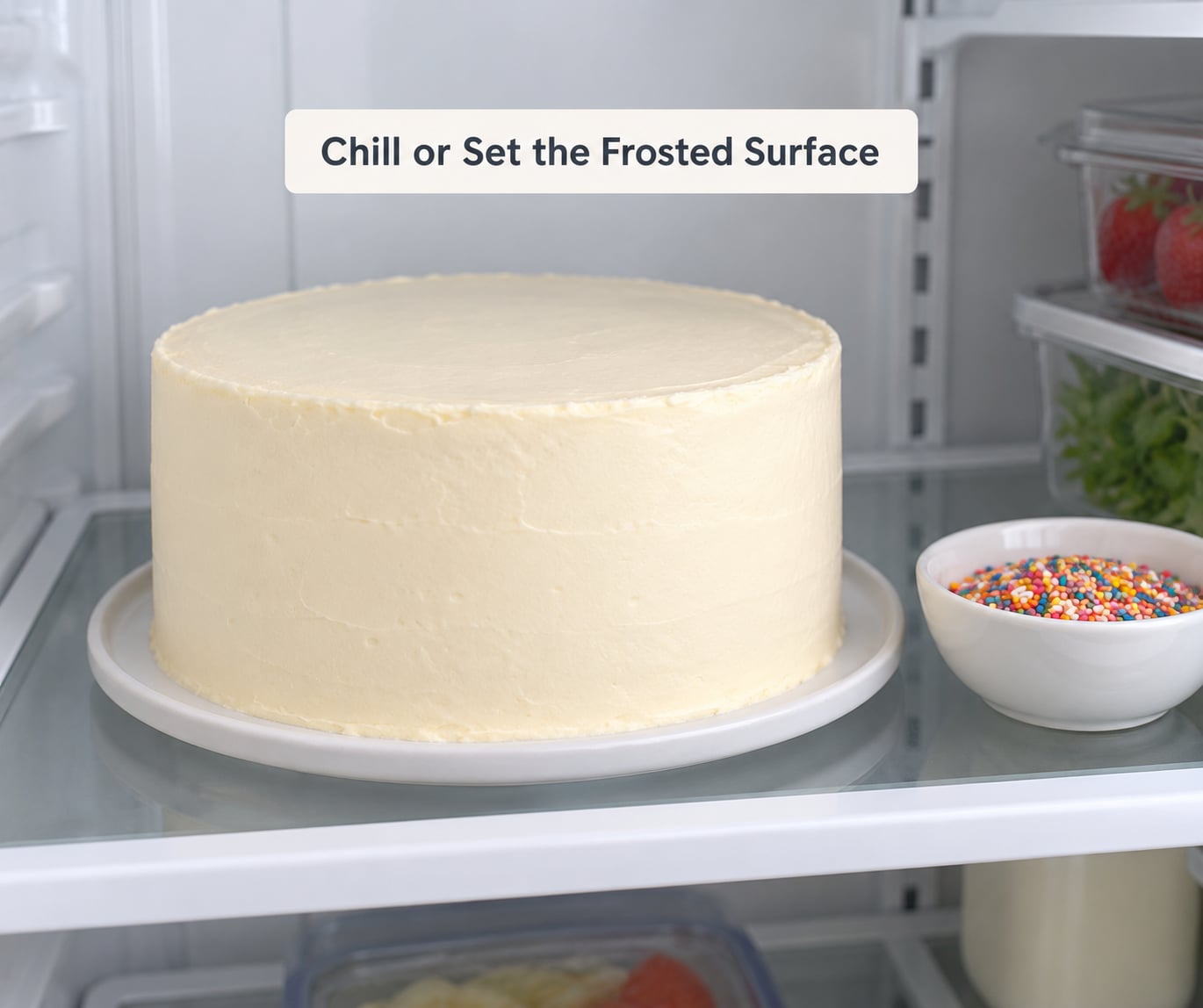
The surface should be firm to a light touch with a faint tack to your fingertip. That is the moment to sprinkle.
For buttercream and ganache, frost the cake, then rest it in the refrigerator for 15 to 20 minutes on a flat tray. Take a knife blade and skim a tiny spot near the edge. If the knife drags a soft ridge through the surface, give it five more minutes. If it cuts cleanly and leaves a matte finish, you are there.
Royal icing and poured glazes set at room temperature instead. Wait until the surface has lost its wet shine, which takes one to five minutes for a thin glaze and considerably longer for royal icing. Fan or a dehumidifier cuts that wait noticeably.
4. Add Sprinkles Gently and Evenly: Keep Sprinkles From Smearing
Decorate one cake or one cookie at a time. A whole tray finished at once means the earliest cookies sit in moving air picking up dust while you work on the last one.
Hold the bowl about 15 centimeters above the surface and let them rain down. Close up, they land heavy and land wet. Pressing them in with a fingertip drives moisture into the frosting and starts the halo immediately, so skip that.
Work in small sections, then tip the excess onto a parchment-lined tray and return it to the jar. When you finish the side coating, dip your fingertips in water and run them along the frosting, then roll the lower edge of the cake through the sprinkles in one turn. A thin film of water is enough to grab them without soaking the cake.
You will know this step worked when the sprinkles sit on the surface in crisp, separate dots with clean frosting visible between them.
5. Let the Decorations Set Before Serving
Drying is where most of the bleed happens, and it happens quietly. A cake that looks perfect at midnight can show grey streaks by morning.
Leave the decorated cake uncovered on the rack for 12 to 24 hours. Covering it early traps humidity against the surface, which is the same as wetting the sprinkles on purpose. Once the top is dry to a light touch and the colors no longer look deep under a lamp, box it or put it under a dome.
Keep it in a cool room rather than the refrigerator. Chilled cake that you take into a warm car or a warm house sweats, and condensation runs straight through the color. If you must transport it, carry it in an insulated box in the cold and open the box only after the room has warmed up.
Before Baking Instead of After
Sprinkles mixed into cake batter or rolled onto cookie dough before baking need sprinkles labeled for baking, since the wax coating melts in a hot oven. Those give you a color that is set into the crumb and can never bleed. Mixed straight into batter, they will still streak a little around each one — pull the batter out of the oven at 190°C and add the rest of the sprinkles to the surface halfway through, and you keep the effect with none of the clouding.
Common Mistakes and Fixes
Decorating a whole tray at once. The first cookies sit for 20 minutes while you finish the last. Decorate one at a time and the timing stays consistent across the batch.
Frosting that is still wet. Any moisture dissolves the coating. Chill buttercream for 15 to 20 minutes, or wait for a thin glaze to lose its shine, before you add anything.
Pressing sprinkles in with a finger. That pushes a wet spot straight into the frosting. Rain them from about 15 centimeters and let gravity do the work.
Oversized jimmies and full-size sanding sugar. Their weight presses into soft frosting. Use them on firm surfaces like royal icing or a chilled ganache.
Stacking or boxing before the surface dries. Twelve to 24 hours uncovered, then box. If you are short on time, a fan or a dehumidifier in the room is the fastest lever you have.
Red, black, and dark blue on white frosting. These carry the most pigment, so any moisture shows. Use them sparingly, place them last, and give them a well-set surface.
Direct sunlight on the finished cake. UV light fades colors unevenly and softens the surface. Keep decorated cakes out of a south-facing window and off the car seat.
A layer of grease mistaken for bleed. Butter and shortening can spot frosting without any dye involved. A sheet of paper towel under the cake wicks that grease away, and the marks stop spreading.
Frequently Asked Questions
How do I get sprinkles to stick to frosting?
Sprinkles stick to frosting that is firm but still slightly tacky. Chill a frosted cake for 15 to 20 minutes, test a spot near the edge with a knife blade, and sprinkle as soon as the surface cuts cleanly without dragging. Rain them from about 15 centimeters above the cake instead of pressing them in with a fingertip, which forces moisture into the frosting and starts a color halo.
Which sprinkles bleed the least?
Jimmies, sanding sugar, and pressed sugar shapes bleed the least, because the color sits through more of the sugar body instead of on a paper-thin outer shell. Round nonpareils are the most likely to halo, and red, black, and dark blue bleed worst of all because they carry the heaviest pigment. Any sprinkles with a shellac or wax coating hold their color better than uncoated ones.
Why do my sprinkles bleed overnight?
Almost always one of three things: the surface was still soft when you decorated, the cake was covered before it dried, or the room was humid. Covering traps moisture against the frosting, which is the same as wetting the sprinkles deliberately. Leave decorated cakes uncovered for 12 to 24 hours, and run a fan or dehumidifier in the room if humidity runs above 60 percent.
Can you mix sprinkles into frosting?
You can, but they will streak around each one, since any surface with moisture dissolves the outer dye coating. It works well in stiff buttercream rather than soft icing or whipped frosting. For a cleaner look, press them into a firmer icing layer instead, or add them to batter and finish the top of the cake partway through the bake.
How long should frosting dry before I add sprinkles?
Buttercream and ganache need 15 to 20 minutes in the refrigerator, then a quick check with a knife blade near the edge. A thin glaze is ready in one to five minutes, when it loses its wet shine. Royal icing takes longer and needs a dry surface, so add sprinkles while it is still slightly damp. Once decorated, give everything 12 to 24 hours uncovered before boxing.
Conclusion
Start with the frosting, not the sprinkles. Stiffen it until it holds a sharp edge, chill or set the surface for 15 to 20 minutes, then rain the sprinkles on from close above in small sections, one cake at a time. Give the finished cake 12 to 24 hours uncovered before it goes anywhere near a box, and the colors will still look sharp the next morning.