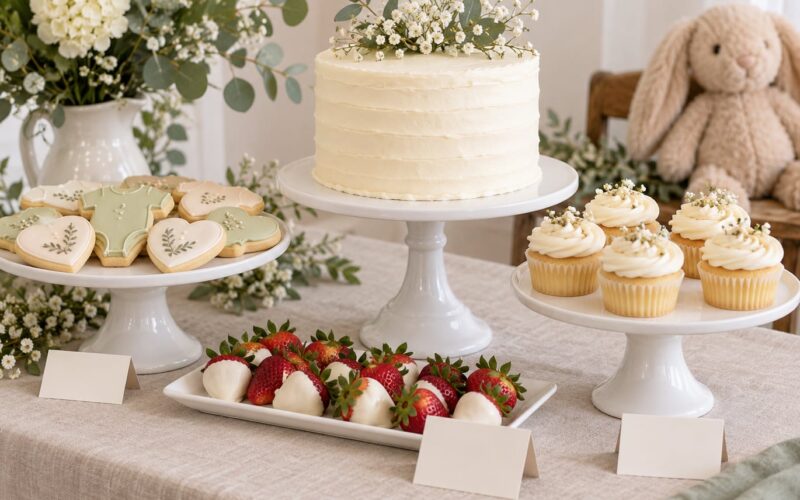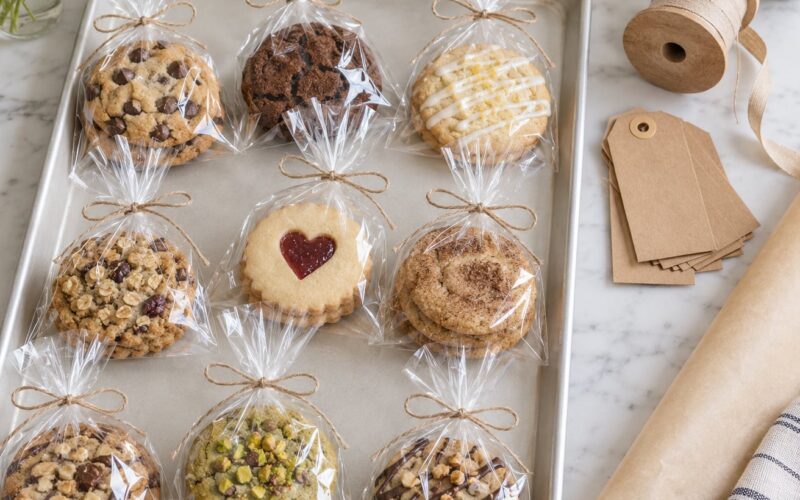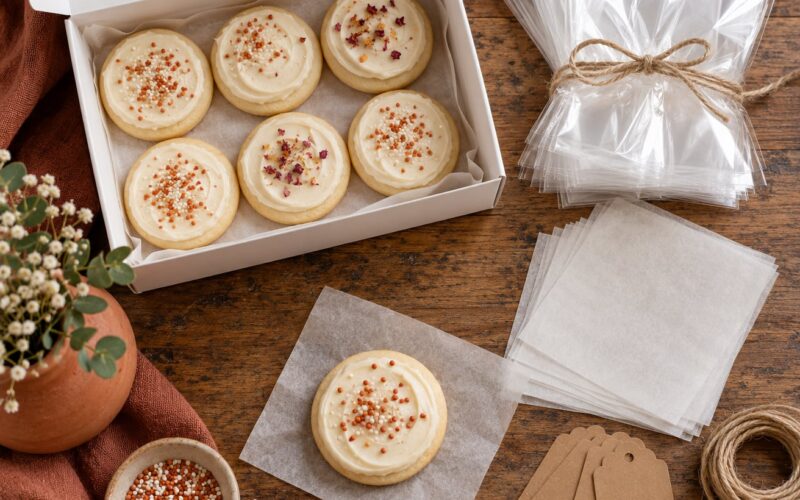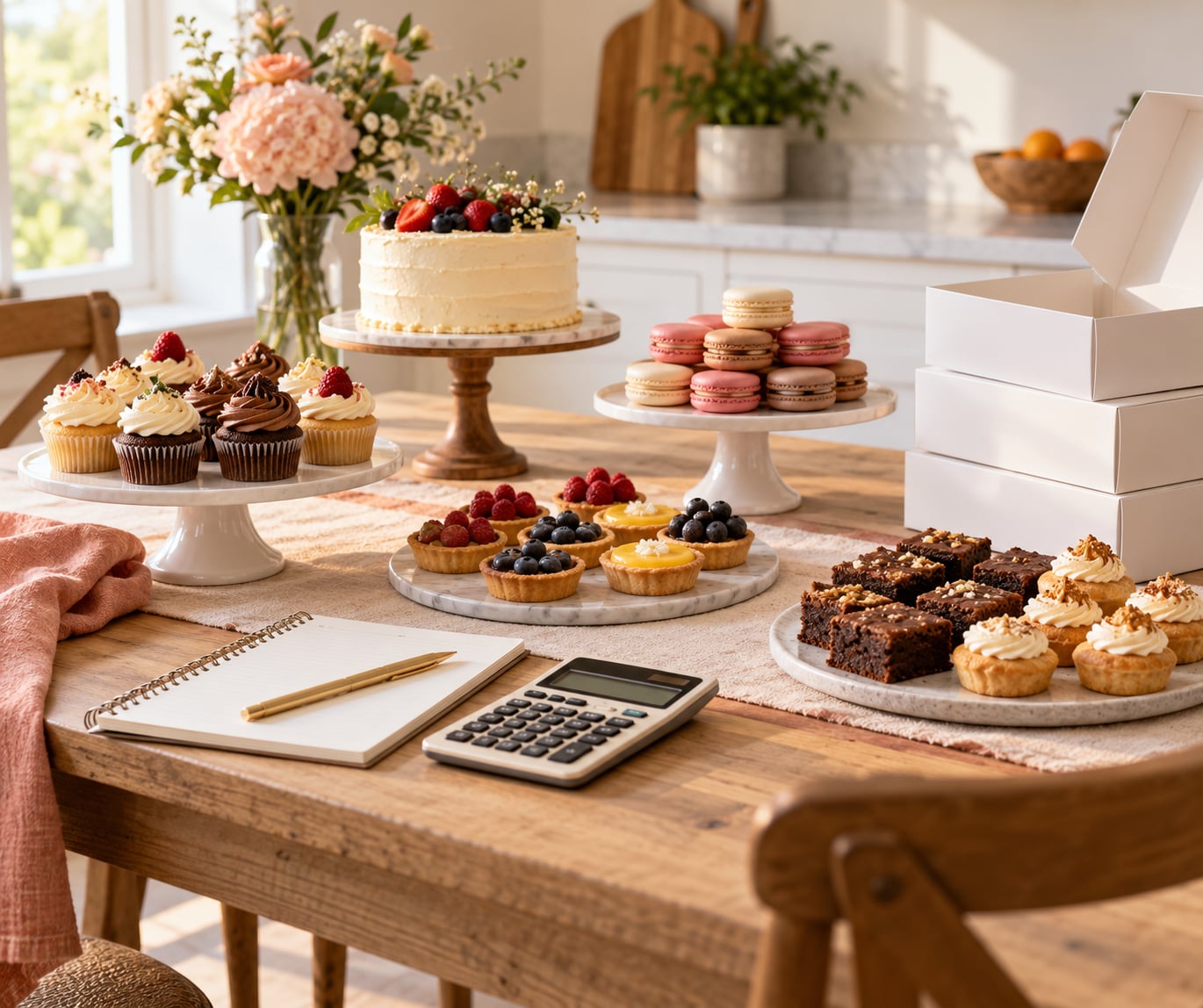
Working out how to calculate how many desserts for a party comes down to one line of math: guest count multiplied by a per-guest number, then add roughly 10% as a buffer. For a dessert table with no cake, most hosts land on 2 to 3 mini desserts per adult, so 50 guests means somewhere between 100 and 150 individual pieces before the buffer. The whole thing takes about five minutes once you know which desserts you are serving.
That single step matters more than anything else that follows. Under-ordering leaves a bare tray at the end of the night, and nobody complains about a table that still has food on it.
Here is the short version, before the detail: choose a service format, apply that format’s per-guest number, split the total across three to five dessert types, then add your buffer. A lookup table further down gives you ready numbers for 10 through 150 guests.
Table of Contents
- What You Need
- Step-by-Step
- How to Calculate How Many Desserts for a Party
- How Many Desserts Do You Need by Guest Count?
- Choose the Serving Size for Each Dessert
- Adjust for Children, Dietary Needs, and Extra Pieces
- Common Mistakes
- Frequently Asked Questions
- How many desserts should I plan per adult?
- How many desserts should I make for children at a party?
- How much extra dessert should I buy for a party?
- How do I calculate desserts for a buffet or dessert table?
- How should I plan desserts for allergy-aware or nut-free guests?
- Conclusion
What You Need
Five minutes of preparation saves an afternoon of panic later. Gather the following before you do any arithmetic.
- A confirmed guest count. Use your final RSVP number, not the invite list. If replies are still coming in, plan for the number who said yes plus about 10%.
- The dessert types you actually want. Write them down. The number of varieties changes how the total divides.
- Your service format. Cake only, dessert table only, cake plus a table, or a plated dessert course. Each one has a different per-guest number.
- How long the event runs and whether guests arrive hungry or have just eaten a full meal.
- The age mix. Count kids separately, and note how many guests are seniors or eating small portions.
- Dietary restrictions. Ask about allergies on the invitation so you are not guessing a week out.
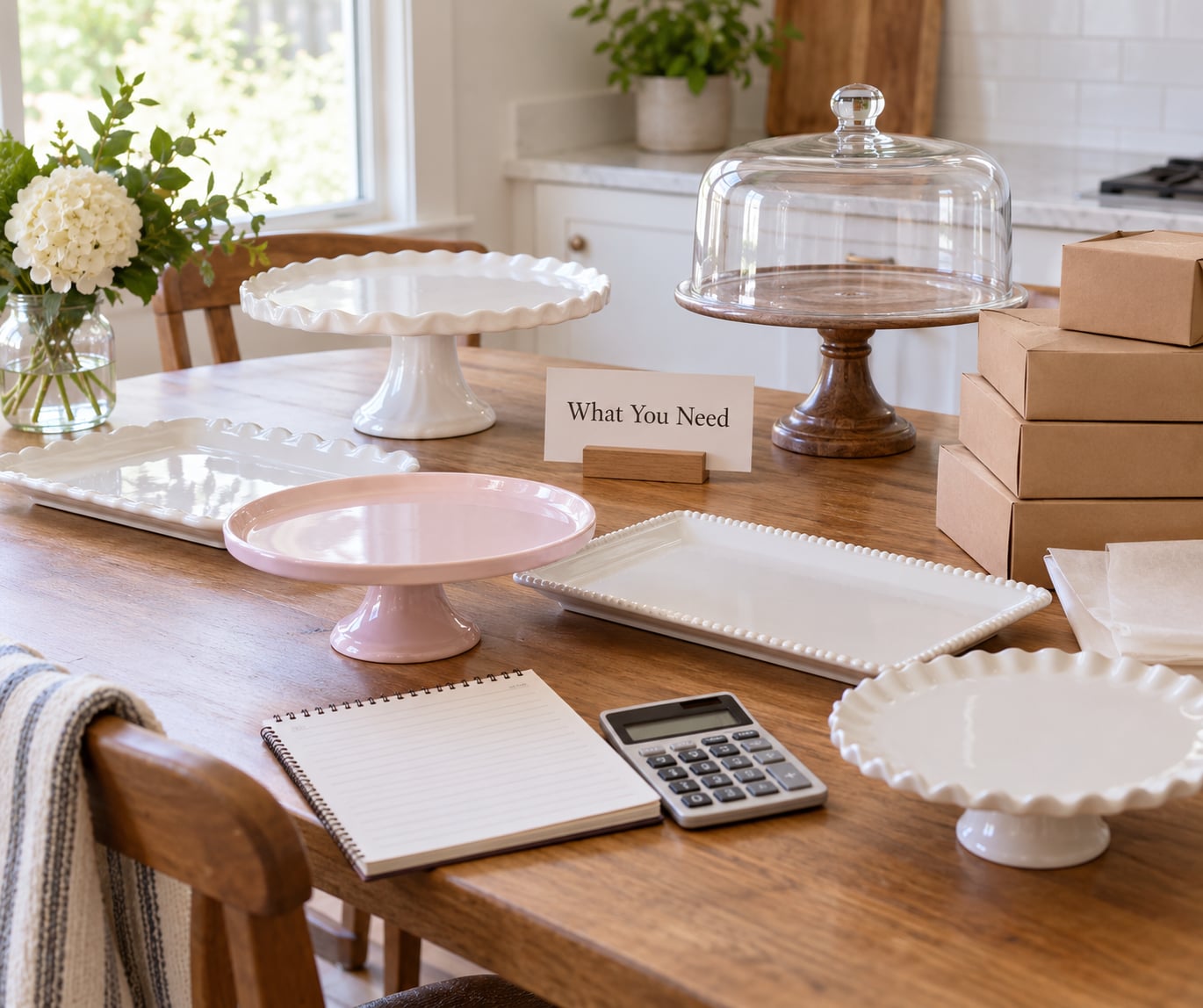
- Your serving equipment. Platters, cake stands, risers, and takeaway boxes all cap how much you can actually display.
Step-by-Step
Three decisions, one formula. Work through them in order and you will have a number you can order or bake against.
How to Calculate How Many Desserts for a Party
Start with the format, because that is where most conflicting advice comes from. A source telling you 1.5 per guest and a source telling you 4 per guest can both be right; they are describing different desserts and different services.
| Service format | Per adult | Example for 50 guests |
|---|---|---|
| Cake only, sliced tableside | 1 slice (plan to 80% of guest count) | 40 slices |
| Cake plus a small dessert table | 1 slice plus 1 to 2 minis | 40 slices and 50 to 100 minis |
| Dessert table, no cake | 2 to 3 minis | 100 to 150 minis |
| Mini desserts only, generous table | 3 to 4 minis | 150 to 200 minis |
| Plated dessert course | 1 plated portion, 50 to 60% will eat it | 30 plated portions |
Once you have a total, add 10% for the buffer. That is 15 extra pieces at 150, and 5 extra at 50. Then read your number back against a few benchmarks.
For a party of 50 with a dessert table and no cake, 2 minis per adult gives 100 pieces, and 3 per adult gives 150. With a full cake plus table, plan 40 cake slices and about 75 mini desserts. For 100 guests, most hosts land between 200 and 250 mini desserts, or 80 cake slices plus a smaller table.
How Many Desserts Do You Need by Guest Count?
This chart gives you the raw totals before the buffer. Pick the column that matches your service format.
| Guests | Cake slices | Cake plus table | Dessert table only |
|---|---|---|---|
| 10 | 8 | 8 slices, 15 minis | 25 minis |
| 20 | 16 | 16 slices, 30 minis | 50 minis |
| 25 | 20 | 20 slices, 38 minis | 63 minis |
| 30 | 24 | 24 slices, 45 minis | 75 minis |
| 40 | 32 | 32 slices, 60 minis | 100 minis |
| 50 | 40 | 40 slices, 75 minis | 125 minis |
| 60 | 48 | 48 slices, 90 minis | 150 minis |
| 75 | 60 | 60 slices, 110 minis | 190 minis |
| 100 | 80 | 80 slices, 150 minis | 250 minis |
| 150 | 120 | 120 slices, 225 minis | 375 minis |
For a party of 60, work from 150 mini desserts and round up to 165 with the buffer. For 75 guests, 190 minis becomes about 210. If you want the number for one guest count you do not see here, the formula is simple enough: guests times 2.5 for a standard dessert table, times 1.1 for the buffer.
Choose the Serving Size for Each Dessert
Per-guest numbers only work if your pieces are a sensible size. A “mini dessert” that is really a full tart will blow past the plan, and a one-bite petit four will leave the table picked clean by 9pm.
- Cupcakes: standard size counts as one piece. Mini cupcakes count as roughly two to a standard serving, so halve the mini count.
- Cookies: a medium cookie is one piece. Plan 2 to 3 per adult on a table, more like 4 for a cookie-only spread.
- Cake slices: a standard wedding slice is 1 by 2 inches. A 1 by 1 inch coffee-size slice is a “just enough” portion when a table is also running.
- Dessert bars: a 2 by 3 inch bar is one serving. Cut them smaller if you are running four varieties plus cake.
- Dessert cups and mousse: a 5 to 8 ounce cup is one full serving and counts as two small bites in the mini math.
- Donuts and whoopie pies: one each is a serving. Stack two only if the rest of the table is light.
Cake pans follow their own chart. These are approximate and assume a standard 2 by 3 inch serving.
| Round cake | Servings | Sheet cake | Servings |
|---|---|---|---|
| 6 inch | 8 | Quarter sheet (9 by 13) | 18 to 24 |
| 8 inch | 12 | Half sheet (9 by 18) | 32 to 40 |
| 9 inch | 14 | Full sheet (18 by 26) | 64 to 80 |
| 10 inch | 18 | Two half sheets | 64 to 80 |
| 12 inch | 25 | Three quarter sheets | 54 to 72 |
So a single 9 inch cake feeds about 14 people. For 50 guests served cake only, you need roughly four 9 inch cakes or two full sheet pans plus a backup, since most hosts plan to 80% of guest count rather than 100%.
Display space has a ceiling too. A single 6 foot banquet table holds a little under 200 mini desserts comfortably. An 8 to 10 inch platter fits roughly 12 minis, a 12 inch platter about 18, and a 14 inch platter about 20. Divide your total by 18 to get the number of platters you need, then add a few spare plates so the table does not empty out the moment the first round goes.
Adjust for Children, Dietary Needs, and Extra Pieces
Once you have a base total, three adjustments usually apply. Do them in this order so they compound correctly.
Children. Count them separately and give them about half the adult portion. A group of 10 kids at a birthday needs roughly 25 to 30 mini desserts, not 25 to 30 adults’ worth. Kids sample widely and finish little, which means a table with four varieties beats a table with one big pile of the same thing.
Multiple varieties. This is the question that confuses people most: no, you do not order the full total of every dessert. Divide the total across three to five types, weighted toward the ones you know people like. For 125 mini desserts across four varieties, order roughly 40 cookies, 35 brownies, 30 dessert cups and 20 macarons. Put the two or three most popular items in the biggest platters at eye level, and park the rest on risers so the table looks full from the start.
Dietary needs. Ask about allergies on the invitation and treat nut-free requests as a real quantity, not a gesture. If five guests need a nut-free option, that is 5 to 10 dedicated pieces that cannot come off a shared platter, plus a label. Marking a mixed dessert bar with a small sign card saves you from cross-contact questions entirely, and buying the safe option separately costs far less than someone getting ill at your party.
Then add the 10% buffer and decide what happens to the extra. Keep small boxes by the table so guests can take pieces, hold the overflow back for a late-evening refill, or refrigerate anything with cream, custard or fruit filling. Those need to be kept cold and used within a couple of days; frosted cakes and cookies keep at room temperature for a few days wrapped.
One more thing worth knowing about self-serve stations: guests wandering past a display eat noticeably less than guests handed a plate at a table. If your dessert is meant to be picked up on the way out the door, plan up to 20% less than the numbers above and let your takeaway boxes absorb the difference.
Common Mistakes
Most over-ordering comes from a handful of repeated mistakes. Each one has a quick fix.
Counting only adults. Your invitation list includes children, and they eat dessert. Count every person who will be at the table, then halve the portion for kids.
Ordering the full total of every variety. This is the big one, and it shows up constantly in wedding planning forums. If your total is 125 pieces across four desserts, that is 125 pieces divided four ways, not 125 of each.
Treating package size as portion size. A dozen cupcakes is twelve guests, not twelve desserts per guest. Read what the package actually contains before you convert.
Counting display desserts as edible ones. If you are stacking a tower or a macaron pyramid for looks, the display stack is separate. It looks like more food than it is, and you still need real quantities underneath it.
Skipping the buffer. Ten percent costs very little and covers the guest who arrives late, the kid who wants a second, and the wrong guess on your RSVP count. Without it you are gambling on an exact number you cannot get.
Over-ordering for self-serve. Handed plates get eaten. A display that guests walk past does not. Trim by a fifth and keep boxes on hand.
Forgetting that a full meal kills the appetite. Dessert after a heavy dinner runs smaller than dessert at an afternoon event. Cut the per-guest number by about a quarter and use the savings on a second small item rather than more of the same.
Frequently Asked Questions
How many desserts should I plan per adult?
Plan 2 to 3 small desserts per adult for a dessert table with no cake, and 3 to 4 if the table is generous and guests are mixing savory food with dessert. If cake is the only dessert, one slice per adult is enough, and you can plan to 80% of your guest count because not everyone eats cake. Add a 10% buffer to whichever number you land on.
How many desserts should I make for children at a party?
Give children about half the adult portion, so roughly 1 to 1.5 pieces each. Ten children at a birthday usually need 25 to 30 mini desserts rather than a full adult serving apiece. Kids tend to sample several kinds and eat less of each, so a table with four varieties serves them better than one large pile of a single dessert.
How much extra dessert should I buy for a party?
Add 10% to your calculated total. At 50 guests that is about 15 extra pieces, and at 100 guests about 25. The buffer covers late arrivals, second helpings, and an RSVP count that was slightly off. Hand the extras over in small boxes at the end of the night rather than trying to store them all.
How do I calculate desserts for a buffet or dessert table?
Multiply your guest count by 2.5 for a standard dessert table, then add 10%. For 60 guests that is about 165 pieces. Divide the total across three to five varieties rather than ordering the full amount of each, and check your display space: a 6 foot banquet table holds just under 200 minis, with roughly 12 to 20 per platter.
How should I plan desserts for allergy-aware or nut-free guests?
Treat allergen requests as a real quantity, not a gesture. For every 5 guests who need a nut-free, gluten-free or dairy-free option, plan 5 to 10 dedicated pieces that are not shared, plus a small label card. Buying those pieces separately costs far less than a guest having a reaction, and it also avoids the cross-contact question at the table.
Conclusion
Calculating how many desserts for a party is one multiplication and a small adjustment. Write down your confirmed guest count, decide whether you are serving cake, a dessert table, or both, apply the matching per-guest number, split the total across three to five varieties, and add 10% if the event runs long or you are unsure of your count. Put the number on paper before you order, and you will not be the host with an empty tray at 9pm.