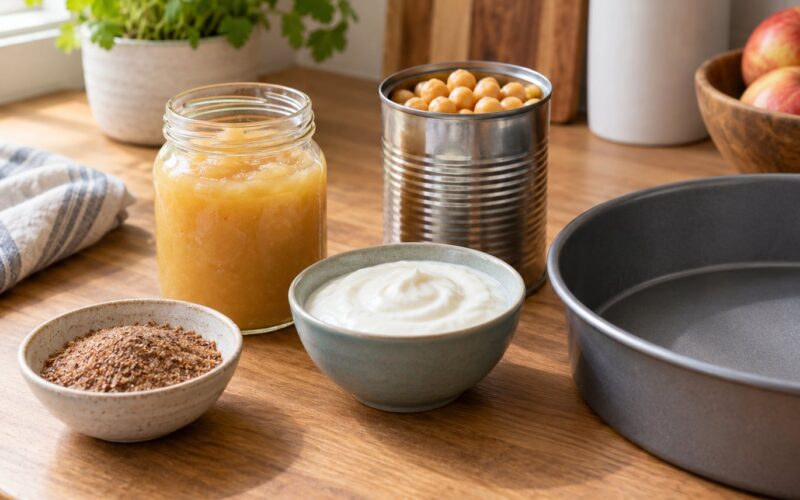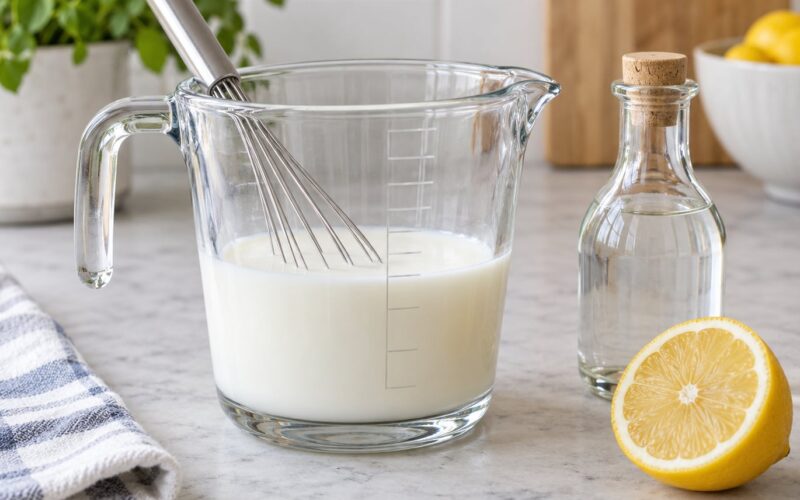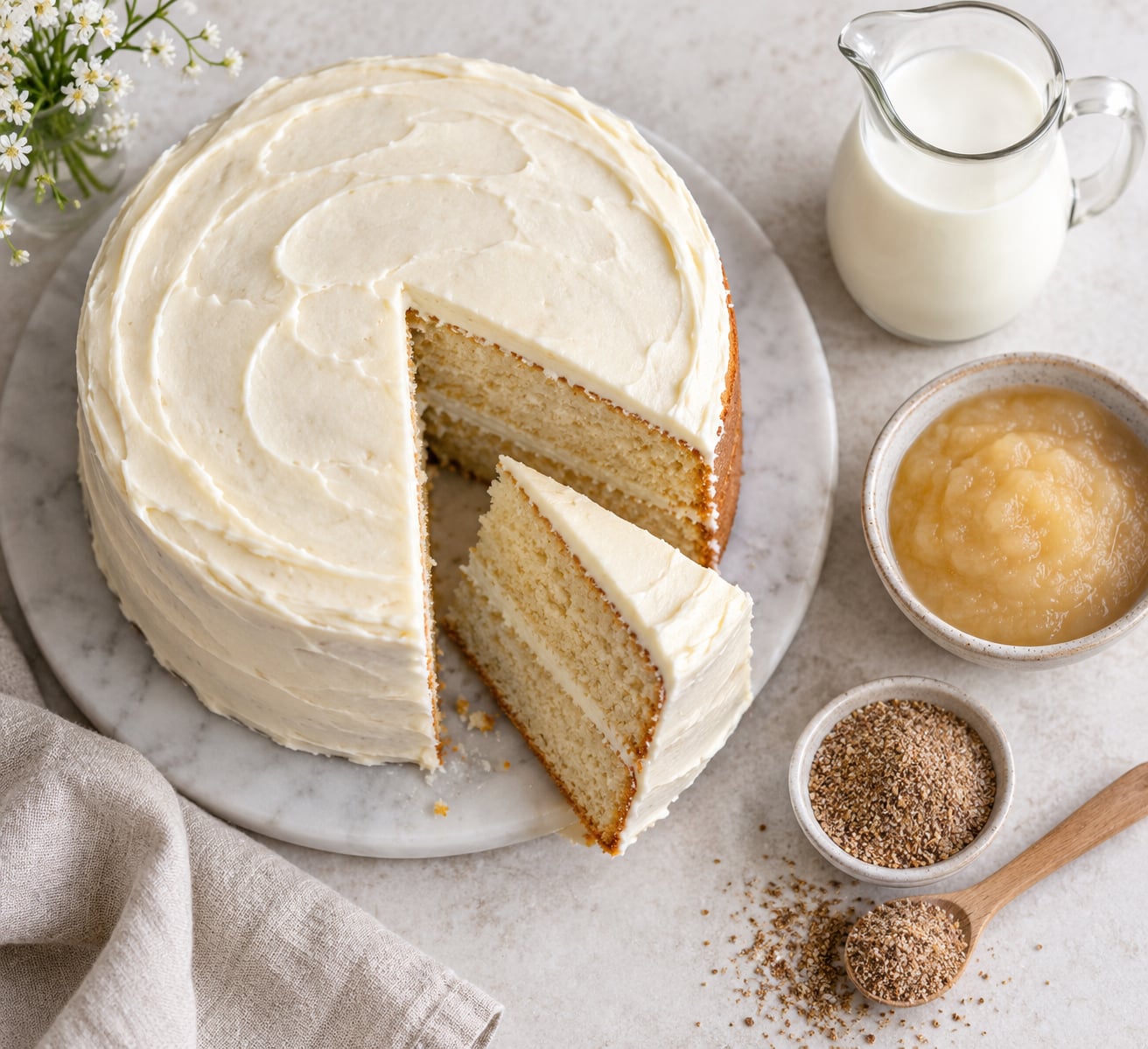
To make a cake without eggs, replace the egg with an ingredient that copies the job it was doing, then let an acid do the lifting. For a 2 to 3 egg cake, 240ml of buttermilk with 1½ tablespoons white vinegar, 120ml of unsweetened applesauce, or 3 tablespoons of ground flaxseed mixed with 9 tablespoons of water will each carry the batter. Most of the work is in choosing the right one for the cake you actually want to eat.
This guide takes the guesswork out of that choice. It covers what eggs physically do in a batter, how much of each substitute to use per egg, a tested base formula you can adapt, the two methods people ask about most (commercial egg replacer and applesauce), what goes wrong and how to fix it, and how to keep the finished cake soft for days. It is written for a home kitchen with an ordinary oven, not a bakery.
Table of Contents
- What You Need
- Equipment
- The base dry and wet split
- How to pick the substitute for your cake
- Step-by-Step: How to Make a Cake Without Eggs
- How to Make a Cake Without Eggs Using Commercial Egg Replacer
- How to Make a Cake Without Eggs with Unsweetened Applesauce
- Common Mistakes
- Frequently Asked Questions
- What is the best substitute for eggs in cake?
- Can I use applesauce instead of eggs in a cake?
- How much egg substitute should I use for a cake?
- Why is my eggless cake not rising?
- Can I make a cake without eggs that is light and fluffy?
- How long does an eggless cake stay fresh?
- Conclusion
What You Need
To make a cake without eggs you need the standard cake toolkit, a base formula that already leans on acid for lift, and one substitute per egg in your recipe. That is genuinely all. No specialist equipment, no dehydrator, no mystery ingredients.
Equipment
- Two 20cm (8 inch) round cake tins, or one loaf tin for a narrower cake
- Digital or kitchen scale for the flour and sugar
- Mixing bowls, a whisk, a spatula, and a sieve or fine strainer
- Wooden skewer or toothpick for the doneness test
- Wire rack for cooling (a damp cloth under the cake traps steam and softens the base)
The base dry and wet split
This is the formula the rest of the article assumes. Weigh the dry ingredients, sift them together, and treat the wet ingredients as one jug. Baking soda needs an acid partner (vinegar, buttermilk, yogurt) to release the carbon dioxide gas that gives the cake its height; the same reaction is what an egg’s protein does slowly in the oven.
Dry
- 220g (1¾ cups) all-purpose flour
- 200g (1 cup) granulated sugar
- 1½ teaspoons baking soda
- 1 teaspoon baking powder
- ½ teaspoon fine salt
Wet
- 240ml (1 cup) milk with 1½ tablespoons white vinegar added, stand for 5 minutes (or 240ml buttermilk)
- 120ml (½ cup) neutral oil, such as sunflower, canola or light olive
- 1 tablespoon vanilla extract
That is roughly a 2 egg cake. It bakes at 350F (180C) for 30 to 35 minutes and uses the vinegar method, which means no eggs and no dairy beyond the milk. Swap the milk for oat or soy and the whole cake is vegan, as long as you also check that your sugar and vanilla are free of egg-derived processing aids.
How to pick the substitute for your cake
Choose the egg substitute by matching the job the egg was doing, not by what you happen to have open in the fridge. A dense mud cake has room for slack; a light sponge does not. The table below is the conversion cheat sheet for a standard 2 to 3 egg cake.
| Substitute | Amount per egg | Job it does | Best for | Flavour impact |
|---|---|---|---|---|
| Unsweetened applesauce | 60g (¼ cup) per egg | Moisture and light binding | Chocolate, carrot, banana, spice cakes | Mildly sweet, fruity; use unsweetened |
| Full-fat Greek yogurt | 60g (¼ cup) per egg | Moisture, binding, extra acid | Vanilla, carrot, red velvet, cupcakes | Slight tang that works with spice and citrus |
| Buttermilk | 60ml (¼ cup) per egg | Moisture and acid for the soda reaction | Light and tender crumb cakes | Neutral to mildly tangy |
| Mashed banana | Half a medium banana per egg | Moisture, sweetness, binding | Banana bread, chocolate, muffins | Clear banana note; not for a plain vanilla cake |
| Ground flaxseed plus water | 1 tablespoon flaxseed + 3 tablespoons water per egg | Binding (a gel) | Oat and wholemeal cakes, brownies, muffins | Slight nutty, earthy |
| Aquafaba (chickpea brine) | 3 tablespoons whipped, or 6 tablespoons unwhipped per egg | Leavening and structure when whipped | Sponge, angel-style and light layered cakes | Neutral once cooked |
| White vinegar plus extra baking soda | 1 tablespoon vinegar per egg, plus ½ teaspoon baking soda | Leavening only | Wacky cake, boxed mix adaptations | Can taste sharp or soapy if unbalanced |
| Commercial egg replacer powder | Per package directions, usually 1½ to 2 tablespoons per egg | Binding and leavening | When a dependable, repeatable rise matters most | Varies by brand; check for dairy or soy |
Two honest limits before you start. No egg substitute whips into meringue, and none holds a custard-style foam, so a lemon meringue pie or a Yorkshire pudding is not the project. What you can make is any standard buttercream or oil-based cake, and those have plenty of room to work with.
Step-by-Step: How to Make a Cake Without Eggs
How to make a cake without eggs comes down to seven steps, and the order matters more than anything else. Check the formula first, activate your acid, mix the wet separately, fold, pour, bake at 350F (180C), then test doneness rather than trusting the clock. Here is the method in full.
How to Make a Cake Without Eggs Using Commercial Egg Replacer
How to make a cake without eggs using commercial egg replacer is the most repeatable route: you measure by volume, the rise is predictable, and the result is the closest to an egg cake. The trade-off is that brands differ, so read the packet and convert rather than assuming.
- Read the packet first. Most egg replacers are sold per egg or per tablespoon, and one tablespoon usually equals one egg for binding purposes.
- Convert the measurement. If the packet says 1½ tablespoons per egg, a 3 egg cake needs 4½ tablespoons (about 55g). Weigh it if you can, because brands vary in density.
- Sift the dry ingredients twice with the baking powder and soda, so the leavening is evenly dispersed rather than sitting in pockets.
- Add the replacer to the wet ingredients and whisk until the batter is smooth with no dry pockets at the bottom of the bowl.
- Do not overmix once the flour goes in. Stop as soon the last streaks disappear. Overworked flour turns an eggless batter gummy because there is no egg protein to keep the crumb tender.
- Bake at 350F (180C) for 30 to 35 minutes, or 320F (160C) for a fan oven.
- Test with a skewer. It should come out clean or with one or two moist crumbs. Wet batter on the skewer means give it three more minutes.
Use this route when the cake has to be tall enough to carry frosting and decoration, and when a repeat bake for a birthday needs to come out the same way twice.
How to Make a Cake Without Eggs with Unsweetened Applesauce
How to make a cake without eggs with unsweetened applesauce is the gentlest swap, and the best one for chocolate, carrot, banana and spice cakes. It adds moisture rather than lift, so keep the baking soda and acid in the formula exactly as written.
- Use 60g (¼ cup) per egg, and buy unsweetened. Sugared applesauce pushes a cake over the edge into cloying once the sugar in the recipe is added.
- Smooth it out if it is a chunky sauce, or stir in a tablespoon of the measured water.
- Count it as liquid, not as fruit. Applesauce is roughly 85% water, so a 3 egg cake using 180g (¾ cup) of applesauce can usually drop the added liquid by about 60ml (¼ cup) or the crumb turns gummy.
- Keep the baking soda at the same level and make sure something acidic is still in the batter (vinegar, buttermilk, yogurt or cocoa), otherwise the soda never reacts and the cake bakes flat and soapy.
- Mix wet, then fold in the dry in two or three additions, stopping the moment the flour disappears.
- Bake at 350F (180C) for 30 to 35 minutes and test with a skewer in the deepest part, not the edge.
Applesauce cakes lean toward heavy rather than light. That is normal, and it is why this swap suits puddings and fudges more than a tall birthday sponge. If you want height, use whipped aquafaba instead: 3 tablespoons per egg, whipped to soft peaks and folded in in two goes at the end.
One more route worth knowing, since it comes up constantly: adapting a boxed cake mix. Replace the water in a standard mix with about 330ml of chilled sparkling water, skip the oil if the mix is already an oil-and-water type, and bake for two minutes less than the box says. The carbonation in the water does the lifting and the cake comes out noticeably lighter.
Common Mistakes
Common mistakes in eggless baking almost always trace back to one of four things: the ratio, the mixing, the oven, or the pan. Here is what each symptom means and what to change next time. Texture, not taste, is where eggless cakes fail, which is good news because texture is fixable.
| What went wrong | Likely cause | The fix |
|---|---|---|
| Dense and gummy in the middle | Liquid-to-flour ratio too high, or the batter was overmixed once the flour went in | Cut added liquid by 2 to 4 tablespoons per egg of applesauce, and stop mixing the moment the dry streaks vanish |
| Flat, no rise at all | Baking soda with no acid to react with, or the soda was old and had lost its punch | Add an acid partner (vinegar, buttermilk, yogurt) and replace the baking soda, since it expires within about 6 months of opening |
| Sank in the centre after coming out of the oven | <tdUnderbaked, or the pan was moved too early in the first 15 minutes, or a wet batter that set on the outside firstTest 5 minutes earlier than you think, leave the cake in the tin for 10 minutes before turning out, and never use a fan oven without dropping the temperature | |
| Cracked across the top | Oven too hot for the sugar and oil content | Drop to 325F (165C) and wrap the tin in a foil band, or add a little more flour (15g) to slow the set |
| Dry and crumbly after 24 hours | Baked past done, or the substitute was lean and oily rather than moist | Pull it at 30 minutes and test; swap oil for yogurt or applesauce to hold more water |
| Sharp or soapy aftertaste | Unbalanced soda and acid, or too much soda added on top of an existing baking powder | Taste the batter raw: it should taste faintly sweet and tangy, never aggressively soapy. Add a half teaspoon more acid, not more soda |
| Sticks to the tin, tears when turned out | No fat in the pan, or the cake was turned out too soon | Grease and line with baking paper, and wait the full 10 to 12 minutes |
One question comes up on nearly every baking forum, so here is the straight answer: adding extra baking powder or baking soda does not compensate for missing eggs. Baking powder and soda create gas; eggs create structure, moisture and a slower, gentler set. If the cake is short on all three, the answer is a substitute, not a double scoop of leavening.
On the persistent claim that eggless cake is always denser than a cake with eggs: it is not always true, it depends on the recipe, and the reason usually is that a sponge was rebuilt with applesauce instead of whipped aquafaba. A dense chocolate cake with applesauce can beat a poorly made egg cake every time.
Frequently Asked Questions
What is the best substitute for eggs in cake?
Greek yogurt is the best all-rounder: 60g per egg, it adds moisture, binds, and brings its own acidity to activate baking soda. Applesauce works just as well for chocolate and carrot cakes, while whipped aquafaba is the one to reach for when you need real height. If you can only pick a single ingredient, use plain unsweetened applesauce for a dense cake and yogurt for a light one.
Can I use applesauce instead of eggs in a cake?
Yes, and it is one of the most reliable swaps. Use 60g (a quarter cup) of unsweetened applesauce per egg, and remember that applesauce is mostly water, so you can usually trim 2 to 4 tablespoons of other liquid from the recipe. It is best in chocolate, carrot, banana and spice cakes, and less suited to a light sponge that needs to rise tall.
How much egg substitute should I use for a cake?
Most substitutes convert at a quarter cup per egg: 60g of applesauce, 60g of Greek yogurt, 60ml of buttermilk, or half a mashed banana. A flax egg is different at 1 tablespoon of ground flaxseed plus 3 tablespoons of water, and aquafaba is 3 tablespoons whipped or 6 tablespoons unwhipped. A 3 egg cake needs three times whatever you pick.
Why is my eggless cake not rising?
Almost always the baking soda has no acid to react with, or the soda has lost its potency. Baking soda needs vinegar, buttermilk, yogurt, lemon juice or cocoa to release its gas, and it loses strength within about six months of opening. Check that your formula still contains an acid after the swap, add fresh baking soda, and make sure the oven is actually at temperature before the batter goes in.
Can I make a cake without eggs that is light and fluffy?
Yes, but not with applesauce alone. Whipped aquafaba is the closest thing to egg white: 3 tablespoons per egg, whipped to soft peaks, folded in at the very end in two additions. A light sponge also needs 1 teaspoon of baking powder alongside the baking soda, and a strict 10 to 12 second mix once the flour goes in. Give the cake 3 extra minutes in the oven rather than pulling it at the first sign of colour.
How long does an eggless cake stay fresh?
Kept in a cake tin at room temperature, an eggless cake stays fresh for about 3 to 4 days, roughly the same as an egg cake. It often holds a day or two longer because the oil and sugar in the batter slow staling. Wrap cooled layers in cling film, refrigerate anything with perishable frosting such as cream cheese or whipped cream, and freeze unfrosted layers for up to 2 months.
Conclusion
To make a cake without eggs, start by reading the formula, not the substitute list. Work out whether the egg in that recipe was there to bind, to add moisture, or to help the cake rise, then pick the swap that does that job. The vinegar-and-baking-soda method is the most forgiving place to begin, and a small test batch in one loaf tin costs you twenty minutes and saves you a ruined layer cake.