To thicken frosting that is too runny, chill the bowl for 10 to 20 minutes, beat it again, then add sifted powdered sugar one tablespoon at a time, mixing after each spoonful. Most loose frosting is saved in under five minutes, and nothing has to go in the bin.
It is almost always one of four things: butter that was too soft, too much milk or cream, a long slow whip that warmed the fat, or a hot kitchen. Once you know which one, you can pick the right fix instead of guessing with the sugar bag.
Table of Contents
- What You Need
- Step-by-Step: How to Thicken Frosting That Is Too Runny
- 1. Chill the frosting, then mix it again
- 2. Add sifted powdered sugar gradually
- 3. Mix in a small amount of starch
- 4. Use meringue powder for smooth, stable buttercream
- 5. Add cocoa powder when chocolate flavour suits the cake
- Choose the Best Fix for Your Frosting Type
- Test the Consistency Before Frosting the Cake
- How to Store the Fixed Frosting
- Common Mistakes
- Frequently Asked Questions
- Can I fix frosting that is too thin by adding more butter?
- How much powdered sugar should I add to runny frosting?
- Why is my frosting still runny after I added cornstarch?
- Can I thicken whipped cream frosting without making it grainy?
- How long can I keep thin frosting before I thicken it?
- Conclusion
What You Need
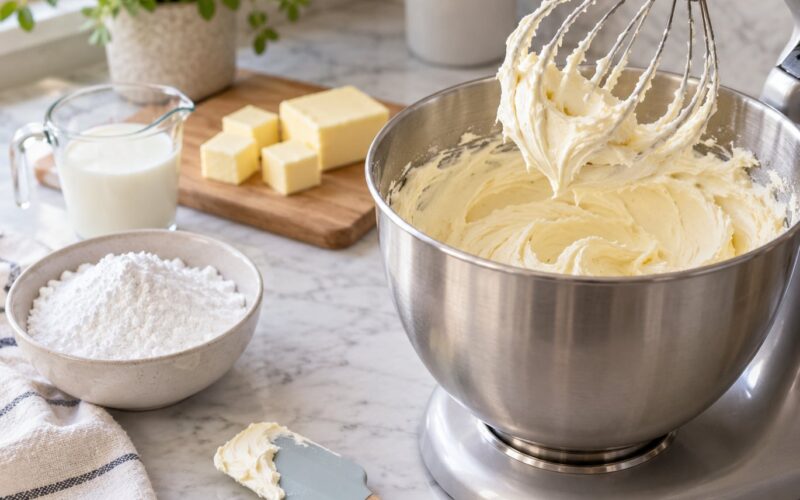
You need very little. The original frosting, a stand mixer or a spatula and a bowl, a measuring spoon or a small kitchen scale, and a sifter if you own one. A second chilled bowl makes the whisking side of this much easier.
For the fix itself, have one or more of these within reach:
- Powdered sugar, also called confectioners sugar or icing sugar, sifted
- Cornstarch, tapioca starch or arrowroot starch
- Instant meringue powder
- Unsweetened cocoa powder for a chocolate frosting
- Gelatin or instant pudding mix, both of which stabilise without adding sweetness
A sifter matters more than people think. Powdered sugar that went in lumpy will not dissolve in fat, and those lumps are the grainy grit people mistake for bad frosting.
Step-by-Step: How to Thicken Frosting That Is Too Runny
Work down this list in order. Each step changes the frosting more than the one before it, so stopping early keeps the flavour you built.
1. Chill the frosting, then mix it again
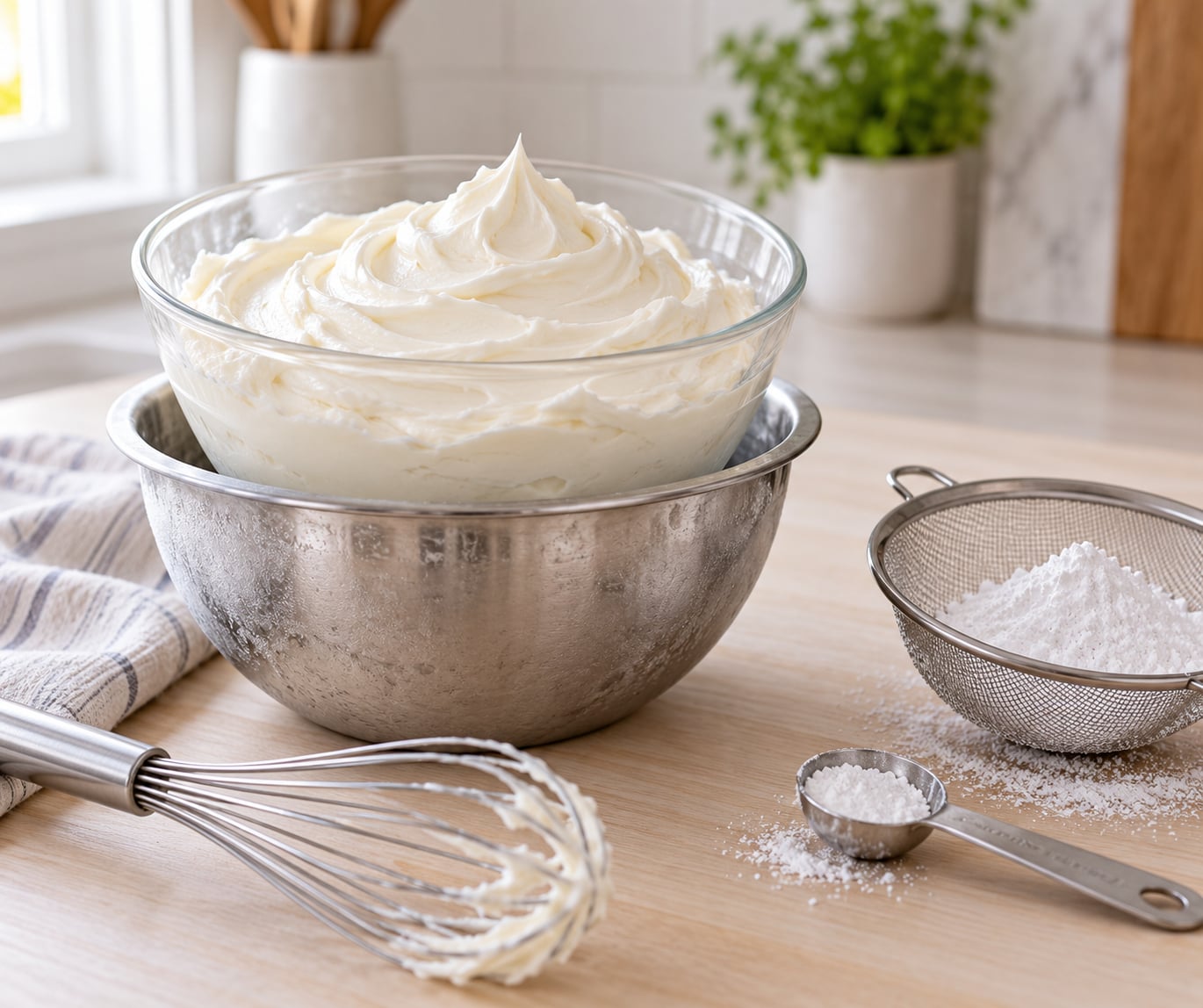
Chilling is the least disruptive fix and the first one to try. Put the bowl in the fridge uncovered for 10 to 20 minutes, until the frosting looks noticeably thicker around the edges but is not set solid.
Then take the bowl out, let it sit at room temperature for five minutes so the fat is workable, and beat it on medium for 30 to 60 seconds. The fat firms back up and any air you whipped in gets redistributed.
You are looking for a soft, spoonable texture that holds a ridge on the spatula for a second before slumping. Do not spoon hardened frosting straight onto a warm cake, or it will slide off and take the top crumb with it.
If the frosting is still loose after a proper chill, chilling is not your problem. An overwhipped or badly proportioned frosting can be cold and still drip, and bakers have posted exactly that frustration in r/Baking from a house that was already cold.
2. Add sifted powdered sugar gradually
Sift the sugar over the frosting and add one tablespoon at a time, beating on low to medium for 20 seconds between additions. For a standard 3-cup batch, expect to need somewhere between a quarter cup and half a cup before the frosting stops moving.
This is the right fix for American buttercream, a simple powdered sugar glaze, and many cream cheese frostings. The trade is sweetness. If your frosting is already near the edge of what you can taste, stop after a quarter cup and switch to starch or meringue powder instead.
A heavily flavoured frosting will punish you for this. Vanilla, cocoa and coffee frostings have very little room left, and a lemon or salted caramel glaze can turn unpalatable fast.
3. Mix in a small amount of starch
Starch adds body without the sweetness, which is why it works so well on a frosting you have already pushed too far. Start with one teaspoon of cornstarch, tapioca starch or arrowroot starch for a 3-cup batch.
Stir the starch into a tablespoon or two of the frosting first until it is a smooth paste with no dry pockets, then fold that paste back into the bowl. Beating the dry powder straight into butter lumps it, and those lumps read as grit later.
The texture cue is simple. Before the starch, the frosting runs slowly off the spatula and spreads on contact. After it, the frosting holds the edge of the spatula and keeps a line when you drag it across the bowl.
Use tapioca or arrowroot if the frosting will be served cool or frozen, and cornstarch for a plain room-temperature cake. Cornstarch can taste faintly chalky once a cake has sat out and warmed.
4. Use meringue powder for smooth, stable buttercream
Meringue powder is the answer when the frosting has to hold a shape in a warm room, or when you are piping flowers, shells and borders that need sharp edges. It firms the frosting and slows melting without shifting the sweetness much.
Add roughly one teaspoon per cup of frosting to start, beat well, then chill and re-whip. If the box directions for your brand say the powder goes into the powdered sugar first, whisk them together before any liquid is added.
You are after stability, not a big flavour change. The frosting will feel drier and slightly less creamy, and it will not weep at the edges of a piping bag the way thin frosting does.
5. Add cocoa powder when chocolate flavour suits the cake
Unsweetened cocoa powder is a dry flavour ingredient that soaks up liquid and deepens the chocolate taste at the same time. That makes it the neatest fix for a thin chocolate frosting, where more sugar would be unwelcome.
Add a teaspoon at a time, sift it in, and beat until the colour and smell are where you want them. Two to three teaspoons is usually enough to notice on a 3-cup batch.
Use plain unsweetened cocoa, never hot cocoa. Hot cocoa carries sugar, and its starch is treated in a way that can make the frosting seize and go grainy, which is the opposite of what you are trying to do here.
Choose the Best Fix for Your Frosting Type
Different frostings break in different ways. Use this table to pick the safest first move before you add anything at all.
| Frosting | Safest first fix | Avoid | Still too thin if |
|---|---|---|---|
| American buttercream | Chill, then add sifted powdered sugar a tablespoon at a time | Loosening with milk once it stiffens | The butter was soft at mixing time, so no dry ingredient will fix the balance |
| Swiss or Italian meringue buttercream | Chill and re-whip on low | Heavy-handed powdered sugar, which dulls the meringue | It was warmed too long and the fat broke out of emulsion |
| Cream cheese frosting | Chill, then stir in powdered sugar | Extra whipping, which loosens it further | It is warm or has been sitting out over two hours |
| Ganache and poured glaze | Cool it undisturbed, then stir | Water or extra cream after the chocolate seizes | It is emulsifying; chill and re-stir rather than add liquid |
| Simple powdered sugar glaze | Whisk in more sifted powdered sugar | Starch, which dulls a clear glaze | It has been sitting near steam or heat |
| Whipped frosting | Re-whip cold, then stabilise with gelatin or cornstarch | Powdered sugar, which is grainy and heavy on top of cream | The cream was warmed during whipping or has already broken |
Meringue powder suits buttercream that must hold a piping shape. Cocoa suits chocolate frostings only. Cornstarch suits a batch you have already over-sweetened.
Test the Consistency Before Frosting the Cake
Dab a small spoonful onto a chilled bowl or the back of a cold plate and leave it for 30 seconds. That test tells you more than any amount of guessing in the bowl.
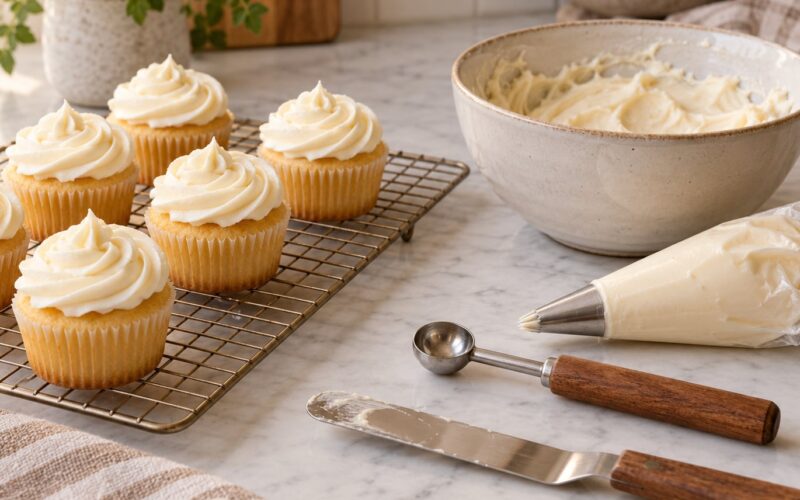
For spreading and smoothing, the dab should hold its shape with only a soft edge. For a crumb coat, it can be a little looser. For piping, it should keep a defined ridge and pull away from the spatula cleanly rather than stretching in a string.
Two things change the answer after the test. Frosting softens in a warm room or on a warm cake, so what passed on a cold plate may slump within minutes. And a thin crumb coat, chill, then a final layer is more forgiving than trying to lay a thick coat on the first pass.
For cakes that sit in a humid kitchen, build in more stiffness than the test demands. Nobody complained about a buttercream that was a little firmer than planned.
How to Store the Fixed Frosting
Store the finished frosting in a covered container, and label it with the ingredients if anyone in the house has a food allergy or intolerance. A short note naming the dairy, nuts or gluten in the mix saves a lot of guessing later.
American buttercream made with all butter keeps well at room temperature for a day or two, and about a week in the fridge. Buttercream made with shortening does the same, and travels better warm.
Cream cheese frosting is the one to treat seriously. Because of the dairy, keep it refrigerated and use it within three to four days. Whipped cream frosting is the shortest of all: refrigerate it and eat it within 24 hours, ideally the same day.
Royal icing dries hard on the cake and keeps for several days airtight at room temperature. Ganache and poured glazes are usually fine for a day or two refrigerated, then brought back to room temperature before serving.
Every time you pull frosting from the fridge, give it a short beat before you use it. Cold frosting that has set will not spread, and a stiff smear is how people accidentally tear a crumb coat.
Common Mistakes
- Dumping in a large scoop of thickener. You cannot take it back. Add a tablespoon, mix, test, then decide.
- Measuring by guess. A gram or two is the difference between spreadable and pipeable, and a scale removes the argument.
- Pushing past the sweetness limit. Past about half a cup of extra sugar in a 3-cup batch, switch to starch or meringue powder.
- Overlooking the bowl temperature. Cold bowl and cold butter set the structure. Warm bowl and warm butter will not, no matter what you add.
- Using the wrong starch. Cornstarch for a chilled or frozen cake can taste chalky once it warms. Use arrowroot or tapioca there.
- Using hot cocoa powder. It is sweetened and its starch can seize the frosting into a grainy paste.
- Thin ganache that has already seized. More liquid will not loosen it back. Cool it slowly, then stir until the fat comes back into the mix.
- Binning frosting that only needed more mixing. Before you start over, run the mixer for two full minutes. A frosting that never emulsified often comes together right there.
One more worth knowing: separation inside a piping bag is not a thin frosting. Massage the bag between your hands until the white streaks disappear and it is spreadable again.
Frequently Asked Questions
Can I fix frosting that is too thin by adding more butter?
Softened butter works for American buttercream if your frosting has too little fat, and one tablespoon at a time is plenty. It does nothing for cream cheese frosting, whipped cream, or ganache, because the butter will just slide through the water phase and leave the frosting loose. If you already have enough butter, the fix is sugar or starch, not more fat. Warm the bowl and butter first so it incorporates instead of tearing the frosting.
How much powdered sugar should I add to runny frosting?
For a typical 3-cup batch, expect to need between a quarter cup and half a cup of sifted powdered sugar, added one tablespoon at a time. Sift it, beat 20 seconds, then test a dab on a chilled plate before adding more. If the frosting is vanilla, cocoa or salted caramel and already close to too sweet, stop after a quarter cup and finish with cornstarch or meringue powder instead.
Why is my frosting still runny after I added cornstarch?
Most often the cornstarch never dispersed. Added straight to the bowl it sits in dry pockets, and those pockets dilute instead of thicken. Mix the starch into a couple of tablespoons of frosting to a smooth paste, then fold that back in and beat. A teaspoon is a realistic starting amount for a 3-cup batch. Also chill the bowl afterwards, since a cold buttercream will hold the new structure far better.
Can I thicken whipped cream frosting without making it grainy?
Yes. Keep it cold and stabilise it rather than sweetening it. Sprinkle one teaspoon of gelatin softened in cold water, or one teaspoon of cornstarch, over the cream and whip for a full two minutes, then chill for 20 minutes before use. Powdered sugar is the enemy here: it is grainy on its own and dulls quickly once it sits on a cool dessert.
How long can I keep thin frosting before I thicken it?
A day at room temperature is fine for a butter-based frosting, and thin frosting actually firms a little as it sits. Keep cream cheese and whipped cream frostings refrigerated and fix them within 24 hours, since the dairy does not appreciate waiting. A thin frosting that has been mixed and left will not spoil quickly, but its flavour dulls. Thickening it the same day gives you the best taste and the easiest texture to work with.
Conclusion
Start with the fridge. Ten to twenty minutes, then a proper beat, fixes frosting that was simply warm. If it is still loose, test a dab on a chilled plate, then add the thickener that suits your frosting one small increment at a time.
Sugar for buttercream and glaze, starch for a frosting you have already over-sweetened, meringue powder for shapes that have to hold, cocoa for a chocolate cake. Add slowly, stop when the test passes, and the batch is saved. Updated for 2026.