What does overmixing cake batter do? It develops far more gluten than a delicate cake can handle and folds in extra air, so the batter turns sticky and tight and bakes into a dense, rubbery crumb that sinks in the middle and tunnels rather than rising light.
It is also easy to do by accident. A stand mixer on medium speed will keep beating a standard butter cake batter long past the point where it is ready, and that extra minute or two is usually the whole distance between a cake that crumbles and one that chews.
- Dense, rubbery crumb that feels chewy instead of tender
- Sunken center, sometimes with a raw or gummy patch underneath
- Tunnels and large holes running through the crumb
- Dry, tight texture on the outside with a heavy, doughy feel
- Poor or heavy rise and a cracked or domed top
Almost all of this damage happens in the bowl, long before any heat is involved. Once you can see it coming, you can stop it.
Table of Contents
- What Does Overmixing Cake Batter Do?
- Why Does Mixing Too Long Change Cake Batter?
- What Are the Signs of Overmixed Cake Batter?
- What does overmixing cake batter do versus overbaking?
- Why Is Overmixing More Damaging in Some Cake Recipes?
- Gluten-free batters are a different story
- How Much Mixing Is Too Much for Cake Batter?
- Can You Fix Overmixed Cake Batter?
- How to Avoid Overmixing Cake Batter
- Frequently Asked Questions
- How do I know if I overmixed my cake?
- How do I fix overmixed cake batter?
- Does overmixing cause dense cake?
- What happens if you overbeat cake batter?
- Can you overmix a gluten-free batter?
- How much should I mix cake batter for the best texture?
- Conclusion: Start With the Batter, Not the Clock
What Does Overmixing Cake Batter Do?
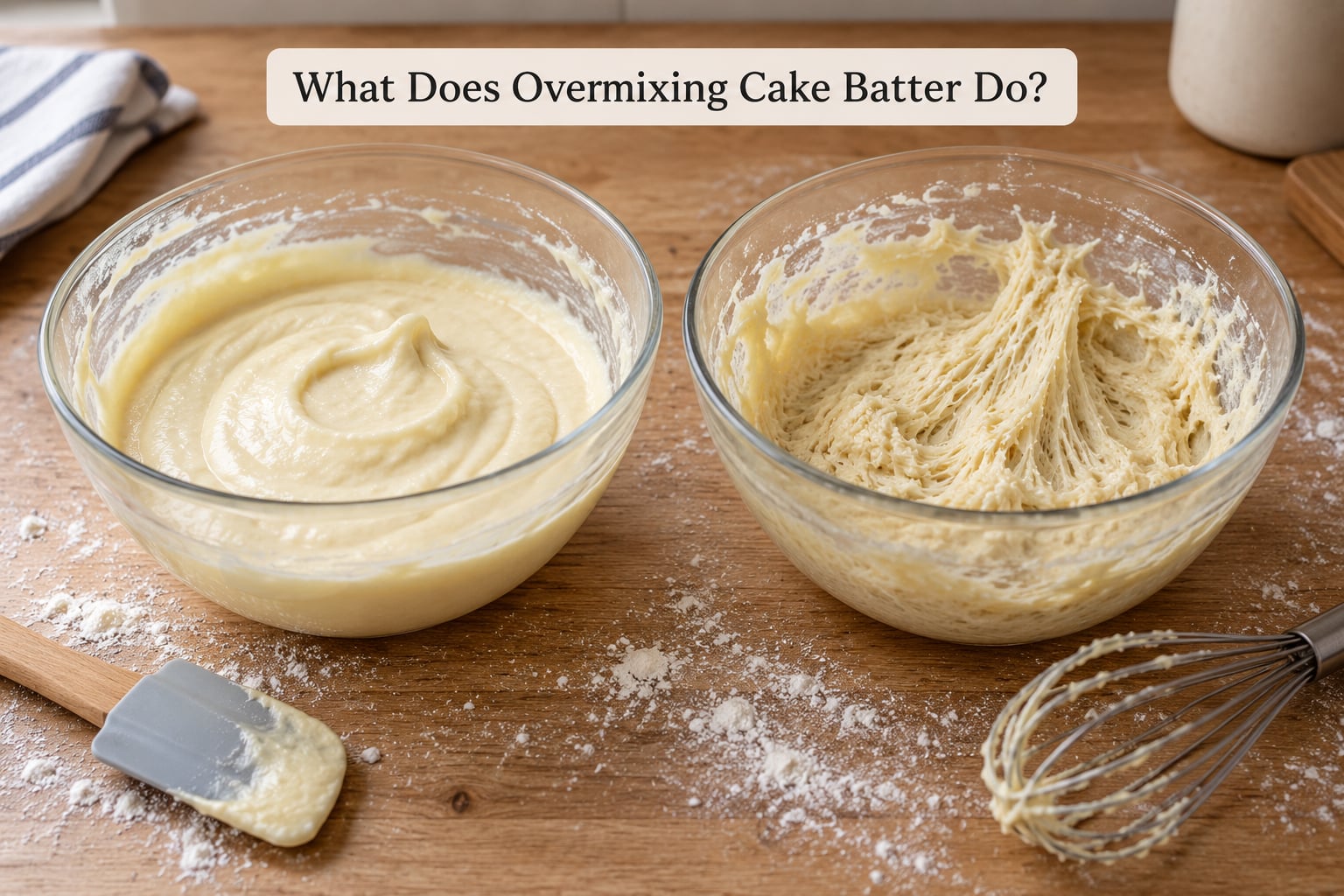
Overmixing means working the batter harder or longer than the formula needs once the flour is hydrated. Two things build up at the same time: an overly strong gluten network and an excessive amount of trapped air. A cake wants only a light, loosely bonded crumb, so both of those work against it.
The first few seconds of mixing are mostly wetting the flour. After that, continued beating unfolds and aligns wheat proteins until the batter behaves like a soft dough rather than a pourable cream. That is the point where many home bakers simply do not stop.
Flour choice matters, by the way. Cake flour is milled finer and carries less protein than all-purpose, so it reaches that doughy stage later and gives a more tender crumb. All-purpose flour, and especially bread flour, arrive with a stronger gluten budget and punish you faster for beating too long.
Why Does Mixing Too Long Change Cake Batter?
It starts with hydration. When liquid meets flour, water slips between starch granules and lets two families of wheat proteins, glutenin and gliadin, uncoil from their compact shape. Uncoiled proteins reach out and link to each other, and those links are gluten.
Glutenin gives gluten strength and elasticity. Gliadin gives it stretch. Neither is active until it is hydrated, which is why dry flour in a bowl is slack and undevelopable while wet flour can be worked into something elastic.
Beating accelerates that reaction on two fronts. Mechanical development aligns the new strands into an ordered network, and air folded into fat and sugar is whipped into that network. More beats mean longer strands and more air, both of which set into a tight, springy shell during baking.
Sugar plays its own part. In the creaming stage, sugar crystals cut into softened butter and hold tiny air pockets in it. Push that stage too far and the foam becomes fragile, so the cake rises fast in the oven, sets its outside early, then buckles in the center once the still-soft interior cannot carry itself.
Fat is the other fragile element. In a scratch cake with a high butter ratio, an emulsion of fat and water is what gives the crumb its fine, moist texture. Long mixing on high speed can break that emulsion, which shows up as a batter that suddenly looks curdled or greasy instead of smooth.
What Are the Signs of Overmixed Cake Batter?
Batters announce themselves early, and most of the useful clues appear before the flour disappears completely.
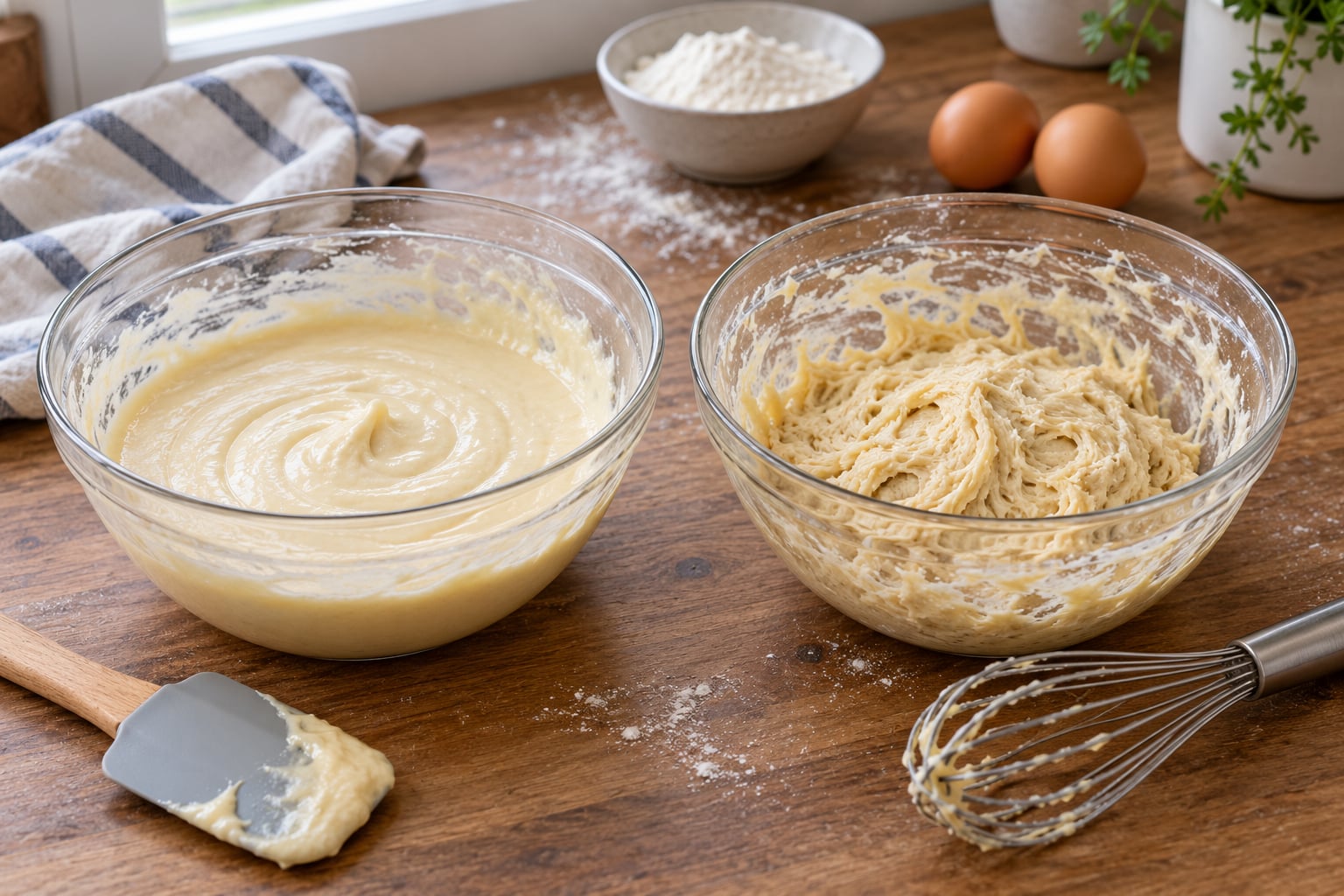
- Stiff resistance. The beater leaves a defined trail behind it instead of disappearing, and the batter fights back.
- A rubbery film. Lift the beater or a spoon and the batter strings between it and the bowl rather than sliding off in a ribbon.
- Excessive smoothness. A correctly mixed batter still shows a few lumps and streaks of flour. Batter that looks like finished icing is batter that has been worked too long.
- Rough, torn surface. Instead of leveling out, the top of the batter holds peaks and ridges that sit rather than relax.
- Breaks in the fat. A sudden graininess or oily sheen means the emulsion has split.
- Visible large bubbles. Big irregular air pockets in a batter that should be tight and even.
A few small lumps are not a problem. Baking finishes the job, and most flour lumps disappear in the oven. The point of stopping is that no dry flour should be visible, not that the batter has to look professionally smooth.
What does overmixing cake batter do versus overbaking?
This is the most common source of confusion, because three different mistakes produce a disappointing cake and get blamed on each other. The batter is your evidence, but the crumb has clues too.
| What you notice | Likely cause | What to change next time |
|---|---|---|
| Batter was stiff and rubbery before pouring | Overmixing | Add dry ingredients in two or three additions on low speed, stop at no visible flour |
| Crumb is dry and tight all the way through, edges darker than the center | Baking too long, often in a hot oven | Pull the cake 5 to 10 minutes earlier and verify oven temperature with an oven thermometer |
| Center is wet or gummy, edges done, top cracked in a deep fissure | Underbaking, or too much sugar and liquid for the pan | Use an oven thermometer, tent loosely with foil after halfway, check pan size against the recipe |
| Center collapsed into a bowl, rim set properly | Rise too fast then structure too weak | Check leavening amounts, oven temperature, and whether the batter was overworked |
| Large tunnels and holes in an otherwise fine crumb | Overmixing with excess air | Slow down, scrape the bowl down, and stop as soon as flour is incorporated |
| Even, tender crumb but the top browned early | Oven running hot | Verify temperature with an oven thermometer, use the recipe’s stated pan material and size |
An oven that runs 25 to 50 degrees hot is common enough to change your results dramatically, and an inexpensive oven thermometer settles the argument in about five minutes.
Why Is Overmixing More Damaging in Some Cake Recipes?
Some formulas need a developed gluten network and some need almost none. Knowing which is which saves a lot of second guessing.
- Pound cakes and high-ratio butter cakes. Lots of fat and sugar against relatively little flour, plus a long creaming stage by design. These tolerate heavier mixing, and most are meant to be beaten thoroughly. Even here, pushing past the creaming stage does nothing useful.
- Sponge and genoise cakes. Very little fat, so all the structure comes from lightly set egg foam and a minimal, gently folded flour. Overworking here is the fastest route to a tough, chewy, low-rise sponge. Folding with a light hand is the whole technique.
- Standard butter cakes and cupcakes. The middle ground, and where most overmixing happens. Enough structure to hold up, not so much that the crumb tightens. Cupcakes bake fast and have less time to recover from a dense batter.
- Chocolate cakes. Cocoa carries its own starches and can disguise a firm crumb for a while. Many recipes depend on hot coffee or buttermilk for a thin batter, and beating that thin mixture hard is a reliable way to make it pasty.
- Quick breads and muffins. Banana, pumpkin, and zucchini breads are high in fat and sugar, so they are naturally forgiving. Muffin method mixes just until combined for a reason, though: creaming the fat and sugar longer than needed produces a tall, cracked dome and a heavy base.
Boxed mixes fall into their own category. The stated mixing time is calculated for the flour and leavening in that specific box, so following it precisely is the safest option. Adding your own flour or stretching the time is what usually causes problems.
Gluten-free batters are a different story
Without wheat proteins there is no gluten network to overdevelop, so the classic toughness explanation does not apply. The risks change rather than disappear: overmixing a gluten-free batter can deflate whipped egg whites, break an emulsion, and over-aerate a mixture you wanted dense.
Mix gently, but for a different reason. And if lumps of flour or starch are the problem, a few extra stirs are safer in a gluten-free batter than in a wheat one.
How Much Mixing Is Too Much for Cake Batter?
There is no universal time, and anyone who gives you one is guessing. Mixers differ, flour varies by brand and protein content, and the same speed number means different things on a hand mixer and a stand mixer. Cues beat clocks every time.
The useful framework is speed and endpoint rather than duration:
- Low speed for dry ingredients. Add flour in two or three additions and let it fall into the wet mixture rather than blasting it. Most recipes are finished in under a minute at low speed.
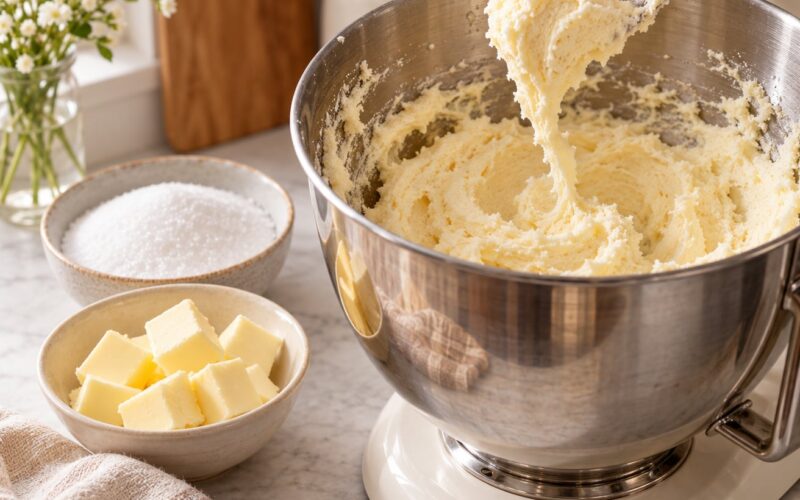
- Medium only for creaming. Butter and sugar are the exception, where some air is genuinely wanted and the recipe may specify a number of minutes.
- High speed is rarely right for cake batter. It suits meringues and whipped cream, not a cake batter you intend to bake.
- Stop at the cue. No visible dry flour, a few lumps acceptable, batter that falls off the beater in a slow ribbon rather than a stiff rope.
For sponge cakes, treat mixing time as nearly zero and use folding. For a standard butter cake, most of the work happens in the creaming stage, and the flour goes in gently at the end. Scrape the bowl and the beater down once or twice during the dry additions so you are not chasing flour hiding at the sides.
A hand mixer gives you better feedback than a stand mixer because you can see the batter as you work. A stand mixer does it faster, which is the problem, because it does not slow down at the finish line.
Can You Fix Overmixed Cake Batter?
Sometimes, partially, and only early. Once gluten has aligned, no ingredient dissolves it back, so think in terms of softening the damage rather than undoing it.
- A small splash of liquid. For a stiff, tight batter, a spoonful of milk, buttermilk, or water thins it and relaxes the crumb. Add a little at a time; overcorrect and you have a runny batter that spreads thin and dries out.
- Fold in something tender. A spoon of sour cream, yogurt, or an egg white loosened with a little milk softens the texture of a firm batter.
- Change the baking plan. Pour thinner layers, or bake in a cupcake tin for shorter times, so a heavy crumb is less noticeable. A thinner cake also sets faster, and a faster set helps a center that was struggling.
- Gluten-free batters. These respond better, since there was no gluten network to build in the first place. A light hand and an extra stir to clear lumps is usually enough.
What does not work: adding more flour, which tightens the batter further, or mixing harder to smooth it out. Very badly overmixed batter is honestly better repurposed into cake bites, a trifle base, or pancakes, where the texture matters less.
If you have not baked yet, the best rescue is time. Resting the batter for 15 to 30 minutes lets the flour hydrate fully and often relaxes a batter that was beaten stiff on the last stroke.
How to Avoid Overmixing Cake Batter
Most of this is preparation rather than willpower. Set the bowl up so the flour goes in slowly and you cannot accidentally dump it all at once.
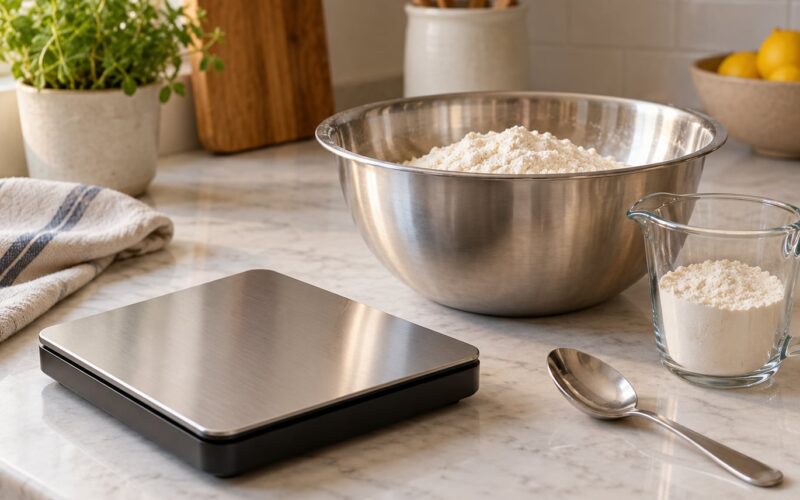
- Measure accurately and sift dry ingredients. Scooping straight from the bag gives you too much flour by weight, which makes the batter tighter and more likely to feel overworked.
- Add flour in two or three additions on low speed, letting each addition almost disappear before the next.
- Scrape the bowl and beater down partway through each addition so no dry flour hides at the edges.
- Use the speed the recipe names. If it says low, low is not a suggestion. Many recipes say speed 1 or 2 on a stand mixer.
- Stop at the cue, not the minute. Scrape the spoon and look for dry flour, not lumps.
- Pull the beater earlier than feels right. Slightly undermixing bakes out perfectly, while overmixing does not recover.
A few other mistakes hit the same crumb. Beating the eggs in a scratch recipe until they turn gluey folds in far more air than intended. Melting butter into hot batter can break the emulsion. And using the wrong pan size changes both rise and bake time, which gets blamed on the batter more often than it deserves.
If your stand mixer runs fast, a timer does not help much. Watching the batter does. That is the whole skill.
Frequently Asked Questions
How do I know if I overmixed my cake?
The batter usually tells you first: it feels stiff, the beater leaves a defined trail, and lifting the spoon shows a rubbery stringy film rather than a slow ribbon. A few lumps of flour are fine, but batter that looks perfectly smooth has usually been beaten too long. The finished cake confirms it with a dense chewy crumb, a sunken center, or large tunnels.
How do I fix overmixed cake batter?
You cannot undevelop gluten, but you can soften the result. Add a small splash of milk, buttermilk, or water to relax a stiff batter, or fold in sour cream or yogurt for extra tenderness. Pour thinner layers or use a cupcake tin so the heavier crumb is less noticeable. Resting the batter for 15 to 30 minutes before baking also helps it relax slightly.
Does overmixing cause dense cake?
Yes, it is one of the most common causes. Beating aligns and strengthens the gluten network so the crumb sets tight and springy instead of light and tender. Density can also come from baking too long, an oven running hot, or too much flour, so check the batter texture before blaming the recipe. The doughy, rubbery feel of the raw batter is the clearest clue.
What happens if you overbeat cake batter?
Overbeating develops an excessive gluten network, incorporates too much air, and can break the fat emulsion. The cake comes out heavy, chewy, and sometimes gummy in the middle, with a sunken center and cracks across the top. If the butter and sugar were creamed too long, the foam also rises fast in the oven and then collapses as the center cannot support itself.
Can you overmix a gluten-free batter?
You cannot overdevelop gluten that is not there, so the classic toughness problem does not apply. The risks are different: too much mixing can deflate whipped egg whites, break the emulsion, and over-aerate a mixture you wanted dense. Gluten-free batters also tend to be thirsty, so mix gently but do stir out stubborn lumps, since under-mixing starch lumps is the more common failure.
How much should I mix cake batter for the best texture?
Judge by the batter, not the clock. Add flour in two or three stages on low speed and stop once no dry flour is visible, accepting a few small lumps. Creaming butter and sugar is the one stage that benefits from time, so follow the recipe there. Sponge cakes need almost no mixing and are better folded, while pound cakes tolerate a heavier hand than most formulas.
Conclusion: Start With the Batter, Not the Clock
Overmixing cake batter is one of the few baking mistakes that cannot be corrected later, which is why prevention is easier than repair. Hydrated flour, a stretchy beater, and a rubbery film between spoon and bowl are the signals, and all three appear before the flour is gone.
So read the method, not the clock. Cream the fat and sugar for as long as the recipe asks, add the dry ingredients in stages on low speed, scrape down once, and stop when no dry flour remains. A few lumps are fine. Overmixing is not, and the cake will tell you either way.