To cream butter and sugar properly, beat softened butter at about 65°F (18°C) with sugar using a stand mixer and paddle attachment (or an electric hand mixer) on medium speed for 3 to 5 minutes. Stop when the mixture is pale, light, fluffy and free of visible sugar granules. It takes about 10 minutes start to finish, including softening.
The clock matters far less than the cues, though. Butter that is too cold stays chunky, butter that is too warm turns greasy, and neither traps the air you need for lift. Once you know what the finished mixture should look and feel like, you will never need a timer again.
Table of Contents
- What You Need to Cream Butter and Sugar Properly
- Step-by-Step
- 1. Bring the Butter to Room Temperature
- 2. Start Mixing the Butter
- 3. Add the Sugar Gradually
- 4. Check the Texture and Aeration
- Common Mistakes When You Cream Butter and Sugar
- Frequently Asked Questions
- How long should butter and sugar be creamed?
- Can I use melted butter to cream with sugar?
- Should I use granulated sugar or powdered sugar?
- How do I know when butter and sugar are creamed?
- Can I cream butter and sugar by hand?
- Why does my butter and sugar mixture look greasy?
What You Need to Cream Butter and Sugar Properly
Unsalted butter is the safer starting point because you control the salt. Salted butter works, but many newer cultured and lightly salted butters carry more water than older recipes assume, and that extra water is one of the reasons a mixture refuses to fluff up.
Granulated sugar is what you want for cookies and cakes. It dissolves into the fat and leaves a fine, tender crumb. Brown sugar behaves differently because its molasses content holds moisture, so it produces a chewier, softer result and never fully dissolves. I keep both in the house, but I only pull brown sugar out when a cookie recipe asks for it.
For equipment, a stand mixer with the flat paddle attachment gives the most control, and the paddle is the right tool. A whisk attachment beats in more air but also works the fat harder, so it pushes you toward over-creaming faster. An electric hand mixer does the same job in a bigger bowl with more cleanup. A whisk and a bowl by hand will get you there, just slowly.
A silicone spatula matters more than people expect. Sugar settles fast against the sides of the bowl, and anything left stuck up there never creams. A small instant-read thermometer is the single best upgrade for this step, because it takes all the guesswork out of the word “softened.”
Step-by-Step
1. Bring the Butter to Room Temperature
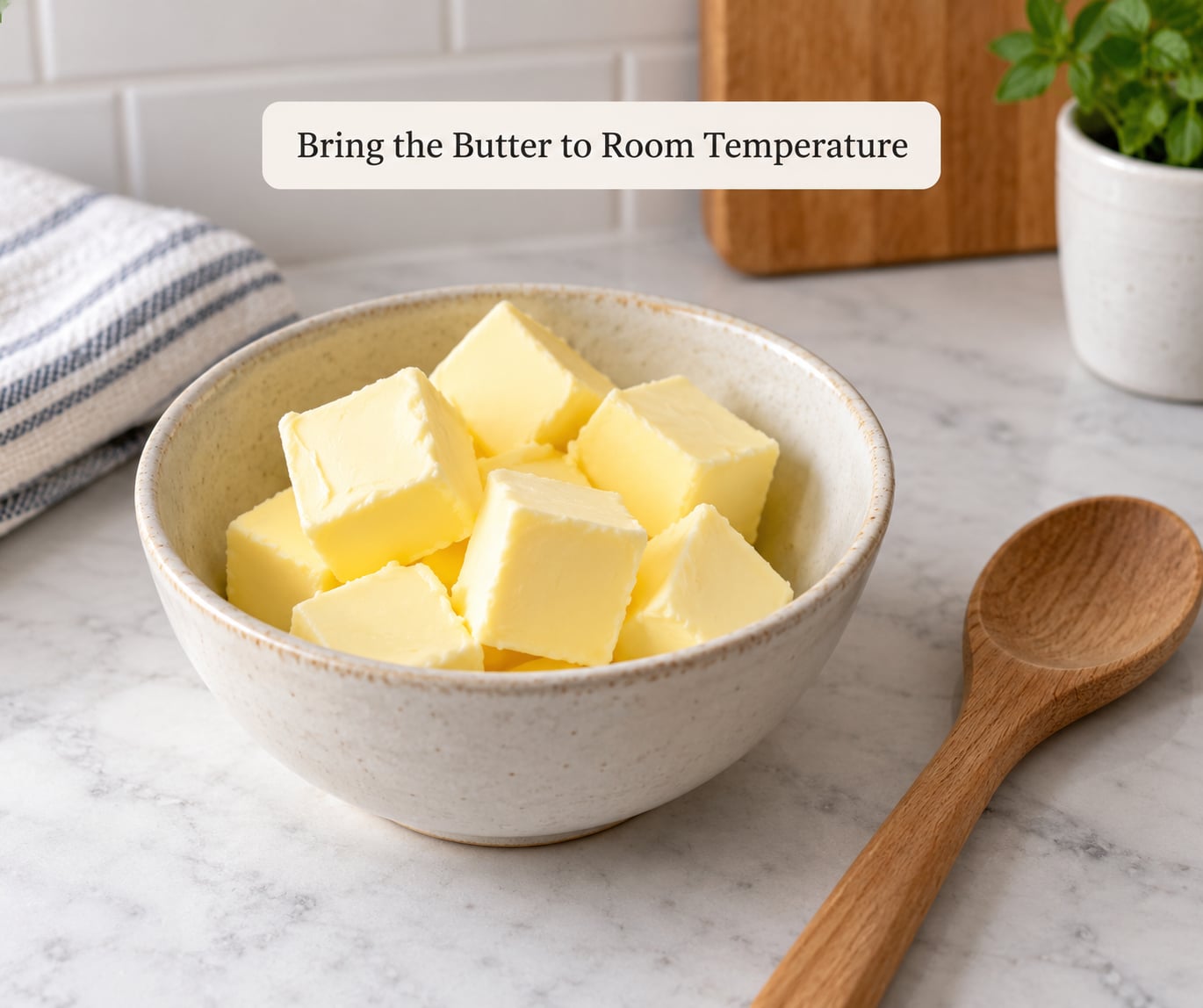
Cut the butter into 1-inch cubes and leave them out for 30 to 60 minutes. On a thermometer they should read 65°F to 68°F, and they should still feel cool to the touch, not warm. Press a fingertip into a cube: if it dents easily but the edges stay intact, you are there. If it slumps or looks shiny, it is melted and will not work.
Warm fat cannot hold air, and that is the whole game. You can speed things up with the cube method: cut smaller pieces, or microwave 10-second bursts at half power, checking between every burst. The microwave route is the fastest way to accidentally melt the outside while the middle is still cold.
2. Start Mixing the Butter
Put the butter in the bowl and beat it on low for 30 to 60 seconds first. This breaks the cubes down and smears them against the paddle without flinging them around the bowl. Scrape down the sides and the base once, then raise the mixer to medium.
After a minute the butter alone should look softer, lighter in color and a little aerated. That is where you add the sugar, not before.
3. Add the Sugar Gradually
Add the sugar a couple of tablespoons at a time with the mixer on low, letting each addition disappear before the next. Dumping the whole bowl in at once gives you a grainy mixture that takes much longer to recover from, and part of that sugar ends up glued to the sides where the paddle cannot reach it.
There is a real disagreement in baking circles about speed. You will see recipes saying high speed for 2 minutes and others saying medium for 5. Both can produce good results, and here is why: high speed generates more friction, which both aerates faster and heats the fat faster. Medium speed is the safer default for a first attempt because you can watch the texture and stop on cue. If you go high, keep it short and watch the bowl temperature, not the clock.
Whichever speed you choose, scrape down the bowl at least twice, at roughly the 90-second and 3-minute marks. A minute later, the mixture should be noticeably paler and have grown by roughly a third in volume.
4. Check the Texture and Aeration
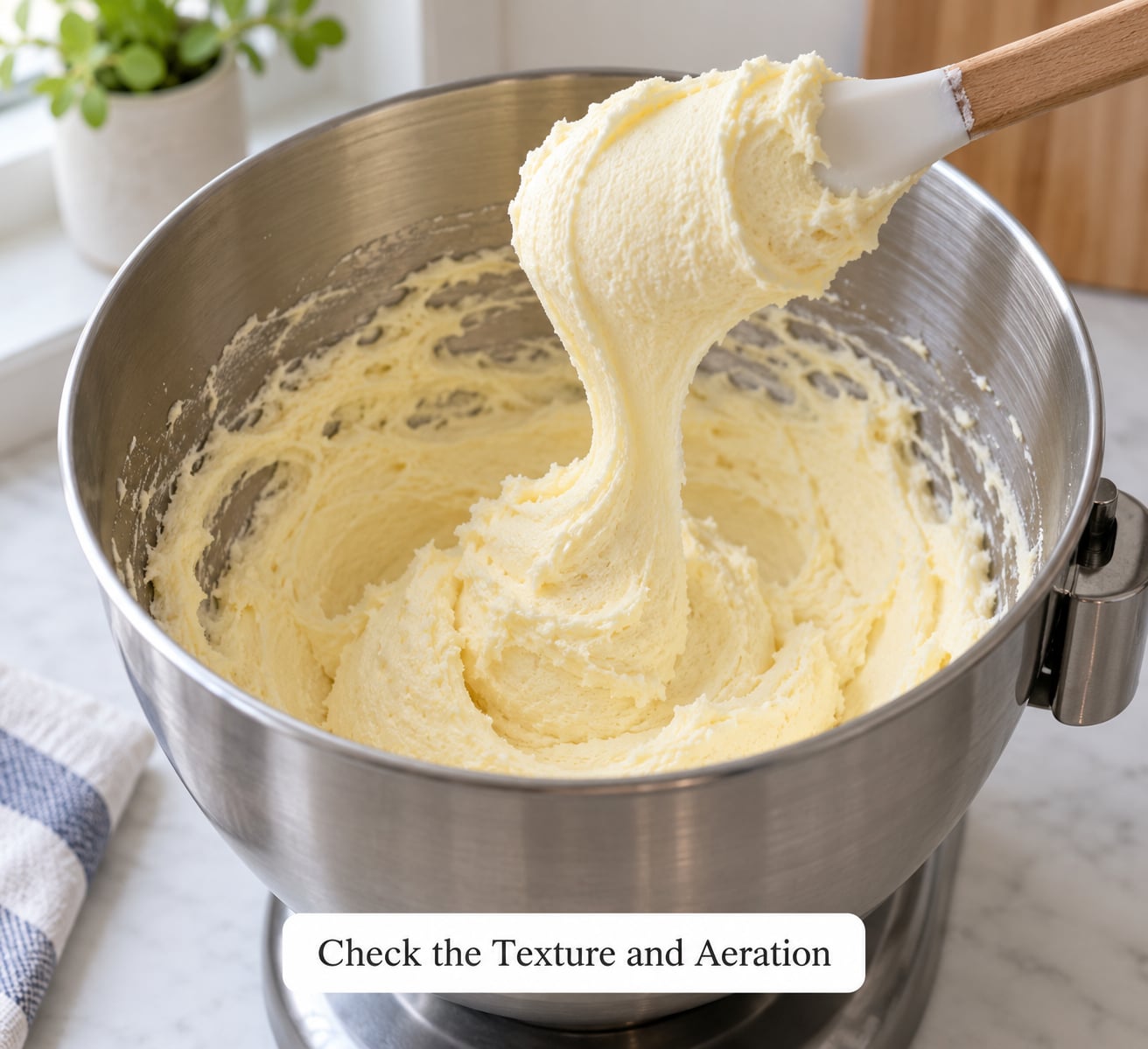
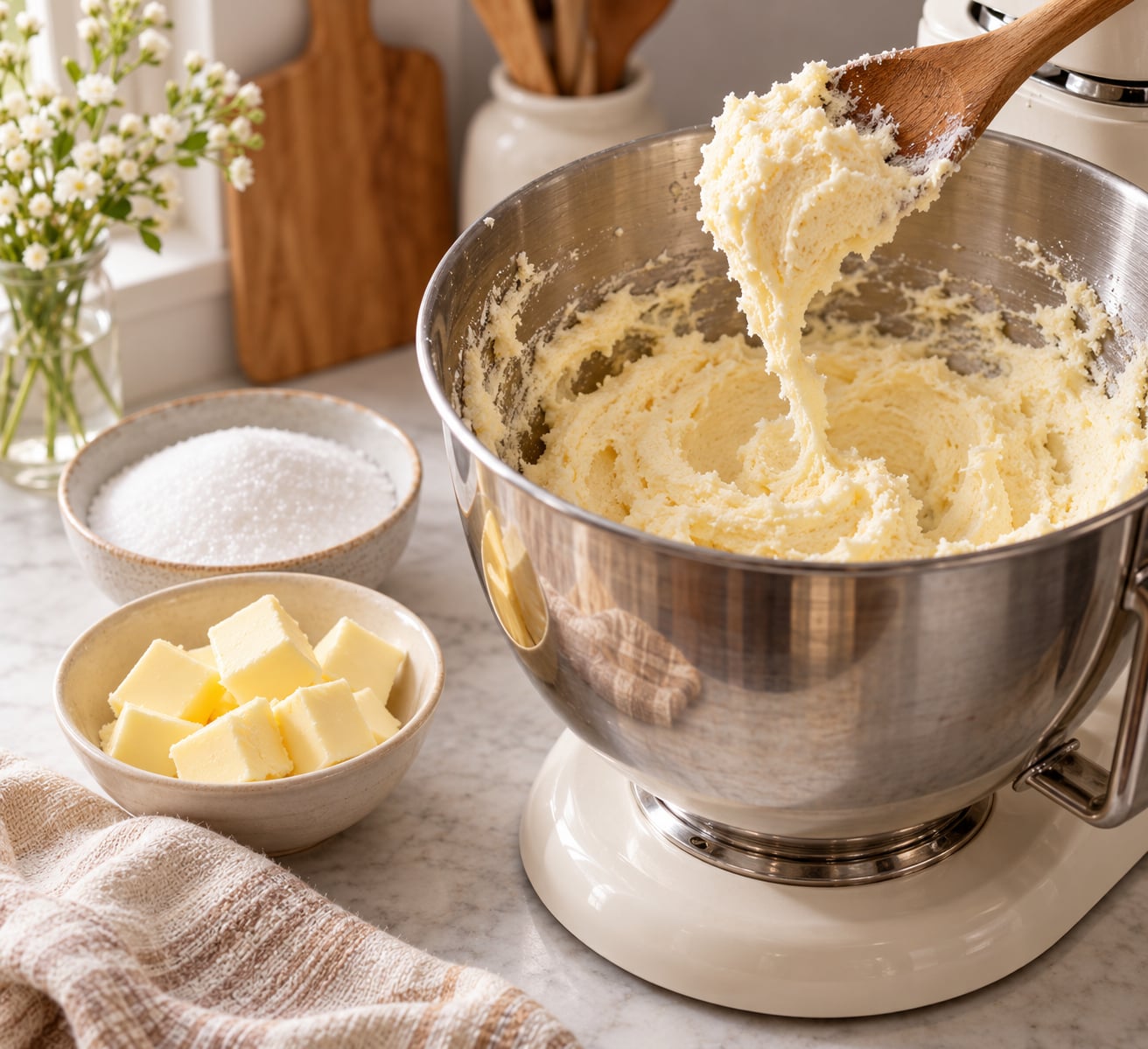
Stop on the cues, not the timer. Four things should be true at once: the color has gone from deep yellow to a pale, almost ivory yellow; the volume has increased noticeably; the texture is light and fluffy rather than pasty or oily; and there are no visible sugar crystals left on the surface or the paddle.
Turn off the mixer and lift the paddle. The mixture should fall off in a soft, continuous ribbon, and the ribbon should hold its shape briefly before folding into itself. Touch the side of the bowl with clean fingers, and it should feel cool, not warm. That last check is the fastest way to catch a mixer running hot.
Some home bakers use the “paddle test”: if you can write a small letter on the paddle with a fingertip and it disappears slowly, the mixture is right. Another version is to lift a spoonful and see whether the peak holds its shape without the tip stretching and drooping.
Common Mistakes When You Cream Butter and Sugar
Most failed batches trace back to butter temperature or to sugar that never got worked in. Here is what each failure looks like and what to do about it.
The mixture stays grainy. Usually the butter was too cold, the sugar was added all at once, or the bowl sides were never scraped. Fix it by continuing to beat on medium with a scrape every 30 seconds for another 2 to 3 minutes. Graininess that persists after that usually means the butter was partially melted at the start.
The mixture looks greasy or oily. The butter was too warm, or you mixed on high speed too long. You cannot fully reverse this once the fat has separated, but you can stop the damage: chill the bowl for 10 minutes and resume on low, scraping often. For the next batch, check with a thermometer rather than guessing.
You still see chunks of butter. Cold butter plus a short mixing time. Add another 2 minutes at medium with frequent scraping, or grate the butter through a coarse grater next time so it starts at a much smaller particle size.
It never gets fluffy or light. The most common cause is melted butter, followed by a stand mixer that ran too long on high. There is no rescue for a mixture that never aerated. Start again with butter at 65°F.
Your cookies spread out flat and greasy. Two candidates: over-creaming, which leaves too little structure in the fat, or a dough that was too warm when it hit the pan. Chilling the scooped dough for 20 to 30 minutes fixes the second one. For the first, time the creaming rather than mixing until the bowl feels done.
Under-creamed butter and sugar leaves sugar crystals intact and produces a dense, tight crumb with a slightly gritty bite. Over-creamed butter and sugar goes past fluffy into soft and oily, and the result is a flat cookie, a sunken cupcake center, or a cake that collapses as it cools. Proper creaming sits in the middle: pale, aerated, and still structurally firm.
There is also the “should I even cream this?” question. If butter and sugar are listed next to each other in the ingredient list, cream them. The exception is brownies and some quick breads, where the recipe wants everything melted or whisked together for a dense, fudgy crumb.
And yes, you can cream butter and sugar by hand. Use a wooden spoon and a lot of elbow grease, expect 10 minutes or more, and know that you will get a slightly denser result with less lift. It is a perfectly good method for a small batch, just not the one to rely on for a birthday cake.
Frequently Asked Questions
How long should butter and sugar be creamed?
Plan on 3 to 5 minutes of active mixing on medium speed. Total time from cubed butter to finished creamed mixture is closer to 10 minutes, because softening takes the first half of that. Watch the color and volume rather than the clock, since bowl size and mixer strength change the timing. If you mix on high speed, cut it to about 2 minutes and stop the moment the mixture pales.
Can I use melted butter to cream with sugar?
No. Melted butter is the single most common reason creaming fails. Liquid fat cannot trap air, so the mixture will stay glossy and heavy no matter how long you beat it. Let melted butter set back to a soft solid first, or start over with fresh cubes. You need butter that dents under a fingertip but holds its shape, roughly 65°F to 68°F.
Should I use granulated sugar or powdered sugar?
Granulated sugar for cookies and cakes. Its crystals cut into the butter and dissolve into the fat, which gives a fine, tender crumb. Powdered sugar contains cornstarch and dissolves almost instantly, so it disappears without much creaming and leaves a denser, softer texture better suited to frostings. Brown sugar is a third option that adds moisture and chew but never fully dissolves.
How do I know when butter and sugar are creamed?
Look for four things together: the color has shifted from deep yellow to pale ivory, the volume has grown by roughly a third, the texture is light and fluffy rather than pasty or oily, and no sugar crystals are visible. Lifting the paddle should give you a soft ribbon that holds its shape for a second. The bowl should still feel cool to the touch on the outside.
Can I cream butter and sugar by hand?
Yes, with a wooden spoon or a sturdy whisk, but budget 10 minutes or more of steady work and expect a slightly less airy result. The method is the same: soften the butter, mash in the sugar gradually, and scrape the bowl as you go. Hand creaming is practical for small batches of cookie dough. For layer cakes or anything that needs a tall rise, use a mixer.
Why does my butter and sugar mixture look greasy?
Greasy texture means too much heat and too much friction. The butter was likely softened past 68°F, or the mixer ran on high for several minutes and warmed the fat through friction. Stop the mixer and let the bowl rest, then beat on low with frequent scraping. The fix for the next batch is to start with cooler butter and keep to medium speed for 3 to 5 minutes.
If you only change one thing this week, weigh your butter and use a thermometer. The temperature is the variable that decides whether the air goes in and stays in, and once that is right, the speed and the 3-to-5-minute window follow almost on their own. Set the butter out first, then everything else takes ten minutes.