Yes, you can make a cake ahead of time for a party, and it usually comes out better than a same-day bake. Unfrosted layers keep about 24 hours at room temperature, roughly four to five days in the refrigerator, and one to three months in the freezer, while a frosted cake stays good for up to a week chilled.
The trick is splitting the job into stages: bake and freeze the layers, make the frosting separately, then fill, crumb coat and decorate close to the event. Chilled layers are also easier to level, stack and carve than warm ones, so the make-ahead method solves two problems at once.
Here is the plan I use, based on how many days you actually have between now and the party.
Table of Contents
- What You Need
- Step-by-Step: How to Make a Cake Ahead of Time for a Party
- How to Choose the Right Make-Ahead Method
- How to Store a Cake Overnight
- How to Freeze a Cake Ahead of Time
- How to Frost, Decorate, and Transport It
- Common Mistakes
- Frequently Asked Questions
- How far in advance can I make a cake for a party?
- Can I make a cake the night before and frost it the next day?
- Can a frosted cake be frozen for a party?
- How long should a cake stay in the refrigerator?
- How do I keep a cake from getting stale when made ahead?
- What kind of cake is best to make ahead?
- Conclusion
What You Need
You do not need special equipment. You need the right containers, and that is where most make-ahead plans fall apart.
- Cooling racks so layers cool evenly on the bottom instead of steaming themselves soggy
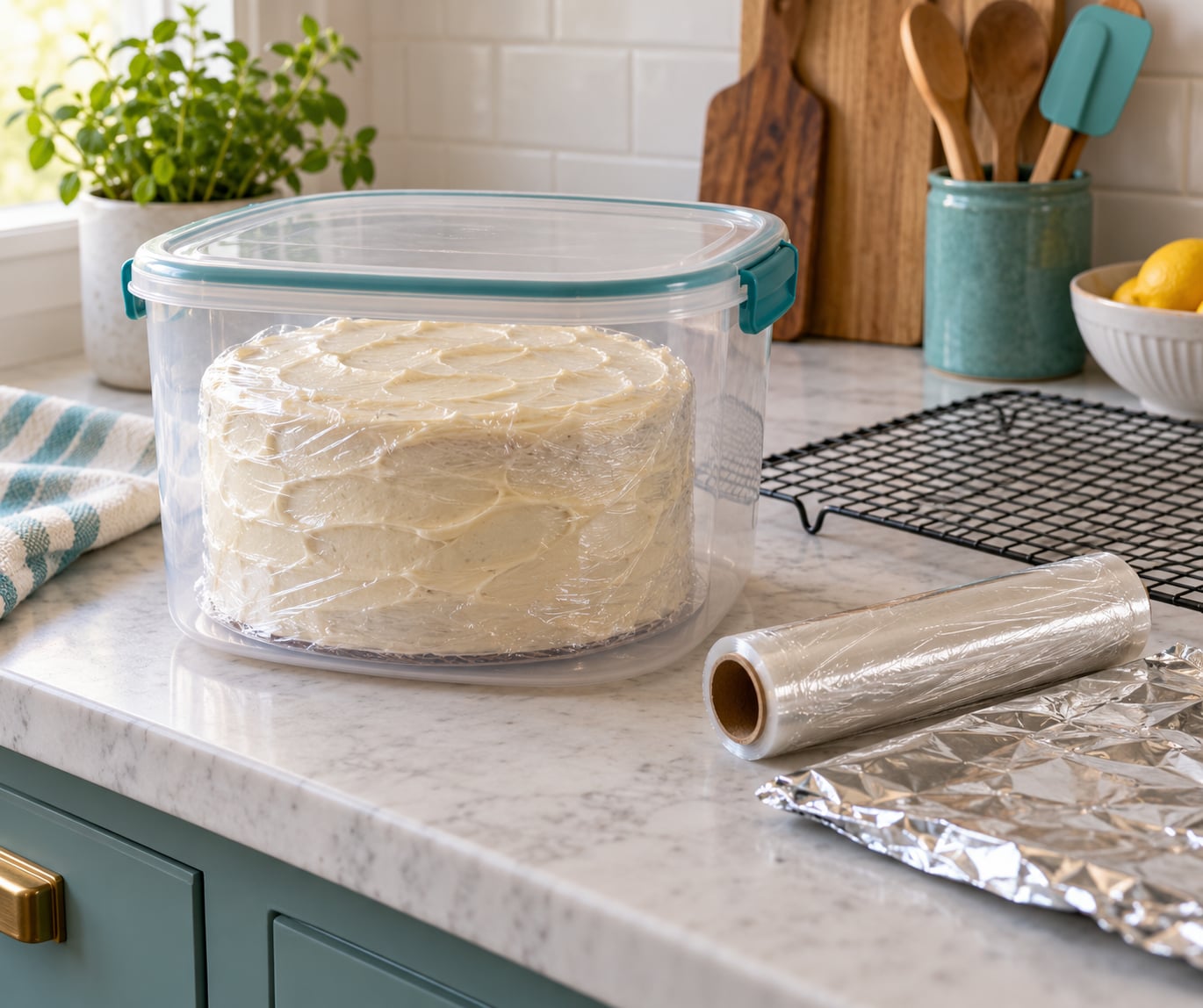
- Plastic wrap and aluminum foil for double wrapping, or a freezer bag for layers that do not fit a box
- An airtight cake container or a large bowl with a tight lid for anything stored in the refrigerator
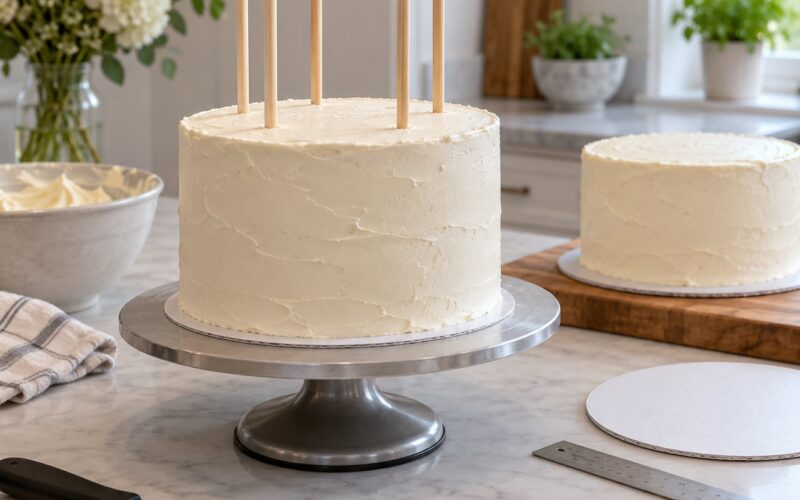
- A cake board and dowels for tall or tiered cakes that have to survive a car ride
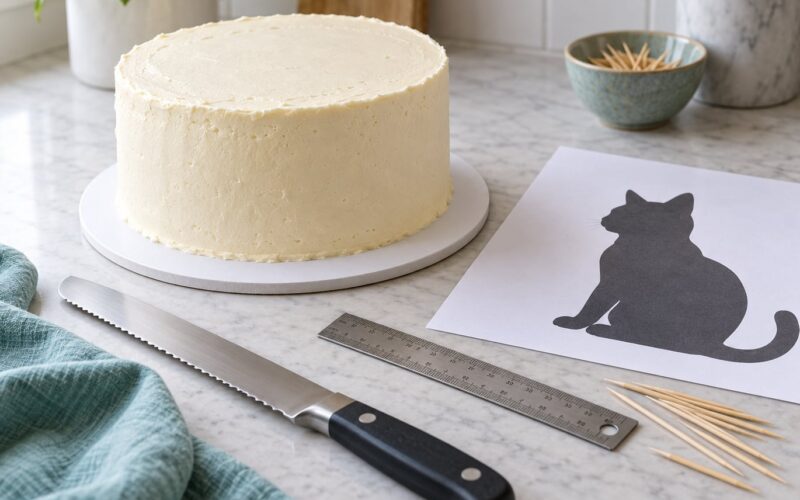
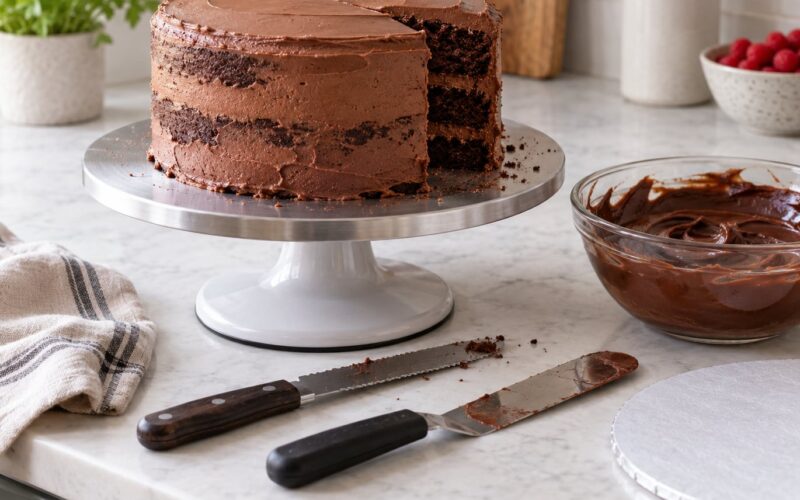
- A serrated knife and an offset spatula for leveling chilled layers and smoothing the frosting
- Simple syrup (equal parts sugar and water, warmed) if you like moist layers
The optional extras are a cake carrier for transport and a small bench scraper for leveling. What is not optional is matching your storage method to the cake and the frosting. A butter cake covered in American buttercream behaves completely differently from a chiffon layer with whipped cream, and treating them the same is how you end up with a dry cake or a soupy one.
Step-by-Step: How to Make a Cake Ahead of Time for a Party
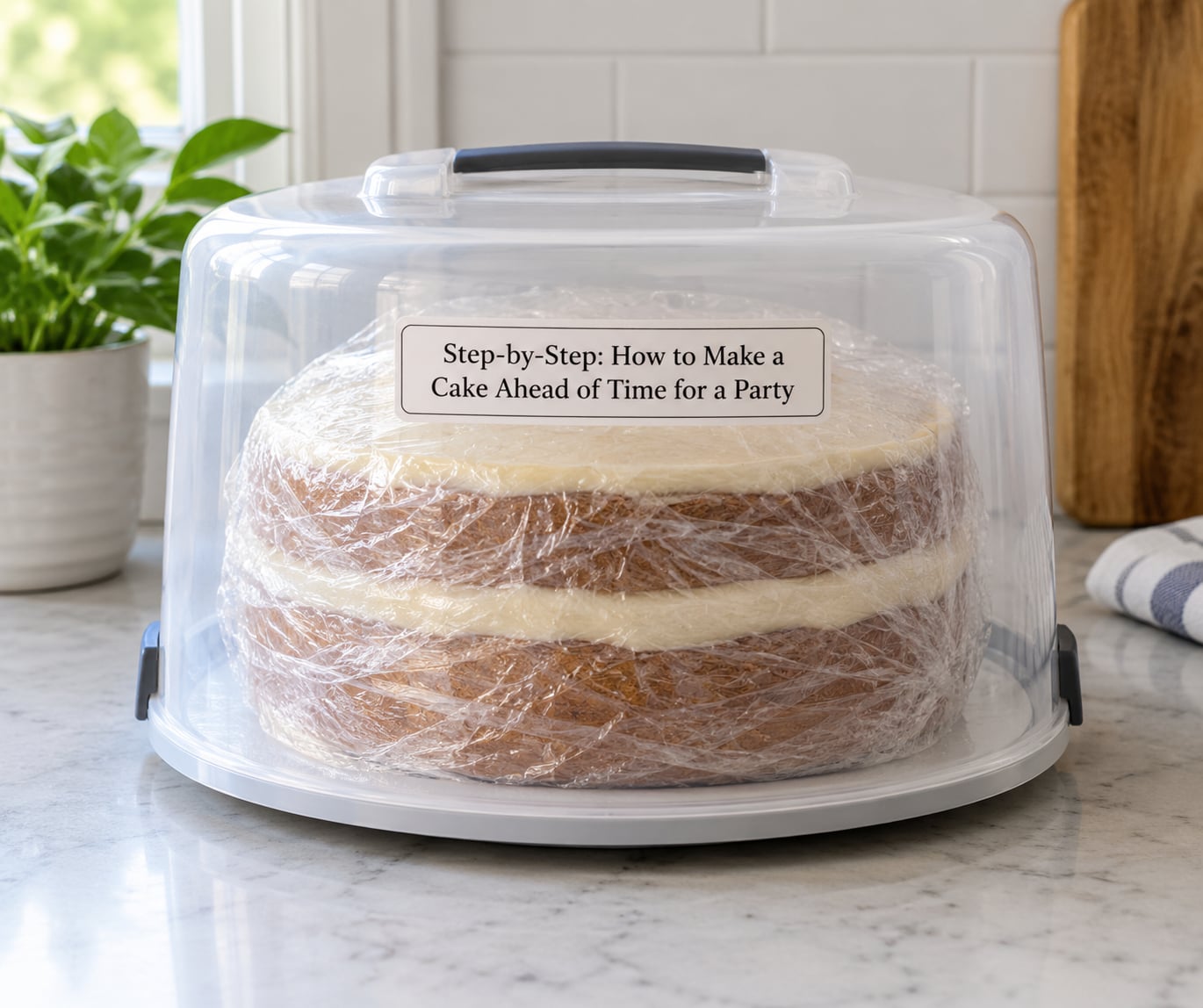
- Pick the recipe. Choose something that already knows how to travel: a sturdy butter or oil cake, a chocolate cake, or a carrot cake. Skip meringue toppings, whipped cream frosting and fruit-heavy cakes like pineapple upside-down if you are freezing.
- Bake the layers and let them cool completely. Ten minutes in the pan, then out onto a rack until there is no warmth at all, usually one to two hours. Trapping a warm cake is the single most common make-ahead error.
- Decide your horizon. A cake made the night before is stored wrapped at room temperature or in the refrigerator. A cake made three weeks out gets wrapped and frozen. The method is the same for both, only the destination changes.
- Wrap, label and store. Unfrosted layers can be wrapped directly. A finished frosted cake needs a cake board under it so you can lift it out in one piece.
- Make the frosting on its own schedule. American buttercream keeps about a month in the refrigerator and three months frozen. Swiss meringue and ganache keep a week or two chilled. Cream cheese and whipped cream frosting keep two to three days and must be refrigerated.
- Thaw, still wrapped. Frozen layers move to the counter about 30 minutes before you need them. Refrigerator thawing takes several hours overnight.
- Level, soak and fill. Trim the top while the layer is still firm, then soak with simple syrup and add your filling.
- Crumb coat, chill, then finish. A thin first coat of frosting seals the crumbs. Chill 30 minutes, then add the final layer of frosting and decorate.
- Transport, settle and serve. Carry it cold, let it sit at room temperature before cutting, and use a serrated knife with a wiped blade between cuts.
How to Choose the Right Make-Ahead Method
Choose by timeline first, then by cake type. Here is how long each method actually lasts.
| Method | How long it lasts | Best for |
|---|---|---|
| Room temperature, wrapped | About 24 hours | Plain or buttercream-frosted layers made the night before |
| Refrigerator, covered | 4 to 5 days unfrosted, up to 7 days frosted | Cakes with cream cheese, whipped cream, custard or fresh fruit filling |
| Freezer, double wrapped | 1 to 3 months | Unfrosted butter, oil, chocolate and carrot cake layers; cupcakes unfrosted |
| Freezer, fully decorated | 1 to 3 months | Fondant and sturdy buttercream cakes, not whipped or meringue finishes |
One warning about the refrigerator. Cold does not preserve cake indefinitely, it speeds up starch retrogradation, the process where starch molecules re-link and the crumb turns dry and firm. That is why a cake kept in the fridge for a week often tastes worse than one kept on the counter for a day. Refrigerate for food safety when the filling requires it, and add a syrup soak to compensate for the drying.
Some cakes are simply poor candidates for freezing. Meringue goes soft and weepy, whipped cream frosting breaks down to liquid, and very fruit-heavy or pineapple cakes turn mushy. Cheesecake-style cakes freeze acceptably as plain unfrosted rounds, but fresh fruit on top does not survive.
Cupcakes freeze best unfrosted, in a single layer until solid, then moved to a container so they do not touch. Frost them the day of the party and they will look freshly made.
The same logic decides the style of cake you choose. Match the shape to the storage window and the journey.
| Cake style | How far ahead you can go |
|---|---|
| Standard layer cake | 3 months frozen unfrosted, 24 hours if you frost it the same day |
| Semi-naked cake | Freeze unfrosted and frost on the day; the thin crumb coat wrinkles if it sits |
| Tall tiered cake | Freeze layers flat, never stacked; dowel and support after assembly |
| Sheet cake | Freeze unfrosted in the pan or on a board, thaw before frosting |
| Cupcakes | 2 to 3 months frozen unfrosted, frost the day of the party |
| Cheesecake-style or whipped finish | Refrigerate and make 1 to 2 days ahead only; never freeze the finished cake |
How to Store a Cake Overnight
For an overnight stay, the goal is simply to keep the cake from drying out or picking up odors while you sleep.
- Cool the layer fully first. Warm cake plus plastic wrap equals trapped steam and a gummy top.
- Wrap it tightly in plastic wrap, then in foil or a sealed bag. Two layers of protection beat one.
- Store a plain or American buttercream cake on the counter, in a cake carrier or under a bowl, for up to 24 hours.
- Refrigerate anything with dairy, fresh fruit, custard or cream cheese frosting, and refrigerate a cake that sits in a warm or humid kitchen.
- Set a cake board under a frosted cake so you can lift the whole thing out without a spatula fight.
Frosting sticks to whatever it touches, and plastic picks up odors from the fridge. A cake dome, a large bowl, or a cardboard box over the container handles both. One baker described her bridal shower cake sliding apart on the day because it sat unrefrigerated overnight; a lid and a cold room would have prevented it.
Two hours is the general limit for a perishable cake at room temperature, and much less in hot weather. If a cream cheese or whipped cream frosting has been out longer than that, treat the cake as refrigerated food and keep it out no more than two hours at the party.
How to Freeze a Cake Ahead of Time
Freezing is the method that actually buys you time. Here is the whole process.
- Cool completely. Any residual warmth turns to ice in the freezer and crystals into moisture loss later.
- Do not level or trim before freezing. The outer crust is your moisture barrier, and a serrated knife goes through a frozen layer far more cleanly.
- Wrap in plastic wrap, pressing out the air. Push gently from the top and tuck the wrap down the sides.
- Wrap again in foil, a freezer bag, or an airtight container. Label each layer with the cake name and the date.
- Freeze flat for 1 to 3 months. Airtight wrapping is what prevents freezer burn, and that is the fear most bakers have about freezing layers. People report freezing layers for four to six weeks with no freezer burn at all when they double wrapped them.
Freeze unfrosted whenever you can. A frosted cake also freezes well if the frosting is fondant or a firm American buttercream, but you lose the crisp edges and any piped detail. Whipped cream and meringue frostings should not be frozen at all.
Thawing is where cakes go wrong. Take the layer out of the freezer and leave it wrapped on the counter for about 30 minutes, or move it to the refrigerator overnight. Unwrapping a frozen or still-cold layer brings the warm air straight to the surface, and the condensation that forms will make the crumb soggy and the frosting slide. This temperature shock is the cause of the beaded, wet-looking cakes people describe in comment threads. Wait until the layer has reached room temperature before you touch the wrap.
Trim while the layer is still firm, let it finish coming to room temperature, then level. A chilled layer sheds far fewer crumbs and carves into clean edges, which matters if you are stacking tiers.
You will know the wrap did its job. If the layer comes out of the freezer looking dull or the wrap has white patches stuck to the top, air got in and freezer burn has started. That cake still tastes fine, but the surface dries out faster. Rewrap it tightly, press the air out, and next time double the layer. Thawed layers also dry out faster in the fridge than unfrozen ones, so cover them and move straight to frosting.
How to Frost, Decorate, and Transport It
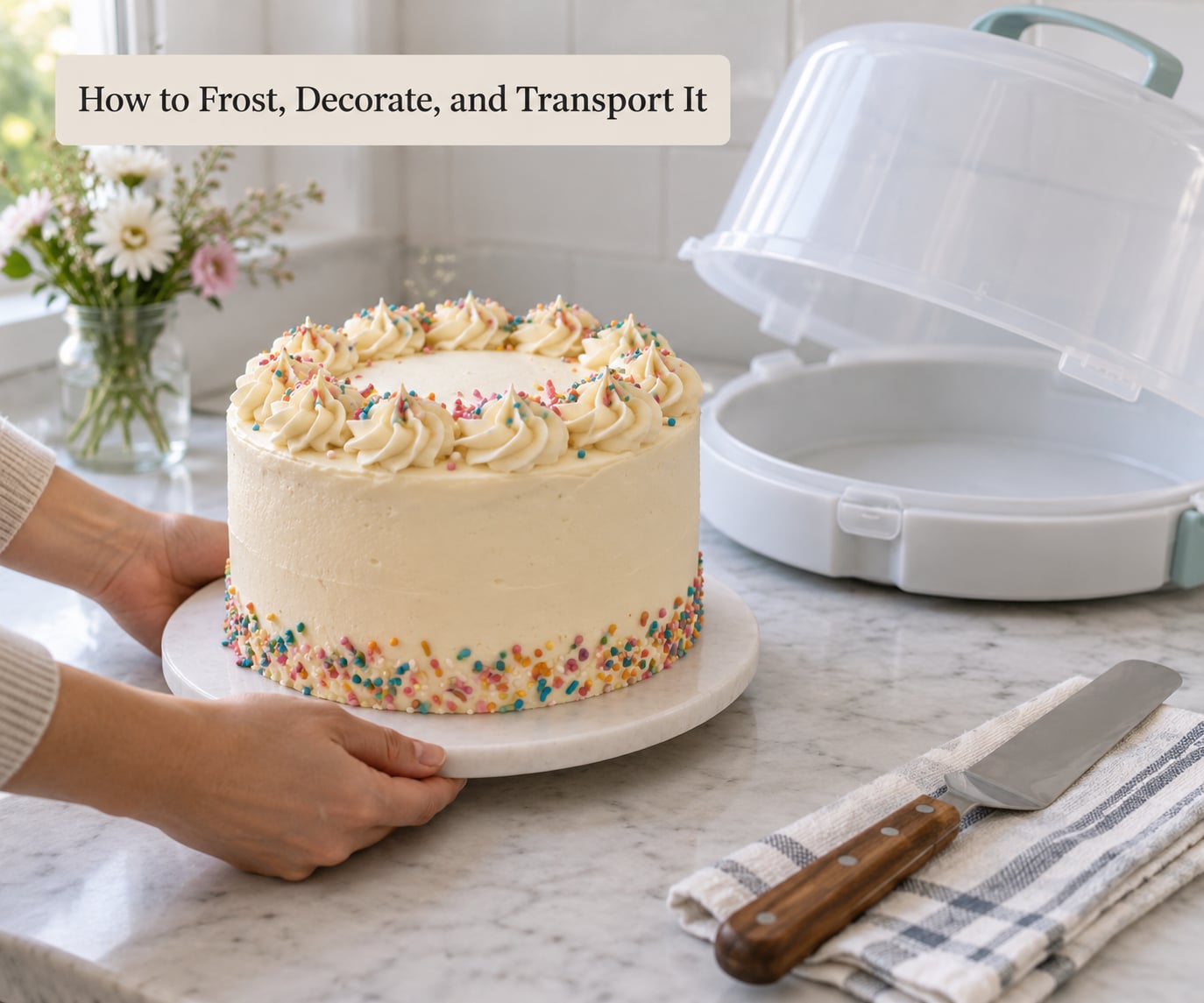
Frosting a cold layer straight from the freezer is a mistake. Wait until it has fully thawed, then spread on a thin crumb coat and chill the cake for 30 minutes. That coat traps crumbs and gives the final frosting something to grip.
For a two-day head start, fill and crumb coat on day one, refrigerate, and decorate on day two. Fondant goes on the cake the day before. Fresh flowers, delicate sugar work and anything with meringue wait for the morning of the party.
Transport is mostly a problem of movement and heat. Set the cake on a board larger than the base, use a non-slip mat under the board in the car, and put the whole thing in a cake carrier on a flat surface, never a seat or a lap. Tall tiered cakes need dowels and a central support, or the middle tier will sink into the one below it on the first turn. Keep the car cool; buttercream softens fast in a parked vehicle, and nobody enjoys a cake that slid on the way to the party.
On the day, take the cake out of the refrigerator one to two hours before you plan to cut it. Straight-from-the-fridge cake tastes cold and dense, and a chilled cake cuts into crumbs. One to two hours at room temperature is enough for most butter cakes to come to a clean, sliceable temperature while keeping the frosting firm.
Keep the cake out of direct sun at the party, because a table near a window or a warm patio will soften buttercream in about an hour. If you are taking a tiered cake to an outdoor event, carry a small cooler for the base board and keep the car running cold right up to arrival.
A cake left sitting in a parked car is the fastest way to lose your frosting, and the damage happens before anyone sees it. When the party is over, a cake that sat out for two hours with cream cheese frosting goes back in the fridge. If it was out longer than that, it is safer to cut it small and bin the rest rather than serve it the next day.
Common Mistakes
Wrapping a warm cake. Steam gets trapped, the top turns gummy, and the texture never recovers. Cool it on a rack until there is no warmth at all, which takes longer than most people expect.
Refrigerating an uncovered decorated cake. It absorbs every smell in the fridge and dries out from the airflow. Cover it with a dome, a bowl or a box, or put a cake board under it so it can be lifted out whole.
Freezing a cake with delicate decorations. Piped swirls, sugar flowers and spun sugar are fragile and rarely survive a freeze. Freeze plain layers instead and decorate fresh.
Frosting a frozen or crumbly layer. Cold frosting tears the surface and warm layers shed crumbs into the icing. Thaw fully, then frost.
Leaving a dairy-filled cake out too long. Cream cheese, whipped cream, custard and mousse fillings need cold storage, and the two-hour rule applies at the party as much as it did in your kitchen.
Unwrapping too early. Beads of water on a thawed cake are condensation, not spoilage. It happens because warm humid air met a cold surface, and the fix is simply to leave the wrap on until the layer is fully at room temperature.
Timing is the last thing to get right. A week or more out, bake and freeze. Two to three days out, thaw and fill. The day before, frost and decorate, then refrigerate. On the day, bring it out of the cold, transport it, and let it settle before you cut. Work backwards from your party time and you will never be frosting a cake at nine the night before.
Frequently Asked Questions
How far in advance can I make a cake for a party?
It depends on the storage method. Unfrosted layers keep about 24 hours at room temperature, four to five days in the refrigerator and one to three months in the freezer. A frosted cake stays good for up to a week chilled, as long as it is covered. Bake and freeze up to three months ahead, fill and crumb coat two to three days ahead, and decorate the day before the party.
Can I make a cake the night before and frost it the next day?
Yes, and that is the sweet spot for most home bakers. Let the layers cool completely, wrap them tightly in plastic wrap and foil, and store them at room temperature for up to 24 hours. Frost, fill and decorate the next day. If your frosting has cream cheese, whipped cream or custard in it, refrigerate the layers instead and bring them back toward room temperature before frosting.
Can a frosted cake be frozen for a party?
Yes, if the frosting is fondant or a firm American buttercream. Freeze it on a board, wrap in plastic and foil, and let it thaw in the refrigerator overnight. Expect the sharp edges on piped work to soften. Never freeze a cake finished with whipped cream, meringue or fresh cream frosting, and skip cakes topped with fresh fruit.
How long should a cake stay in the refrigerator?
An unfrosted layer keeps four to five days chilled and a frosted cake up to seven days, provided it is covered with a dome, a bowl or a box. Cold storage speeds up staling, so if the cake contains no dairy or fresh fruit, one day on the counter is often tastier. Take the cake out one to two hours before cutting so it is not served cold and crumbly.
How do I keep a cake from getting stale when made ahead?
Wrap it twice. Plastic wrap pressed against the surface, then foil, a freezer bag or an airtight container, keeps air and moisture out. A light brush of simple syrup on each layer after thawing gives back the moisture the crumb loses, and the crumb coat plus final frosting seal everything in. Refrigeration dries cake faster than the counter, so only chill it for food safety when the filling or frosting requires it.
What kind of cake is best to make ahead?
Sturdy butter, oil and chocolate cakes freeze and store best, and chilled layers are easier to level, stack and carve. Sponge and chiffon hold up well too. Choose a recipe whose frosting can survive your timeline: American buttercream and ganache travel well, while whipped cream and meringue frostings must be added on the day. Sheet cakes and cupcakes also freeze well when stored unfrosted.
Conclusion
The safest, simplest way to make a cake ahead of time for a party is to bake the layers, cool them completely, double wrap them and freeze. Thaw them wrapped, fill and crumb coat two days out, decorate the day before, and take the cake out of the fridge one to two hours before you cut it.
Start with the number of days you have, then count back from your party time. Pick a recipe whose frosting and filling can handle that storage method, and set a baking date on the calendar before anything else.