To store a frosted cake overnight, let it cool completely, then pick the method that matches the frosting. American buttercream, Swiss meringue buttercream, fondant and ganache cakes do fine under a cake dome or upturned bowl at cool room temperature. Cream cheese frosting, whipped cream, custard and fresh fruit cakes belong in the fridge.
Overnight is usually where a good cake goes wrong, not the baking. A warm cake wrapped too early traps steam, so the frosting turns sticky and the top goes tacky. A cake left uncovered overnight dries the crumb out and picks up onion or garlic from whatever else is in the fridge. This guide walks through both methods, step by step, so you can store a frosted cake overnight and serve it tomorrow with the icing intact.
Table of Contents
- What You Need
- Step-by-Step: How to Store a Frosted Cake Overnight
- 1. Let the Cake Cool Completely
- 2. Choose the Right Storage Method for the Frosting
- 3. Cover the Cake Without Damaging the Frosting
- 4. Refrigerate or Store in a Cool, Dry Place
- 5. Check and Restore the Cake Before Serving
- Common Mistakes
- Frequently Asked Questions
- How long can frosted cake sit out unrefrigerated overnight?
- Do frosted cakes need refrigeration?
- Can I put a frosted cake in the fridge without covering it?
- How long before serving should a cake come out of the fridge?
- How do I store layers overnight before frosting them?
- Conclusion
What You Need
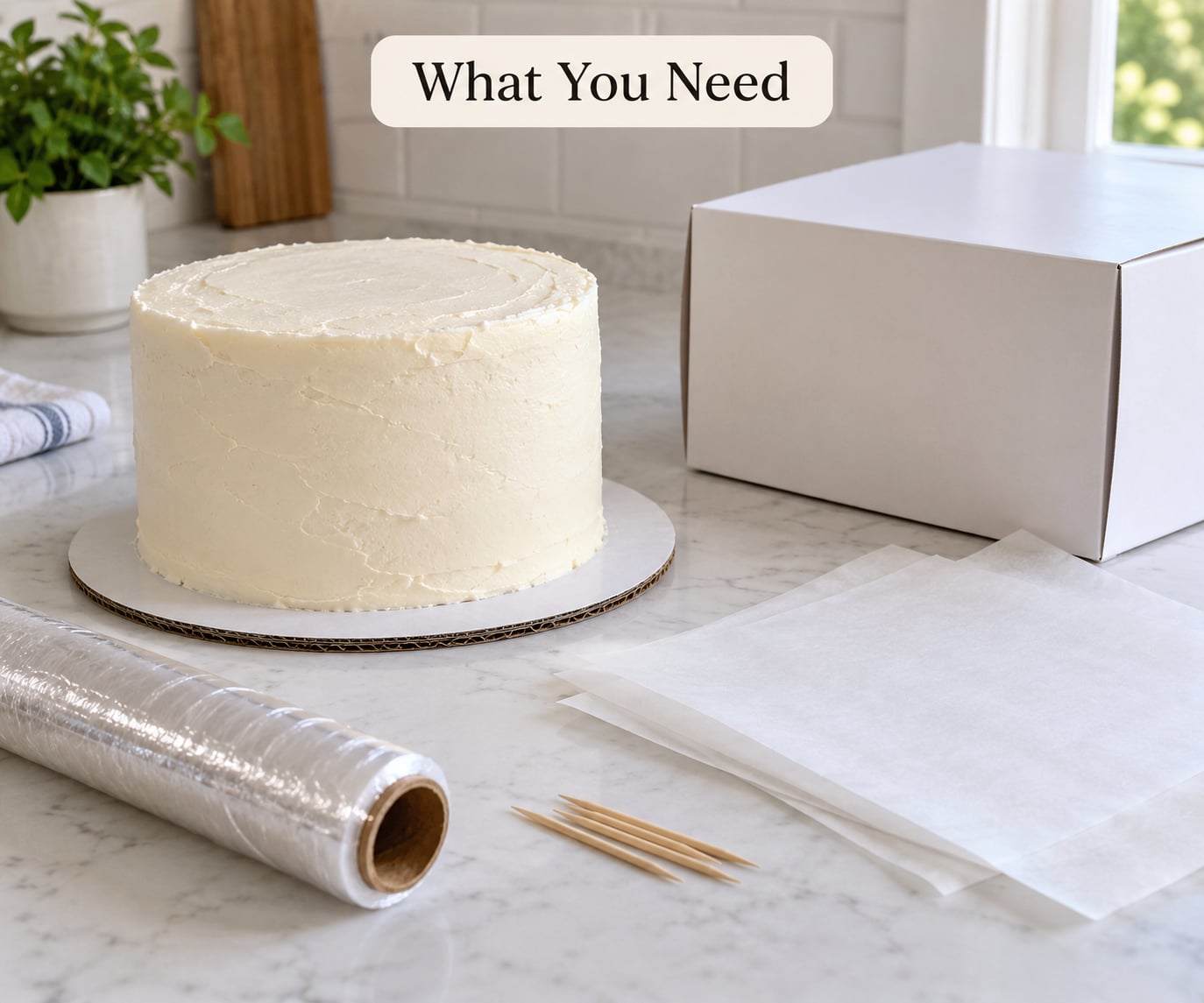
You need very little, and none of it is specialty equipment. A sturdy cake board or flat platter keeps the cake level and makes it easier to move without touching the icing. A cake box, cake dome, or airtight cake carrier gives you the airtight seal that actually protects the crumb.
For wrapping, keep plastic wrap and a roll of aluminum foil on hand, plus a sheet of parchment to sit between the frosting and the wrap. A handful of toothpicks handles tall or heavily piped cakes where nothing else will fit. If you are refrigerating, you also need space on a shelf that does not sit next to leftovers or raw meat.
Step-by-Step: How to Store a Frosted Cake Overnight
1. Let the Cake Cool Completely
Cooling is the step people rush, and it is the step that ruins the frosting. Wait until the center of the cake feels room temperature, not just the top, which can take one to two hours depending on size.
Covering a warm cake traps steam, and that steam condenses into water on the underside of the wrap. American buttercream goes sticky, fondant dull and soft, and any piped detail you worked on can slide. Put the cake on a wire rack first so air moves under it.
2. Choose the Right Storage Method for the Frosting
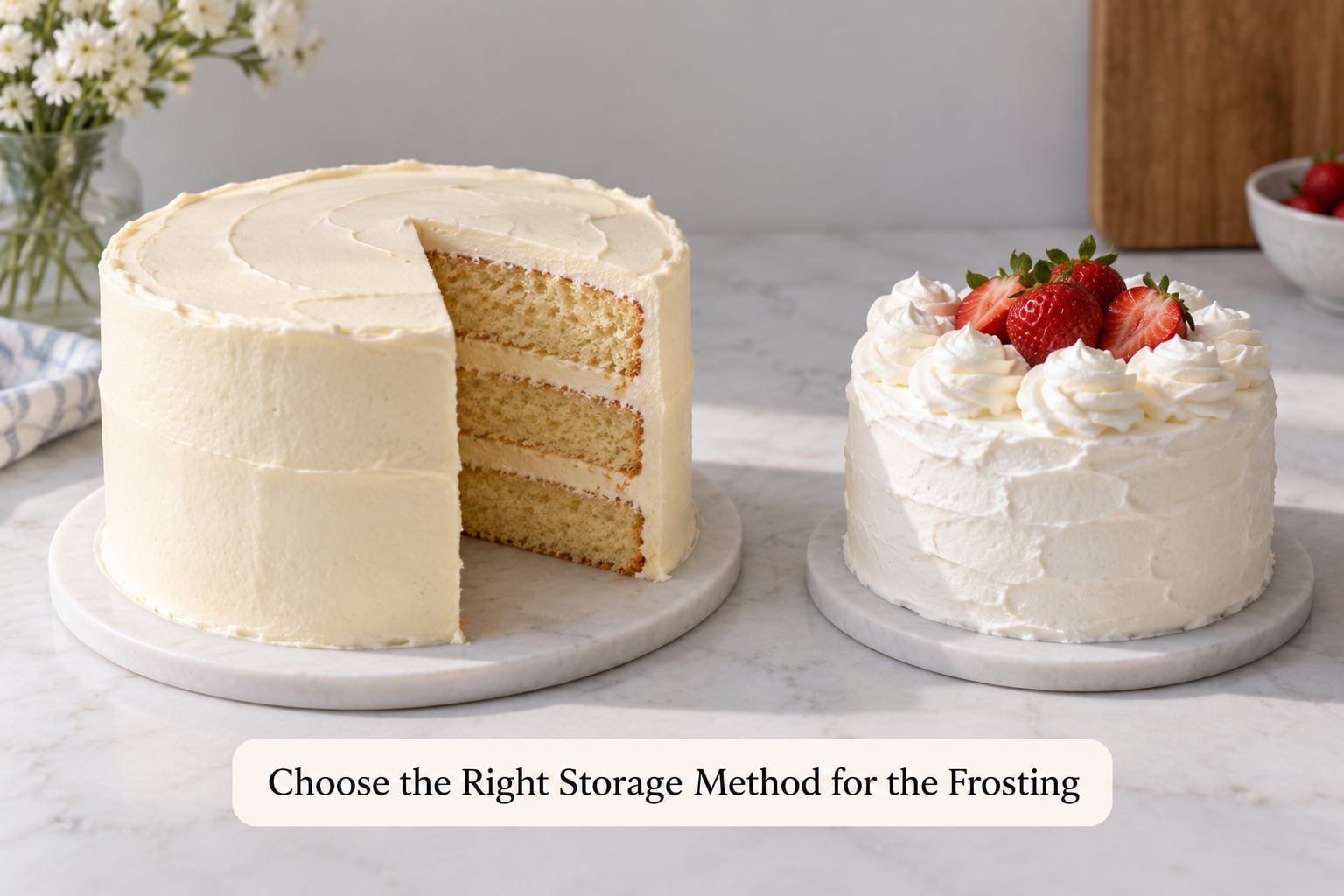
Frosting decides the method, not habit. Here is how to store a frosted cake overnight by what is on top of it.
American buttercream, Swiss meringue buttercream, fondant, ganache: counter storage is fine. These frostings are fat- and sugar-based and hold their shape at room temperature. Put the cake in a dome or box in a cool, dark corner away from sun and heat.
Ganache glaze or a thin pourable glaze: counter storage works only if the cake is eaten within a few hours. A thin glaze does not seal moisture as well as a thick buttercream, so refrigerate it if you need more than a day.
Cream cheese frosting, whipped cream frosting, custard filling, mousse: refrigerator storage, no discussion. These contain dairy and go into the danger zone fast. Cover them and refrigerate on a middle shelf within two hours of finishing.
Cakes with fresh fruit or a curd filling: refrigerator storage. Fresh berries and cooked curds are perishable, and sliced fruit on a frosted cake releases moisture that softens the crumb by morning.
Unfrosted or crumb-coated layers: room temperature is fine overnight, wrapped tightly. More on that below, because it is the one case where air is not the enemy.
3. Cover the Cake Without Damaging the Frosting
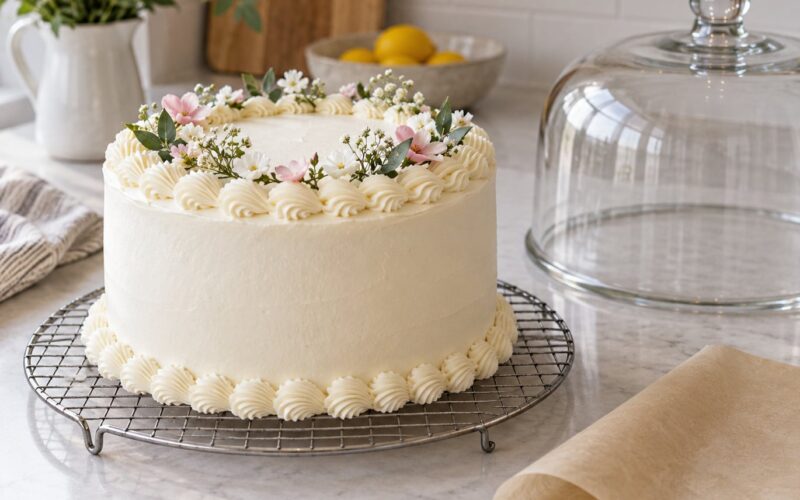
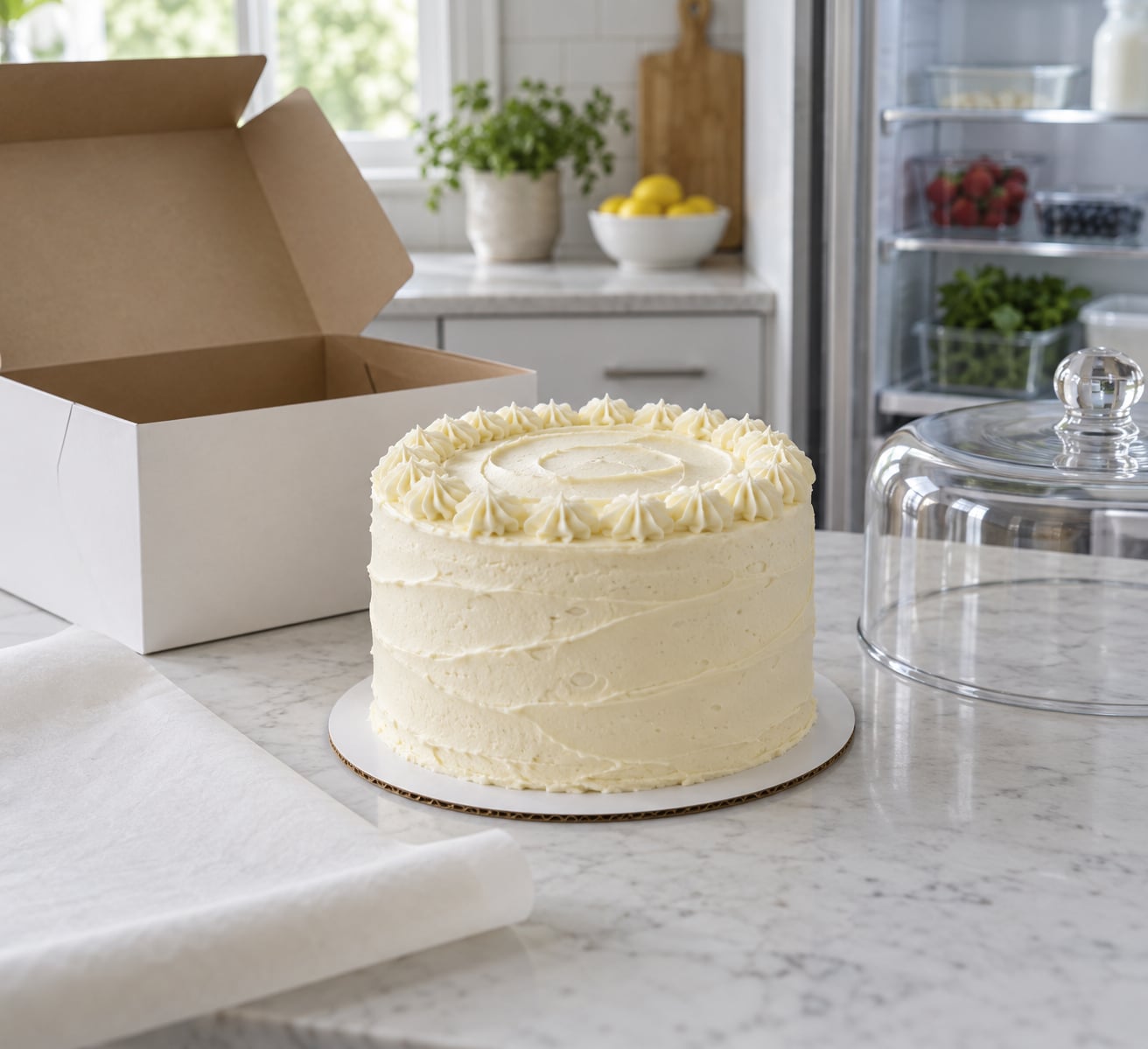
Set the cake on its board and put a cake dome, cake box, or upside-down bowl over it. If a slice has already been cut out, press a small piece of plastic wrap directly against the exposed crumb so it does not dry out overnight.
For a cake too tall or too decorated to fit a dome, use the toothpick method. Stick toothpicks into the cake at even intervals around the top and down the sides, leaving the heads above the decoration. Drape plastic wrap over the whole cake, then twist it so the toothpicks trapped underneath hold it off the frosting. Most cake decorators rely on this exact method for tall cakes that will not fit a cover.
Wrapped cakes need a second layer. Wrap in plastic wrap first, then aluminum foil, and push the wrap snug against the frosting so no air pockets remain. If frosting tends to stick, lay a sheet of parchment on top before the plastic wrap.
4. Refrigerate or Store in a Cool, Dry Place
For the fridge, chill the cake uncovered for 15 to 20 minutes first. That short chill firms up the frosting so the wrap will not drag across it when you seal the box. Then wrap, box it, and put it on a middle shelf, level and away from anything strongly scented.
Cake picks up odors fast. Onion, garlic, fish and raw meat are the usual culprits, and a cake is porous enough to absorb them even through a cake box. If your fridge shelf is crowded, a lidded bin with the cake box inside adds another barrier.
For the counter, pick the coolest spot in the room, out of direct light and away from the oven or a sunny window. A north-facing closet shelf or the bottom of a pantry works better than the counter itself. In a hot or humid kitchen, where indoor temperatures sit around 74°F, go with the fridge even for buttercream, or expect condensation to bead on the frosting by morning.
5. Check and Restore the Cake Before Serving
Take the cake out of storage and look at it before you unwrap it. Beading of water on the frosting, a sour or onion smell, or a tacky surface all tell you the night did not go well.
Let a refrigerated cake come to room temperature on its own, protected from direct heat, rather than warming it fast. Swiss meringue buttercream needs one to two hours; a dense or tall cake closer to two. That tempering window is the difference between frosting that tastes creamy and frosting that tastes like cold butter.
If the frosting softened in transit, a short blast of the fridge for 10 minutes firms it back up before you slice. If decorations shifted, a hair dryer on the cool setting held a few inches away will set ganache drips and piped work back in place.
Common Mistakes
Wrapping a cake that is still warm. Trapped steam condenses and makes the frosting sticky. Fix it by cooling fully on a rack, uncovered, before anything touches the cake.
Refrigerating every frosted cake out of habit. Buttercream and fondant cakes come out of the fridge dry, crumbly, or weepy from condensation. Put them on the counter unless the filling forces the issue.
Leaving the cake uncovered in the fridge. It picks up odors within hours and dries at the edges. Chill uncovered only for those first 15 to 20 minutes, then seal it.
Storing perishable frosting at room temperature. Cream cheese and whipped cream cakes should not sit out overnight. The two-hour rule is the limit for dairy-filled cakes in a room that is not air-conditioned.
Wrapping a tall decorated cake with loose plastic. The wrap touches the icing and pulls it off. Use the toothpick method, or a cake collar for cakes going into the fridge so the sides hold their shape.
Skipping the second layer. Plastic wrap alone lets moisture out and air in. Wrapped in plastic plus foil, the crumb holds its moisture for far longer.
One more that catches people: storing layers overnight before frosting them is a different job. Unfrosted layers want the opposite treatment, since air is now the thing that dries them.
Frequently Asked Questions
How long can frosted cake sit out unrefrigerated overnight?
Frosted cakes with American buttercream, Swiss meringue buttercream, fondant or ganache can sit out overnight covered, as long as the filling is shelf-stable and the room is cool. Cream cheese frosting, whipped cream, custard and fresh fruit fillings should not. Two hours is the safe limit for a perishable cake in a room that is not air conditioned.
Do frosted cakes need refrigeration?
Only when the frosting or filling needs it. Buttercream, fondant and ganache cakes are fine covered at cool room temperature for a day or two. Cream cheese frosting, whipped cream, mousse, custard and fresh fruit need the fridge within two hours. Refrigerating a buttercream cake you did not need to chill usually dries the crumb and makes the frosting weep.
Can I put a frosted cake in the fridge without covering it?
Only for the first 15 to 20 minutes. That uncovered chill firms the frosting so the wrap does not drag across it when you seal the box. Leaving a cake uncovered in the fridge for hours lets it dry at the edges and absorb odors from onion, garlic and raw meat on nearby shelves.
How long before serving should a cake come out of the fridge?
Give a refrigerated cake one to two hours at room temperature, out of direct heat. Swiss meringue buttercream needs the full two hours to soften to a creamy texture; a thick buttercream or fondant cake needs closer to one. Serving it straight from the fridge leaves the frosting tasting firm and cold.
How do I store layers overnight before frosting them?
Cool the layers fully, then wrap each one tightly in two layers of plastic wrap with a board or sheet of parchment between the layers. Leave them at cool room temperature for one night; freeze for longer storage. Do not wrap a warm layer, and leave a few inches between them so air can circulate.
If you take one thing from this, start by naming the frosting. Everything else follows from that.
Conclusion
To store a frosted cake overnight, do three things in order. Let the cake cool all the way to room temperature, identify what the frosting and filling are made of, and then use the matching method: an airtight cover on a cool counter for buttercream, fondant and ganache, or a wrapped box on a middle fridge shelf for anything with dairy or fresh fruit in it.
Chill uncovered for 15 to 20 minutes before wrapping if you are refrigerating, seal it in plastic plus foil or a tight box, and give it one to two hours to come back to serving temperature tomorrow. That is the whole job, and it takes about five minutes once the cake is cool.