Yes, you can refrigerate a buttercream cake. A frosted, decorated cake keeps safely in a refrigerator at 40°F / 4°C or below for about 3 to 5 days, and the frosting stays perfectly edible the whole time. The catch is appearance: a chilled cake tastes flatter, the frosting firms up hard, and the surface can weep with condensation when it meets warm air. How long you can refrigerate a buttercream cake depends almost entirely on what is inside it and how warm your kitchen is.
I keep a cake dome on the counter for the two or three days a sugar-dominant American buttercream cake manages fine there, and the fridge for anything with cream cheese, whipped cream, custard or fresh fruit in the middle. That single split solves most of the questions I get asked about cake storage, so it is where I will start.
Table of Contents
- Can You Refrigerate a Buttercream Cake?
- How Long Can a Buttercream Cake Stay in the Refrigerator?
- Will Refrigerating Buttercream Change the Texture?
- Why does the frosting go hard in the fridge?
- Why is my cake sweating in the fridge?
- What happens to the sponge and the decorations?
- How to Refrigerate a Buttercream Cake Safely
- How to Bring a Refrigerated Cake Back to Serving Temperature
- When Is It Better Not to Refrigerate a Cake?
- Frequently Asked Questions
- Do buttercream cakes need to be stored in the fridge?
- Can you refrigerate a buttercream cake overnight?
- How do I fix condensation on a buttercream cake?
- How do I soften buttercream that has gone hard in the fridge?
- Does buttercream frosting need to be refrigerated before decorating?
- Conclusion
Can You Refrigerate a Buttercream Cake?
Can you refrigerate a buttercream cake? Yes. There is no rule against it and nothing about buttercream that makes it unsafe cold. What the fridge changes is the eating experience, not the safety of the cake.
Before you reach for the door, ask three quick questions:
- Is the filling perishable? Cream cheese frosting, whipped cream, custard, mousse, curd, or raw fresh fruit all require refrigeration. Go straight to the fridge, regardless of the frosting on top.
- Is your kitchen hot? Above roughly 75°F / 24°C, butter in the frosting softens and the cake starts to slump. Warm, humid rooms are the other common reason to chill.
- Are you making it more than a day ahead? Overnight is fine for almost any cake. Beyond two days, freezing beats the fridge on both quality and how long the cake lasts.
If the answer to all three is no, the counter is genuinely fine. Plenty of experienced decorators refrigerate every cake they build anyway, because chilling firms the frosting and makes crumb coats easier, but that is a decorating technique rather than a storage rule.
How Long Can a Buttercream Cake Stay in the Refrigerator?
Refrigerated at 40°F / 4°C or below, most buttercream cakes keep 3 to 5 days and stay good to eat for up to about a week. Beyond 5 days the crumb dries out and the frosting picks up fridge flavours, even though it is still technically safe.
| Cake or filling | Counter | Refrigerator | Freezer |
|---|---|---|---|
| American buttercream, no filling | 1 to 2 days | 3 to 5 days | 2 to 3 months |
| Swiss or Italian meringue buttercream | 1 day | 3 to 5 days | 2 to 3 months |
| German or ermine buttercream | 1 day | 3 to 5 days | 1 to 2 months |
| Cream cheese frosting | About 2 hours | 4 to 5 days | 2 to 3 months |
| Whipped cream or meringue topping | About 2 hours | 1 to 2 days | 1 to 3 months |
| Custard, mousse or curd filling | About 2 hours | 3 to 4 days | About 1 month |
| Fresh fruit filling | About 2 hours | 3 to 4 days | Not recommended |
The safety limit for anything perishable is the USDA two-hour rule: get it into a refrigerator within two hours of serving, or within one hour if the air temperature is above 90°F / 32°C. That rule is about bacteria growth, not about buttercream, so it applies to the filling and never to a sugar-dominant frosting.
Sugar is the reason a plain American buttercream cake is comfortable on the counter. The sugar binds up so much of the available water that bacteria have almost nothing to work with, which is why an all-butter frosting behaves differently from a dairy-rich one.
Will Refrigerating Buttercream Change the Texture?
Yes, and most of the changes are reversible or cosmetic rather than a sign the cake went bad. The one thing you will never get back is aroma, because cold dulls the aroma compounds that make a cake smell like vanilla or coffee.
Why does the frosting go hard in the fridge?
Butter is a solid fat at room temperature. Below about 60°F the milkfat in buttercream crystallises into firmer structures, so the frosting firms up and loses its spreadable, workable feel straight out of the fridge. That is the single most common complaint, and the fix is short: let the cake sit, then re-whip or re-spiral the frosting with a little more butter.
Why is my cake sweating in the fridge?
The sweating happens on the way out, not in the fridge. Cold air holds very little moisture, so when the chilled cake meets warm humid kitchen air, water vapour condenses on the frosting exactly like a cold glass of water on a summer day. That bead of moisture then loosens the top layer of buttercream and turns it tacky or weepy, and dark colours can bleed where they touch.
What happens to the sponge and the decorations?
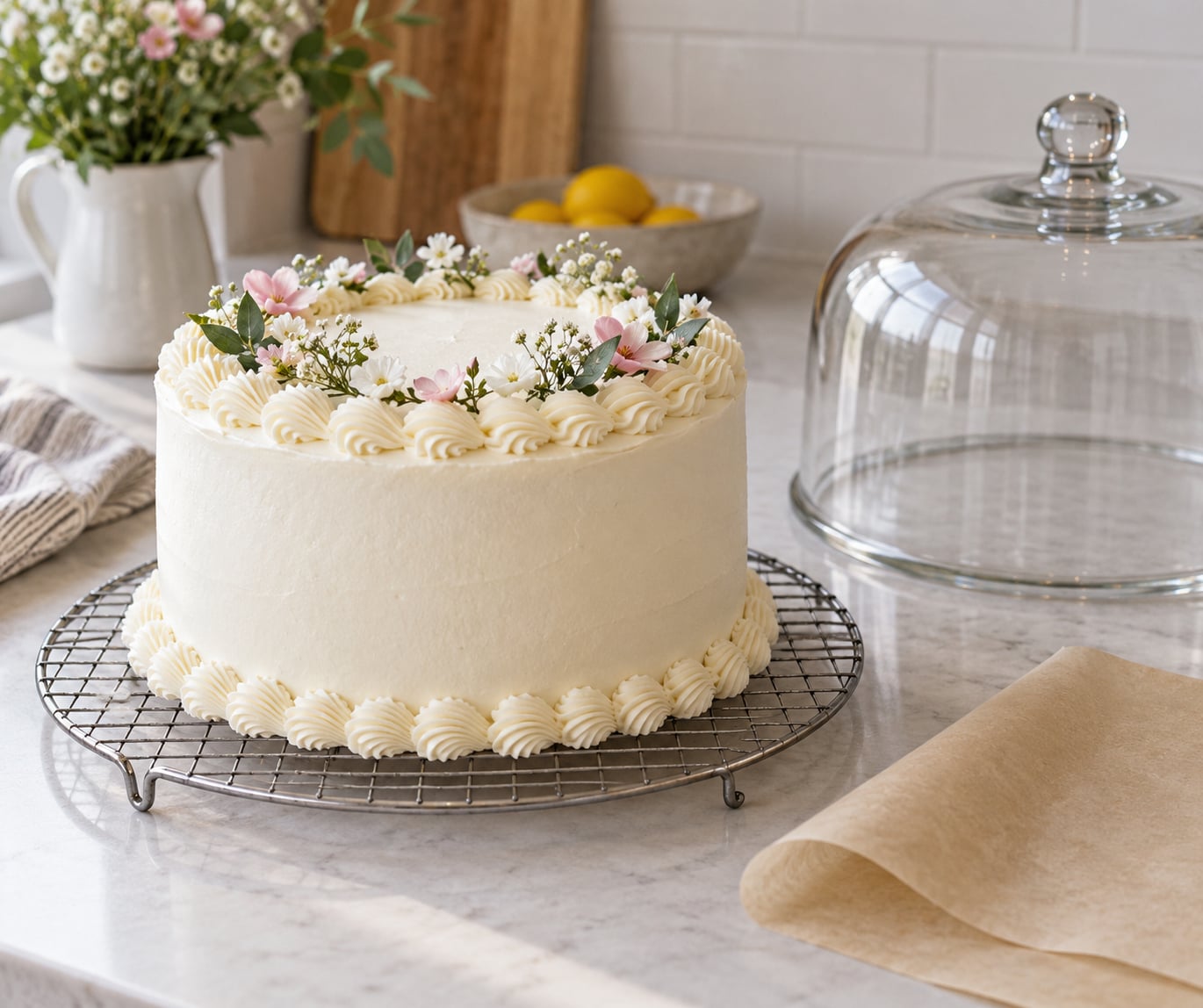
Uncovered or loosely covered, the crumb dries out and goes crumbly, which is why wrapping matters more than anything else in this guide. Fondant and modelling chocolate usually handle chilling well and firm up nicely for transport. Fresh flowers, fresh fruit, marshmallow toppings and anything glued with royal icing are the decorations to remove first and add on the day. Piped borders also lose their crisp edges once the cake warms back up, so keep them shallow on cakes you know need chilling.
How to Refrigerate a Buttercream Cake Safely
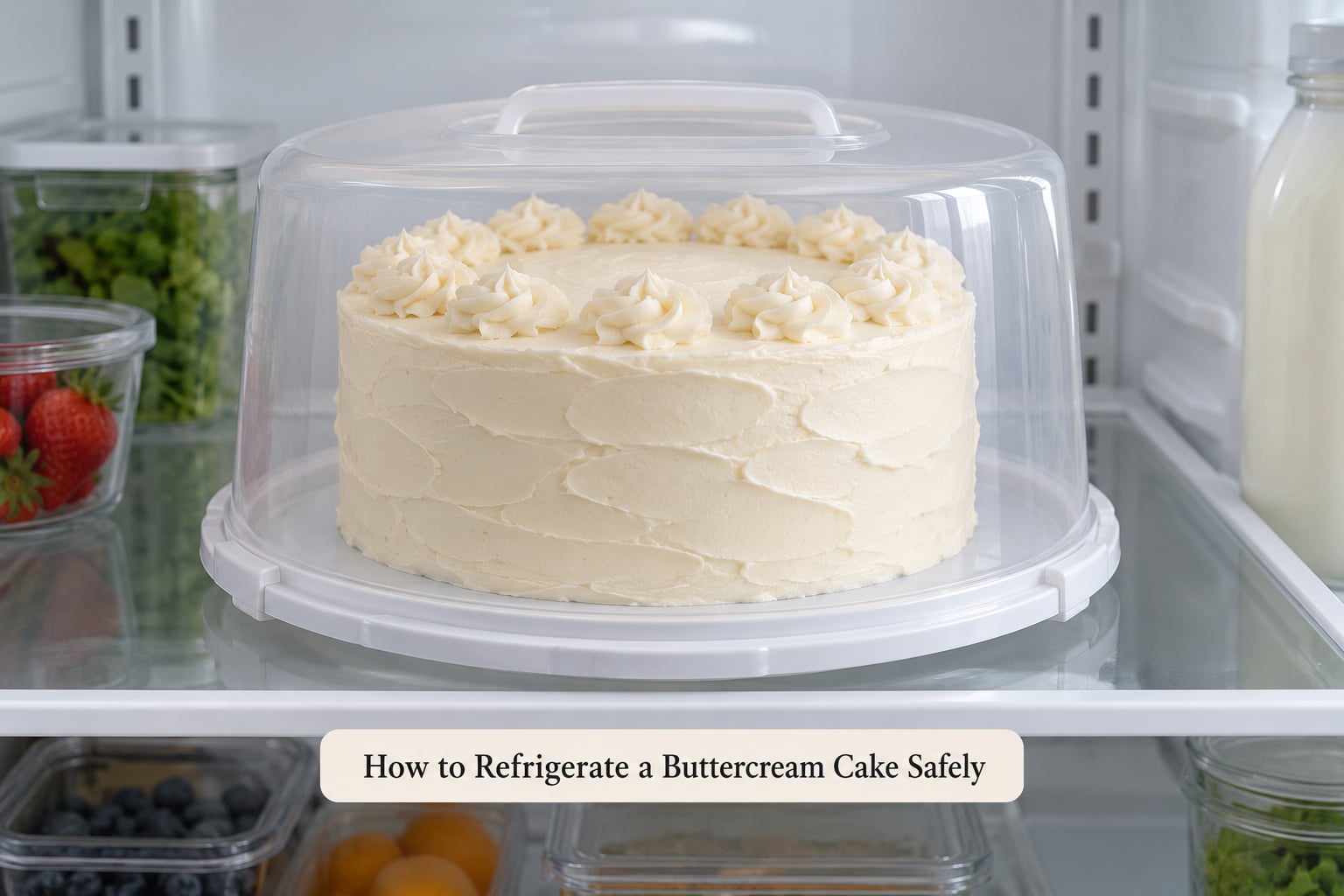
Follow this order every time and you will avoid nearly all of the problems people associate with chilling a cake.
- Cool it completely first. A warm cake traps steam, and that steam condenses inside the box and soaks into the crumb. Wait until the centre of the cake feels room temperature, not just the outside.
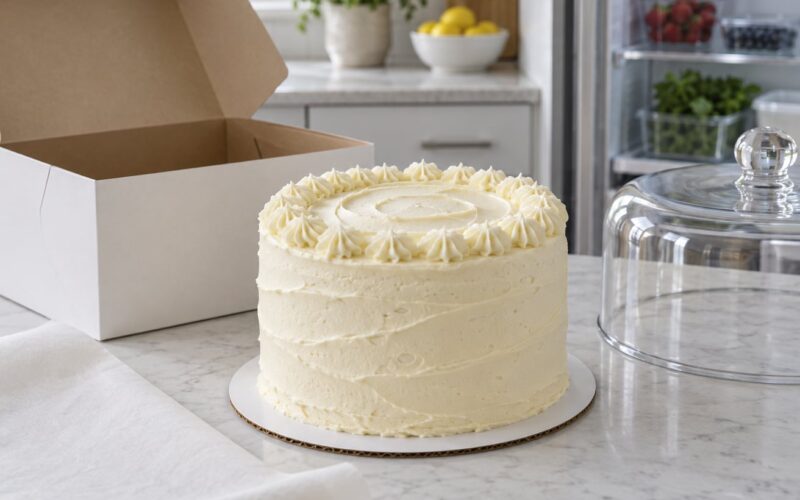
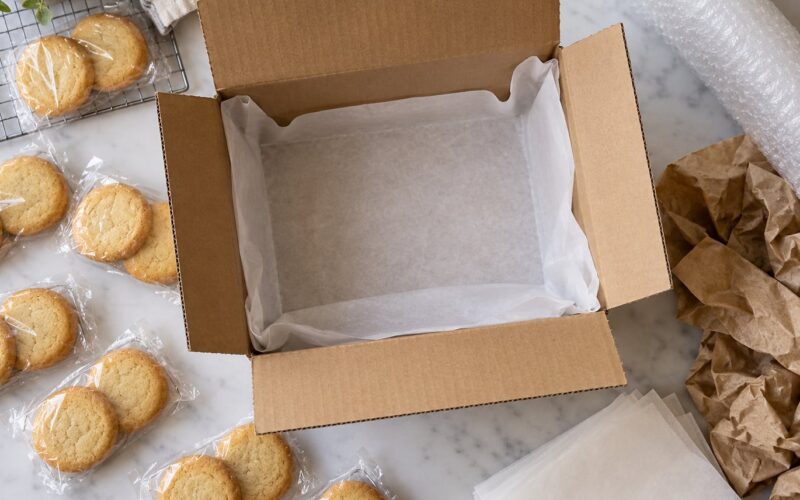
- Choose the right cover. A cake dome on a board is best for a single cake you will finish within a day. A fitted cake carrier or a cardboard cake box holds a stacked cake steady. An airtight plastic container works well for a whole undecorated round or for slices.
- Add a barrier if the frosting is delicate. Piped work, drag-ons and flowers stick to cling film. Drape a sheet of parchment paper or a single layer of cling film over the surface and tape the box closed on the outside so nothing lands directly on the piping.
- Store it on a level shelf, not the door. The door swings and tilts, and the shelf temperature is steadier. Keep it away from the back wall where the coils run cold.
- Give it its own shelf. Buttercream is mostly fat and sugar, so it absorbs smells. Garlic, raw onion, fish, cheese and curry will all travel through a closed box over a night or two. A box on its own shelf or a sealed container solves it completely.
- Label it with the date. A small strip of tape on the box saves you doing the smell test on a cake you were hoping to serve.
For longer storage, freeze instead. Wrap the cake in two layers of cling film, then foil, then freeze in a bag. Buttercream cakes hold for 2 to 3 months frozen, and thawing slowly in the fridge overnight is far gentler on the crumb than thawing on the counter.
If your party got postponed, a cake that has already been chilled can absolutely go back in the fridge. Two days cold does no lasting harm as long as it stayed covered.
How to Bring a Refrigerated Cake Back to Serving Temperature
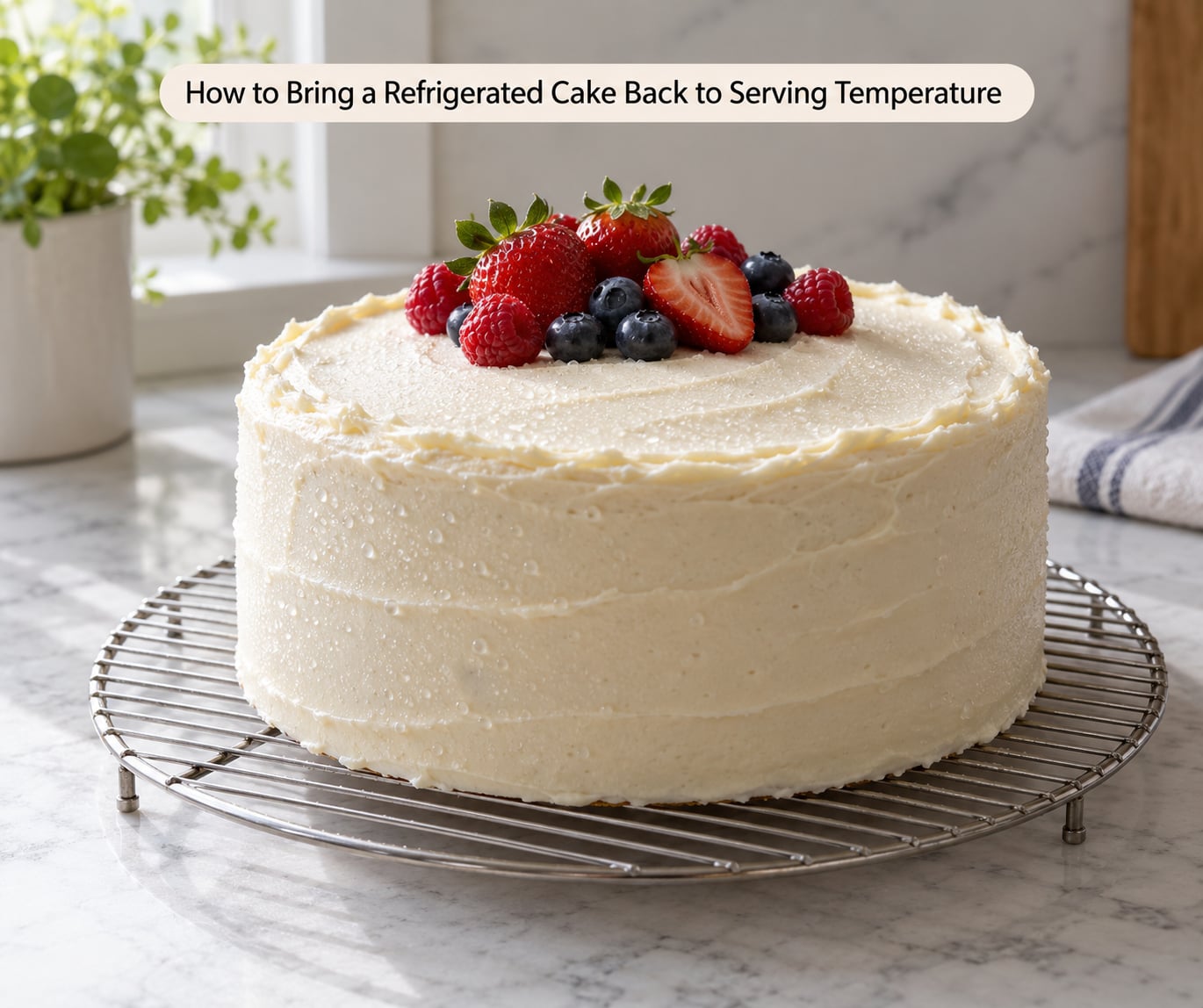
Take the cake out of the fridge 2 to 3 hours before you plan to serve it, and put it in the coldest part of the room first if you are in a hurry. A cake that goes from 40°F straight into a warm kitchen sweats hardest in the first 20 minutes, so the slower that handover the cleaner the frosting stays.
Keep it covered while it warms. The cover protects the surface from condensation for the first part of the warming, and the crumb stays softer. Once it is roughly room temperature, take the cover off, then look at it before serving.
If the frosting feels hard, work it back to spreadable with a spatula while it warms, or lift what you need, put it in a bowl and beat it briefly with a little extra butter. Never try to pipe cold, stiff buttercream, because it tears the crumb and the result looks lumpy rather than smooth.
For a cake you are transporting to an event, transport it cold. A chilled cake is firmer, so it holds its shape through a car journey far better than a room-temperature one, and the frosting will not slide off during the drive. Put it on a non-slip mat in a box on the floor of the car rather than on a seat, keep the box out of sun through a window, and set it out at the venue two hours before anyone eats.
Cold cake also tastes less sweet and flatter than warm, which is worth remembering when you are comparing it to the bakery version. Set it out fully, not just until the icing stops feeling cold, and people will notice the difference.
When Is It Better Not to Refrigerate a Cake?
Leave a cake at room temperature when all three of these are true: the frosting is firm American buttercream or another sugar-dominant style, the filling is a stable jam or curd without cream, and the room sits comfortably below 70°F / 21°C with no strong cooking smells near it.
In that case the counter is the better choice. The frosting keeps its soft, workable texture, the sponge stays tender, and there is no condensation risk and no thawing window to plan around. A cake frosted in the morning and served the same evening needs nothing more than a cake dome.
The opposite rule applies in hot weather, and it is not a small adjustment. Above 75°F / 24°C, buttercream softens enough that a tall cake can start to slide on its board, and in humid weather the frosting goes tacky rather than firm. If your kitchen looks like that on the day, refrigerate the finished cake, transport it cold, and let the venue’s room temperature do the softening right before service.
There is also a difference between chilling a finished decorated cake and chilling layers before you frost them. Decorators chill layers for 30 minutes to an overnight so a crumb coat sets cleanly and the stack stops shifting, and that is normal practice. What nobody wants is a chilled layer going straight into filling with no return warming time, because the cold layer and the warm filling squeeze each other and the filling pushes out of the sides.
Frequently Asked Questions
Do buttercream cakes need to be stored in the fridge?
Only if the filling needs it. A cake with American buttercream and a stable jam filling is fine on the counter for 1 to 2 days in a cool room. Cream cheese frosting, whipped cream, custard, mousse, curd or fresh fruit make the cake perishable, and the USDA two-hour rule applies. Cover it either way and label the box with the date.
Can you refrigerate a buttercream cake overnight?
Overnight chilling is the most common reason bakers refrigerate a decorated cake, and it does no real harm. Leave the frosting covered, keep the box on a level shelf away from raw onion, fish or garlic, and take the cake out 2 to 3 hours before serving. Expect the frosting to be firm when you unwrap it and the sponge to taste slightly flatter than a fresh one.
How do I fix condensation on a buttercream cake?
Condensation appears when a cold cake meets warm air. Keep the cake covered while it warms for the first hour, which catches most of the moisture, then unwrap it and blot any damp surface gently with a clean dry cloth rather than rubbing. If the frosting has gone tacky, put it in a bowl and beat it briefly with a dab of butter, then chill it again for 20 minutes to firm up.
How do I soften buttercream that has gone hard in the fridge?
Take the cake out and let it warm for 1 to 2 hours with the cover on. If you need the frosting straight away, lift it into a bowl and beat it with a little extra butter until it is smooth and spreadable again, then put it back on the cake. Avoid adding water, which makes the frosting grainy and can split the emulsion. Warm, not hot butter works best.
Does buttercream frosting need to be refrigerated before decorating?
Decorators chill cake layers for 30 minutes to an overnight to set a crumb coat and stop tall stacks from shifting, and that is a technique rather than a storage requirement. If you are assembling a filled cake with chilled layers, build it at room temperature instead, because a cold layer against warm filling pushes the filling out of the sides.
Conclusion
Refrigerate a buttercream cake only when the filling or the weather demands it, and you will never regret the decision. Cool it fully, box or dome it so nothing touches the frosting, keep it away from strong smells, and take it out of the fridge two to three hours before you serve so the frosting softens and the flavours come back. For more than five days, freeze it instead.