Cream cheese frosting that slumps, melts off a warm cupcake and slides down the side of the cake is not a skill problem, it is a water problem. The fix is simple: full-fat block cream cheese, an equal weight of butter, a dry stabiliser like cornstarch or meringue powder, and 15 to 20 minutes in the fridge before you pipe. That is how to make cream cheese frosting that holds its shape, and every technique below builds on those four things.
Regular cream cheese frosting is roughly three quarters water, so on its own it has almost no fat structure to support its own weight. It spreads beautifully, which is why it is so good on a banana bundt cake, and then it goes soft the moment the room warms up. Add butter and it starts behaving. Add a dry binder and it starts holding an edge. Chill it and it holds a peak.
This is the method I use for everything from carrot cake to a tall four-layer birthday cake, and it takes about ten minutes of work plus the chill. The important part is not a secret ingredient, it is temperature control and mixing order.
Table of Contents
- What You Need
- Full-fat block cream cheese, not tub cream cheese
- Unsalted butter, softened but not melted
- Powdered sugar, sifted
- A dry stabiliser
- Vanilla, salt, and a stand mixer or hand mixer
- Tools for shaping
- Step-by-Step: How to Make Cream Cheese Frosting That Holds Its Shape
- 1. Bring everything to cool room temperature
- 2. Beat the butter and sugar first
- 3. Add the cream cheese last, on low
- 4. Mix in the stabiliser and the extras
- 5. Adjust the consistency before you chill
- 6. Chill the frosting, and the bag
- 7. Frost a completely cool cake, and fill in two stages
- 8. Pipe, then chill the finished cake
- Common Mistakes
- The frosting is too runny to pipe
- The frosting is stiff enough but tears the cake
- There are lumps in the bowl
- The frosting is curdled or grainy
- The swirl flattened after a few hours
- It melted off a warm cupcake
- It slid off the side of a tall cake
- Tips for different jobs
- Frequently Asked Questions
- How can I make cream cheese frosting thicker without making it too stiff?
- Why is my cream cheese frosting sliding off the cake?
- Should cream cheese frosting be chilled before piping or decorating?
- Can I use cream cheese frosting on cupcakes, cookies, and cakes?
- How long does cream cheese frosting keep in the refrigerator?
- Can I add gelatin or cornstarch to help cream cheese frosting hold its shape?
- Conclusion
What You Need
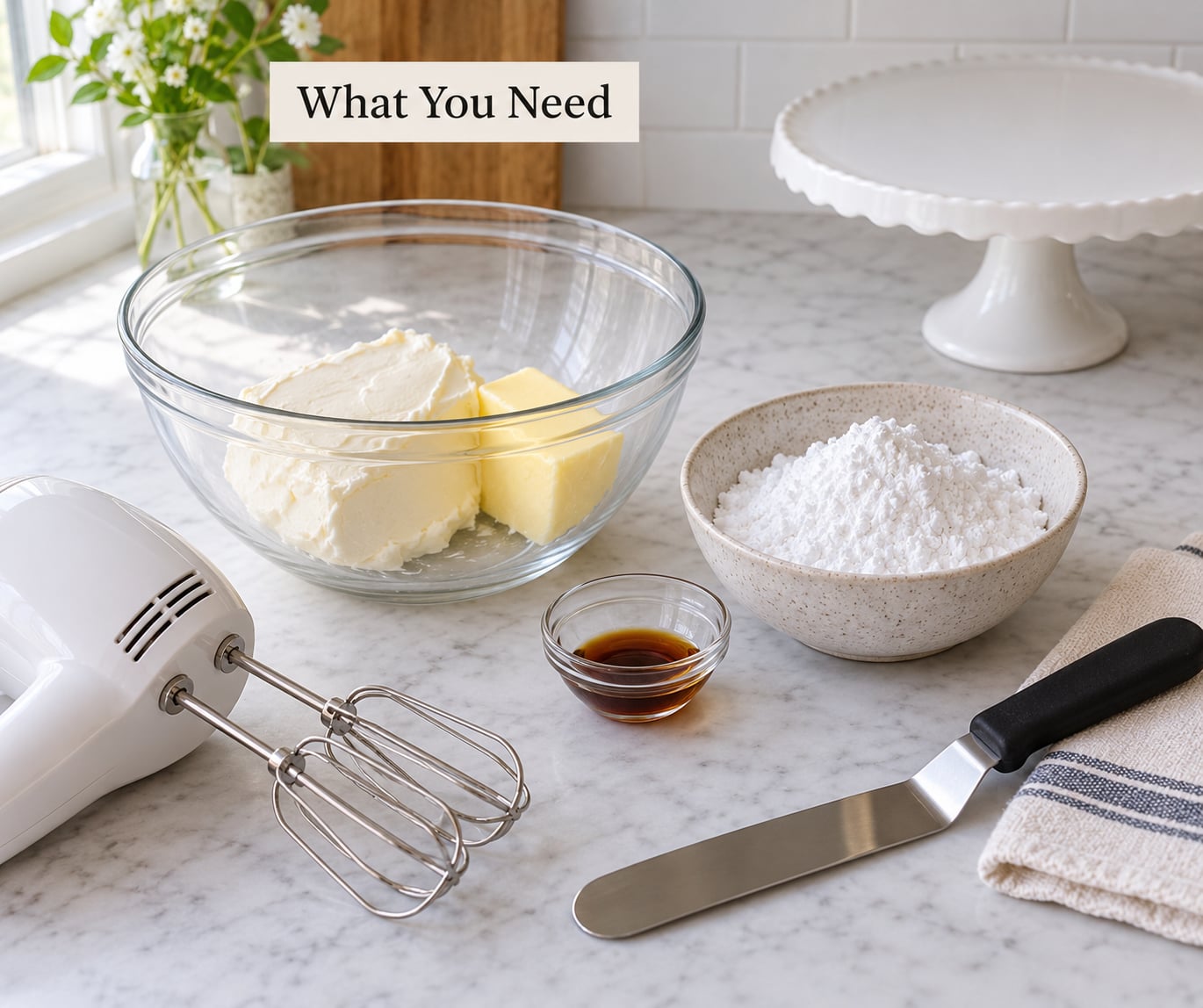
Full-fat block cream cheese, not tub cream cheese
Buy the brick-style kind in the foil wrapper, the 8 oz / 226 g block is the standard size. Block cream cheese is denser and holds noticeably more fat solids than the whipped spread in a tub.
Tub varieties are whipped with air and stabilisers to make them spreadable straight from the fridge, and that extra water and air is exactly what you do not want here. Light and fat-free versions have even more water in them to replace the fat they removed, which is why low-fat cream cheese is far more likely to end up runny.
Unsalted butter, softened but not melted
Butter is your fat network. It is what gives the frosting enough body to hold a star tip swirl. Use unsalted so you control the salt with a pinch of fine salt at the end.
Softened means the butter dents under your finger and leaves a slight print, without looking shiny or sliding off the knife. Melted butter is the single most common beginner error, and it is the reason so many first attempts turn into a glaze.
Powdered sugar, sifted
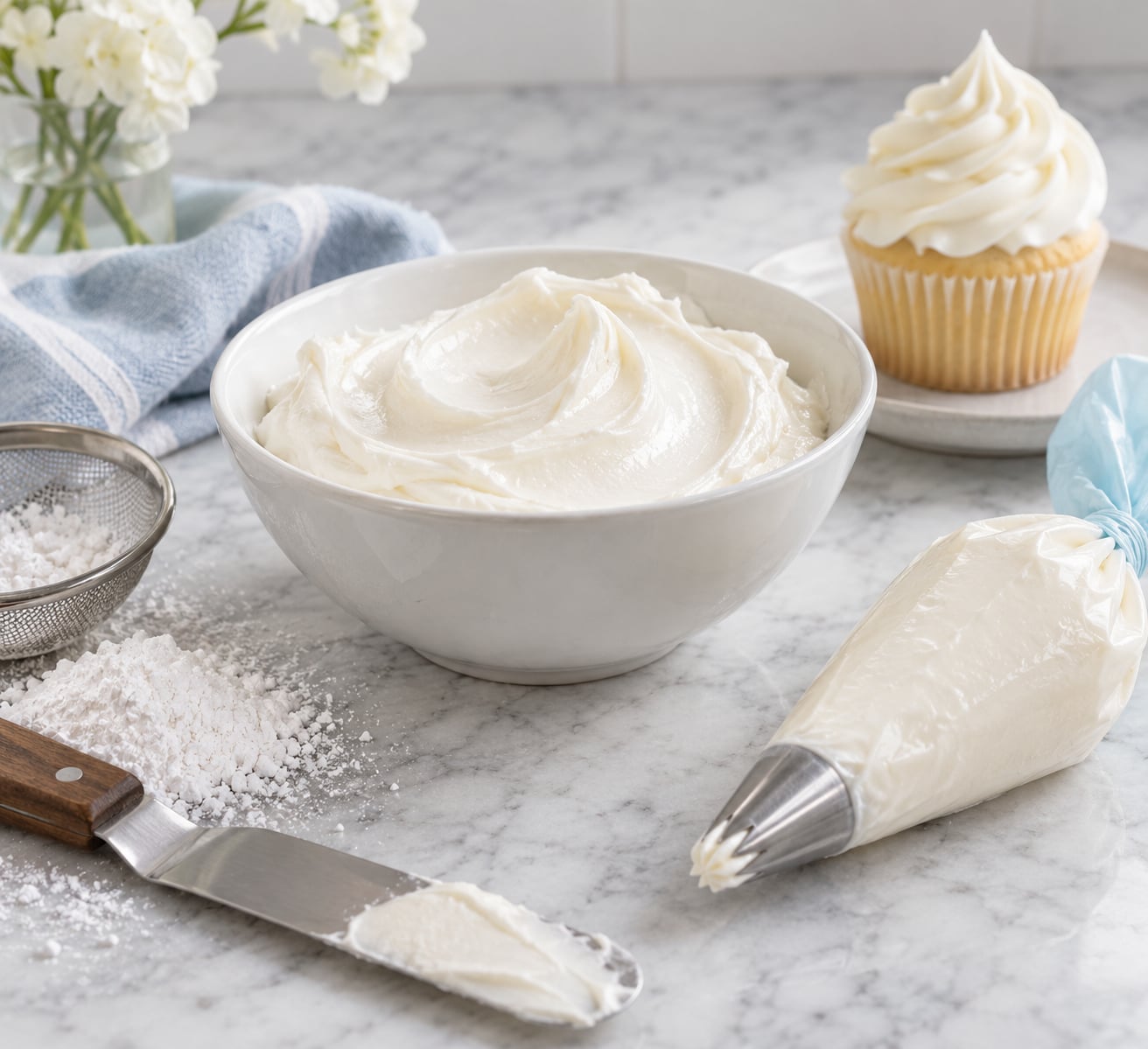
Four cups, about 480 g, sifted if you have a sieve. Powdered sugar does two jobs: sweetening, and absorbing free water from the cream cheese. Sifting matters because cornstarch in the sugar clumps when it hits liquid, and those lumps get locked in by the next additions.
A dry stabiliser
This is the lever most recipes skip. You need one of these to turn a spreadable frosting into a pipeable one.
- Cornstarch, 1/4 cup (about 32 g). The most neutral option and the one I reach for first. It thickens without adding any flavour.
- Meringue powder, 1 tablespoon. Adds structure and a very slight crispness at the edge. Egg-white based, so it is not for an egg-free kitchen.
- Buttermilk powder, 1/4 cup. Adds body and a gentle sour note that suits carrot cake and red velvet.
- Extra powdered sugar, 2 tablespoons at a time. Free, but it sweetens as it thickens.
- Mascarpone, swapped in for a quarter of the cream cheese. Thickens and adds richness, though it is not cheap.
Gelatin works too, but it needs blooming and it makes the frosting slightly rubbery. I would rather you skip it unless you are already comfortable with gelatin.
Vanilla, salt, and a stand mixer or hand mixer
Two teaspoons of vanilla and a pinch of salt. For the mixer, a flat paddle is what you want, not a wire whisk. A whisk aerates the cream cheese and you will chase that airy, weepy texture all afternoon.
Tools for shaping
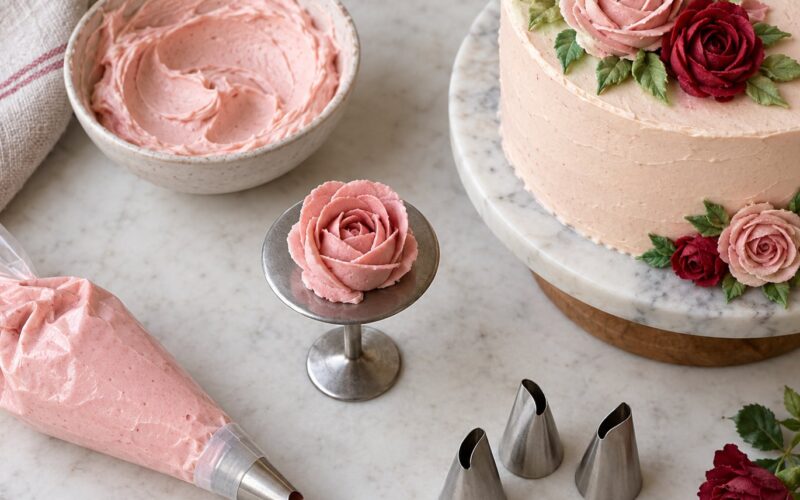
An offset spatula for the cake and a piping bag with a coupler for the decoration. Keep the second bag in the fridge while you work on the first one, which is the trick experienced decorators use on long jobs.
Step-by-Step: How to Make Cream Cheese Frosting That Holds Its Shape
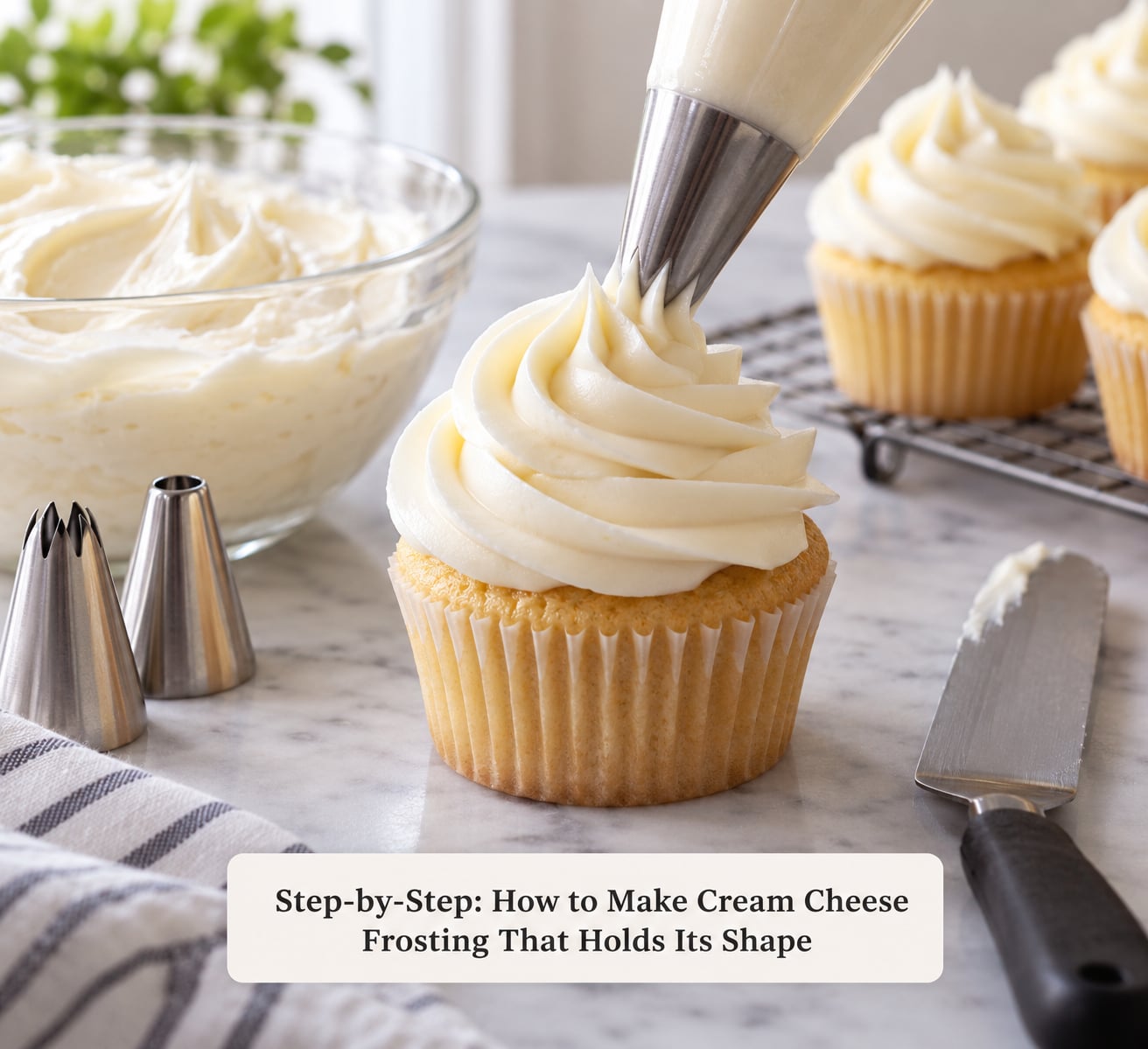
1. Bring everything to cool room temperature
Take the cream cheese and butter out about 30 to 45 minutes before you start. Aim for somewhere around 65 to 70°F (18 to 21°C). Cool room temperature, not warm. Cold cream cheese fights the sugar and leaves you with lumps; above roughly 70 to 75°F the cream cheese itself softens and you are chasing the slump all over again.
2. Beat the butter and sugar first
Paddle the butter on medium-high for a minute to get it moving, then add the sifted powdered sugar a third at a time, scraping down the bowl twice as you go. Beat for another 2 to 3 minutes until it is pale and fluffy and leaves a soft peak when you lift the paddle.
This is the only aerating step in the whole recipe. Getting your air here means you never need to overwork the cream cheese later.
3. Add the cream cheese last, on low
Drop the softened cream cheese in and run the mixer on low for 60 to 90 seconds, scraping down once. Stop as soon as it looks smooth.
Overmixing is the mistake that turns frosting grainy and slick. The protein in cream cheese tightens and seizes under heavy agitation, and there is no beating it back. The rule that keeps showing up in experienced bakers’ advice is plain: whip the sugar, fold in the cheese, stop while it still looks slightly soft.
4. Mix in the stabiliser and the extras
Add the cornstarch, meringue powder or buttermilk powder with the vanilla and a pinch of salt. Beat on low just until the dry powder disappears, about 30 seconds.
5. Adjust the consistency before you chill
The right target is between a soft peak and a stiff peak: it holds the tip of the paddle upright at the top but the base bends. Too loose, add powdered sugar 2 tablespoons at a time. Too stiff and tearing the cake, add heavy cream or milk a teaspoon at a time. Photograph the paddle test on your phone and compare it on every batch.
6. Chill the frosting, and the bag
Refrigerate the bowl for 15 to 20 minutes, covered. Cold fat is what actually holds the shape, so this step is not optional if you are piping.
If you are filling the bag ahead of time, chill the filled bag itself. That buys you another 30 to 60 minutes of working time in a warm kitchen.
7. Frost a completely cool cake, and fill in two stages
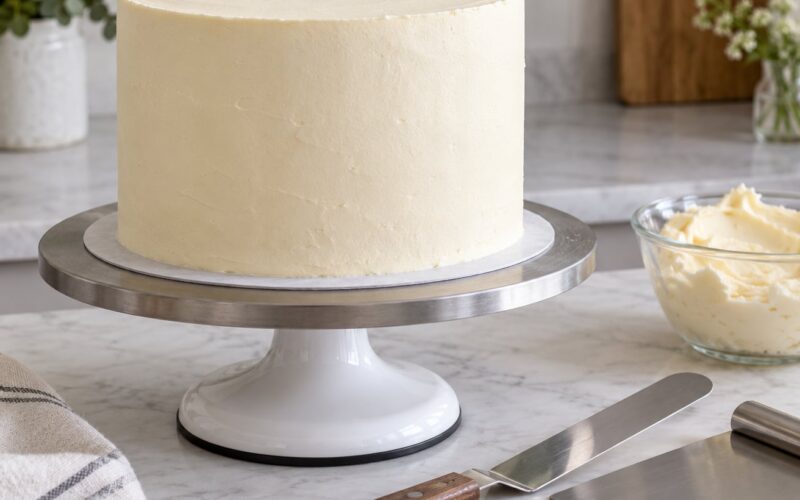
Even a slightly warm cake will melt the bottom of the frosting into a slick that creeps outward. For a layer cake, spread a thin crumb coat, chill it 20 minutes until it firms, then add the final layer of filling.
That crumb coat is the answer to the tall four-layer question that comes up constantly in cake decorating groups. It gives the filling something to sit on and it stops the layers bulging under weight.
8. Pipe, then chill the finished cake
Pipe your borders and swirls, then refrigerate the decorated cake for 20 to 30 minutes before you move it. Frosting that has set cold in the fridge travels far better than frosting that was only ever soft.
Common Mistakes
The frosting is too runny to pipe
Usually one of three things: tub or low-fat cream cheese, not enough dry sugar, or a warm kitchen. Add 2 tablespoons of powdered sugar at a time and give it a mix between additions, because sugar does not dissolve evenly into a cold dense mix. If you are already at the sugar limit, fold in 1 tablespoon of cornstarch. Chill for 15 minutes and test again before adding anything else.
The frosting is stiff enough but tears the cake
You have gone too far the other way. Fold in heavy cream a teaspoon at a time until it spreads without resistance. The frosting should never drag crumb or frosting behind it as you spread.
There are lumps in the bowl
Cold cream cheese, almost every time. The lumps get locked in by the sugar and the stabiliser, so chasing them at the end is a losing game. Start over with cream cheese that dents under your finger, or pass the finished frosting through a sieve while it is still soft.
The frosting is curdled or grainy
Two causes: overmixing after the cream cheese goes in, or butter that got hot enough to split the fat. You cannot un-seize a broken emulsion with more sugar. Prevention is the fix: beat the sugar first, add the cheese last, and keep the mixer on low.
The swirl flattened after a few hours
That is deflation, and it happens because the air structure slowly relaxes. Chilling firms the fat and slows it down. For an event, freezing the piped cake for about an hour before display and bringing it out right before serving is the common workaround.
It melted off a warm cupcake
The most repeated complaint in home baking. Cool the cupcakes completely on a rack first. If you are short on time, 10 minutes in the freezer does more good than 10 minutes on the counter. A cupcake that still feels even slightly warm will take the frosting with it.
It slid off the side of a tall cake
Skipping the crumb coat, or filling too thickly. Thin layers of filling chilled between each layer are stronger than one thick layer. If you are stacking four or more layers and do not want to use dowels, keep the filling to about a quarter inch per layer.
Tips for different jobs
- Cupcakes: chill the baked cupcakes fully, then pipe cold frosting straight from a chilled bag.
- Cookies: the dough is already cool, so this frosting works well. A thin layer is plenty.
- Sheet cakes: the easiest application. Spread with the offset spatula and chill before writing on it.
- Cinnamon rolls: loosen it with a teaspoon of cream if it is stiff, or the dough will tear.
- Warm kitchen: chill the filled bags, work in small batches, keep the rest in the fridge, and if it is genuinely hot, use cold butter rather than soft. My kitchen heats up badly from May through September, and every 2026 I remind myself that the frosting is not the fragile part of the project, the room is.
Frequently Asked Questions
How can I make cream cheese frosting thicker without making it too stiff?
Add dry ingredients before you add liquid ones. Fold in 2 tablespoons of powdered sugar at a time, or 1 tablespoon of cornstarch, mixing fully between additions. Cornstarch thickens without extra sweetness, which makes it the safer choice for a frosting that is already sweet. Chill the frosting for 15 minutes and test again before adding more, because cold frosting reads thinner than it really is.
Why is my cream cheese frosting sliding off the cake?
Three causes account for most of it: the frosting was too warm when you applied it, the cake was still warm, or there was no crumb coat. Cool both the cake and the frosting first. For a layer cake, spread a thin crumb coat, refrigerate it for 20 minutes until set, then add the final filling. Sagging layers and a warm kitchen make it worse, so chill between every layer.
Should cream cheese frosting be chilled before piping or decorating?
Yes, and 15 to 20 minutes is the usual window. Chilling firms the butter fat, which is what lets the frosting hold a peak and a sharp tip edge. You can also chill the filled piping bag itself for 30 to 60 minutes if you are working in a warm room. Once you pipe, refrigerate the finished cake for 20 to 30 minutes so the decoration sets before you move it.
Can I use cream cheese frosting on cupcakes, cookies, and cakes?
All three, with different techniques. Cupcakes and cookies are cool already, so pipe or spread directly. For layer cakes, always crumb coat and chill between layers. For cinnamon rolls or other soft doughs, loosen the frosting with a teaspoon of cream first so it does not tear the dough. On cookies a thin layer holds best; a thick layer slumps as the cookie cools.
How long does cream cheese frosting keep in the refrigerator?
About five days in an airtight container, refrigerated, because cream cheese frosting is perishable. It will firm considerably in the fridge and can look slightly weepy or grey after a day or two. Give it a short re-whip before using it, and add a teaspoon of cream if it needs loosening. It also freezes well for two to three months, thaw it in the fridge overnight and re-whip until smooth.
Can I add gelatin or cornstarch to help cream cheese frosting hold its shape?
Cornstarch is the easier choice: add 1/4 cup, about 32 g, per standard batch and mix it in with the powdered sugar. It thickens the frosting without changing the flavour, which is why most working recipes use it. Gelatin also works but needs to be bloomed in warm water first and can give the frosting a slightly rubbery texture. Meringue powder is a good middle ground if egg products are fine for you.
Conclusion
Start cold and full-fat. A block of full-fat cream cheese and an equal weight of butter, softened but cool, mixed in that order with 1/4 cup of cornstarch folded in at the end, is the whole recipe. Beat the sugar first, add the cheese last on low, stop while it still looks slightly soft, then chill for 15 to 20 minutes.
If you take one thing from this guide, make it the chill. Cold butter fat is what turns a spreadable frosting into one that holds its shape, and it is the step people skip. Frost a completely cool cake, crumb coat and chill between layers, and your cream cheese frosting will still be holding sharp swirls hours later.